
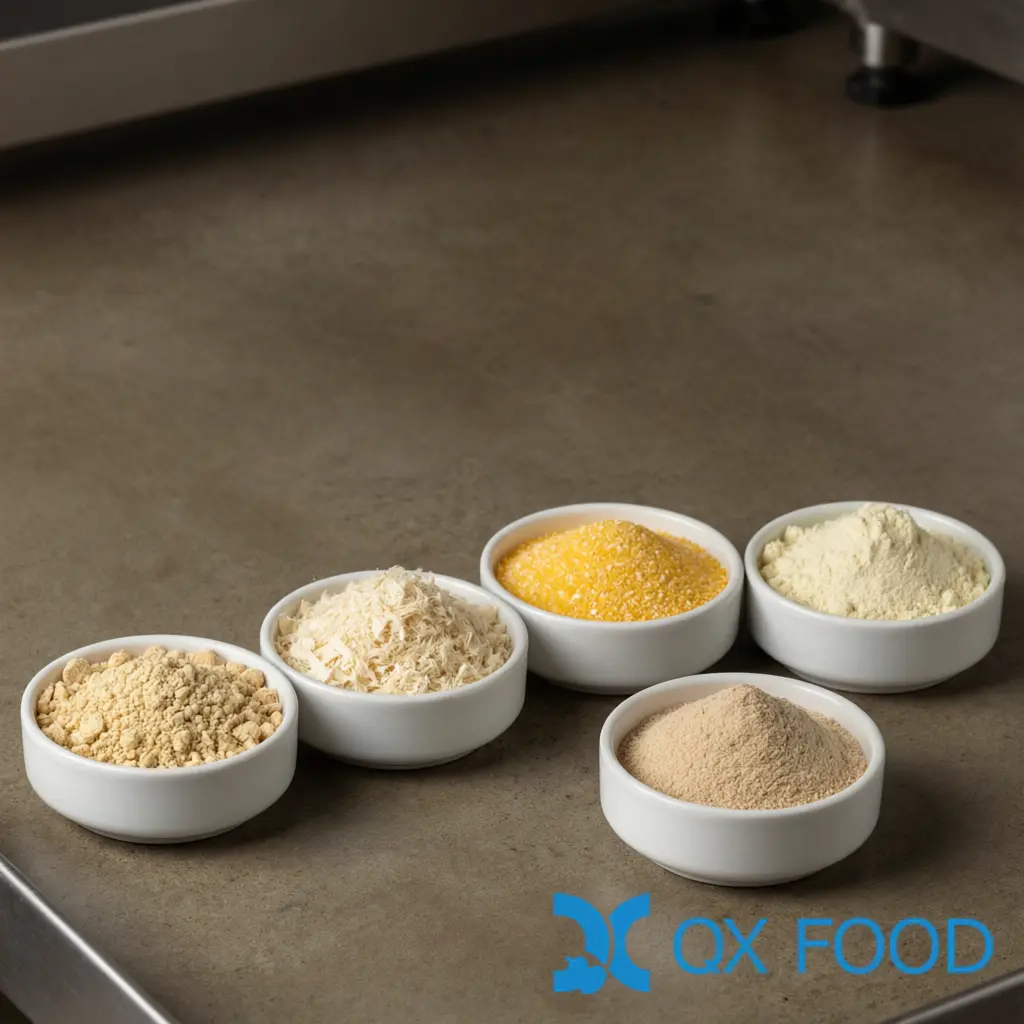
Raw material is one of the first variables in hvp raw material selection because it defines the protein source entering the process and can directly affect allergen and labeling requirements. It also influences the chemical starting point for hydrolysis, but it does not by itself determine the finished HVP flavor, intensity or application fit.
Those finished properties depend on the selected grade, including hydrolysis route, process conditions, salt, color, nitrogen specification and any downstream standardization. This is the starting point for hvp raw material selection: the source is screened first, and the grade is chosen afterward in the finished application.
Raw Material Is a Starting Variable, Not a Flavor Score
This guide compares four commercially relevant plant-protein sources, soy, wheat, corn and pea, because they represent common sourcing and formulation choices in savory ingredient programs. The comparison focuses on what the source actually determines, not on a fixed flavor ranking.
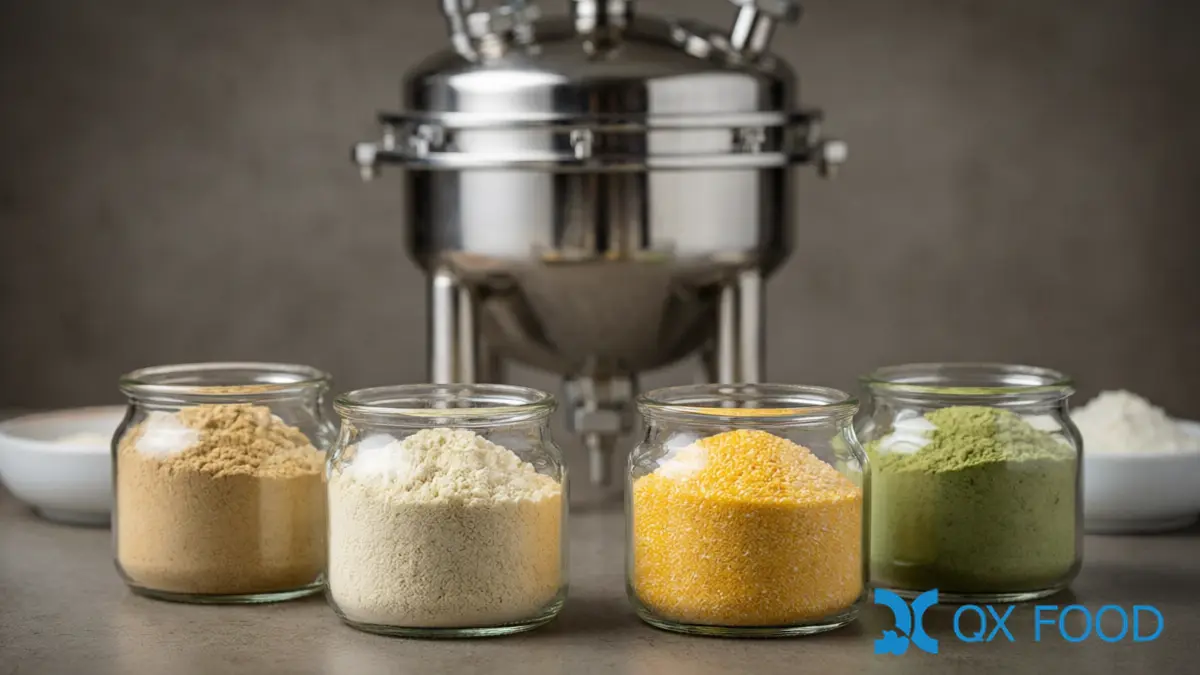
What Source Determines Directly
- Protein identity: which plant protein entered the process and the amino-acid starting composition associated with that source.
- Allergen and labeling implications: soy and wheat are major allergens in the United States and listed in the EU, with the corresponding declaration obligations.
- Sourcing documentation: origin, identity preservation and any GMO or claim-related evidence.
What Source Does Not Determine by Itself
Protein source can influence the starting amino-acid and protein composition, but finished sensory direction has to be evaluated grade by grade because hydrolysis route and downstream processing also strongly affect aroma and taste. In one study, three hydrolysates made from the same defatted soy feedstock but by different hydrolysis routes showed clearly different sensory profiles (chemical and sensory characterization of hydrolyzed vegetable protein).
Neither sensory intensity, nor color, nor required dose, nor application fit, nor final cost-performance can be read off the source name alone.
Soy, Wheat, Corn and Pea: Regulatory and Sourcing Differences
| Source | What source tells you directly | What it does not tell you by itself |
|---|---|---|
| Soy | Soy-derived protein, allergen implications, sourcing identity | Finished flavor intensity, color or required dose |
| Wheat | Wheat-derived protein, wheat and gluten labeling implications | A sharp or roasted sensory profile |
| Corn | Corn-derived protein, different allergen status in many markets | Light color, mild flavor or lower intensity |
| Pea | Pea-derived protein, not listed among US or EU major allergens | Allergen-free status, mild flavor or premium performance |
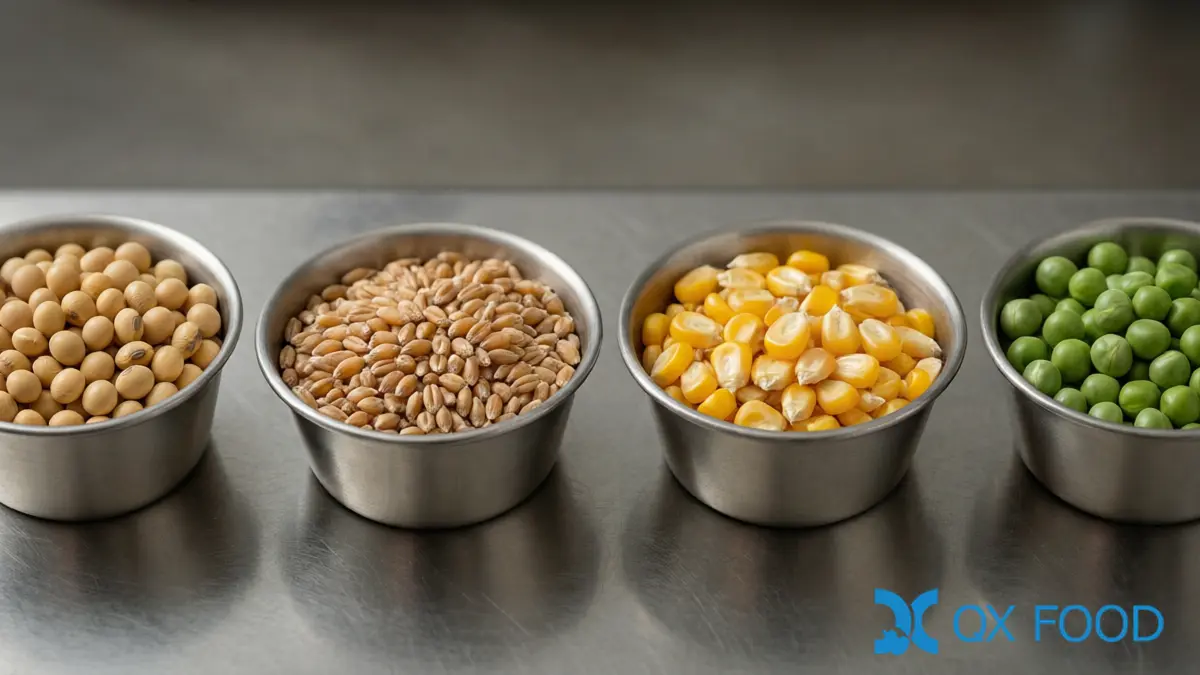
Allergen Status Is Not the Same as Allergen-Free
Soy and wheat are major food allergens under U.S. rules (the current list includes nine, after sesame joined in 2023) and are listed in the EU, so soy- and wheat-derived HVP carry corresponding declaration obligations (FDA major food allergens).
Corn is not listed among the U.S. major food allergens or EU Annex II allergens, which can make it relevant where soy- or wheat-derived protein must be avoided. Complete formulation, cross-contact and destination-market review still apply.
Pea is not listed as a major allergen under current U.S. FDA rules or EU Annex II, but pea protein can still be allergenic, and health authorities note possible reactions in some people with peanut allergy (Health Canada information on pea protein). Any free-from claim requires complete-formula and cross-contact verification and must follow destination-market requirements.
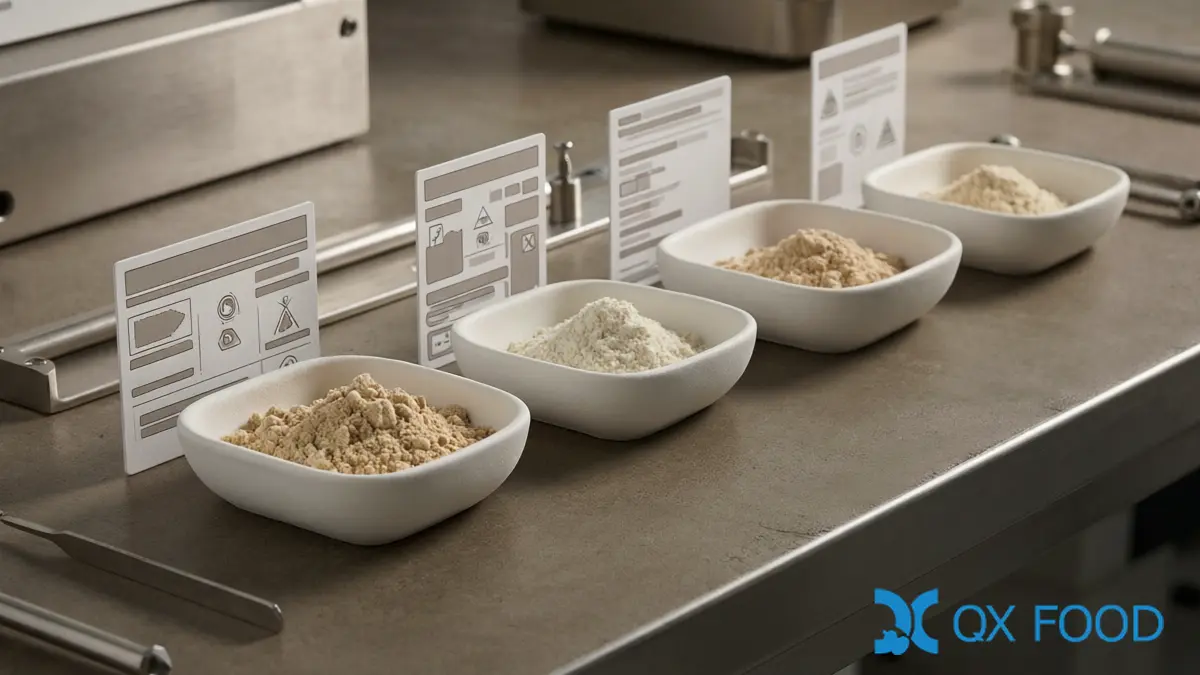
A soy-free or gluten-free requirement can eliminate certain source options, but it does not by itself identify the best remaining HVP grade. The surviving candidates still need finished-product and cross-contact validation.
Non-GMO Requirements Depend on the Supply Chain
Non-GMO risk and documentation burden vary by crop and origin. For example, genetically engineered corn and soy are widely adopted in U.S. production, with adoption above 90 percent for both crops (USDA ERS GE adoption trends). In contrast, USDA ERS states that no genetically modified wheat is commercially grown in the United States (USDA ERS, wheat sector at a glance).
The relevant sourcing question is therefore whether the selected supply chain can support the required identity-preservation and documentation standard, not whether the crop name alone is GMO or non-GMO.
Choose the Grade After Source Screening
The hvp raw material selection sequence treats source as a screening variable, not as the flavor answer:
- Define the labeling and allergen constraints for the destination market.
- Identify the source options that remain eligible.
- Compare actual grades on sensory direction in the finished application.
- Compare salt, color, nitrogen specification and process compatibility.
- Verify claim and sourcing documentation where required.
- Compare cost at equivalent finished-product performance.
Form and process compatibility are covered separately in the HVP liquid vs powder guide and the HVP production process guide.
Source Cost Is Not Finished-Product Cost
Raw-material source can influence ingredient cost, but there is no permanent price ranking that applies across all HVP grades, suppliers and markets.
The useful economic comparison is between candidate grades at equivalent finished-product performance, including required dose, freight, specification, allergen or claim requirements and any formulation changes needed around the grade. A lower ingredient price does not necessarily reduce finished-product cost if the grade requires a different dose or additional formulation support. The liquid vs powder cost comparison follows the same rule.
Source economics also move with availability. For the supply-side picture behind these comparisons — source and regional share, and where published capacity claims stop telling a buyer much — see our regional HVP supply outlook.
What Documentation to Request
- Source identity and raw-material information.
- Allergen declarations and any free-from claim evidence.
- GMO or identity-preservation documentation where required.
- The product specification for the selected grade.
- The batch COA verifying the analytical parameters specified for that grade.
Source identity, allergen information and process-related documentation should be confirmed from the product specification and relevant supplier documentation, while the batch COA verifies the analytical parameters specified for the selected grade.
How QXFOOD Documents Source Options
QXFOOD publishes soy- and corn-based HVP grades across liquid and powder forms, with additional source options subject to grade availability. Published options include soy FSA powder, soy YSA liquid, corn FYA powder and corn YYA liquid, with the full range in the HVP category. Source identity, specifications and destination-market documentation should be confirmed for the selected grade, and the corn HVP applications guide covers the corn-based range in detail.
Questions About HVP Raw Materials
Does the raw material determine HVP flavor intensity?
No. Protein source influences the starting composition, but finished flavor intensity and sensory direction also depend on hydrolysis route, processing and the selected grade. Compare actual grades in the target application rather than ranking soy, wheat, corn or pea by source alone.
Is pea HVP allergen-free?
No. Pea is not currently listed among the U.S. major food allergens or EU Annex II allergens, but pea protein can still cause allergic reactions. Any allergen-free or free-from claim requires complete formulation, manufacturing and destination-market verification.
Does wheat hydrolysis remove wheat and gluten labeling requirements?
Do not assume so. Wheat-derived HVP should be evaluated under the applicable wheat and gluten labeling and gluten-free rules for the destination market; hydrolysis should not be assumed to remove those obligations.
How should I choose between soy, wheat, corn and pea HVP?
Screen the source and label constraints first, then compare the actual candidate grades in the finished application on sensory direction, salt, color, nitrogen specification, process compatibility, documentation and cost at equivalent finished-product performance.