
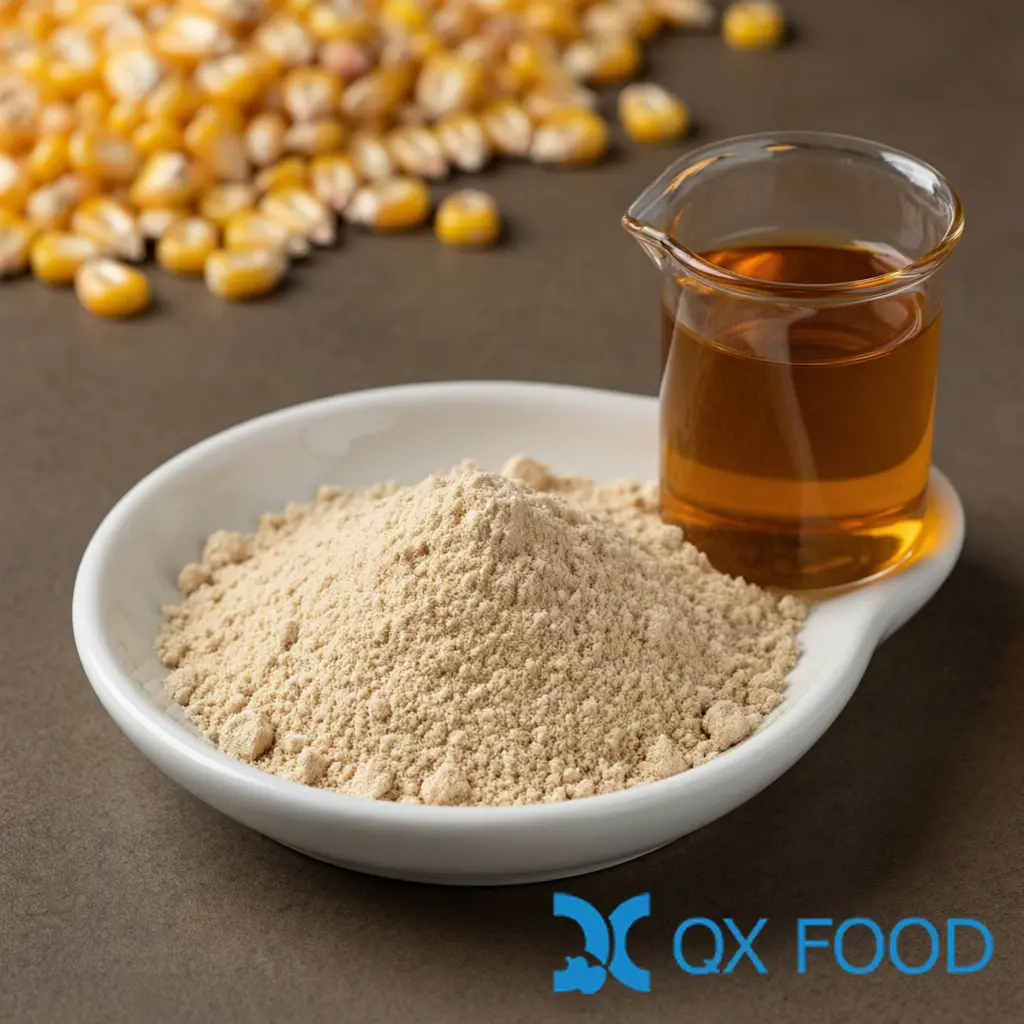
Hydrolyzed corn protein is produced from corn-derived protein materials such as corn gluten meal and zein-rich fractions, broken down into free amino acids and peptides through acid or enzymatic hydrolysis. For food manufacturers, the sourcing decision usually starts with how corn-based HVP compares with soy-based HVP, and then moves to processing route, amino nitrogen and total nitrogen values, 3-MCPD control for acid grades, and allergen, gluten and labeling considerations for the destination market.
This guide covers how hydrolyzed corn protein is made, the specifications that matter when buying it, its regulatory considerations and its use across industrial food applications.
How Hydrolyzed Corn Protein Is Made
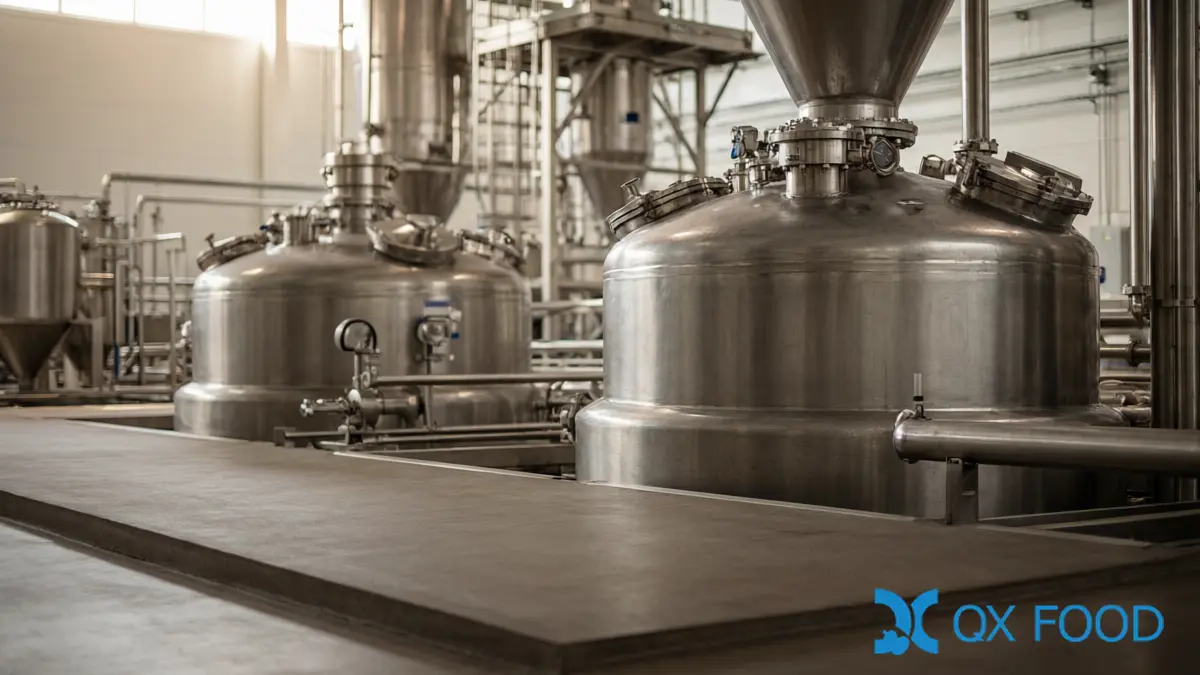
Hydrolyzed corn protein can be produced from corn-derived protein materials such as corn gluten meal and zein-rich fractions; for the broader production framework, see our HVP production process guide. The protein is broken down by acid hydrolysis, typically with hydrochloric acid under heated acidic conditions, then neutralized and further processed. Corn gluten meal and related protein-rich fractions are well documented as substrates for chemical and enzymatic hydrolysis in the scientific literature, for example in a review of corn gluten meal utilisation. Powder grades may then be spray-dried, while liquid grades are concentrated to the target solids content.
Enzymatic hydrolysis is an alternative that runs under milder conditions and produces a different peptide profile. Flavor, bitterness and salt contribution depend on the specific process and degree of hydrolysis, so grades should be compared on actual specifications and application trials rather than assumed from the process route alone.
Flavor Profile and Amino Acid Contribution
The savory character of hydrolyzed corn protein comes from its composition. Free glutamate is an important contributor to umami, while peptides, other amino acids, salt and process-derived flavor compounds influence the overall savory profile. Corn- and soy-based HVP can produce different sensory profiles, but buyers should compare actual grades at matched dosage and salt contribution rather than assume that one source is inherently stronger, lighter or more savory.
Hydrolyzed Corn Protein vs Soy HVP
| Buyer Consideration | Corn-Based HVP | Soy-Based HVP |
|---|---|---|
| Protein source | Corn | Soy |
| Soy intentionally introduced | No, for corn-only grades | Yes |
| Flavor profile | Grade / process dependent | Grade / process dependent |
| Color | Grade / process dependent | Grade / process dependent |
| Amino nitrogen | Verify specification | Verify specification |
| Total nitrogen | Verify specification | Verify specification |
| Salt | Process / grade dependent | Process / grade dependent |
| Acid-HVP 3-MCPD control | Relevant | Relevant |
| Allergen consideration | Verify soy cross-contact | Soy declaration generally relevant |
| Selection method | Application trial | Application trial |
Corn is not one of the nine major food allergens identified under U.S. federal law. However, buyers planning a soy-free claim should verify raw-material identity, shared-equipment controls and the supplier’s allergen-management program rather than rely on the ingredient name alone. For a direct comparison of the two bases, see our soy HVP vs corn HVP guide.
Specifications That Matter
When you evaluate hydrolyzed corn protein, confirm the following parameters against the selected grade and application:
| Parameter | Buyer should confirm |
|---|---|
| Amino nitrogen | Grade specification / lot result |
| Total nitrogen | Finished-product nitrogen level |
| AN/TN | Supporting hydrolysis indicator |
| NaCl / sodium | Formula sodium contribution |
| Moisture | Powder grade |
| Total solids | Liquid grade |
| pH | Where application relevant |
| 3-MCPD | Acid-HVP / market-specific |
| Solubility / clarity | Application-specific |
| Microbiology | Buyer / market specific |
| Allergen status | Source + cross-contact controls |
Acid vs Enzymatic Hydrolysis in Practice
The hydrolysis route shapes the finished ingredient. Acid hydrolysis uses acid and heat; enzymatic hydrolysis uses proteolytic enzymes. The main technical differences are summarized below; selection depends on the target specification and application.
| Parameter | Acid Hydrolysis | Enzymatic Hydrolysis |
|---|---|---|
| Hydrolysis mechanism | Acid + heat | Proteolytic enzymes |
| Peptide cleavage | Extensive | More controllable |
| Salt formation | Can increase after neutralization | Process-dependent |
| Flavor | Grade / process dependent | Grade / process dependent |
| Bitterness | Process-dependent | Enzyme / DH-dependent |
| 3-MCPD | Critical process-contaminant consideration | Process-related risk generally much lower |
| Process control | Acid concentration, temperature, time, neutralization | Enzyme system, pH, temperature, DH |
| Final selection | Application trial | Application trial |
Enzymatic grades should not be assumed to be lower in sodium or completely free of 3-MCPD; these characteristics should be verified against the individual grade and supporting documentation.
3-MCPD Control in Acid-Hydrolyzed Corn Protein
Acid hydrolysis can form chloropropanols under certain processing conditions. For acid-hydrolyzed corn protein, 3-MCPD should therefore be treated as a process-contaminant control parameter rather than a general flavor specification.
| Parameter | Requirement |
|---|---|
| 3-MCPD | Destination-market / process specific |
| EU reference (Regulation (EU) 2023/915) | 20 µg/kg for liquid HVP at 40% dry matter |
| Dry-matter equivalent | 50 µg/kg dry matter |
| Applicability | Especially relevant to acid-HVP |
The Codex Code of Practice CXC 64-2008 addresses reduction of 3-MCPD during acid-HVP production. Other chloropropanols, including 1,3-DCP, can also occur in acid-HVP and may be included in buyer-specific or analytical control programs. Buyers of acid-hydrolyzed grades should request 3-MCPD test documentation where required by the destination market, buyer specification or contract.
Reading the COA Correctly
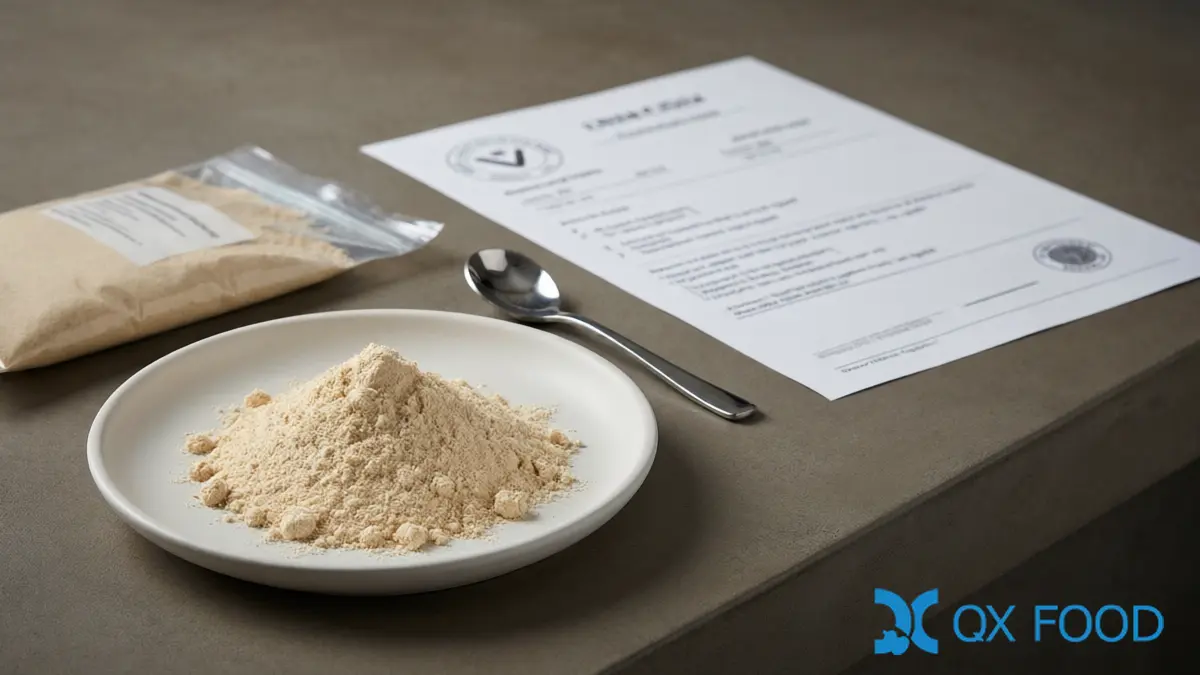
Amino nitrogen reflects free amino groups and is one useful analytical parameter for comparing hydrolysis-related characteristics between grades. However, it is not a direct flavor-intensity formula.
Total nitrogen is the total nitrogen content of the finished hydrolysate, not the protein content before hydrolysis. The AN/TN ratio can support a comparison of hydrolysis extent, but neither AN alone nor AN/TN directly predicts savory intensity. Sensory performance also depends on amino-acid composition, peptide distribution, salt content, process conditions and the final food matrix, so grades should be validated by application trials against a defined sensory target.
Applications in Food Manufacturing
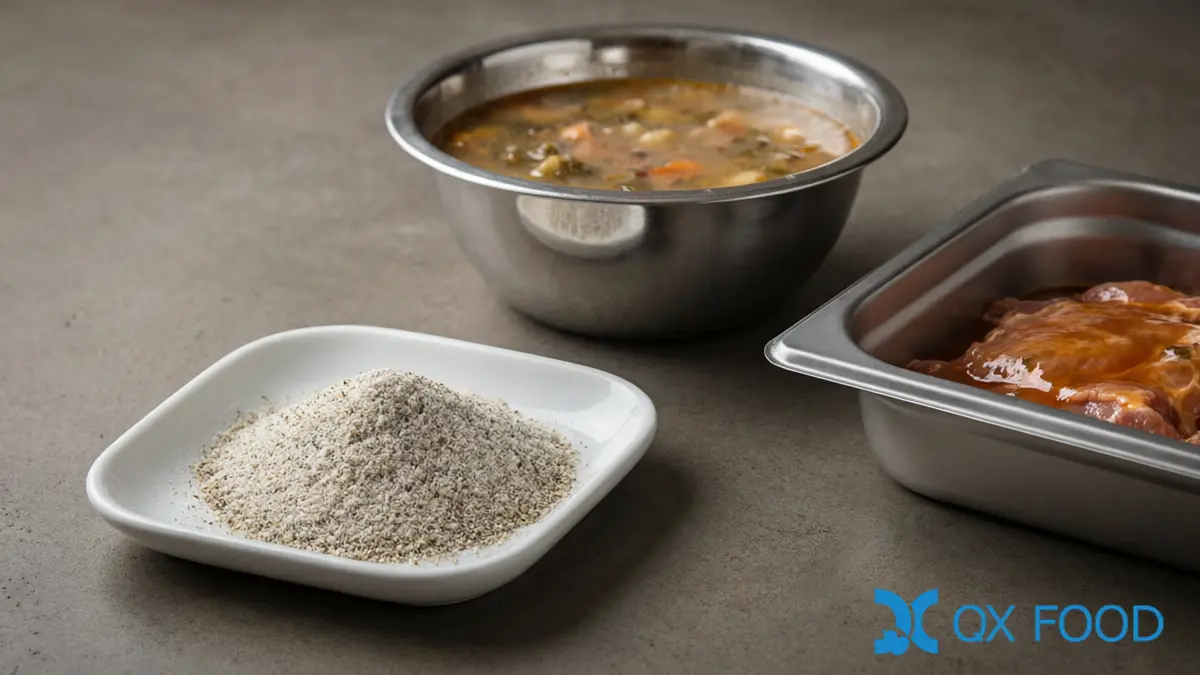
Hydrolyzed corn protein is used in bouillon and soup bases, instant noodles, savory and meat seasonings, snack coatings, sauces, compound seasonings and plant-based or meat-analogue products. Usage level depends on nitrogen level, salt contribution, flavor profile, HVP type and the other umami ingredients in the formulation. For formulations that combine HVP with other umami ingredients, see our umami base formulation guide. Bench trials under actual processing conditions are more reliable than a universal dosage range.
Storage, Shelf Life and Handling
Hydrolyzed corn protein powder is hygroscopic, so moisture control is central to storage. Powder should be stored in sealed, moisture-protective packaging under the storage conditions specified for the selected grade; moisture uptake can cause caking and affect powder handling and dosing performance.
Liquid grades should be stored according to the supplier’s validated temperature, microbiological handling and shelf-life requirements.
Soy Allergen and Cross-Contact Considerations
A corn-only hydrolyzed protein does not intentionally introduce soy protein. However, buyers planning a soy-free claim should verify raw-material identity, shared-equipment controls and the supplier’s allergen-management program.
Gluten-Free Labeling for Hydrolyzed Foods
Under the FDA gluten-free labeling rule, hydrolyzed foods bearing a gluten-free claim must meet additional compliance requirements because current testing cannot reliably quantify gluten after hydrolysis. Manufacturers must keep records demonstrating that the food met the gluten-free definition before hydrolysis, evaluate gluten cross-contact, and apply control measures where necessary. This applies even where the source ingredient is inherently gluten-free.
Free Glutamate and “No MSG” Claims
Hydrolyzed protein naturally contains free glutamate. Under FDA guidance, foods containing ingredients with naturally occurring free glutamate, including hydrolyzed vegetable protein, cannot claim “No MSG” or “No added MSG” on their packaging.
Ingredient Naming for U.S. Labels
The FDA Food Labeling Guide addresses naming for hydrolyzed proteins. If corn and soy are mixed before hydrolysis, the ingredient is “hydrolyzed corn and soy protein”; if hydrolyzed separately and then blended, each should be declared separately, for example “hydrolyzed corn protein” and “hydrolyzed soy protein.”
Regulatory and Labeling Notes
In the U.S., hydrolyzed corn protein should be declared using the applicable common or usual ingredient name. Requirements outside the U.S. are market-specific. Buyers should confirm local ingredient-naming, labeling and customs-classification requirements before commercial launch, because customs classification may vary with composition, processing and destination jurisdiction.
Buying Hydrolyzed Corn Protein
Request a lot-specific COA covering the agreed parameters for the selected grade, such as AN, TN, moisture for powder grades, solids or pH for liquid grades, and salt where relevant. Confirm whether the product is acid or enzymatically hydrolyzed, and request 3-MCPD documentation where the destination market requires it. GMO status, Halal or Kosher certification and other claims should be handled as verification items: confirm that the certificate or declaration covers the specific product and manufacturing site and is accepted by the target customer or market. Ask for a sample run in your own application before committing to volume. For the broader range of soy-, corn- and blended-protein options, see our hydrolyzed vegetable protein solutions.
Related QXFOOD Resources
QXFOOD supplies hydrolyzed corn protein powder, a high-nitrogen corn protein powder and liquid grades including hydrolyzed corn protein liquid. Buyers can request grade specifications, application samples and supporting documentation according to project requirements. For grade selection, provide the target application, required format, nitrogen and salt parameters, and destination market. QXFOOD can then match the project with an appropriate grade and evaluation sample.
References and Regulatory Sources
Regulatory and Standards
- Regulation (EU) 2023/915 – Maximum levels for certain contaminants in food (3-MCPD limits for hydrolysed vegetable protein).
- Codex CXC 64-2008 – Code of Practice for the Reduction of 3-Monochloropropane-1,2-diol (3-MCPD) during the Production of Acid-Hydrolyzed Vegetable Protein.
- FDA – A Food Labeling Guide (hydrolyzed protein naming).
- FDA – Gluten-Free Labeling of Fermented or Hydrolyzed Foods.
- FDA – Questions and Answers on Monosodium Glutamate (free glutamate and “No MSG” claims).
- FDA – Food Allergies (major food allergens).
- SB/T 10338-2000 – Acid-Hydrolyzed Vegetable Protein Seasoning Liquid (China industry standard, for acid-HVP liquid only).
Scientific References
- Review on utilisation of corn gluten meal, a by-product from the corn starch industry for production of value-added products. International Journal of Food Science and Technology.
FAQ
What is hydrolyzed corn protein?
Hydrolyzed corn protein is produced from corn-derived protein materials such as corn gluten meal and zein-rich fractions, broken down by acid or enzymatic hydrolysis into free amino acids and peptides, delivering savory umami flavor for food manufacturing.
Is hydrolyzed corn protein soy-free?
It is made from corn protein and does not intentionally introduce soy. Buyers planning a soy-free claim should verify raw-material identity and the supplier’s allergen-management program.
What does hydrolyzed corn protein taste like?
Hydrolyzed corn protein provides savory and umami character, but the exact profile depends on the protein source, hydrolysis route, nitrogen level, salt content and downstream processing. Corn and soy HVP should be compared using actual grades in the intended application.
Is hydrolyzed corn protein gluten-free?
Corn is not a gluten-containing grain, but a gluten-free claim on hydrolyzed corn protein still requires appropriate verification. In the U.S., hydrolyzed foods bearing a gluten-free claim are subject to FDA recordkeeping and cross-contact control requirements.
What is the difference between acid and enzymatic hydrolysis?
Acid hydrolysis uses acid and heat; enzymatic hydrolysis uses proteolytic enzymes. Flavor, bitterness and salt contribution depend on the specific process and grade, so compare specifications and run application trials.
How much hydrolyzed corn protein should I use?
Usage level depends on nitrogen level, salt contribution, flavor profile and the other umami ingredients in the formulation. Bench trials under actual processing conditions are more reliable than a universal dosage range.
Can hydrolyzed corn protein replace soy HVP?
Hydrolyzed corn protein can replace soy HVP in some formulations, but substitution should be validated for flavor intensity, salt contribution, color and processing performance. Compare actual grades at matched dosage under the intended application conditions.