
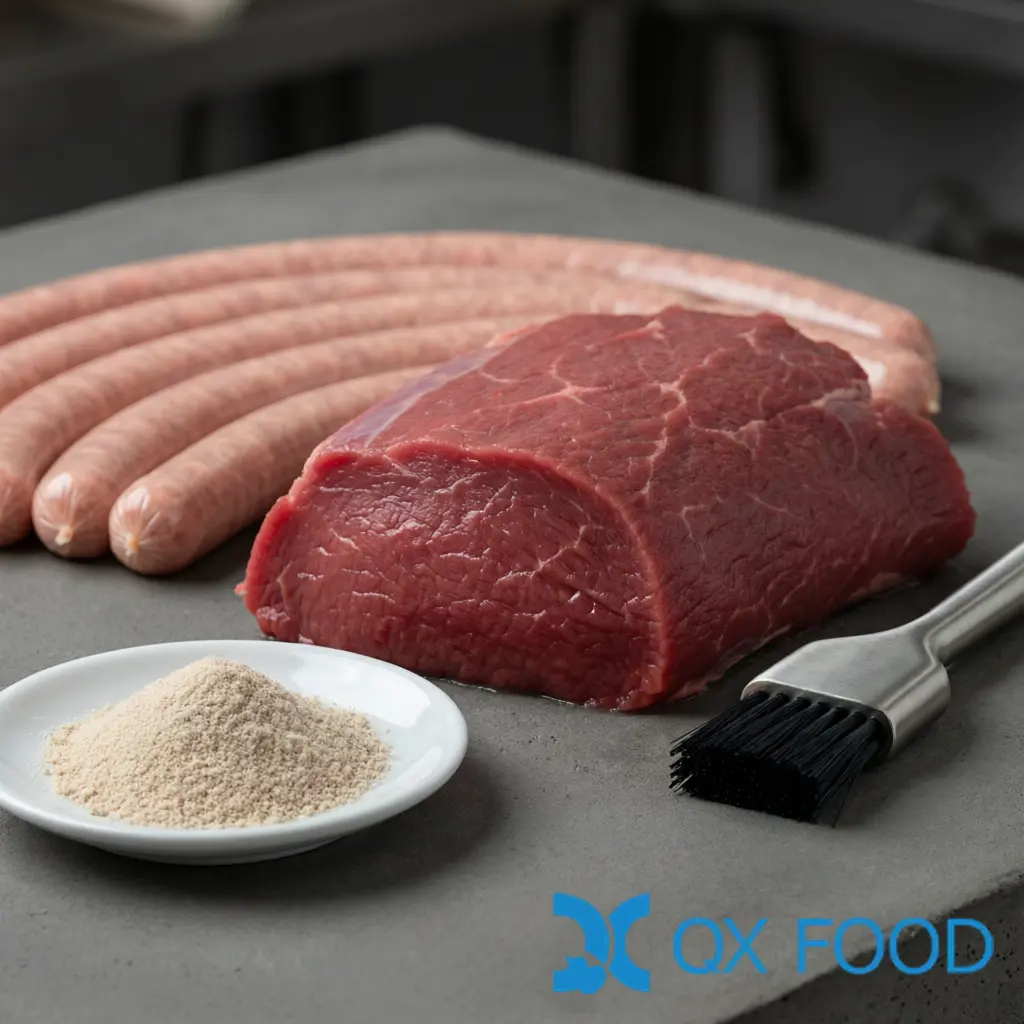
For formulators using HVP in processed meat, the starting question is where the ingredient sits: an injection brine carries it into the muscle interior, an emulsion distributes it through the ground matrix, and a surface application leaves it on the cooked exterior. Position matters as much as grade choice.
Each position comes with its own rules for form, salt and validation, and flavor is only part of the decision: solubility, distribution, color and the sodium balance of the brine or batch sit alongside it.
Where HVP Sits in a Meat System
HVP can enter a meat product at three positions:
- Inside the muscle: dissolved in an injection brine or marinade that is pumped or tumbled into the meat.
- Through the emulsion or ground matrix: blended with the batch in sausages, patties and formed products.
- On the surface: in rubs, glazes and surface seasonings applied before or after cooking.
The position determines what the ingredient has to survive: pumping without blocking needles, even distribution through fat and water, or adhesion and color on a cooked surface.
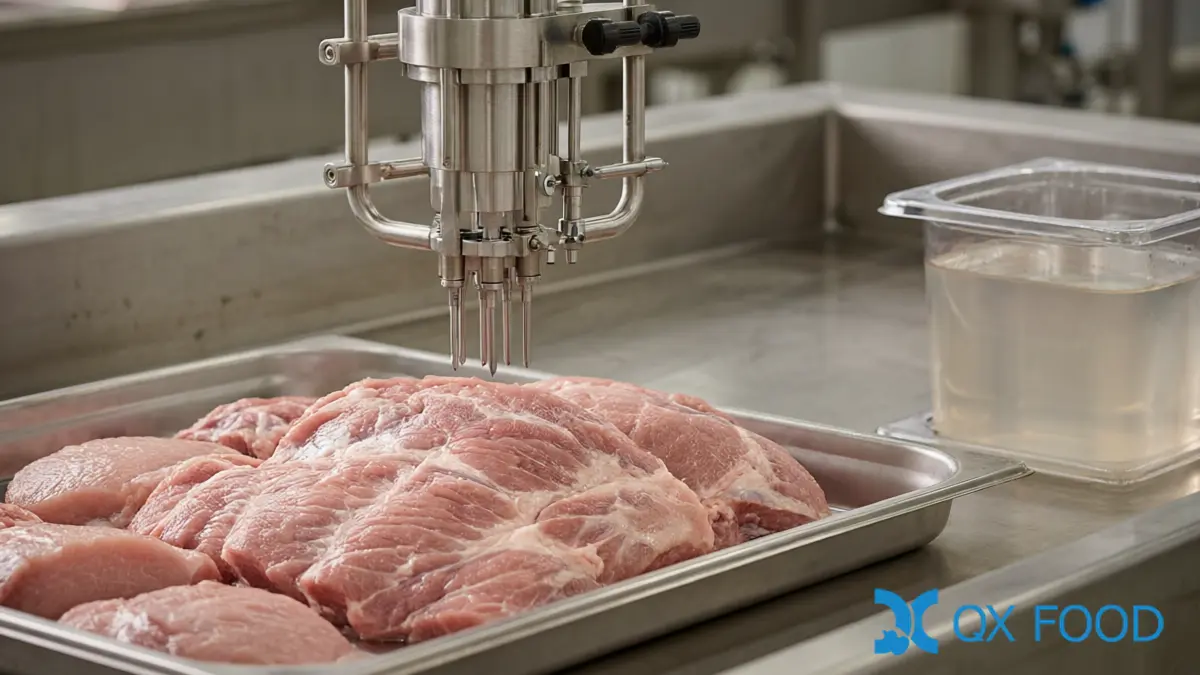
Injection Brines: the Ingredient Has to Be Injectable
Injection compatibility has to be confirmed grade by grade in the actual brine, not assumed from the product form. The relevant checks are:
| Injection-brine question | What actually matters |
|---|---|
| Dissolution or dispersion | The selected grade in the actual brine, not in water alone |
| Sediment | Whether solids settle during brine holding |
| Compatibility | Interaction with salt, phosphate, proteins, gums and other ingredients |
| Viscosity | Suitability for the actual injector |
| Needle passage | Insolubles, particles and precipitation |
| Hold stability | Whether the brine remains uniform before injection |
| Finished flavor | Performance after injection, tumbling or cooking and storage |
For injected meat, HVP concentration in the brine and the brine pickup must be considered together: a percentage of the brine alone does not describe the finished-product dose. The same brine concentration delivers different HVP levels in the finished product at different injection rates.
Brine salt levels are set by the product target, the injection rate and the applicable formulation rules, and the HVP contribution adds to the same sodium budget. The broader liquid-versus-powder selection trade-off is covered in our HVP liquid vs powder guide; for injection use, a powder grade must dissolve or disperse sufficiently in the actual brine and remain free of particles or precipitates that could interfere with pumping or needle passage.
Emulsions and Ground Products: Distribution Through the Matrix
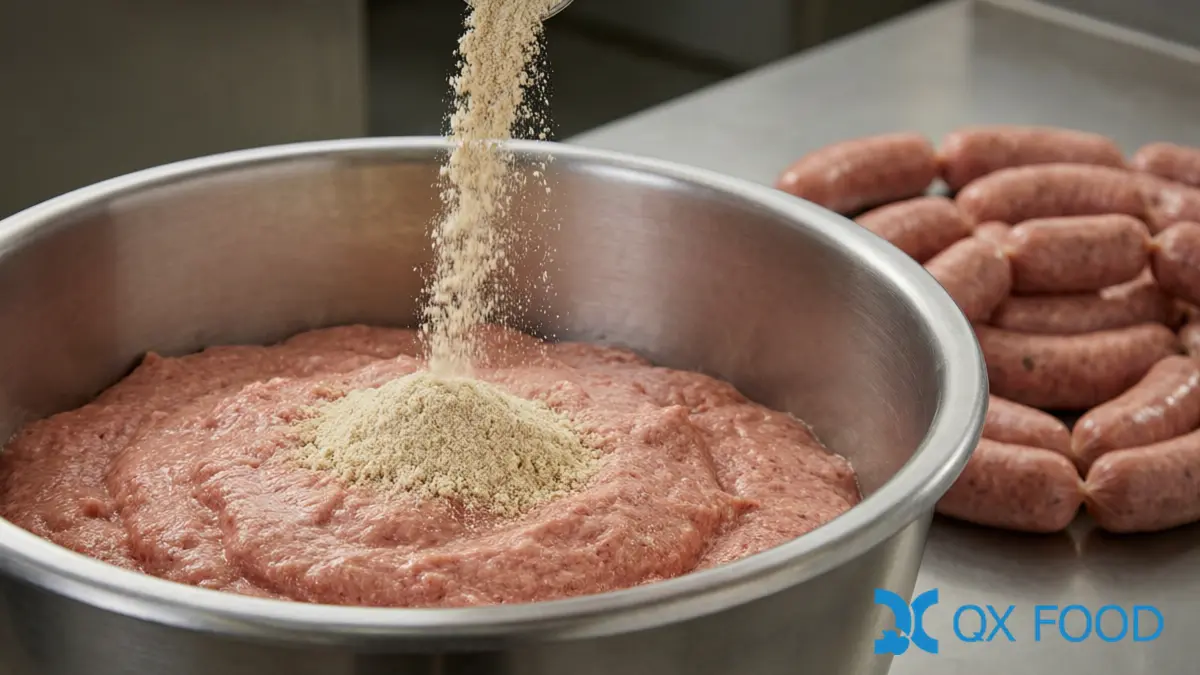
In sausages, patties and formed products, HVP can be incorporated during mixing, chopping or emulsification according to the product and process. The relevant questions are whether it distributes uniformly through the matrix and how its sensory contribution performs after cooking.
Batch-to-batch consistency of the finished product depends on the whole system, including raw-material variation, formulation control and process conditions. An HVP with defined specifications can support that consistency, but it does not by itself remove variation from the meat supply or the line.
Surface Seasonings, Rubs and Glazes
On surface applications, HVP is part of the seasoning that carries the visible identity of the product: rub color, glaze adhesion and the balance between the savory base and the spice top notes. Color contribution matters directly here, because the surface is what the buyer sees.
Surface-coating behavior is covered in more detail in our HVP in snack seasonings guide; the same principle applies to meat rubs: the complete blend, not a single ingredient, determines adhesion and appearance.
What HVP Can and Cannot Do to Meat Flavor
HVP can contribute amino-acid-rich savory depth that supports the meaty character of a processed product, particularly where formulation and processing dilute it. HVP can also participate in wider meat-flavor systems: in reaction-flavor development, an enzyme-hydrolyzed vegetable protein can serve as a precursor or base that is heated with other reactants to build a meat-like process flavoring (development of a meat-like process flavoring from soybean-based enzyme-hydrolyzed vegetable protein, Wu et al. 2000). Adding HVP to a sausage formula is not the same as running that reaction.
HVP may reduce the sensory prominence of some processing-related off-notes, but it does not control the oxidation or storage mechanism that produced them. It also does not replace the meat itself, the signature spice system or the top notes that give a product its identity. The finished sensory direction is determined grade by grade rather than predicted from protein source alone. In a brine, HVP is primarily a flavor ingredient: it should not be credited with water-holding or yield improvement unless that functionality has been demonstrated for the specific grade and formulation.
Dose Is Set by the Finished Product, Not by the Meat Category
Two sausages can require very different HVP levels if the meat content, salt target, grade and spice system differ, and the same is true for two brines with different injection rates. Dose should therefore be established at equivalent finished-product performance rather than copied from a category percentage.
Nitrogen figures help describe the grade; they do not predict finished-meat flavor intensity or the required dose by themselves. Sensory screening across multiple HVP levels in the target product usually gives more useful direction than a starting percentage. Changing the meat content of a product is a reformulation, and the HVP dose should be re-established against the finished sensory target rather than adjusted according to a fixed rule.
Choose the Grade From the Finished Meat Product
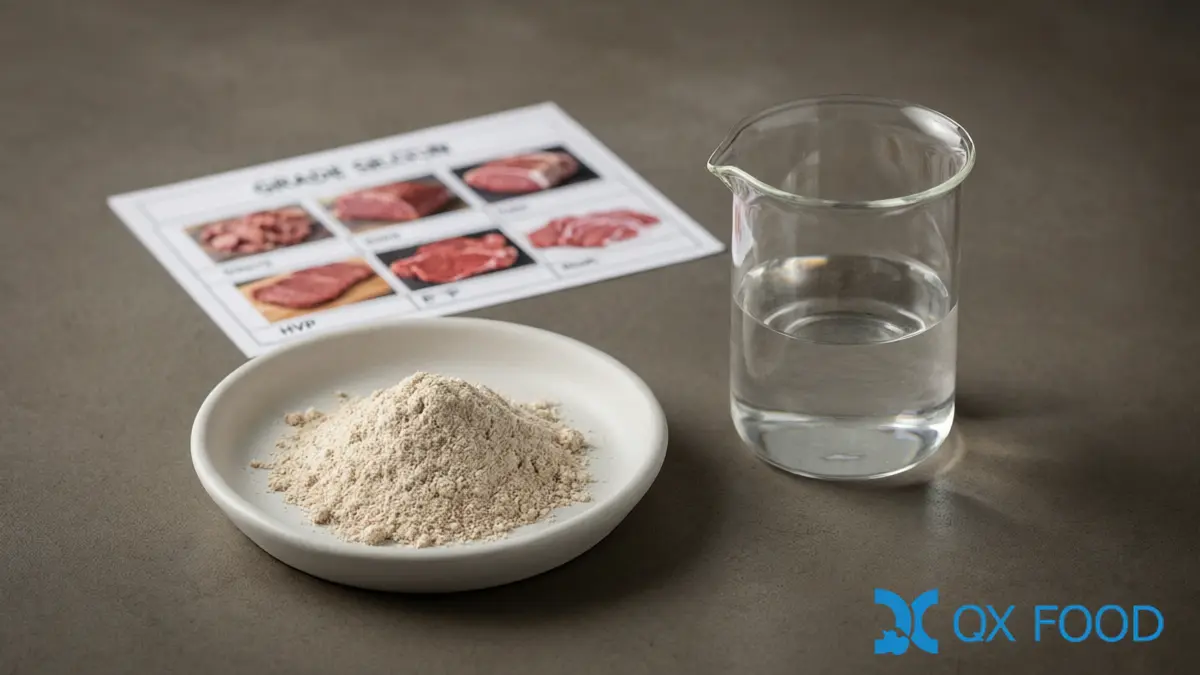
Candidate grades should be compared on sensory direction in the finished product, solubility or dispersibility in the actual brine or batch, color contribution, salt level, nitrogen specification and allergen constraints.
An injection brine does not automatically require a liquid grade if a powder dissolves fully in the brine system, and a dark cooked product does not automatically require a soy grade. QXFOOD grades such as YSA, YSB, YBI, FSA and FSAH can be evaluated as candidates rather than fixed answers, with the full matrix in the HVP liquid series and HVP powder series.
Balance Salt and Sodium in the Brine or Batch
HVP can contribute savory intensity that may help a reduced-sodium meat product maintain flavor, but many grades also contribute sodium. Account for the grade’s actual salt specification at the intended dose; in acid-hydrolyzed HVP, part of the salt may result from the neutralization step.
The total sodium of the brine or batch should be evaluated together with sensory performance rather than treating HVP itself as a low-sodium ingredient (sodium-reduction strategies in processed foods).
Injection Formulation Can Change the Product Label
In the United States, certain raw meat and poultry products containing added solution must identify the presence and amount of that solution as part of the product name under FSIS labeling requirements. Depending on how the solution is declared, its individual ingredients or a multi-ingredient component such as a marinade or sauce must also be identified (water in meat and poultry, FSIS).
Changing an injection-brine formulation is therefore not only a process decision: it can change the product name, the ingredients statement and the allergen declaration. The labeling impact should be reviewed together with the flavor work.
Validate Through Processing, Cooking and Shelf Life
A bench tasting of the dry blend or brine does not predict the finished product. Injection distribution, tumbling, grinding, emulsifying, cooking and reheating can each change the savory balance, color and how the HVP contribution reads in the final meat product.
Candidates should be evaluated under the actual manufacturing and storage conditions and, where relevant, after the shelf-life period, comparing flavor, color, brine stability or emulsion behavior in the finished product.
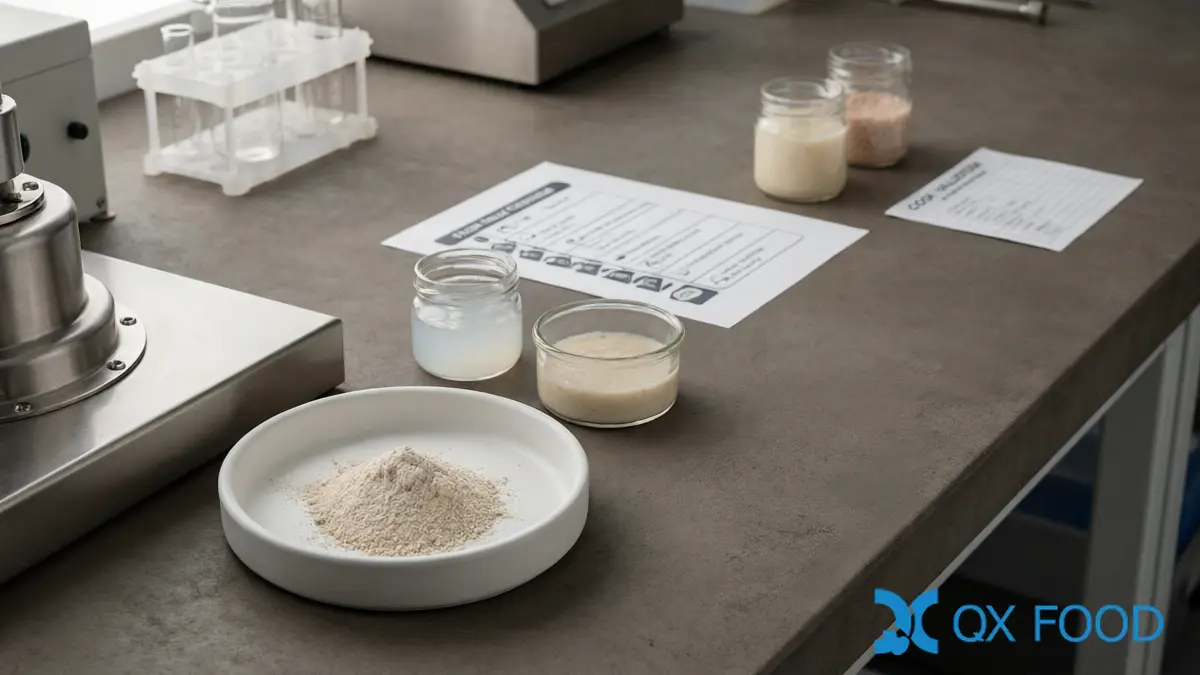
How QXFOOD Evaluates Candidate Grades
QXFOOD compares HVP candidates for meat applications on grade specifications, solubility or dispersibility, sensory direction, color, salt contribution and relevant documentation, alongside the HVP raw material selection guide and braised meat spice pack guide for the surrounding seasoning layers. Final behavior in the brine, emulsion or cooked product should be confirmed in the buyer’s own process.
Questions Meat Processors Ask
How much HVP goes into an injection brine or marinade?
There is no standard level. Brine salt, injection rate, grade and flavor targets all change the answer. The dose is set by the finished product and confirmed in the actual brine and process.
Which liquid or powder HVP in processed meat suits the application better?
For HVP in processed meat systems, form is a process decision, but injection compatibility is a grade-level property: a liquid does not automatically suit every injector, and a powder can work if it dissolves fully in the actual brine. Confirm solubility, viscosity and sediment behavior in the brine system rather than assuming from the form.
Does higher amino nitrogen mean stronger meat flavor?
No. Nitrogen figures describe the grade; they do not predict finished-meat flavor intensity by themselves. The finished flavor depends on the whole formulation and on the actual process.
Can HVP help reduce sodium in meat products?
Possibly. HVP can contribute savory intensity that may help a reduced-sodium formulation maintain flavor, but many grades also contribute sodium. Evaluate the total sodium of the brine or batch together with sensory performance.