
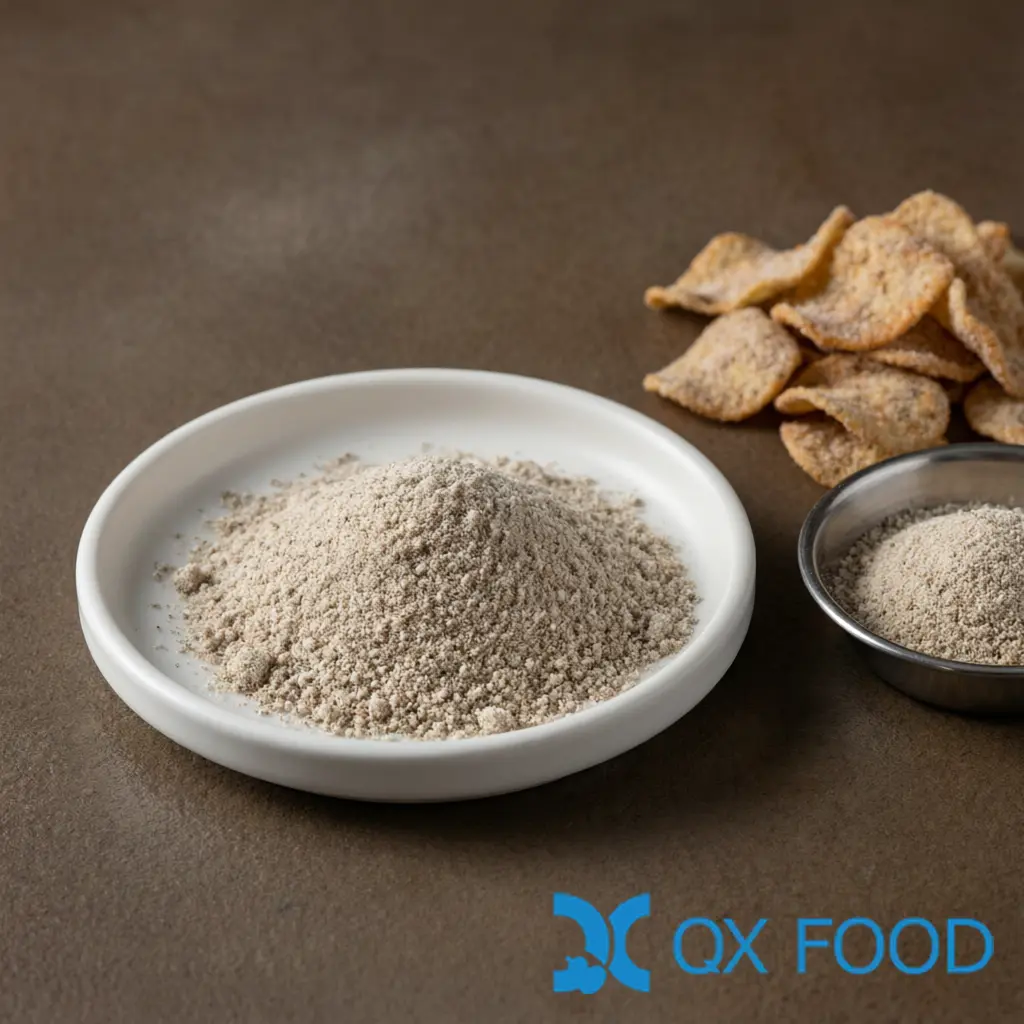
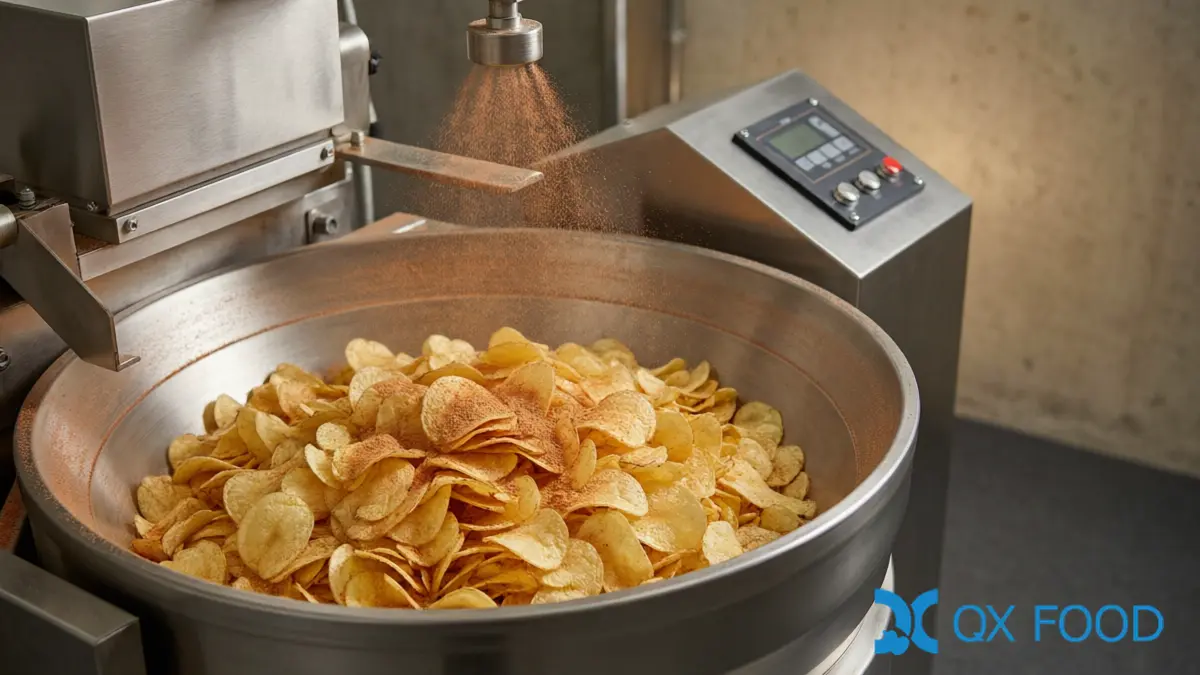
For formulators using HVP in snack seasonings, many topical systems use surface oil or another adhesive phase followed by dry seasoning application, although the exact coating method depends on the snack substrate and the production line. For these systems, the seasoning blend has to distribute, adhere and remain reasonably uniform through coating, handling and packing.
Using HVP in snack seasonings therefore means looking at three places at once: how the powder behaves in the blend, how it performs on the coating line, and what it contributes on the coated surface of the finished snack.
Flavor is part of that decision, but blend physics, line behavior, color and sodium sit alongside it.
Topical Snack Seasoning Is a Surface-Coating System
In topical snack-seasoning applications, the seasoning remains primarily on the product surface rather than being incorporated into the food matrix. Depending on the line, an oil or other adhesive phase may be combined with dry seasoning application, tumbling or another coating method.
The coating mechanics are described in our snack seasoning application guide. For topical systems, this changes what a seasoning ingredient has to deliver: particle behavior and adhesion matter as much as the flavor compounds it carries.
What HVP Can Do in a Snack Blend
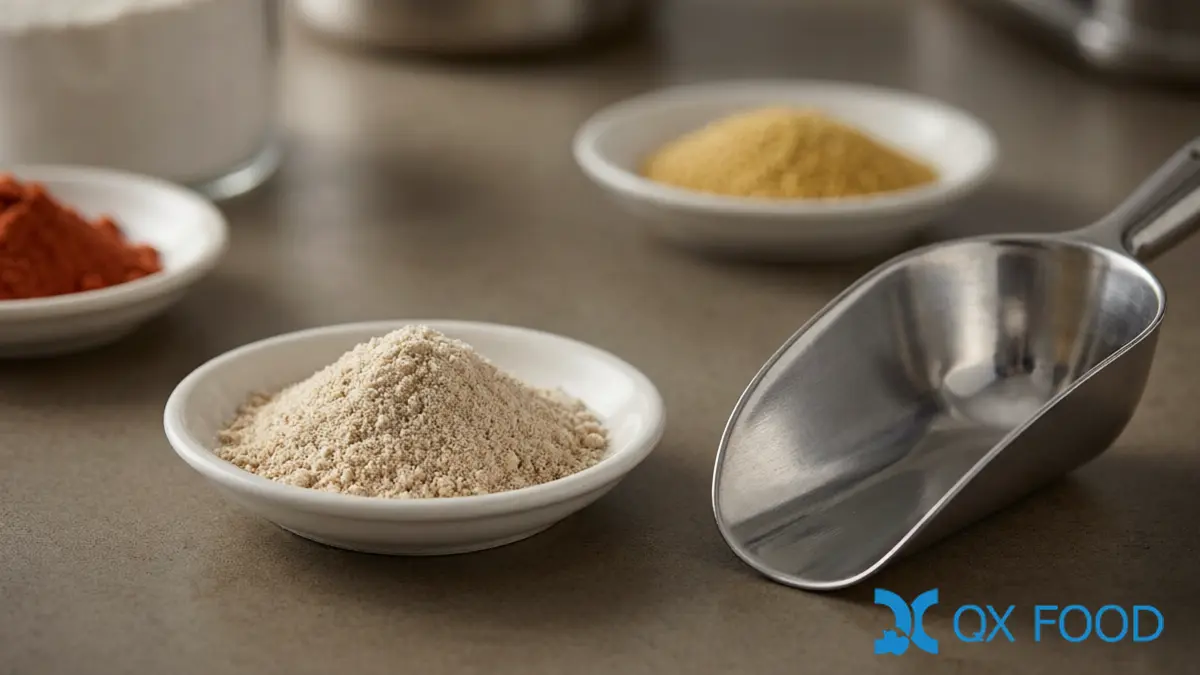
HVP powder can contribute amino-acid-rich savory depth to a snack seasoning blend, with the finished sensory direction determined grade by grade rather than predicted from protein source alone.
The finished snack flavor also depends on the rest of the blend: the signature top note, yeast extract or other umami materials, salt, sugar, acids and the oil system on the base. HVP is one layer of that system, not the whole flavor.
What the Coating Line Adds to the Decision
A grade that tastes right in a bench blend can still fail on the line: poor flow disrupts dosing, fine particles can be lost through dust extraction or distribute unevenly on the product, and color differences show directly on a pale coated surface.
Line evaluation should therefore include the blend containing the candidate HVP grade: flow and dusting behavior, seasoning adhesion at the target oil or binder condition, distribution across the applicator or drum, and appearance on the finished snack. Seasoning loss during application and tumbling, dust collection and, where used, recycled fines can change the effective loading on the finished snack, so the HVP contribution should be checked at the coated-product level rather than only in the blend recipe.
Dose Is Set by the Blend Target, Not by the Flavor Name
Two barbecue seasonings can require very different HVP levels if the grades, salt targets, top notes and coating systems differ. The dose is established against the finished coated snack at the intended loading, not copied from a flavor-category percentage.
Nitrogen figures help describe the grade; they do not predict snack-flavor intensity or the required dose by themselves. Sensory screening across multiple HVP levels in the target blend usually gives more useful direction than a starting percentage copied from another product.
Powder Behavior in the Dry Blend
In a dry seasoning blend, powder properties influence mixing uniformity, flow through dosing equipment and dusting behavior. Particle-size distribution, fines content and moisture-related flow changes can affect how evenly the HVP distributes through the blend and onto the snack.
Where granulation is used to control dust and improve flow in seasoning blends, the trade-offs are covered in our seasoning granules guide. Storage conditions that affect powder flow and caking are covered in our powder caking prevention guide.

HVP and Yeast Extract Can Be Complementary
HVP and yeast extract can be complementary in snack blends, depending on the target profile. Whether both are useful, and at what ratio, should be confirmed in the actual blend and on the coated snack rather than treated as a fixed combination.
Choose the Grade From the Blend and the Coated Surface
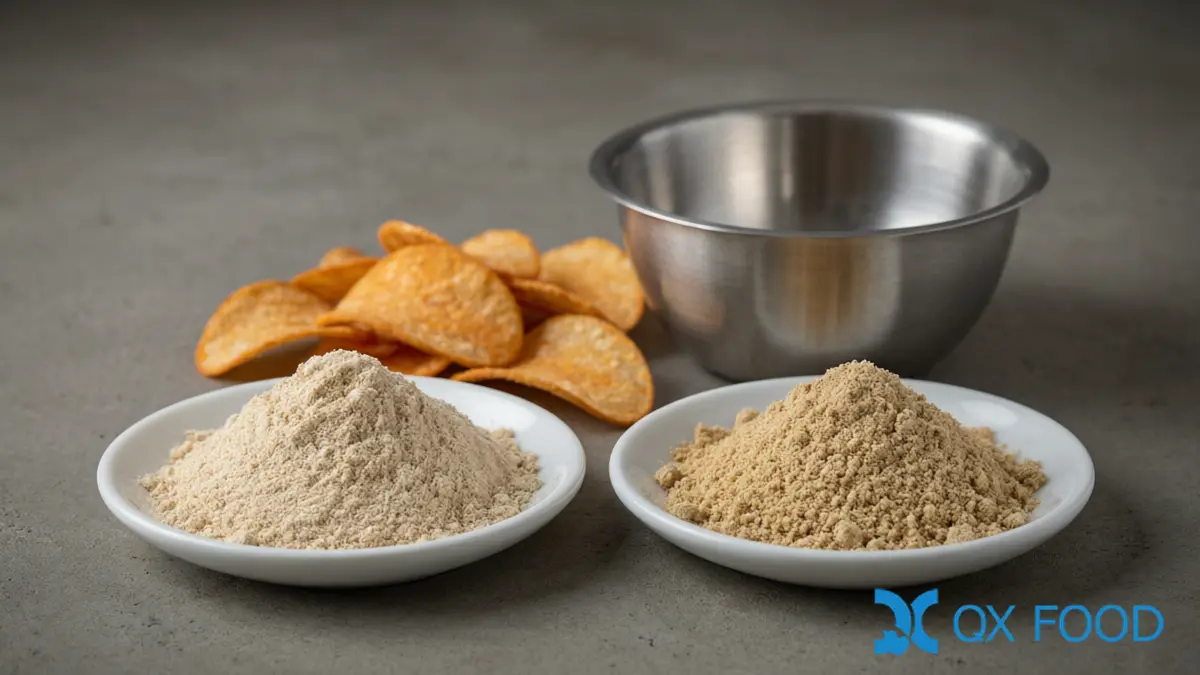
Candidate grades should be compared on sensory direction in the finished coated snack, color impact on the blend and the surface, salt contribution, powder behavior, nitrogen specification and allergen constraints.
A pale cheese or sour-cream profile sets a color constraint that some grades meet more easily than others, but light color is not exclusive to one protein source. Where an application needs to avoid soy-derived protein, corn-based candidates may be considered, subject to complete formulation and cross-contact verification. In the United States, soybeans are a major food allergen, so a soy-based grade carries corresponding allergen-declaration implications (FDA food allergen information).
Balance Savory Impact, Color and Sodium
HVP can contribute savory intensity that may help a reduced-sodium snack seasoning maintain flavor, but many grades also contribute sodium. Account for the grade’s actual salt specification at the intended dose; in acid-hydrolyzed HVP, part of the salt may result from the neutralization step.
The total sodium of the finished seasoning and coated snack should be evaluated together with sensory performance rather than treating HVP itself as a low-sodium ingredient (sodium-reduction strategies in processed foods).
Validate on the Line and After Coating
A bench taste of the dry blend does not predict the coated snack. Oil level, tumble time, seasoning loss, color shift and flavor release on the surface all change between the blend and the finished product.
Candidates should be evaluated on the line at production conditions and, where relevant, after the storage period of the finished snack, comparing flavor, color, adhesion and any claim-relevant attributes on the coated product.
How QXFOOD Evaluates Candidate Grades
QXFOOD compares HVP candidates for snack-seasoning applications on grade specifications, sensory direction, color, salt contribution and relevant powder characteristics, with the full matrix in the HVP powder series. Final line behavior should be confirmed in the buyer’s own coating process. Grades such as FSA, FSC, FSAH and FYA can be evaluated as candidates rather than fixed answers, and the MSG-replacement framework is covered in our HVP vs MSG guide.
Questions Snack Formulators Ask
How much HVP goes into a snack seasoning blend?
There is no standard level. Two blends with the same flavor name can need different HVP amounts if the grades, salt targets, top notes and coating systems differ. The dose is set by the finished coated snack.
What HVP grade suits pale cheese or sour-cream snacks?
Pale profiles set a color constraint, and grades that meet it should be compared in the actual blend and on the coated surface. Light color is not exclusive to a particular protein source.
Does higher amino nitrogen mean stronger snack flavor?
No. Nitrogen figures describe the grade; they do not predict snack-flavor intensity by themselves. The finished flavor depends on the whole blend and on the coated product.
Can HVP help reduce sodium in snack seasonings?
Possibly. HVP can contribute savory intensity that may help a reduced-sodium formulation maintain flavor, but many grades also contribute sodium. Evaluate the total sodium of the finished seasoning together with sensory performance.