
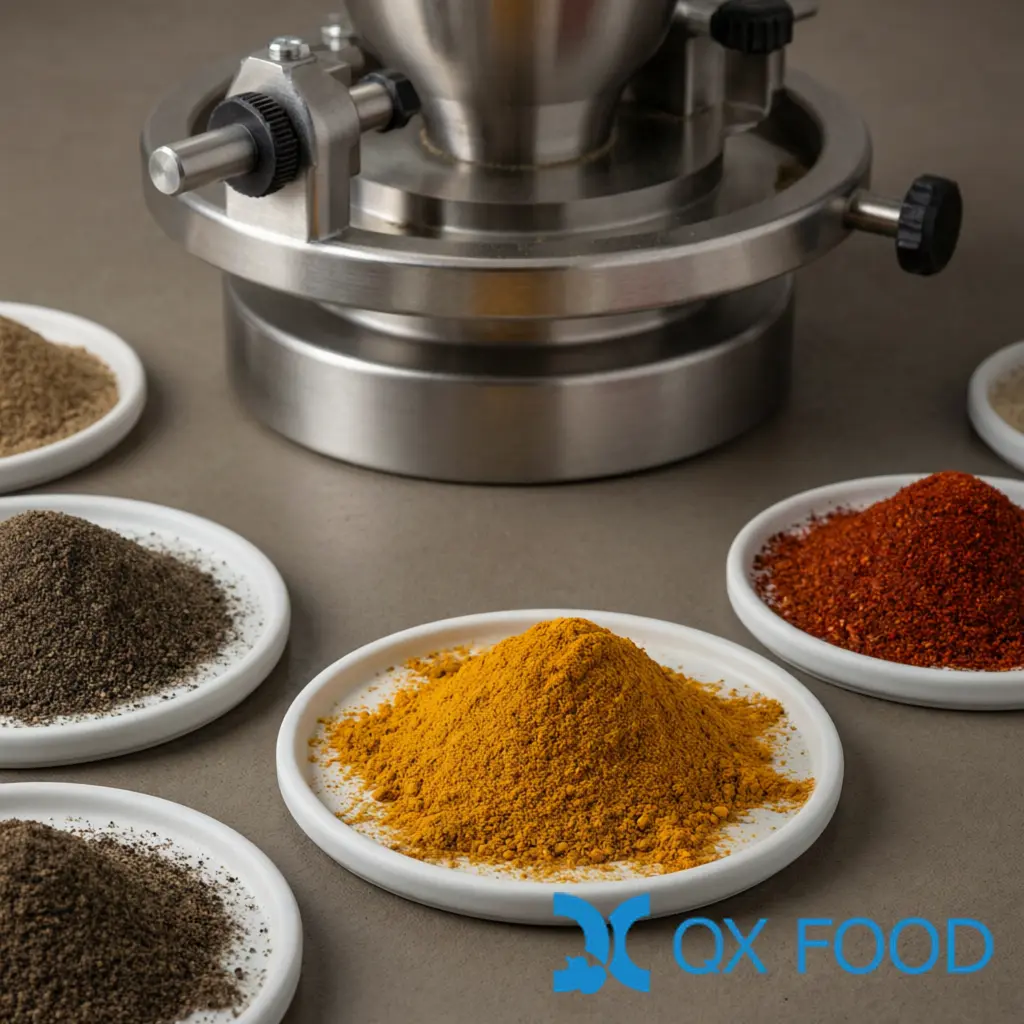
The spice grinding process changes a spice in two directions at the same time. Breaking the plant structure increases surface area and makes flavor compounds more available in the finished food, but the same process can generate heat and expose volatile components to loss.
This is why the finest possible powder is not automatically the best spice powder. The useful grind is the one that gives the required texture, dispersion and flavor release without sacrificing more aroma or storage stability than the application can tolerate.
Particle size is therefore an application specification, not a quality ranking.
Grinding Releases Flavor—and Makes It Easier to Lose
Fracturing spice tissues exposes oil cells and increases surface area, which can make aroma and flavor compounds more available during food preparation. But that same increase in exposed surface also makes the ground spice more sensitive to heat, oxygen, moisture and storage conditions (key issues and challenges in spice grinding).
Finer grinding can improve dispersion and shorten the flavor-release distance in an application, while also increasing the need to control grinding temperature and post-grinding storage. The two effects travel together, which is why grinding quality is judged on what is retained, not only on how small the particles become.
Particle Size Is an Application Specification, Not a Quality Ranking
The target grind follows the application backward. A rub or visible seasoning needs particles that stay visible, carry texture and release flavor more slowly. A snack coating needs powder that adheres, covers evenly and interacts predictably with the surface oil. A sauce or brine system needs powder that disperses without clogging and without an unwanted gritty mouthfeel.
The grind specification is therefore part of the flavor and texture specification. It should be validated in the actual application rather than copied from another spice or product, because the same mesh target can behave differently in different food systems.
“80 Mesh” Does Not Describe the Whole Powder
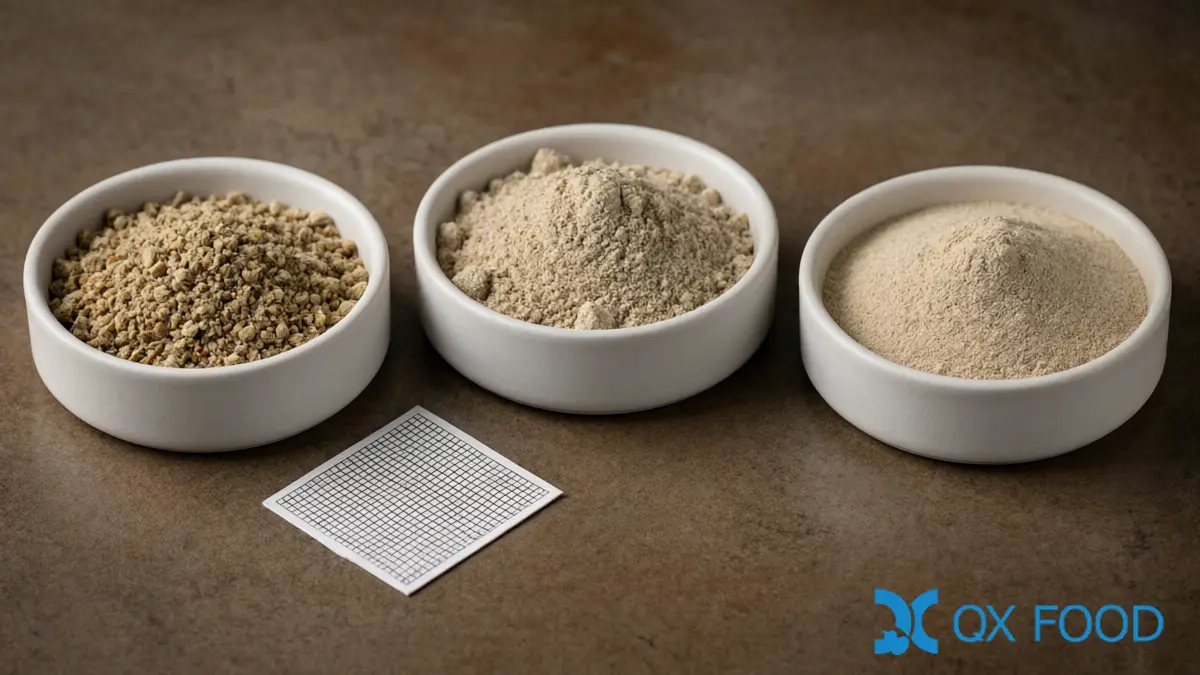
Mesh describes a sieve opening or a passing-and-retained condition. Two powders both sold as “80 mesh” can still have different particle-size distributions: one may be tightly graded around the nominal size, while another may contain a wide spread of fines and oversize.
For industrial purchasing, specify the sieve method and the proportion passing or retained where relevant. A particle-size distribution provides more information than a single nominal mesh number, and the spice trade has standardized sieve-analysis methods for exactly this purpose (ASTA Method 10.0: particle-size distribution by sieve analysis).
Grinding Temperature Changes What You Keep
Conventional grinding can produce substantial temperature rise, and the actual product temperature depends on the spice, the mill, the feed rate and the operating conditions. Reported product temperatures in conventional spice grinding vary widely across materials and equipment (design of a cryogenic grinding system for spices).
For aroma-sensitive spices, measure the product temperature during grinding rather than relying on a generic temperature limit. Volatile-oil retention, color and moisture all respond to how much heat the material actually sees.
When Low-Temperature or Cryogenic Grinding Is Worth It
Heat control can be approached in different ways. Cryogenic grinding actively pre-cools the spice and removes grinding heat using a cryogen such as liquid nitrogen, and studies on cumin, pepper and other oil-rich spices have reported better volatile-oil retention and aroma quality compared with conventional grinding (cryogenic grinding of spices: a review; cryogenic grinding of cumin).
Other milling systems may reduce heat generation through equipment design, airflow, staged grinding or external cooling, but their temperature profile still needs to be measured on the actual product. Cryogenic grinding is a tool for specific materials and targets, not a requirement for every spice, and the cryogen and operating cost have to be justified by the volatile retention and quality gain.
Choose the Mill for the Material, Not From a Mesh Table
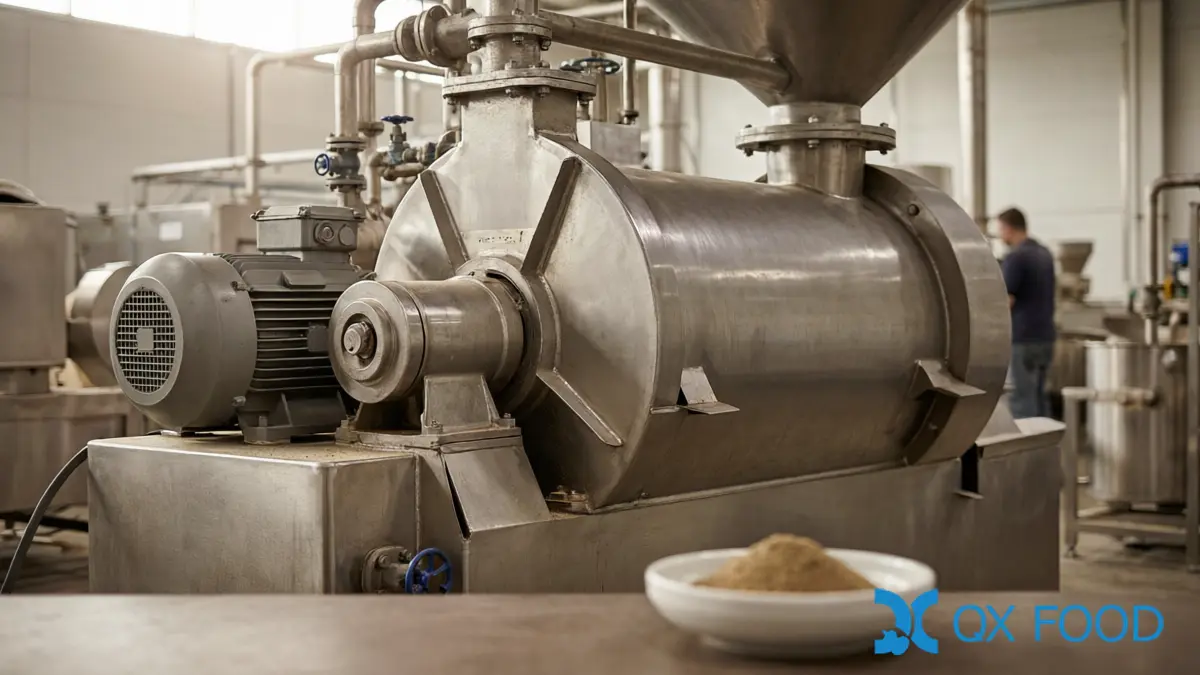
In the spice grinding process, the achievable particle size is not set by the mill name alone. Mill design, rotor speed, classifier setting, screen opening, feed rate, feed moisture and the oil or fat content of the spice all interact, and multi-pass grinding changes the result further. Reviews of spice grinding treat hammer, pin, roller, jet and cryogenic systems as different technical routes rather than as fixed mesh ranges (spice grinding technology review).
| Grinding route | Main strength | Main limitation | What should be validated |
|---|---|---|---|
| Hammer / impact milling | Robust general size reduction | Heat and broad particle-size distribution can become issues | Particle-size distribution, temperature, volatile retention |
| Pin / disc milling | Finer controlled grinding | Heat depends on speed, feed and product | Particle-size distribution, temperature, throughput |
| Roller milling | Controlled compression and shear | Not suitable for every spice structure | Particle-size distribution and texture |
| Jet / air milling | Fine particles without conventional mechanical impact surfaces | Energy cost and product suitability | Particle-size distribution, temperature, flow |
| Cryogenic grinding | Controls heat and embrittles oily or heat-sensitive spices | Cryogen and operating cost | Volatile retention, particle-size distribution, economics |
Finer Powder Can Be Less Stable After Grinding
Smaller particles provide more exposed surface area per gram, which can increase contact with oxygen and moisture and accelerate oxidation, moisture uptake and aroma loss during storage (grinding and subsequent storage of food ingredients).
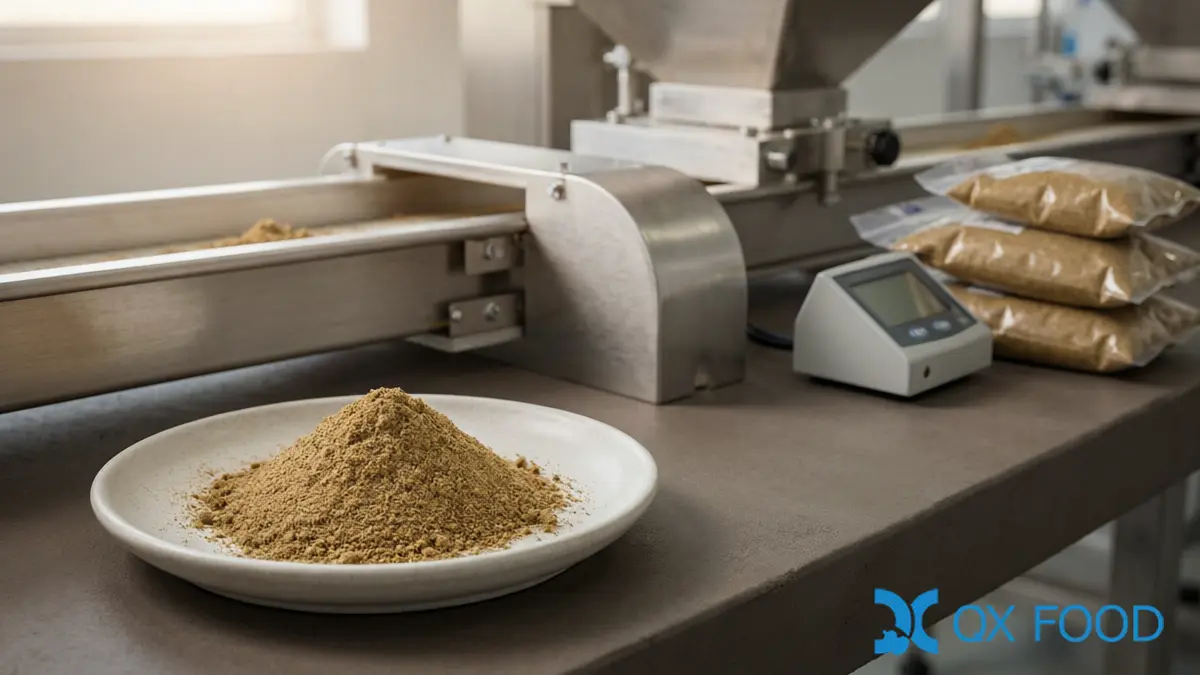
Storage stability is therefore part of grinding quality. These controls can become particularly important as particle size decreases, although the actual storage sensitivity still depends on the spice and its composition. The same logic applies whether the powder is a whole spice grind or part of a blend.
The Relevant QC Markers Depend on the Spice
Particle-size distribution is broadly relevant to ground spices, but other quality markers vary by material. Paprika and chili may be purchased against color value, pepper against piperine or volatile-oil requirements, and other spices against product-specific sensory or chemical specifications. Trade associations publish material-specific monographs and analytical methods for exactly this reason (ASTA spice monographs).
Moisture and water activity are also separate parameters. Acceptable moisture limits depend on the spice and its specification: moisture affects caking, handling and stability, while water activity gives more direct information about the water available for microbial and chemical change. Both have standardized analytical methods in the spice trade (ASTA analytical methods).
Physical-hazard controls such as sieving and metal detection may be important in grinding operations, because mill wear can be a source of metal fragments. Their position and classification should follow the plant-specific hazard analysis rather than a fixed template.
Ground Spice and Spice Extract Are Different Ingredients
Grinding keeps most of the original plant solids in the ingredient. Extraction selectively removes particular flavor, aroma, pungency or color components, producing essential oils, oleoresins or extracts with a different composition and application profile.
Extraction routes vary by spice and target compounds, including distillation, solvent extraction and supercritical-fluid methods among others (recent advances in spice essential-oil and oleoresin extraction), and some extracts may later be encapsulated or spray dried for easier handling. Extracts can provide more concentrated and standardized delivery of selected components, but their dispersion, carrier system and labeling profile depend on the specific format. They should not be treated simply as a stronger version of ground spice.
How QXFOOD Specifies Ground Spices
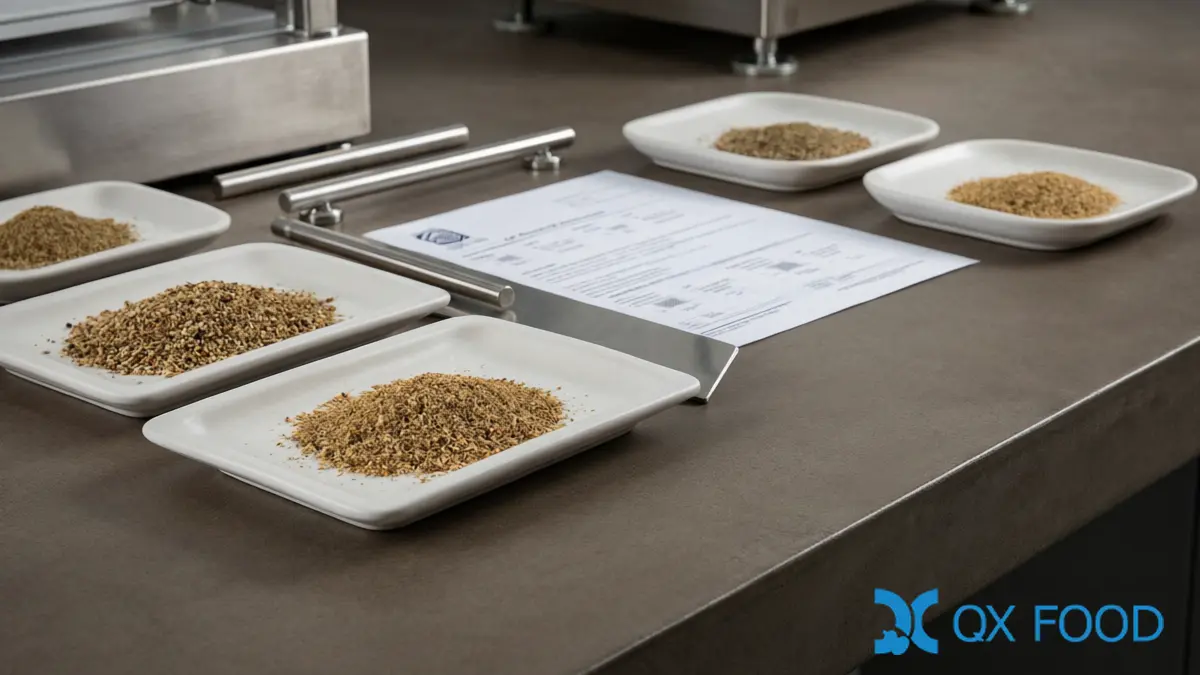
QXFOOD supplies ground spices including black pepper, white pepper, turmeric, ginger, chili, cinnamon, cumin, fennel and clove, with particle-size specifications defined by sieve method and passing-and-retained fractions where relevant rather than by a nominal description alone. Depending on the product, specifications may include moisture, water activity and product-specific markers such as volatile oil or color value, and grinding routes are selected per material, including low-temperature options where the spice and target justify them.
Each lot is released against the agreed specification with applicable test documentation and lot traceability, and physical-hazard controls follow the facility’s hazard-control plan. Examples of the published range include fennel powder and clove powder. For origin, contamination, documentation and supplier qualification, see our spice procurement guide.
Questions That Matter When Specifying a Grind
Is finer spice powder always better?
No. Finer powder can release flavor faster and disperse more evenly, but it also exposes more surface to heat, oxygen and moisture during grinding and storage. The useful grind balances flavor release, texture and stability for the specific application.
Does lower grinding temperature preserve more aroma?
Generally, heat control can improve volatile retention, but the required method depends on the spice and the target particle size. Cryogenic grinding is one option for oil-rich or aroma-sensitive spices; other routes may control heat by design, airflow or staged grinding, and product temperature should be measured rather than assumed.
Is mesh enough to specify particle size?
No. A nominal mesh number does not describe the full particle-size distribution. Specify the sieve method and the passing or retained fraction where relevant, or request a particle-size distribution.
What is the difference between ground spice and spice extract?
Ground spice keeps most of the original plant solids. Extraction selectively removes flavor, aroma, pungency or color components into an essential oil, oleoresin or extract with a different composition, application profile and potential labeling implications.