
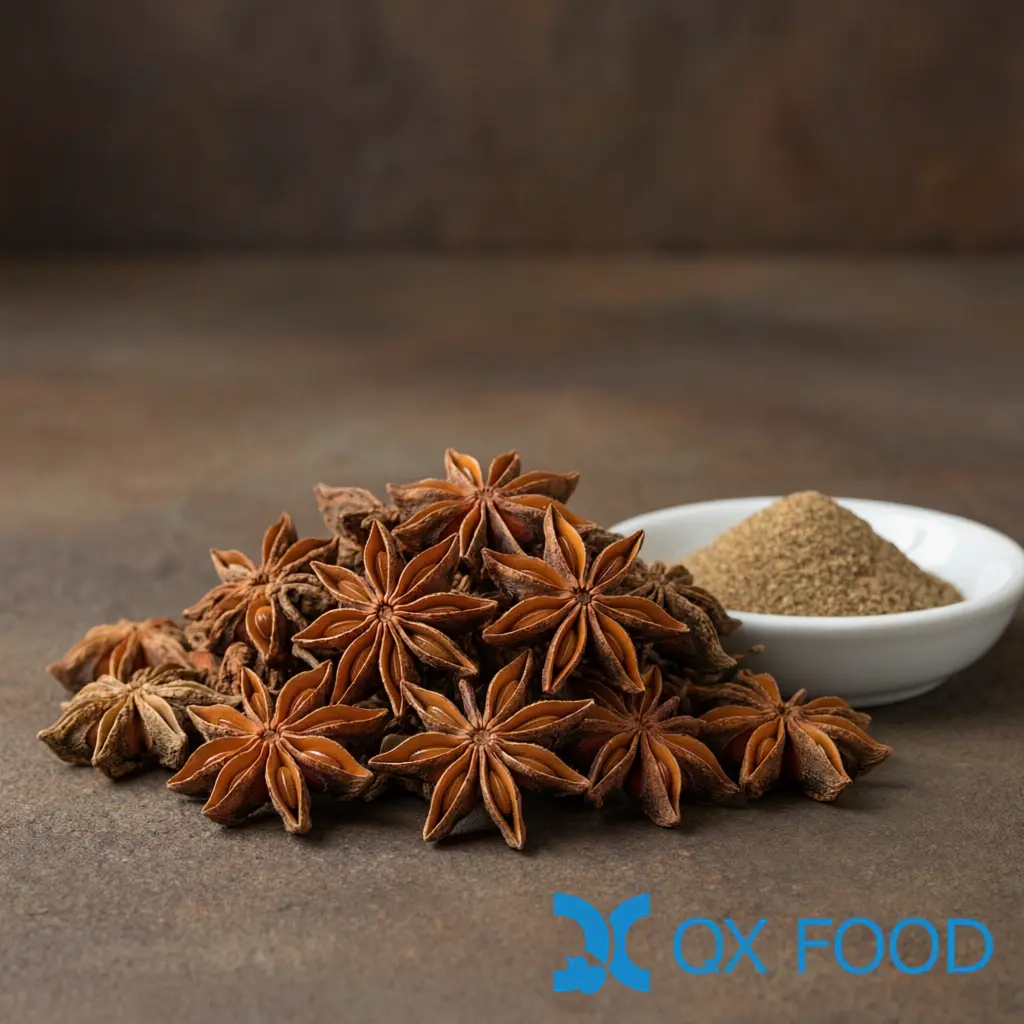
Bulk buyers should not evaluate star anise by appearance alone. For food manufacturing, the more useful purchasing criteria are botanical identity, harvest, whole-star percentage, moisture, volatile oil, foreign matter and pesticide compliance.The specification also depends on the application. A seasoning manufacturer that grinds star anise may accept more broken material, while a buyer packing whole stars for retail usually places much more weight on pod shape, size and appearance.This guide explains how to compare star anise lots, what to request on a COA, how to manage the risk of Japanese star anise contamination, and what to check before approving a supplier.
China remains one of the world’s major star anise origins, with Guangxi serving as its best-known production center. Vietnam is another important commercial origin, particularly for international spice trade.
Why Star Anise Matters in Industrial Food
Star anise delivers the licorice-like sweetness that anchors Chinese five-spice, braising packs, meat marinades, curry bases and seasoning blends across Southeast Asia and beyond. Its flavor comes from trans-anethole, which makes up 85-90% of the volatile oil, the same compound that gives anise seed and fennel their character but at a higher intensity per gram (Zhang et al., Food Science & Nutrition, 2024).
Star anise is also an established commercial source of shikimic acid, a precursor used in pharmaceutical manufacturing. Pharmaceutical demand can therefore be one of several factors affecting raw-material demand, alongside crop size, food-sector demand, inventory and export conditions.
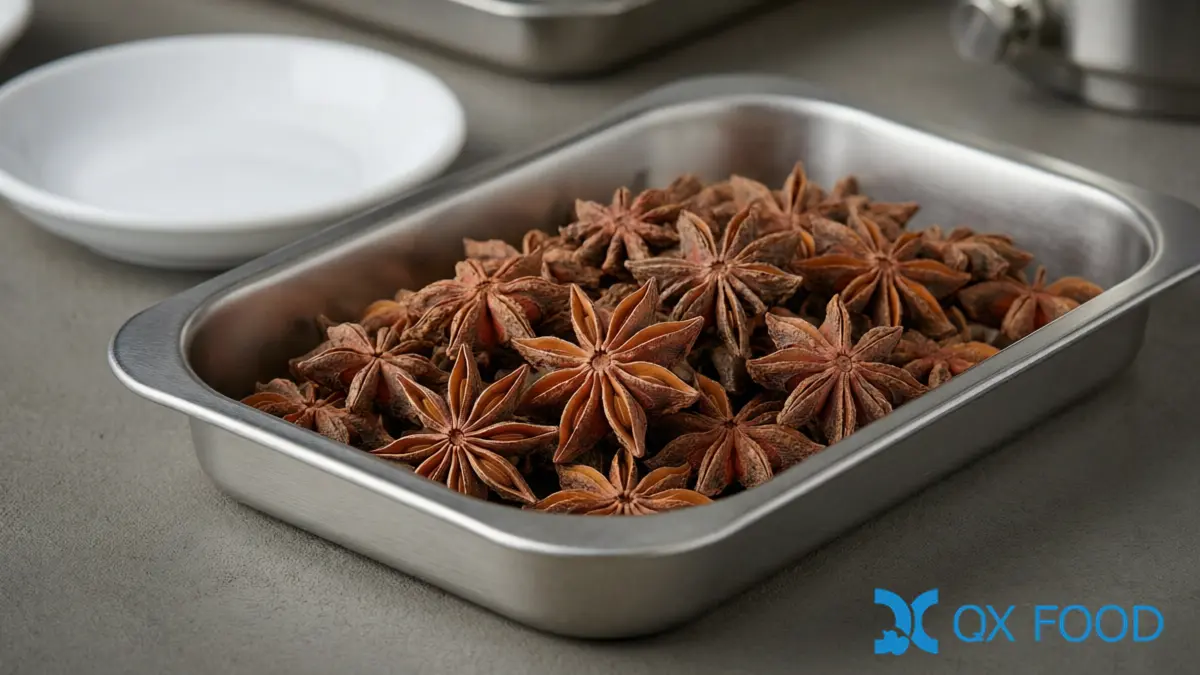
For seasoning manufacturing, star anise may be purchased whole for braising packs or ground to the particle size required by the finished blend. The form changes the spec you negotiate, but the underlying quality checks are the same.
How Bulk Star Anise Is Actually Specified
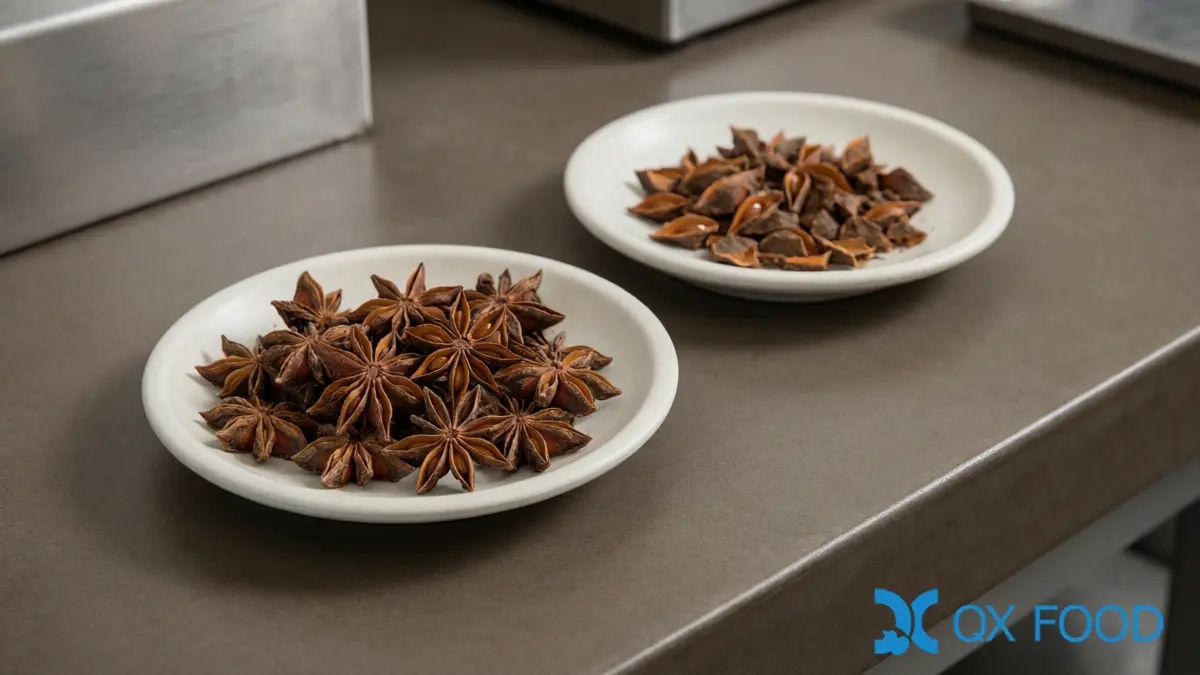
There is no single Grade A/Grade B specification used by every star anise supplier. Commercial grades vary by exporter and buyer requirement. For industrial procurement, it is more useful to compare measurable parameters such as whole-star percentage, pod size, moisture, volatile oil, foreign matter, pesticide residues and microbiological limits.
| Procurement item | What buyers should confirm |
|---|---|
| Botanical identity | Illicium verum |
| Form | Whole / broken / ground |
| Whole-star rate | Agreed contract specification |
| Pod size | Buyer-specific requirement |
| Moisture | COA / agreed specification |
| Volatile oil | Lot-specific result |
| Foreign matter | Agreed maximum |
| Pesticide residues | Destination-market limits |
| Microbiology | Based on intended market/use |
| Harvest | Spring / autumn + harvest year |
Quick procurement answer: Do not approve a star anise lot based only on origin or supplier grade names. Compare botanical identity, whole-star percentage, harvest year, moisture, volatile oil, foreign matter, pesticide compliance and the physical sample against one written specification.
2026 Standards Update
China’s updated national standard GB/T 7652-2026 will take effect on October 1, 2026, replacing GB/T 7652-2016. Buyers sourcing Chinese star anise should confirm which version is referenced in supplier specifications, COAs and quality agreements for shipments scheduled around the transition period.
The Adulteration Risk: Japanese Star Anise
One of the most important food-safety risks in star anise procurement is mixing or contamination with Illicium anisatum, the Japanese star anise, which contains anisatin and is not suitable for food use. The two species look similar when dried, which is why botanical identity control is part of star anise procurement.
Buyers should ask how the supplier controls botanical identity and prevents mixing with other *Illicium* species. The control method should be documented and appropriate to the buyer’s risk level and destination-market requirements. Species verification may include analytical testing or morphological inspection by trained sorters.
The FDA has previously warned about star anise products associated with contamination or confusion involving Japanese star anise. For food buyers, documented botanical identity is therefore an important part of supplier qualification.
Volatile Oil and Flavor Consistency
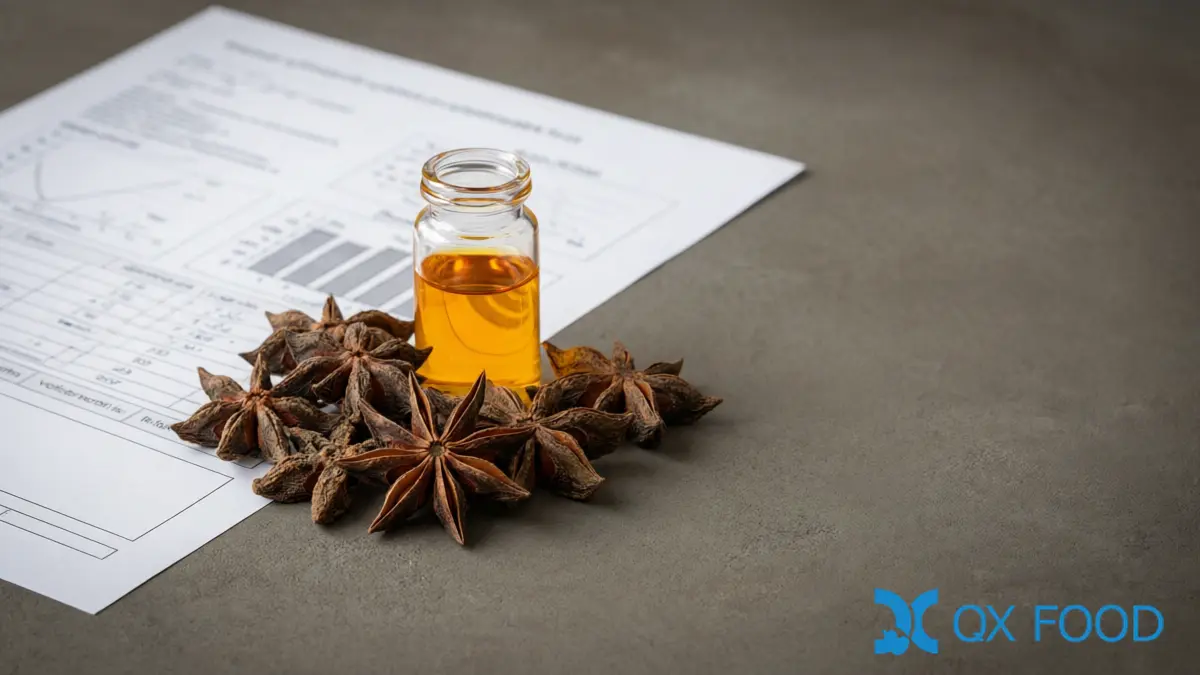
Flavor consistency across batches is the reason volatile oil percentage belongs in your purchase spec. A lot with lower volatile oil may deliver lower aroma intensity than a higher-oil lot, although the sensory result also depends on oil composition, storage and processing. If your formulation uses a fixed dosage, changes between lots can affect finished-product consistency.
Ask for the volatile oil result on the COA for every lot, and check it against your spec. If your supplier only provides a certificate range, ask for lot-specific values. Record the lot-specific volatile-oil result together with the sensory evaluation. Over multiple deliveries, these records make it easier to identify whether changes in aroma are linked to raw-material variation.
Harvest Season and Supply Planning
Star anise is commercially harvested in two main periods in southern China: a smaller spring crop, typically around March-April, and the larger autumn crop, generally around August-October. For bulk buyers, harvest season matters because pod fullness, appearance, aroma and lot availability can differ between crops. Market conditions can change through the year depending on crop size, available inventory, food-sector demand, pharmaceutical demand, export conditions and logistics.
Crop availability normally increases after the main harvest, but purchase timing should not be based on season alone. Buyers should compare current crop availability, harvest year, lot quality, freight and demand before deciding whether to contract volume or buy shipment by shipment.
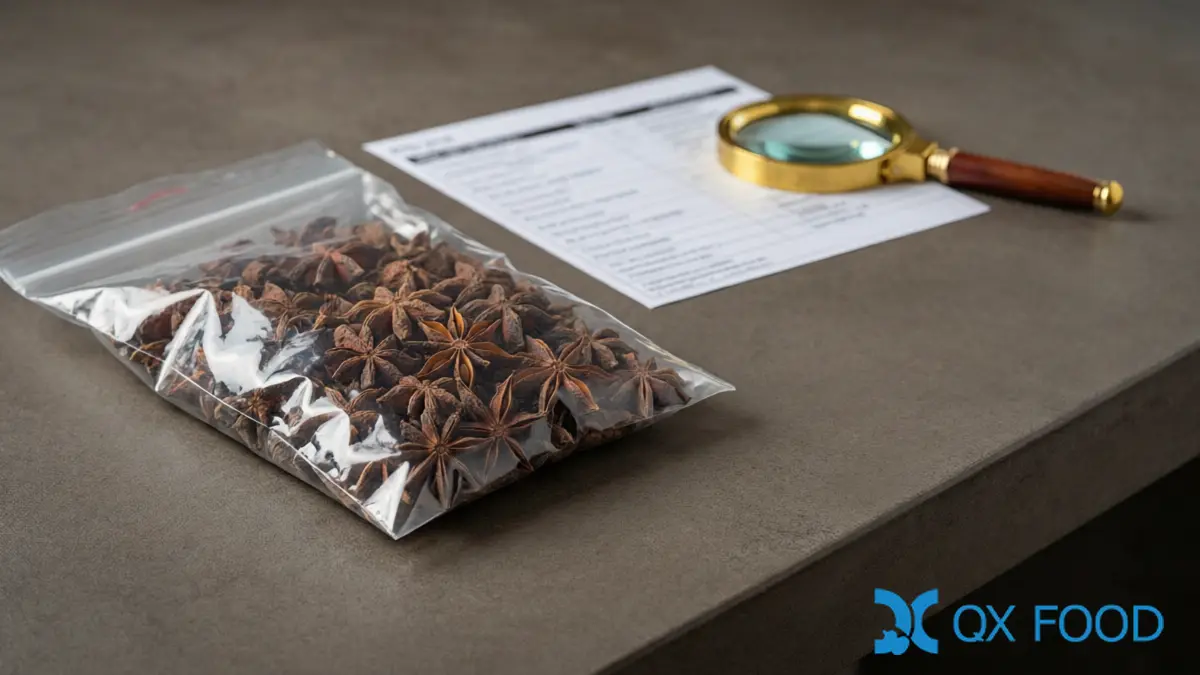
Practical Checks Before You Commit
Run these six checks before placing your first bulk order:
- Species verification: request documented botanical-identity controls for Illicium verum, including the supplier’s sorting, inspection or analytical verification method where applicable.
- Volatile oil on COA: lot-specific value, not a range.
- Breakage rate: confirm the whole-star percentage or maximum breakage limit against the agreed specification.
- Moisture: confirm the maximum limit in the agreed specification and verify the lot-specific COA. For reference, QXFOOD STA-23 specifies moisture at ≤8.0 g/100g using GB 5009.3.
- Pesticide residue: ask for the test method and limits used.
- Sample evaluation: grind a sample and check aroma intensity and uniformity against your reference.
For industrial buyers, the most effective way to reduce star anise quality disputes is to agree on measurable specifications before ordering and verify the incoming lot against the same specification.
Cost Structure and Negotiation
Star anise pricing is mainly influenced by whole-star percentage, pod appearance, harvest year, volatile-oil specification, moisture, foreign matter, packaging and current crop availability. Whole, visually complete lots sold for retail or whole-spice applications generally command a premium over broken material intended for grinding.
When comparing quotations, confirm that the suppliers are quoting against the same specification, packaging and Incoterm. A lower price is not meaningful if the whole-star percentage, moisture limit or quality documentation differs.
Import Compliance Essentials
Import documentation for star anise varies by destination market. Depending on the country and shipment type, buyers may need a phytosanitary certificate, commercial COA, pesticide-residue report, microbiological test results, certificate of origin or other import documents.
Because Japanese star anise (Illicium anisatum) is not suitable for food use, buyers should also keep documented botanical-identity controls or supporting test records where required by their food-safety program. Confirm the documentation package with the importer or customs broker before shipment.
Evaluating Stored Star Anise Lots
Star anise availability changes through the crop cycle, but harvest timing alone does not determine price. For stored lots, buyers should pay closer attention to harvest year, storage conditions, aroma retention and the supplier’s inventory-management practices.
Before approving older inventory, ask for the harvest year and storage history. Whole star anise generally retains aroma better when stored sealed in cool, dry and dark conditions. A correctly stored previous-season lot may still perform better than newer material exposed to excessive heat or humidity.
Ground star anise loses aroma faster after milling because of its greater exposed surface area. Buyers should therefore confirm packaging barrier properties, pack size, production date and expected usage period when purchasing ground material.
Buying Bulk Star Anise from QXFOOD
QXFOOD supplies whole star anise STA-23, a hand-sorted whole-pod product currently specified against GB/T 7652-2016. Buyers placing orders around the October 1, 2026 transition to GB/T 7652-2026 should confirm the applicable specification for their production lot and shipment. Available details include: MOQ 1 MT, 1 kg evaluation samples, packaging options from 100 g foil bags to 25 kg fiber drums, and batch COAs covering moisture (GB 5009.3), coliforms (GB 4789.3) and Salmonella (GB 4789.4), produced under ISO 9001 / ISO 22000 / HACCP with HALAL certification. For supplier qualification in more depth, see our spice procurement guide.
FAQ
What specifications should I request when buying star anise in bulk?
Confirm botanical identity (Illicium verum), form (whole, broken or ground), whole-star rate, pod size, moisture, volatile oil, foreign matter, pesticide-residue compliance and microbiological limits against the agreed specification, with harvest season and harvest year stated.
Is Grade A star anise a standardized international grade?
No. There is no single Grade A/Grade B system used by every exporter. Grades vary by supplier and buyer requirement, so compare measurable parameters rather than relying on grade names alone.
What is the difference between spring and autumn star anise?
The spring crop is typically smaller and harvested around March-April; the larger autumn crop is generally harvested around August-October. Pod fullness, appearance, aroma and availability can differ between crops.
How do I verify Illicium verum before importing?
Ask the supplier to document botanical identity control, which may include analytical testing or morphological inspection by trained sorters, and confirm the method is appropriate to your risk level and destination-market requirements.
What documents should a star anise supplier provide?
A lot-specific COA covering the agreed parameters, species declaration or botanical identity documentation, and destination-market documents such as phytosanitary certification, pesticide-residue test reports or organic certification where required.
What is star anise used for in food manufacturing?
Star anise is used in five-spice blends, braising packs, marinades, curry bases, seasoning blends and as a flavor source for licorice-type notes in confectionery and beverages.
Is star anise the same as anise seed?
No. Star anise is the dried fruit of Illicium verum, while anise seed comes from Pimpinella anisum. They share the trans-anethole flavor character but differ in intensity, appearance and supply chain.
Why is star anise expensive?
Star anise has two commercial harvests a year, is concentrated in a limited number of origins, and also serves as a commercial source of shikimic acid for pharmaceutical manufacturing. Pharmaceutical demand is one of several factors affecting raw-material demand alongside crop size, food-sector demand, inventory and export conditions.
What is the difference between Chinese and Vietnamese star anise?
Both China and Vietnam commercially produce Illicium verum. For industrial procurement, origin alone should not be used as a quality grade. Pod size, whole-star percentage, volatile oil, moisture, harvest, drying conditions and storage can vary between individual lots. Compare the supplier’s specification, COA and physical sample rather than assuming one origin is automatically better.
How should star anise be stored?
Keep whole star anise sealed in a cool, dry place away from direct light, heat and strong odors. Storage conditions should follow the individual product specification, with moisture and packaging controlled to reduce mold risk and aroma loss.
How long can whole star anise be stored?
Shelf life depends on initial moisture, packaging and storage conditions. QXFOOD STA-23 has a declared shelf life of 18 months when stored sealed in a cool, dry place at room temperature. Buyers should follow the shelf-life statement and storage conditions specified for the individual product rather than applying one figure to every star anise lot.
Is star anise FDA approved for food use?
FDA lists Illicium verum (star anise) as a flavoring agent or adjuvant and references it under 21 CFR 182.10. This should not be confused with Japanese star anise (Illicium anisatum), which is not suitable for food consumption.