Soy Sauce Powder for Seasoning Mixes and Dry Sauce Bases
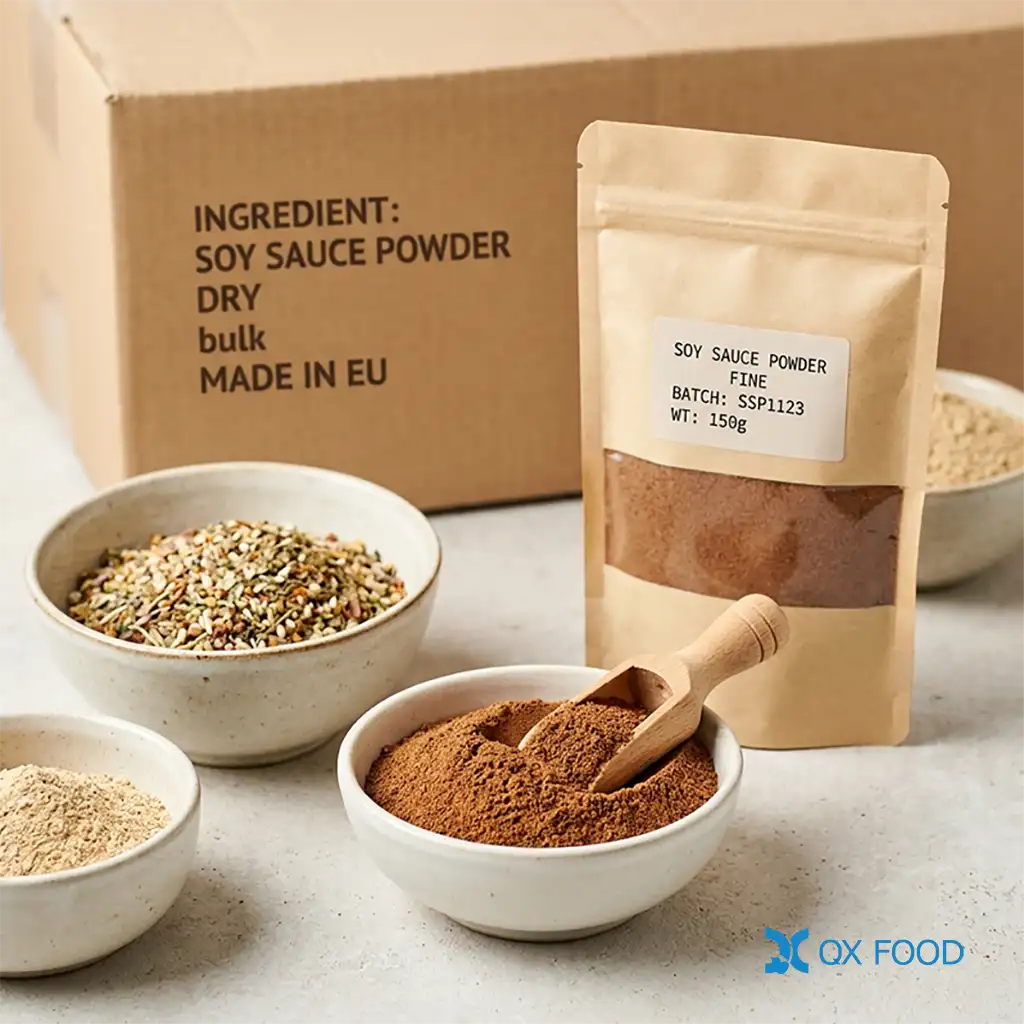
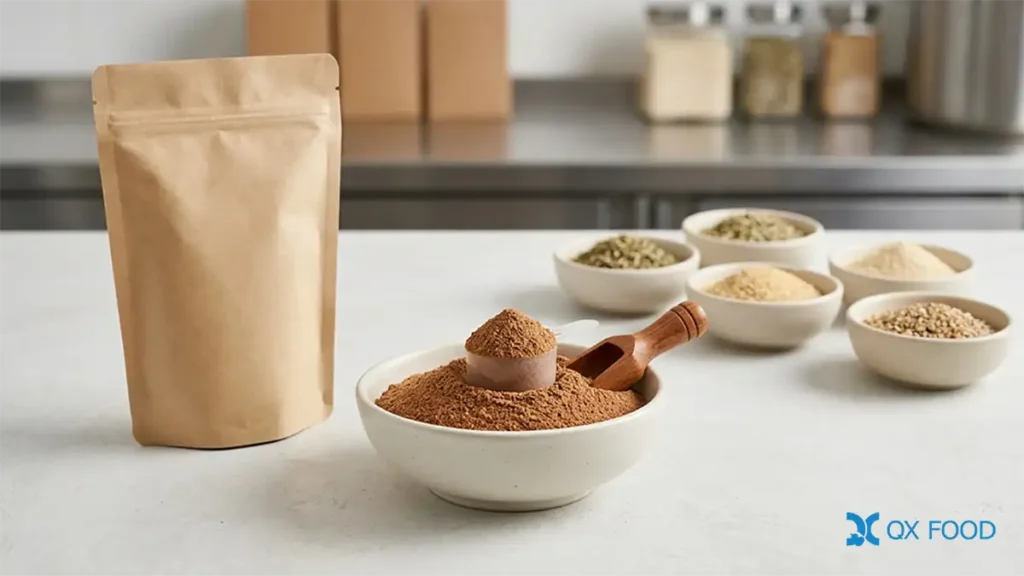
Soy sauce powder for seasoning mixes gives manufacturers a dry way to build salty, fermented soy character into spice blends, soup powders, sauce bases, household convenient seasonings, and foodservice formulations. FSP-H04 is based on brewed soy sauce and vegetable protein liquid, with sterilization and spray drying used to convert the prepared liquid blend into a brownish-red to light yellow powder.
This soy sauce powder for seasoning mixes is intended for formulas in which soy sauce flavor, salt contribution, color, and dry-blend handling must be evaluated together. Its blended soy sauce and vegetable-protein profile can support compound seasonings, dry sauce mixes, snacks, hot pot bases, ready meals, and selected processed-food applications.
Browse the brewed soy sauce powder product range to compare other available profiles. The fermented and brewed powder portfolio covers soy sauce, vinegar, and fermented paste directions, while Japanese miso powder offers a different fermented soybean character for suitable savory projects.
FSP-H04 Technical Specifications
These limits give procurement and R&D a practical starting point. Commercial approval should use the current specification, an agreed sensory sample, the batch COA, and a trial in the intended seasoning. Individual batch results may vary within the approved limits.
| Product Name | Soy Sauce Powder |
| Model | FSP-H04 |
| Main Ingredients | Brewed soy sauce and vegetable protein liquid |
| Physical State | Powder |
| Flavor Profile | Blended soy sauce and vegetable-protein flavor |
| Color and Appearance | Brownish-red to light yellow powder; compare with the agreed standard sample |
| Main Process | Sterilization and spray drying, followed by sifting, magnetic separation, packaging, and metal detection |
| Moisture | ≤8.00 g/100g |
| Total Nitrogen | ≥0.80 g/100g |
| Amino Nitrogen | ≥0.40 g/100g |
| Sodium Chloride | ≤45.00 g/100g |
| 3-MCPD | ≤0.4 mg/kg |
| Reference Dosage | 2%-10%; determine the final level through application trials |
| Allergen Information | Contains soy and wheat; review the current allergen statement for destination-market labeling |
| Certifications | ISO 9001, ISO 22000, HACCP, Halal |
The batch COA can cover moisture, total nitrogen, amino nitrogen, sodium chloride, sensory indicators, contaminants, and microbiological items. Buyers should combine that review with their finished-product specification, nutrition calculation, allergen assessment, and destination-market requirements.
Soy Sauce Powder for Dry Seasoning Blend Development
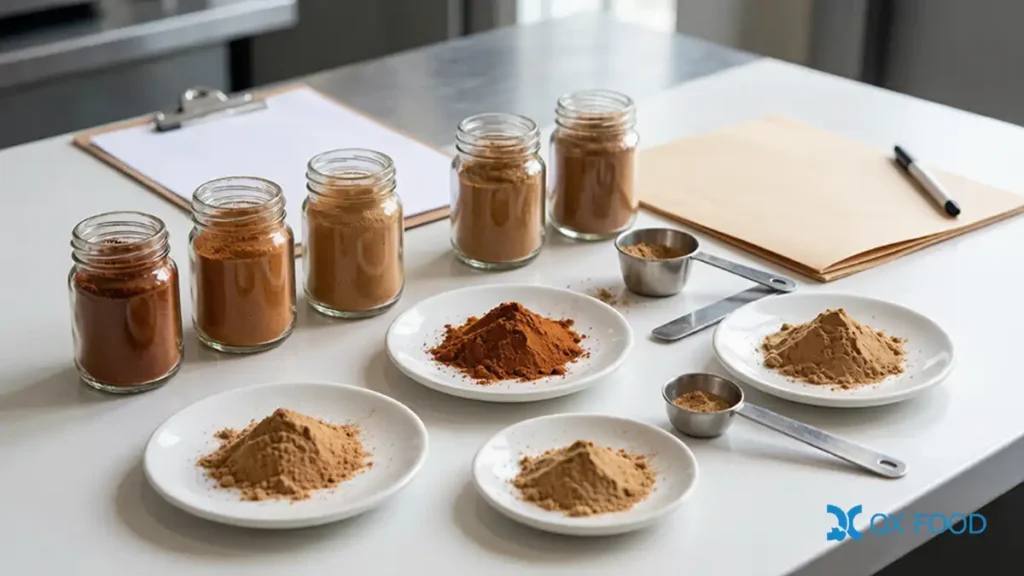
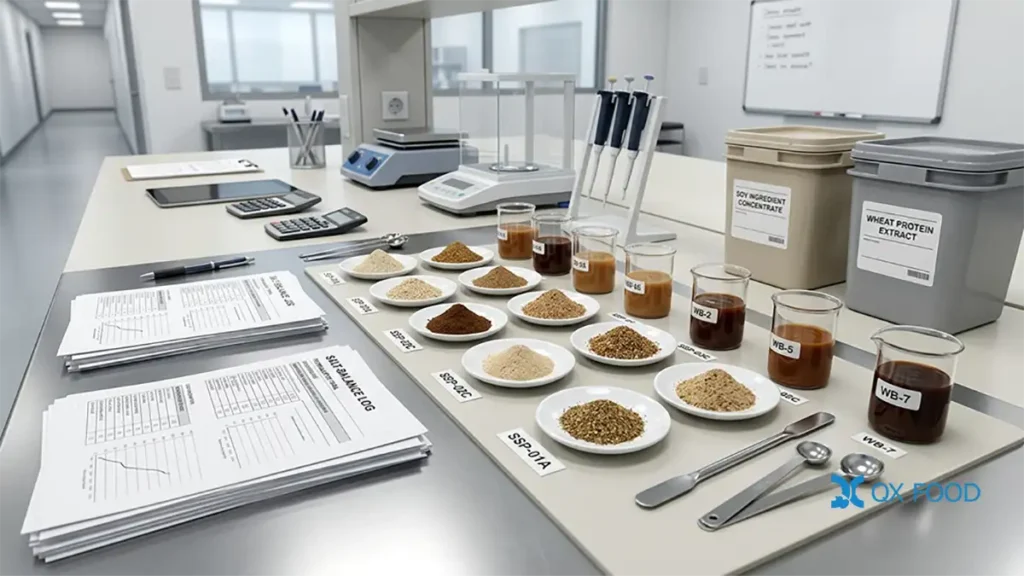
A dry seasoning formula must balance soy sauce aroma with salt, sweetness, acidity, spices, color, and other savory ingredients. Soy sauce powder for seasoning mixes can be weighed directly with the powder base, helping R&D compare controlled inclusion levels without introducing liquid soy sauce during dry blending.
Household Convenient Seasonings
FSP-H04 can be evaluated in household seasoning powder for quick soups, stir-fry seasonings, rice or noodle seasonings, dipping-powder systems, and multi-purpose savory mixes. It contributes one fermented layer, but it is not a finished seasoning by itself. Salt, sugar, acidity, spice, aroma top notes, and any thickening system must be adjusted around the target preparation method.
Prepare a convenient-seasoning trial at the actual serving dilution and holding time. Compare dry aroma, measuring behavior, dispersion, final color, salt perception, and soy sauce character. A powder that tastes strong on its own may become balanced after dilution, while a mild dry blend can lose definition in the prepared food.
Dry Soup, Sauce, and Gravy Bases
This soy sauce powder for dry sauce mixes can be developed into soup powders, sauce concentrates, gravy-style mixes, marinades, and reconstituted seasoning bases. Its dry format makes it straightforward to meter with the rest of the powder system before water, oil, or other liquid components are added.
When reconstitution is required, test the actual water temperature, mixing energy, fat level, starch system, pH, and holding time. Record lumping, sediment, sauce color, viscosity interaction, aroma release, and flavor stability. Do not assume that performance in water will predict behavior in an oily, acidic, or thickened sauce.

Salt, Color, and Allergen Control in Seasoning Mixes
FSP-H04 has a sodium chloride specification of no more than 45.00 g/100g, so formulators must include the powder’s contribution when calculating the salt target of the finished blend. It is not positioned as a sodium-reduction solution. The practical task is to balance the soy sauce flavor against total sodium, serving size, dilution ratio, and the other salted ingredients in the formula.
Building the Trial Matrix
Start with several levels inside the 2%-10% reference range while keeping the other ingredients unchanged. Record total salt contribution, dry and prepared color, soy sauce intensity, lingering savory character, and any change in unwanted notes. Once the useful range is clear, adjust the rest of the seasoning system around it.
Because the powder can range from brownish-red to light yellow against the standard sample, its color contribution should be checked in the final product. Dark spice blends may hide the difference, while pale soups, sauces, bakery systems, or coatings may show it clearly. Approval should use the intended production heat and storage conditions rather than the dry powder alone.
Soy and Wheat Allergen Review
FSP-H04 contains soy and wheat. Procurement should request the current ingredient and allergen documents, and the finished-product team should review cross-contact, declaration wording, and destination-market requirements for the complete formula. Any allergen or dietary statement must be supported by current documentation for the finished product.
Spray Dried Soy Sauce Powder for Snacks and Foodservice
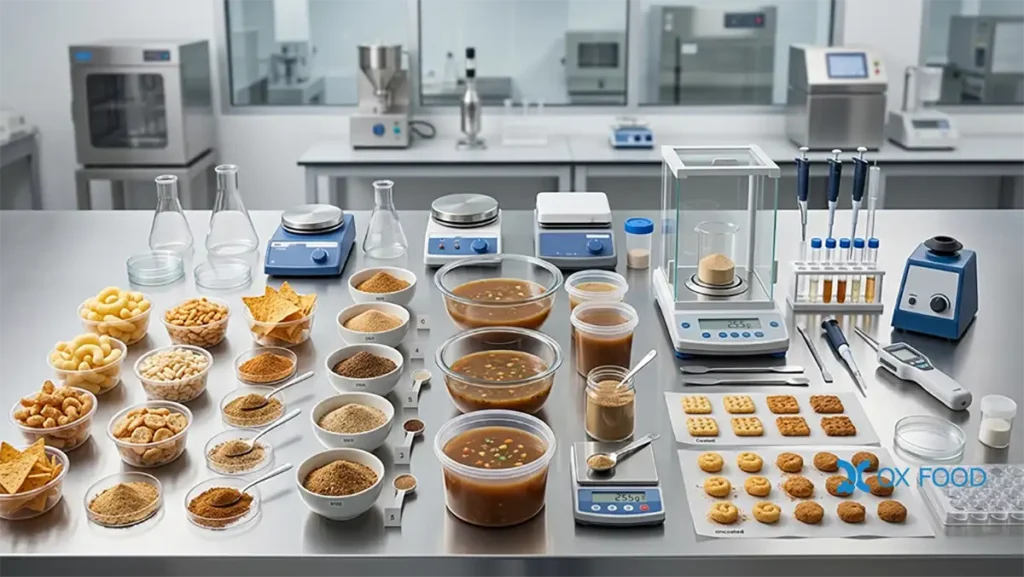
In addition to household and dry sauce applications, soy sauce powder for seasoning mixes can be tested in puffed snacks, chips, crackers, compound seasonings, hot pot bases, ready meals, pickled vegetable seasonings, selected meat products, and foodservice blends. The application determines whether the priority is coating pickup, broth depth, sauce color, aroma after heating, or long-lasting savory character.
Snack Coating Trials
For soy sauce powder for snack seasoning, test FSP-H04 with the production oil or binder. Measure seasoning pickup, coating uniformity, loose powder, salt perception, color, aroma after frying or baking, and flavor after packaging. The product can support a soy-savory base, but top notes and the complete snack flavor still need separate formulation.
Compound Seasoning and Foodservice Use
In compound seasoning blends, the powder can connect spice, vegetable, and other umami components. In foodservice mixes, evaluate portion accuracy and prepared consistency across the intended batch size. Where the formula includes oils, proteins, or strong aromatics, test whether the soy sauce note remains recognizable after heating and holding.
FSP-H04 may help balance fishy or greasy impressions in suitable formulas, but this is application-dependent rather than guaranteed. Test it with the actual protein, oil, spice, and processing system before making a finished-product claim.
In snack coating and hot pot work where you want the soy note to stand out at low addition, the ester aroma grade FSP-BF is a useful reference point for aroma intensity.
Controlled Spray Drying and Documentation
FSP-H04 production includes raw-material acceptance, batching, sterilization at the critical control point, spray drying, sifting, magnetic separation, finished-product packaging, metal detection, and warehouse storage. The resulting fermented soy sauce powder functions as a soy sauce seasoning ingredient for commercial dry-blend evaluation.
Production controls do not replace buyer qualification. Before approving soy sauce powder for seasoning mixes, compare the current sample with the agreed sensory standard, review the current COA and allergen statement, and run the actual mixing, heating, reconstitution, packaging, and shelf-life process.
Documents for Buyer Review
- Current product specification and current-batch COA.
- Ingredient and soy/wheat allergen information.
- Applicable ISO 9001, ISO 22000, HACCP, and Halal documentation.
- Packaging, storage, and shelf-life information.
- Additional export or destination-market documents, subject to project requirements.
Samples, OEM Formulation, and Custom Packaging
For OEM work, specify the target product, preparation method, desired soy sauce character, total salt target, color tolerance, process conditions, allergen requirements, packaging format, and destination market. A clear brief keeps sample work focused and reduces avoidable reformulation.
- Standard net content: 20 kg per bag.
- Standard packaging: colorless inner PE bag with an outer brown paper-plastic composite bag.
- Reference options: 100 g and 1 kg aluminum foil bags, 10 kg and 20 kg cartons, and 25 kg fiber drums.
- Sample quantity: 1 kg.
- MOQ: 1 MT.
- Shelf life: 18 months under recommended sealed storage conditions.
- Storage: store below 25 degrees C and 60% relative humidity in a cool, dry place; reseal promptly after opening.
- Customization: formulation direction and packaging specifications can be discussed for the buyer’s project.
Before ordering bulk soy sauce powder, confirm the approved sample, application results, documentation list, packaging, annual volume, and delivery requirements. The 1 kg reference sample supports laboratory and pilot evaluation before a 1 MT minimum commercial order. 
FAQ
What is FSP-H04 soy sauce powder?
FSP-H04 is a spray-dried seasoning powder based on brewed soy sauce and vegetable protein liquid. It supplies a blended soy sauce and savory protein profile for dry seasoning and food-manufacturing trials.
Where can soy sauce powder for seasoning mixes be used?
It can be tested in household convenient seasonings, dry soup and sauce mixes, spice blends, snacks, compound seasonings, hot pot bases, ready meals, and compatible foodservice applications.
What is the reference dosage?
The reference range is 2%-10%. Final dosage should be established through bench and pilot trials using the complete formula, preparation method, and process conditions.
Does FSP-H04 contain allergens?
Yes. FSP-H04 contains soy and wheat. Buyers should review current allergen documentation and assess the finished formula for destination-market labeling.
How should salt contribution be evaluated?
FSP-H04 has a sodium chloride limit of no more than 45.00 g/100g. Formulators should calculate its contribution together with salt and all other sodium-containing ingredients in the finished seasoning.
Which quality documents can buyers request?
Buyers can request the current product specification, current-batch COA, ingredient and allergen information, packaging details, and applicable ISO 9001, ISO 22000, HACCP, Halal, and supporting documents.
What are the sample size, MOQ, and shelf life?
For FSP-H04, the reference sample quantity is 1 kg, the MOQ is 1 MT, and the shelf life is 18 months under recommended sealed storage conditions.
Can the formulation and packaging be customized?
Yes. OEM formulation direction and packaging specifications can be discussed according to the application, salt and flavor target, market, annual volume, and procurement requirements.