What Is Coffee Powder COP-K42?
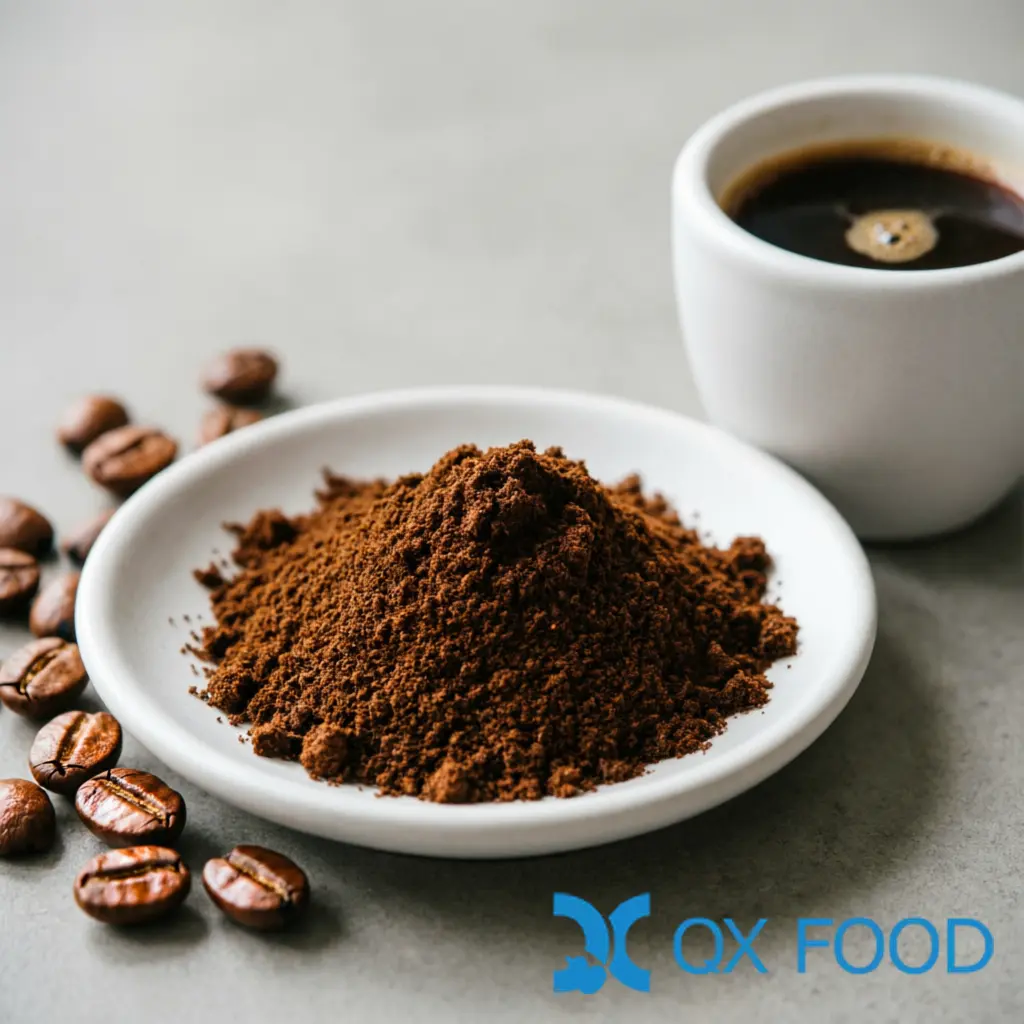
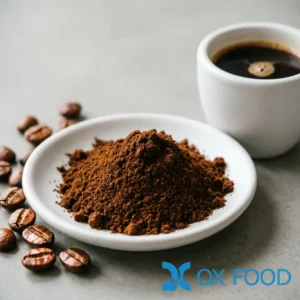
Coffee powder COP-K42 is a deep-roasted, ultra-fine ground coffee powder made from Yunnan coffee beans. The processing line is: coffee bean screening and cleaning, deep roasting, cooling, ultra-fine grinding, sieving and sealed packaging. The result is a uniform brown fine powder with an intense roasted coffee aroma, a caffeine content of ≥2.0%, and no artificial flavors or pigments.
For food manufacturers, coffee powder is a core flavor and functional ingredient: it carries the coffee note into beverages, bakery, ice cream, desserts and compound seasonings, and its caffeine content contributes the refreshing character that consumers expect from coffee-flavored products. COP-K42 is produced to Q/KWQ 0001S under ISO9001, ISO22000 and HACCP systems, with HALAL certification.
Why Buyers Choose Coffee Powder from QXFOOD
Coffee powder buyers evaluate suppliers on roast depth, caffeine consistency, solubility, aroma stability and food-safety documentation. COP-K42 addresses each:
- Deep-roast aroma — a pure roasted coffee aroma with a mellow slight bitterness and soft sweet aftertaste, stable and long-lasting in finished products.
- Caffeine ≥2.0% — a documented caffeine specification that supports consistent formulation of coffee-flavored products and refreshing claims where compliant.
- Quick dissolution — dissolves quickly in hot or cold water, which suits instant solid coffee drinks and cold beverage production.
- Yunnan bean origin — sourced from Yunnan coffee beans, a documented origin with stable supply and full traceability.
- Low moisture and ash — moisture ≤4.00 g/100g and ash ≤5.0 g/100g, anti-caking and moisture-proof in storage.
- Full safety panel — each batch is tested for moisture, ash, inorganic arsenic, lead, aerobic plate count, coliforms, Salmonella and Staphylococcus aureus.
- Food-safety certified — produced under ISO9001, ISO22000 and HACCP systems with HALAL certification, to Q/KWQ 0001S.
Roasted Coffee Powder vs Instant Coffee: What Food Manufacturers Need to Know
Buyers sourcing coffee ingredients will meet both roasted coffee powder and instant (soluble) coffee. They are different products with different roles in formulations:
| Factor | Roasted Coffee Powder COP-K42 | Instant (Soluble) Coffee |
|---|---|---|
| Process | Deep roasting, ultra-fine grinding | Brewing, concentration, spray/freeze drying |
| Form | Ground roasted beans | Water-soluble extract powder |
| Flavor | Full roasted profile, sediment possible | Clean soluble profile, no sediment |
| Solubility | Dissolves quickly but not fully clear | Fully soluble, clear |
| Typical uses | Bakery, ice cream, seasonings, milk tea | Instant drinks, RTD beverages |
Roasted coffee powder delivers the fuller, roast-forward coffee character that bakery and dessert applications need, where the coffee powder also contributes color and texture. Instant coffee suits applications that require complete solubility and clarity, such as ready-to-drink formats. Many manufacturers use both: roasted coffee powder for the flavor base in baked and frozen products, and instant coffee for clear beverage systems. COP-K42 covers the roasted-ground role.
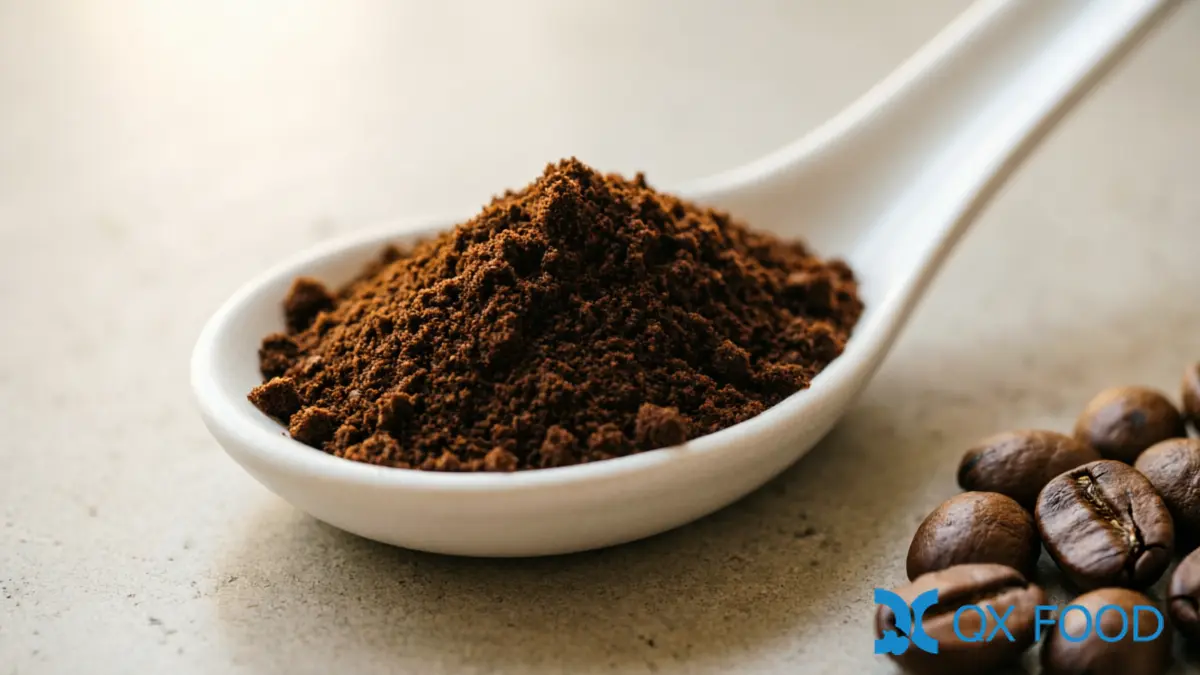
Key Specifications of Coffee Powder COP-K42
COP-K42 is produced to Q/KWQ 0001S with factory and type inspection per the standard test methods. Reference specification below:
| Item | Standard | Test Method |
|---|---|---|
| Color / Appearance | Meets standard samples | Q/KWQ 0001S |
| Odor and taste | Meets standard samples | Q/KWQ 0001S |
| Moisture | ≤4.00 g/100g | GB 5009.3 |
| Ash | ≤5.0 g/100g | GB 5009.4 |
| Caffeine | ≥2.0% | Q/KWQ 0001S |
| Inorganic Arsenic | ≤0.1 mg/kg | GB 5009.11 |
| Lead | ≤0.8 mg/kg | GB 5009.12 |
| Aerobic Plate Count | ≤10000 CFU/g | GB 4789.2 |
| Coliforms | ≤0.3 MPN/g | GB 4789.3 |
| Salmonella | Not detectable / 25g | GB 4789.4 |
| Staphylococcus aureus | ≤100 CFU/g | GB 4789.10 |
Packaging options: 100 g aluminum foil bag, 1 kg aluminum foil bag, 10 kg carton, 20 kg carton, 25 kg fiber drum, with customized packaging available. Shelf life 18 months stored in a cool, dry place away from direct sunlight. Food additives comply with GB 2760 regulations. MOQ 1 MT with 1 kg samples available.
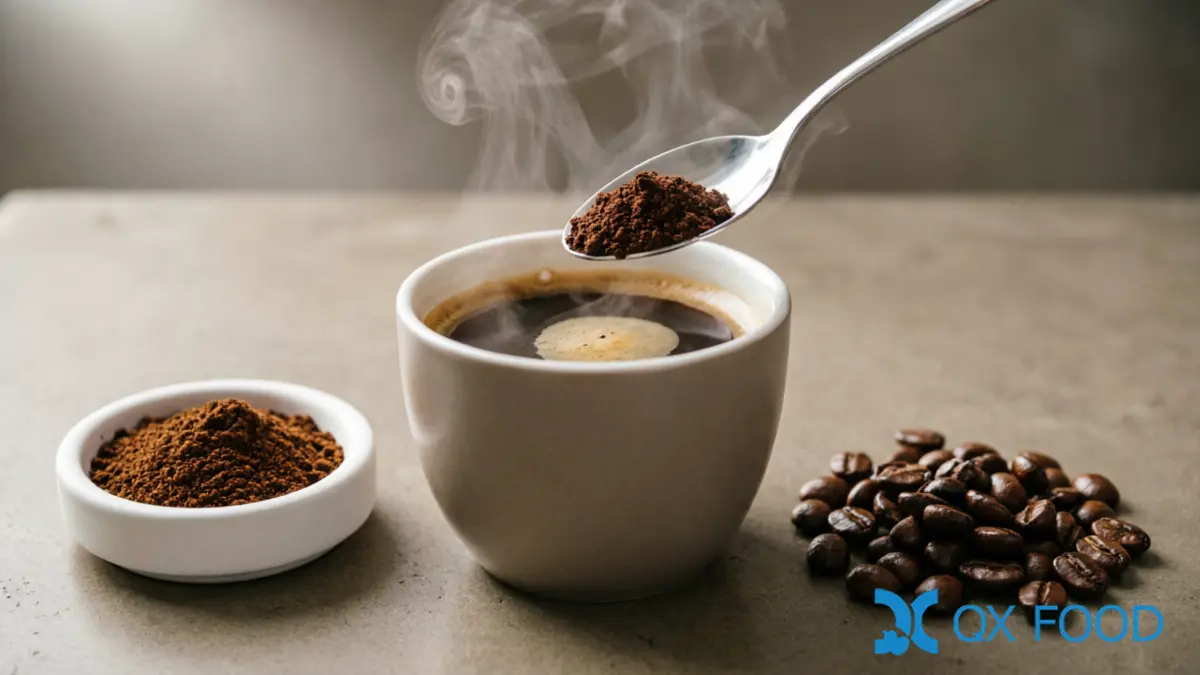
Beverage and Milk Tea Applications
Instant solid coffee drinks are a core application for coffee powder. COP-K42 dissolves quickly in hot or cold water, which makes it a practical base for instant coffee sachets, coffee mix powders and cold-brew style drink blends. For beverage chain stores and milk tea shops, roasted coffee powder is a standard ingredient in coffee milk tea, latte bases and coffee-flavored drinks, where the deep-roast character carries through the milk and sweetener system.
For beverage formulators, coffee powder is one of the most direct ways to bring authentic coffee character into an instant product, and the caffeine content of the powder carries through the finished drink. The caffeine content of coffee powder is also a functional consideration in beverages. Because caffeine ≥2.0% is documented on the specification, formulators can calculate the caffeine contribution of their coffee powder dosage and build compliant labels and claims for their markets. This matters for beverage brands positioning coffee drinks around the refreshing effect of caffeine.
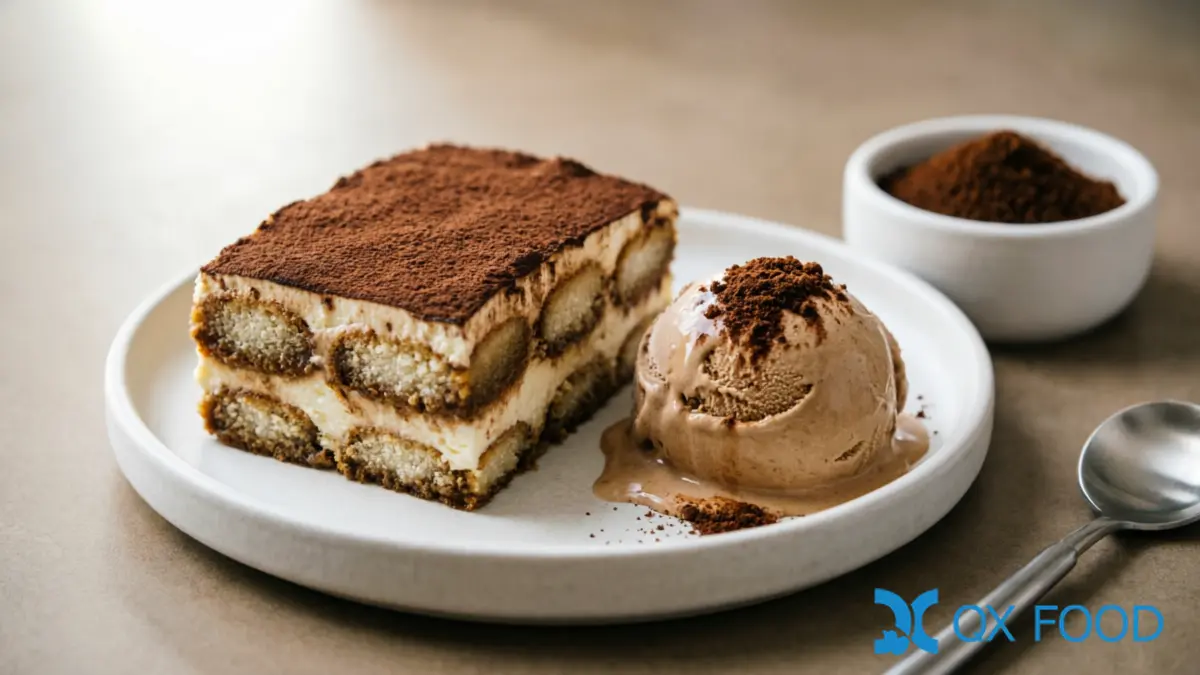
Bakery, Dessert and Ice Cream Applications
In bakery, coffee powder contributes the coffee note and a deep brown color to cakes, biscuits, pastries and dessert preparations. The ultra-fine grind incorporates evenly into dough and batter without grittiness, and the roasted flavor survives baking temperatures — caffeine itself is heat-stable, so the functional character persists through the bake. For ice cream and frozen desserts, coffee powder blends into the mix before churning for uniform coffee flavor, and its low moisture protects the freezing profile.
Coffee powder also appears in compound seasonings and confectionery: coffee-flavored candies, chocolate-coffee blends, and savory seasoning systems where a roasted note adds depth. For dessert chains and foodservice, coffee powder provides the reliable flavor base for tiramisu, coffee mousse, coffee syrup and coffee-flavored sauces, where the deep-roast character is the signature note.
Buying Coffee Powder in Bulk: What to Verify
When sourcing coffee powder for food manufacturing, buyers should verify a few key points with any supplier before committing volume. First, the roast profile: confirm the roast depth matches your target flavor, because light, medium and deep roasts behave differently in formulations. Second, the caffeine content: confirm the specification and test method, because caffeine drives both the functional character and the label calculations in coffee-flavored products. Third, the grind: verify particle size suits your application — ultra-fine for smooth incorporation in dough and ice cream, coarser for brewing systems. Fourth, the specification: check moisture, ash, heavy metals and the full pathogen panel against your market’s requirements.
QXFOOD publishes the processing line, bean origin and test panel for COP-K42 openly, so the specification sheet and the certificate of analysis answer your incoming QC questions before the container arrives. For flavor-sensitive applications, request standard samples and evaluate the powder against your target flavor profile, since roast depth and bean origin both shape the finished note.
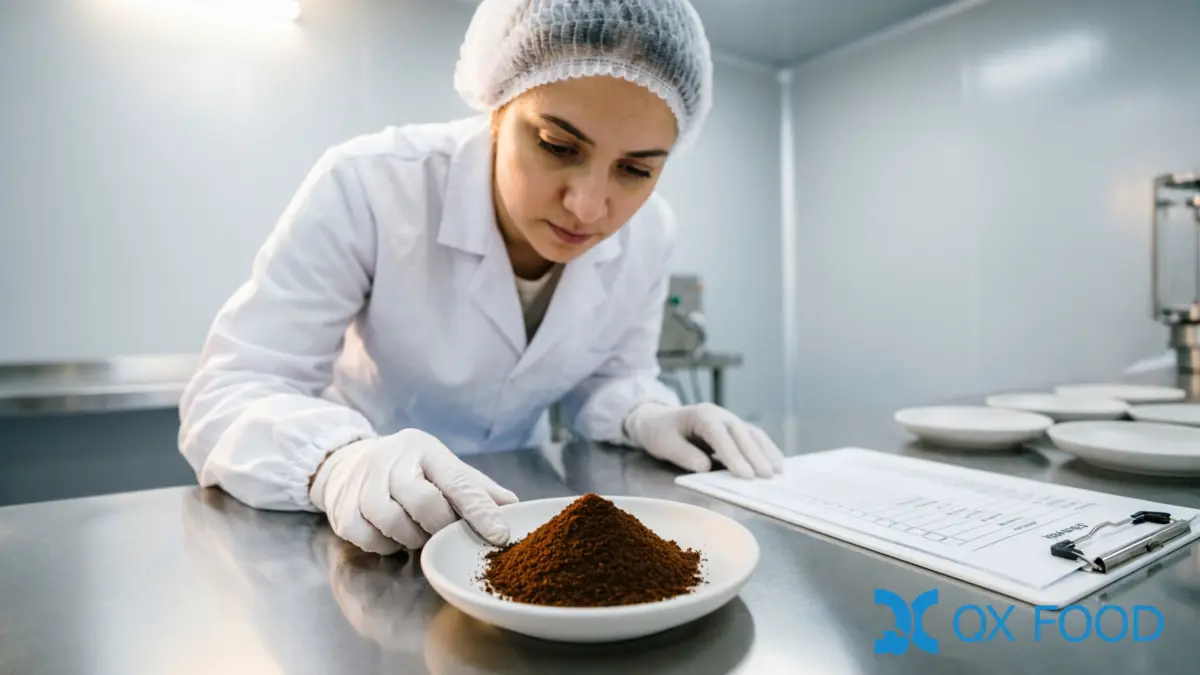
Quality Systems and Documentation
QXFOOD supplies coffee powder from a documented supply chain: Yunnan coffee beans, processed under ISO9001 and ISO22000 management systems, with HACCP controls covering cleaning, roasting, cooling, grinding, sieving and packing steps. Every production batch carries a certificate of analysis covering color, appearance, odor, impurities, moisture, ash, caffeine, aerobic plate count, coliforms and Staphylococcus aureus, with heavy metals and Salmonella tested per the type inspection schedule — so your incoming quality control can verify the lot against the agreed specification.
Food safety compliance follows GB 2760 for food additives and Q/KWQ 0001S for product quality. For export markets, QXFOOD works with buyers to confirm the relevant destination-market requirements before shipment, so compliance claims are only made against agreed specifications and verification. Certification includes ISO9001, ISO22000, HACCP and HALAL, and the raw material is declared non-GMO with no allergen declaration.
Related Products in the Natural Plant Powders Range
Coffee powder COP-K42 is part of the Natural Plant Powders family. Buyers sourcing a full beverage and fruit powder portfolio often evaluate these products alongside:
Fig Powder FIG-15 — whole fig fruit powder with soluble dietary fiber for bakery and meal replacement.
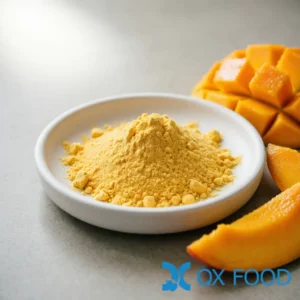
Mango Powder MGO-15 — spray-dried mango powder for solid drinks, yogurt and ice cream.
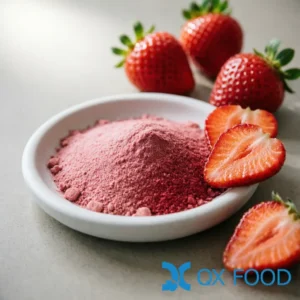
Strawberry Powder STB-18 — spray-dried strawberry powder for bakery, dairy and beverages.
For the full category view, visit the Natural Plant Powders category page.
Related reading: Coffee powder in sauce and dessert applications.
Spiced coffee profiles pair COP-K42 with cinnamon CP-K47 or clove CLO-D11.
Frequently Asked Questions
Is COP-K42 instant coffee or roasted coffee powder?
COP-K42 is roasted coffee powder: Yunnan coffee beans are deep roasted and ultra-fine ground into a powder. It dissolves quickly in hot or cold water but is not the fully soluble instant coffee format. It is the roasted-ground ingredient for bakery, ice cream, milk tea and seasoning applications.
What is the caffeine content of COP-K42?
The specification calls for caffeine ≥2.0%, measured per Q/KWQ 0001S. The documented level supports formulation and label calculations for coffee-flavored products.
Where do the coffee beans come from?
COP-K42 is made from Yunnan coffee beans, with full traceability from bean origin to finished powder.
Can coffee powder be used in ice cream and bakery?
Yes. The ultra-fine grind incorporates evenly into dough, batter and ice cream mixes, and the roasted flavor survives baking temperatures. Caffeine is heat-stable, so the functional character persists through processing.
Does COP-K42 contain allergens?
No. The raw material declaration for coffee beans is non-GMO with no allergen declaration.
What is the shelf life of COP-K42?
18 months when stored in a cool, dry place away from direct sunlight. Keep packaging sealed after opening to protect the powder from moisture.
What certifications does COP-K42 hold?
COP-K42 is produced under ISO9001, ISO22000 and HACCP food safety systems and is HALAL certified, with factory inspection per Q/KWQ 0001S.