What Is Dried Ginger DGR-27?
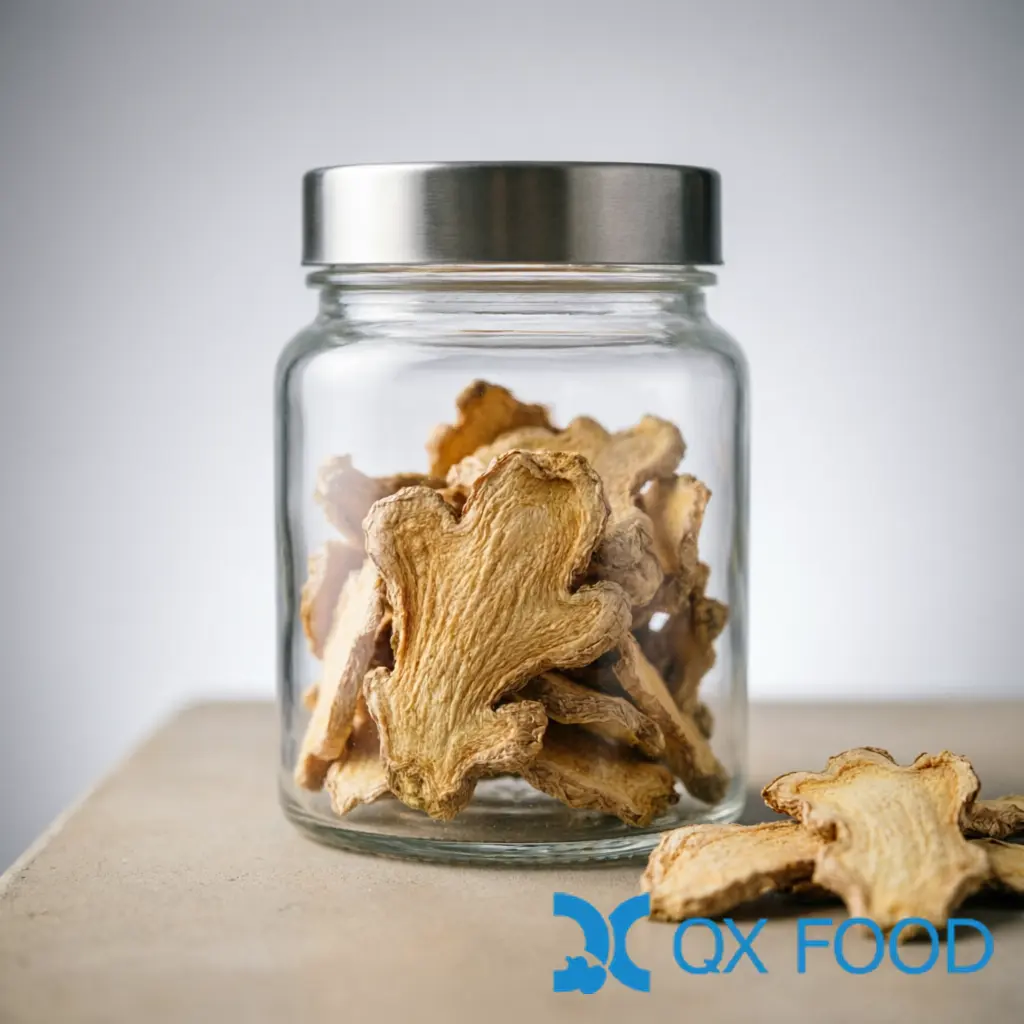
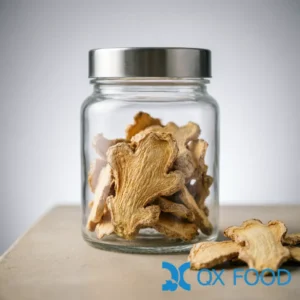
Dried ginger DGR-27 is dehydrated ginger root in sliced form, made from fresh ginger tubers grown in Shandong. The process is straightforward and controlled: fresh ginger is washed, cut into slices, dried in staged hot-air tunnels, screened for fragments, quality checked and packed. The result is a clean, mildew-free dried ginger slice that keeps the pungent ginger aroma and the natural soluble solids of the fresh root.
For food manufacturers, dried ginger slices are the stable, storable form of a spice that is otherwise seasonal and perishable. Sliced format matters: slices are easier to dose in soup bases and tea blends, easier to inspect for quality, and easier to grind in-house to a custom particle size than whole roots. DGR-27 is produced to GH/T 1194-2022 under ISO9001, ISO22000 and HACCP systems, with HALAL certification.
Why Buyers Choose Dried Ginger Slices from QXFOOD
Dried ginger is a volume spice with a wide quality spread. The buying factors that separate a reliable dried ginger supplier from the rest are drying control, purity and documentation:
- Controlled hot-air drying — staged drying removes moisture steadily without burning the slices or destroying the aromatic compounds. The result is a low-moisture product that resists mold in storage and keeps its pungency through the shelf life.
- Low moisture content — DGR-27 carries a low moisture specification, which protects the buyer against fungal growth, caking and weight loss during long transit and warehouse storage.
- No mildew, no foreign matter — each batch is screened for fragments and checked for visible impurities, reducing foreign-matter risk in soup bases, tea bags and spice blends where the slices go directly into food.
- Microbiological control — batches are tested for coliforms and Salmonella per GB 4789 methods, with results on the certificate of analysis for incoming QC verification.
- Stable supply — sourced from Shandong ginger planting areas, with production under ISO9001, ISO22000 and HACCP management systems, giving food manufacturers a dependable volume source across seasons.
Dried Ginger vs Fresh Ginger in Food Production
Buyers sometimes ask whether dried ginger can simply replace fresh ginger in a formulation. The answer depends on the application, and the difference is well understood in the industry:
| Factor | Dried Ginger Slices | Fresh Ginger |
|---|---|---|
| Shelf life | 18 months at room temperature | Days to weeks, cold chain needed |
| Flavor intensity | Concentrated pungent aroma | Lighter, fresher pungency |
| Substitution ratio | 1 part dried approx. 3–4 parts fresh | Reference basis |
| Logistics | Container-friendly, no cold chain | Perishable, high freight cost |
| Best suited for | Soup bases, tea blends, spice blends, extracts | Retail fresh produce, juice, short-run cooking |
For soup base factories, tea manufacturers and spice blenders, dried ginger slices are the practical choice: they concentrate flavor, store for 18 months, and arrive ready for dosing or grinding. The drying process also converts some gingerols into shogaols, which shifts the pungency profile toward the warmer, sharper note associated with dried ginger in traditional cuisines.
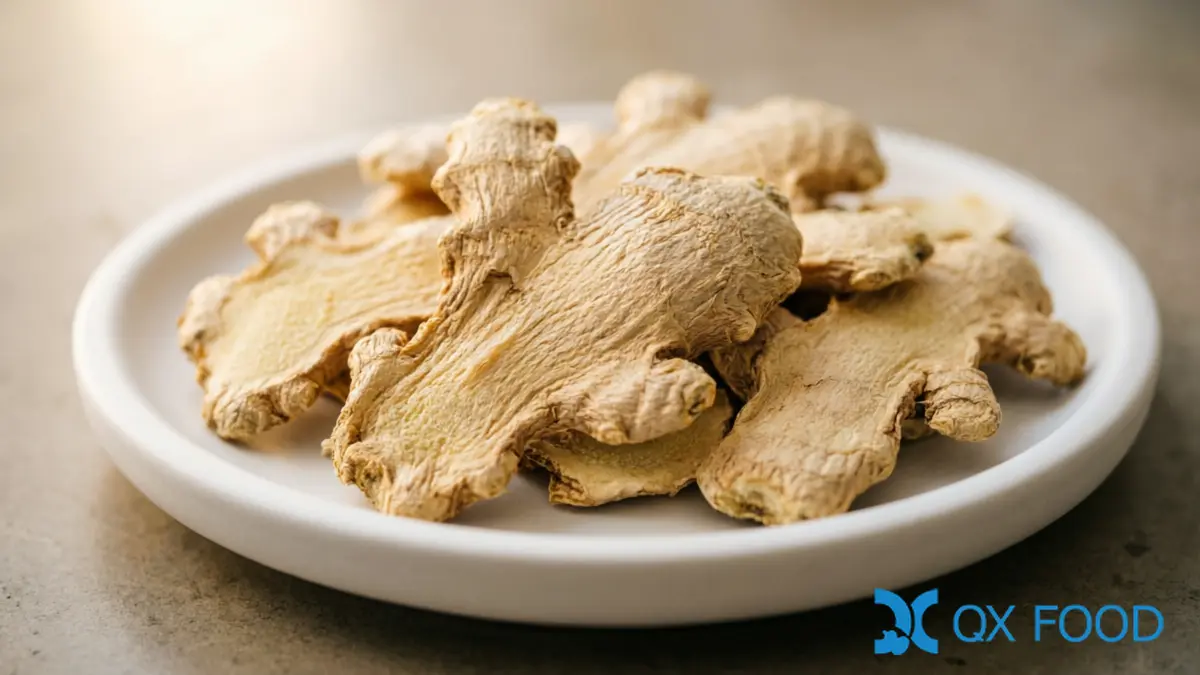
Key Specifications of Dried Ginger DGR-27
DGR-27 is produced to GH/T 1194-2022 with factory inspection per the standard test methods. Reference specification below:
| Item | Standard | Test Method |
|---|---|---|
| Color | Conforms to standard sample | GH/T 1194-2022 |
| Impurities | No foreign debris visible to the naked eye | GH/T 1194-2022 |
| Moisture | Low moisture, controlled drying | GB 5009.3 |
| Coliforms | ≤0.3 MPN/g | GB 4789.3 |
| Salmonella | Not detectable / 25g | GB 4789.4 |
Packaging: colorless PE bags inside, brown paper-plastic composite bags outside. Shelf life 18 months stored at room temperature in a cool, dry place. Food additives comply with GB 2760 regulations. Samples available for evaluation.
Gingerol and Shogaol: The Chemistry Behind Dried Ginger
Ginger’s pungency comes from a family of compounds that change as ginger dries. Fresh ginger is rich in gingerols, which deliver the bright, sharp bite of raw root. During drying, heat converts part of the gingerols into shogaols, which are measurably more pungent than their precursors. That is why dried ginger tastes hotter and more concentrated than fresh ginger weight for weight, and why chefs and formulators use dried ginger for warm, persistent heat in cooked applications rather than the fresh zing of raw root.
For food manufacturers, this chemistry has practical implications. A dried ginger supplier’s drying profile directly influences the pungency of your finished product: slow, staged hot-air drying develops the shogaol character evenly, while uncontrolled high heat can degrade aroma and darken the slices. DGR-27’s staged hot-air drying is designed to protect both the pungent ginger aroma and the natural soluble solids, so the finished slices deliver consistent heat and flavor from batch to batch. When you formulate with dried ginger, the pungency contribution should be validated against your target profile using samples, because batch-to-batch pungency varies with growing conditions even within a single origin.
Sourcing, Seasonality and Supply Stability
Ginger is harvested once a year in each growing region, which makes sourcing discipline the difference between a stable dried ginger supply and a volatile one. DGR-27 is sourced from Shandong, one of China’s established ginger-producing provinces. QXFOOD purchases against the harvest cycle, dries and holds stock, and releases product against confirmed orders, which smooths the seasonal price swings that buyers face when they source spot on the market.
For volume buyers, this matters in three ways. First, price stability: forward buying against the harvest avoids the premium that spot buyers pay in the off-season. Second, quality stability: drying runs made from fresh harvest within a defined window produce more uniform slices than ad-hoc processing of stored root. Third, continuity: a supplier who holds dried stock can ship against reorders without waiting for the next harvest. These are the practical reasons buyers consolidate their dried ginger volume with a single qualified supplier rather than sourcing per-container on the open market.
Applications in Soup Bases and Beverage Production
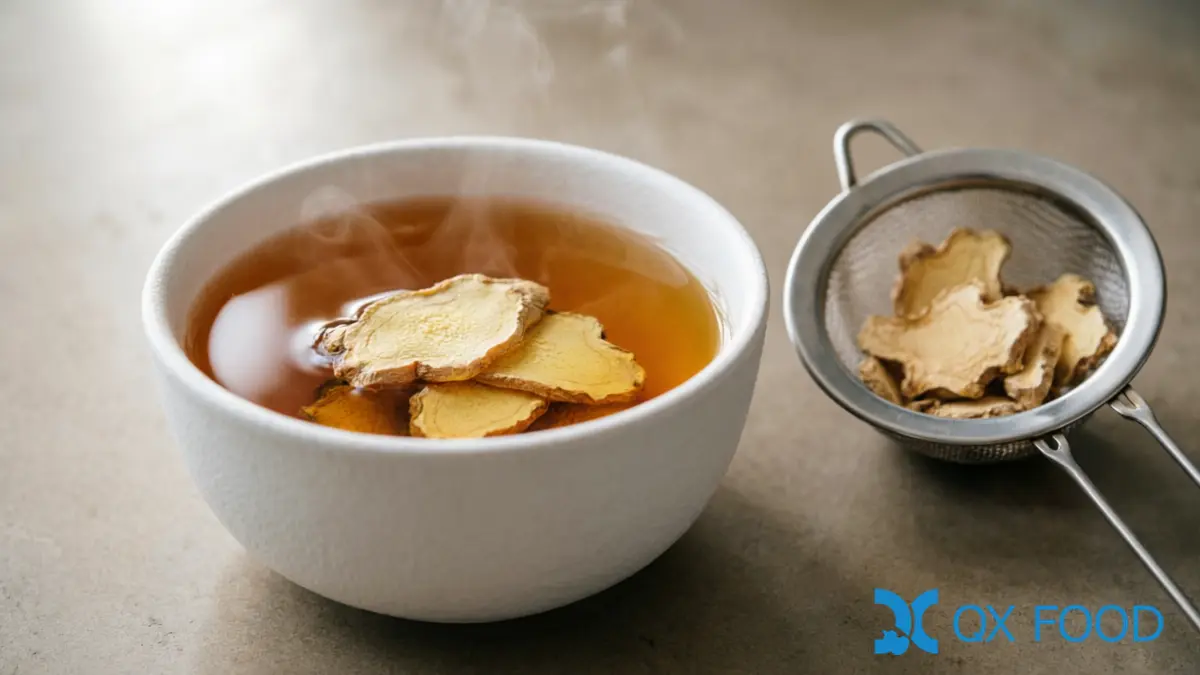
Dried ginger slices are a core raw material in instant soup base production. Ginger contributes the warming pungent note in chicken soup bases, seafood broths and hot pot bases, and the sliced format integrates cleanly into both liquid concentrate and dry powder processes. For dry soup mix manufacturers, dried ginger slices can be dosed as-is or ground to the target particle size in-house, which gives formulators control over texture and release rate.
Beverage production is the other major application. Ginger tea blends, spiced soft drinks, herbal infusions and functional drink mixes all use dried ginger as a flavor base. In tea bags, sliced ginger releases flavor gradually during steeping without the cloudiness that fine powder can create. The stable soluble solids content of DGR-27 also matters for extract producers who measure yield per batch.
Spice Blending, Pickled Food and Cooking Seasoning
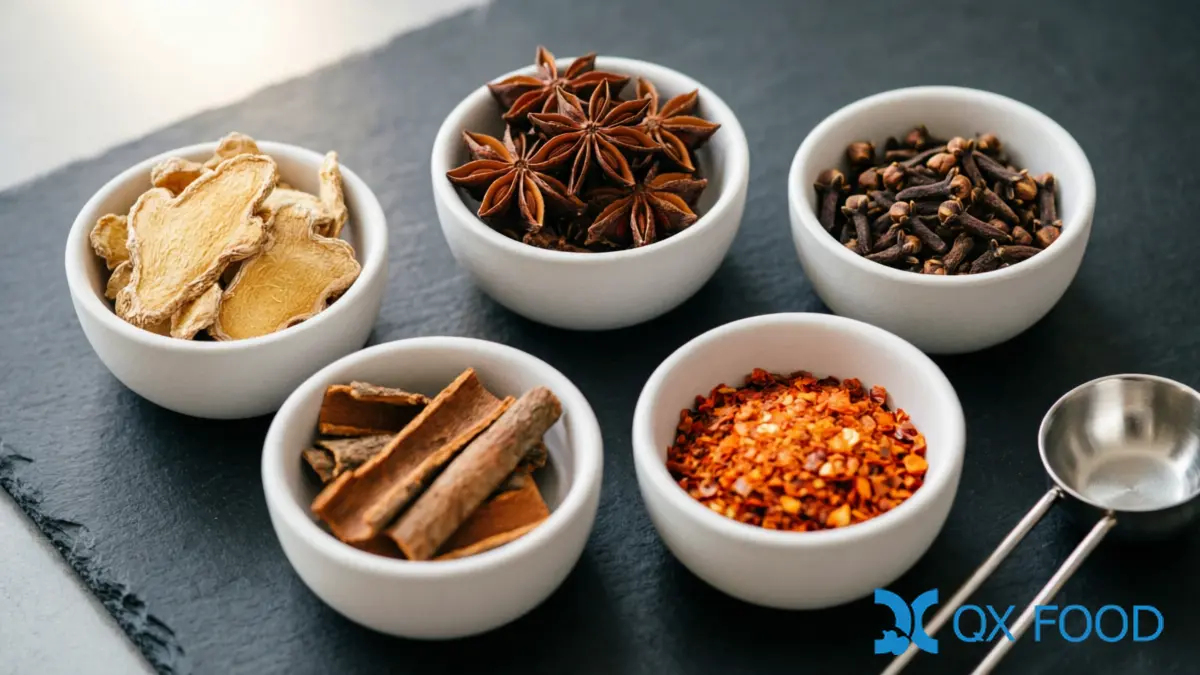
In spice blending, dried ginger slices serve as the pungent backbone of curry powders, five-spice variants and meat seasoning blends. Grinding in-house from slices lets manufacturers control the fiber content and particle size of their ginger component, which is harder to achieve with pre-ground powder. For pickled food production, dried ginger slices are rehydrated or added directly to pickling brines to contribute the characteristic pungent note.
Cooking seasoning applications range from braising spice packs to dry rubs and marinade mixes. The concentrated pungency of dried ginger means small dose rates go a long way, which keeps formula costs predictable. Food manufacturers exporting to multiple markets also benefit from the documented origin and batch testing of DGR-27, since destination-market importers increasingly ask for traceability on spice raw materials.
Quality Systems and Documentation
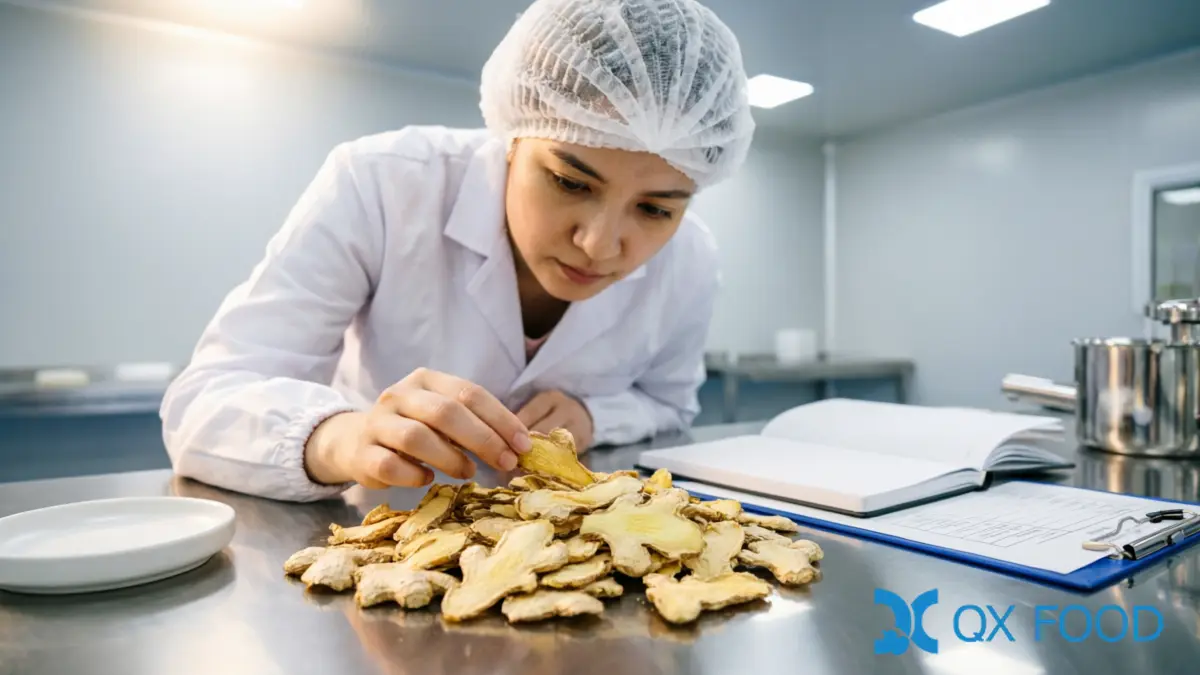
QXFOOD supplies dried ginger from a documented supply chain: fresh ginger sourced from Shandong, processed under ISO9001 and ISO22000 management systems, with HACCP controls covering washing, drying, screening and packing steps. Every production batch carries a certificate of analysis covering color, impurities, moisture, coliforms and Salmonella, so your incoming quality control can verify the lot against the agreed specification.
Food safety compliance follows GB 2760 for food additives and GH/T 1194-2022 for product quality. For export markets, QXFOOD works with buyers to confirm the relevant destination-market requirements before shipment, so compliance claims are only made against agreed specifications and verification. Certification includes ISO9001, ISO22000, HACCP and HALAL, and the raw material is declared non-GMO with no allergen declaration.
Dried ginger DGR-27 is part of the Raw Spices & Herbs family. Buyers sourcing a full spice portfolio often evaluate these products alongside:
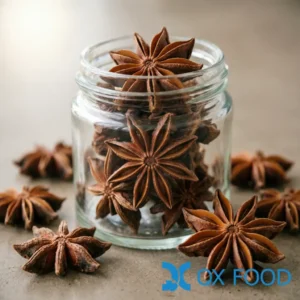
Whole Star Anise STA-23 — hand-sorted pods, high anethole, for braising and five-spice.
Cassia Powder CP-B04 — Chinese cassia bark, volatile oil 2.02g/100g, for braised meat and bakery.
Clove Powder CLO-D11 — 80 mesh, volatile oil 17.8g/100g, for meat curing and spice blends.
Ginger Powder DGP-W01 — pure ground dried ginger for seasoning and beverage blends.
For the full category view, visit the Raw Spices & Herbs category page.
Related reading: Dried ginger’s role in soup base formulation and braised meat spice packs.
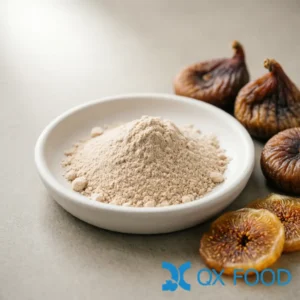
Ginger’s warmth lifts fruit systems like fig FIG-15 and matcha MP-K40 in hot beverages.
Frequently Asked Questions
What is the difference between dried ginger and ginger powder?
Dried ginger DGR-27 is the sliced, dehydrated form of fresh ginger root. Ginger powder is the ground form of the same material. Slices are preferred for soup bases, tea bags and spice sachets where gradual release matters; powder is used where even distribution in a dry mix is needed.
Can dried ginger slices replace fresh ginger in a formula?
Yes, with an adjustment. As a general industry rule, 1 part dried ginger replaces approximately 3–4 parts fresh ginger by weight. Because dried ginger is more concentrated and its pungency profile shifts during drying, formula revalidation with samples is recommended before production.
What is the shelf life of DGR-27?
18 months when stored at room temperature in a cool, dry place. Keep packaging sealed after opening to preserve the pungent aroma and low moisture content.
Is DGR-27 suitable for tea bags?
Yes. The sliced format releases ginger flavor gradually during steeping and is widely used in ginger tea blends, herbal infusions and spiced drinks.
Does QXFOOD supply ground ginger from these slices?
DGR-27 is the sliced format. Grinding to a custom particle size can be discussed with the sales team, subject to technical feasibility and sample validation.
What certifications does DGR-27 hold?
DGR-27 is produced under ISO9001, ISO22000 and HACCP food safety systems and is HALAL certified, with factory inspection per GH/T 1194-2022.
What is the minimum order quantity?
MOQ is 1 MT. Samples are available for evaluation before ordering.