
Halal seasoning powder compliance is a documented ingredient-and-process system, not a pork-free formulation rule. Pork-free status addresses one part of the requirement, and the rest covers ingredient sources, processing aids, manufacturing controls, storage and handling, certification scope and the destination market’s recognition of that certification.
This guide explains how halal seasoning powder compliance is actually established: where the evidence comes from, which ingredients need the most scrutiny, and how alcohol, enzyme and shared-equipment questions are handled under different schemes, with particular attention to Malaysia and Indonesia, two important halal markets for China-origin food ingredients.
Halal Is More Than Pork-Free
A pork-free formula is a useful starting point but not a compliance conclusion. The same applies to other simplified rules that sound like universal requirements: alcohol-free processing is not one global rule, enzyme halal status is not settled by microbial source alone, and shared lines are not handled by a generic cleaning protocol. Each of these is assessed under the applicable halal standard and certification body requirements, and each leaves a documentation trace.
Halal compliance for seasoning powder is therefore built across the full chain: materials, supplier evidence, processing aids, the manufacturing process, facility controls, storage and logistics, the certification scope, and destination-market recognition. Pork-free is one check inside that chain.
Start With the Destination Market
The destination market determines which certification body, recognition route and supporting documents matter. A certificate recognized in one country does not automatically open another, so the practical sequence is: define the destination market first, then verify the certification or recognition route that market accepts for the specific product.
Malaysia: JAKIM certification
JAKIM operates a specific procedure for halal certification of international manufacturing, in force for applications from 1 January 2024. The applicant must be a company registered in Malaysia (for example a branch, subsidiary, importer, distributor or agent), the foreign manufacturing site is audited, the factory must operate a Halal Assurance System, and certificates are valid for two years. For ingredient suppliers, the practical consequence is that the Malaysian buyer needs documented evidence covering the finished product scope, and the raw materials behind it.
Indonesia: BPJPH and the October 2026 mandatory-halal stage
Indonesia regulates halal certification under Law No. 33/2014 and its implementing rules. The current transition period for applicable imported food and beverage products runs through 17 October 2026, with the next mandatory-halal stage taking effect from 18 October 2026. BPJPH has confirmed the staged timeline, and the stage covers food and beverages, slaughter products and services, plus categories including food raw materials, additives and processing aids. Imported products in mandatory-halal categories are not exempt: BPJPH has stated that products entering, circulating and being traded in Indonesia must meet Indonesian halal certification and labeling requirements regardless of origin, and that mutual-recognition arrangements simplify procedures rather than remove the obligation. Where a foreign halal certificate is issued by an overseas halal body recognized under BPJPH’s foreign-certification framework, the applicable foreign halal certificate must still be registered with BPJPH through the relevant SIHALAL procedure before the product enters the Indonesian market. Recognition of the foreign certification body and registration of the foreign halal certificate are related but separate steps.
For China-origin supply chains these requirements are actively enforced: BPJPH held a socialization session with 18 China-based halal certification bodies in April 2026 and began halal compliance checks on China-origin products at Indonesian ports from 1 July 2026, focused on certification completeness, packaging and warehousing. Even where a raw agricultural product is exempt from product certification, its packaging, storage and transport must still be protected from cross-contamination. Buyers should therefore verify the current BPJPH route for the specific product category rather than assuming that a foreign halal logo alone establishes market eligibility.
Build the Halal Evidence Chain
Documented halal evidence does not mean one certificate per material. Upstream evidence can take different forms: a recognized halal certificate, a product specification, a raw-material declaration, a source statement, processing-aid documentation or other evidence accepted by the certifier. What matters is that every relevant material and processing step is covered by evidence the applicable scheme accepts.
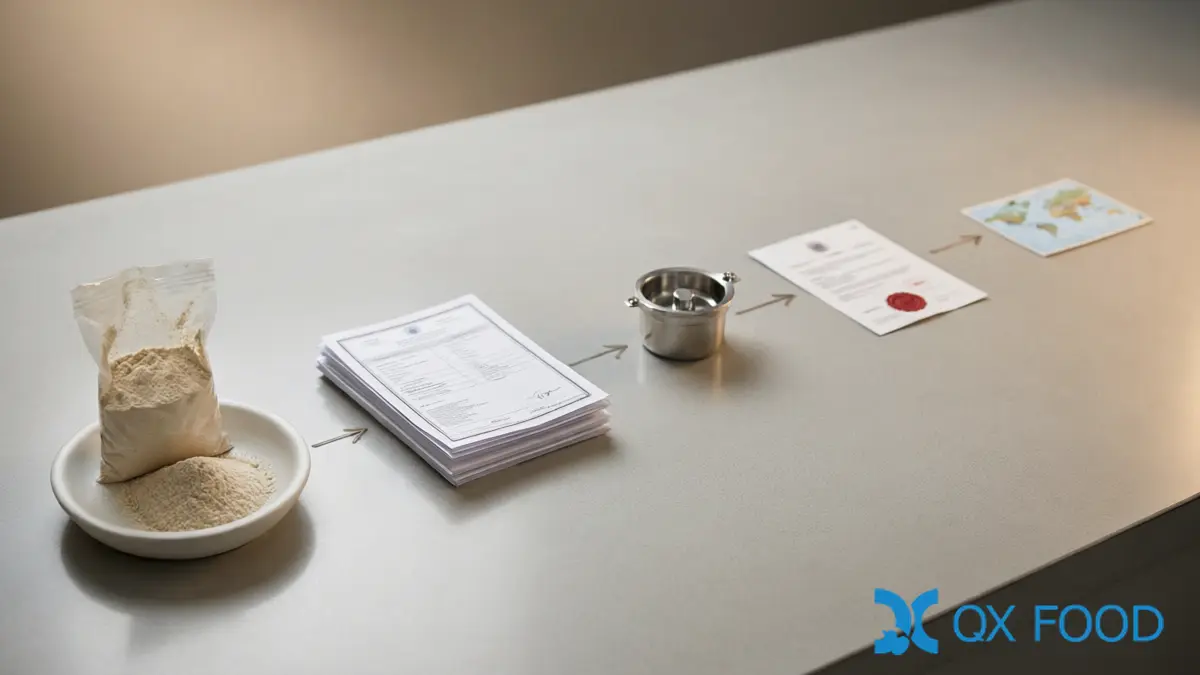
JAKIM’s international-manufacturing procedure illustrates the pattern: the submission requires a halal certificate or product specification for all raw materials and ingredients, the same for processing aids, plus the production flow chart, factory layout, Halal Assurance System documentation and related records, followed by a site audit. Halal certification requires documented evidence for all relevant raw materials and processing aids, but that does not mean every material universally requires its own standalone halal certificate. Depending on the ingredient risk and certification scheme, acceptable evidence may include a recognized halal certificate, product specification or other supporting documentation accepted by the certifier.
Which Seasoning Ingredients Need More Scrutiny
Some ingredient categories carry more halal risk than others because of their sources, solvents or downstream processing. The scrutiny list is practical rather than fixed:
| Ingredient category | Why scrutiny is needed | What to verify |
|---|---|---|
| Flavors and extracts | Solvent use and carriers differ by product | Solvent source and function, processing route, residual conditions, product specification or halal documentation |
| Enzymes | Source category alone does not settle status | Production organism, fermentation media, processing aids, carriers, certificate or specification |
| Animal-derived materials | Species and slaughter method determine status | Species, source chain, applicable slaughter and certification requirements |
| Carriers, emulsifiers and processing aids | Some are animal-derived or solvent-processed | Ingredient origin, derivation route, halal documentation or specification |
| Fermentation-derived ingredients | Media and downstream steps vary | Substrate, production organism, processing aids, carrier, documentation |
The scrutiny principle is the same across the list: the ingredient category raises the question, and the specific product answers it through its composition, processing and documentation.
Alcohol and Solvent Rules Are Scheme-Specific
Alcohol and solvent use should not be reduced to one universal alcohol-free rule. Flavor solvents, processing aids and residual alcohol conditions are reviewed under the applicable halal standard and certification body requirements, with supporting product specifications or halal documentation where required. Do not infer compliance from the word alcohol-free alone: the technical function of the solvent, its source, the processing route and the residual conditions are all part of the assessment, and the outcome can differ between schemes and between products.
Plant-Derived Does Not Mean Automatically Certified Halal
Plant- and microbial-derived savory ingredients may reduce animal-source risk, but halal status still has to be verified for the specific grade, including processing aids, carriers and manufacturing documentation. HVP from soy, wheat or corn is a common example: the plant origin removes the animal-protein question, but the selected grade still needs product-specific verification. The same applies to yeast extract, fermented powders and other fermentation-derived ingredients, whose media and downstream steps can vary.
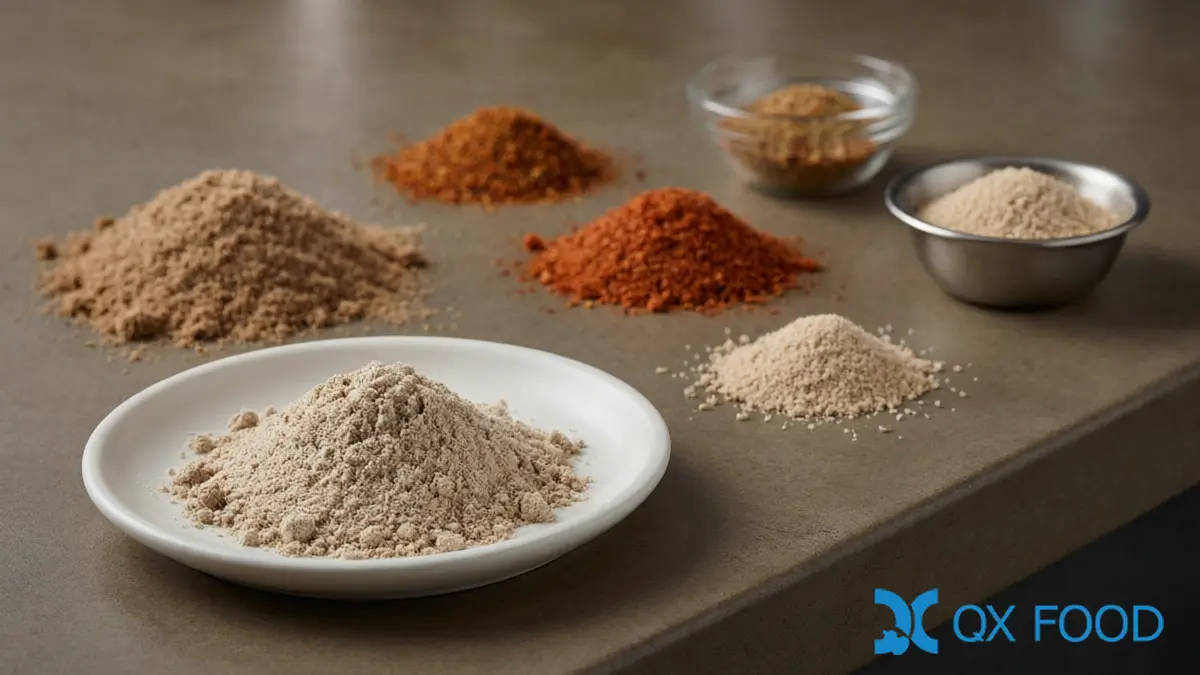
Botanical ingredients such as onion, garlic, pepper and paprika are generally lower-risk from an animal-source perspective, but compound spice or seasoning products still require review of added ingredients and processing. A thermal-process flavor may be formulated from plant-derived precursors, animal-derived materials or a combination; meat-free or pork-free status must be verified from the specific product composition and supplier documentation rather than assumed from the production category.
Shared Equipment Requires Certification-System Controls
Shared equipment and facilities require controls accepted under the applicable certification system. These may include segregation, dedicated areas, material-flow controls, equipment history and documented cleaning, plus additional procedures where the certifier requires them. A generic cleaning protocol should not be presented as a universal rule: under the JAKIM international procedure, for example, the audit examines the factory layout, the Halal Assurance System and risk management in place, and the controls are assessed against that system rather than against one fixed cleaning formula.
Specification, Halal Documentation and COA Are Different Records
Three different records answer three different questions. The product specification describes composition, process route and agreed parameters. The halal supporting documentation covers certification status, ingredient evidence, processing-aid documentation and other records required by the applicable scheme. The batch COA reports the quality and safety parameters controlled for the selected seasoning SKU, such as moisture, microbiology and contaminant items where specified. Halal status is documented through the certification and evidence records, not by adding halal fields to every COA.
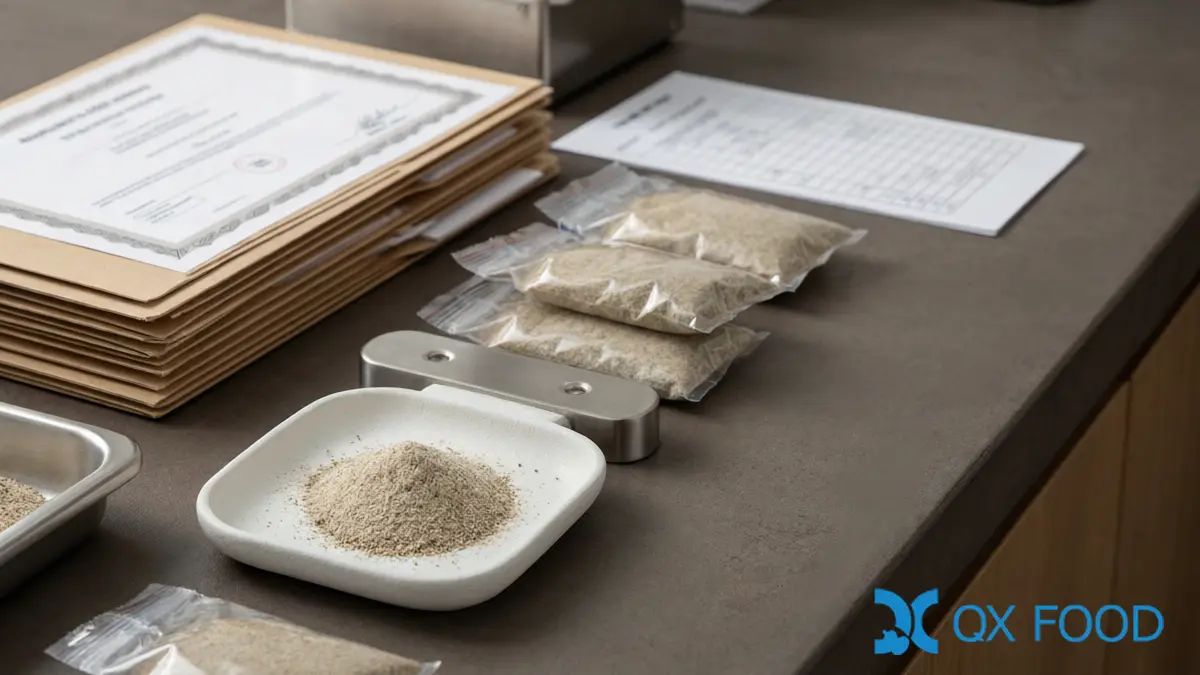
Species or porcine testing may be used where required by the certification body, regulator, buyer or risk assessment, but it is not a substitute for supply-chain documentation and process control. When a buyer asks for it, treat it as one verification layer on top of the documentation chain, not as the evidence itself.
How QXFOOD Documents Halal-Program Products
QXFOOD supplies seasoning and savory ingredient grades that can be reviewed for halal programs, including chicken seasoning CFP-H19, natural beef flavor BFP-H25 and the compound seasoning powder range. The current halal certificate, certified operation, product scope and destination-market recognition should be confirmed for the selected SKU before claim or import planning, because certification applies to a specific product, facility and period rather than to a brand or a category.
The same documentation discipline runs through our ingredient procurement guide and the savory-system guidance in our meat flavor enhancer guide, where halal, label and allergen status are treated as product-specific verifications.
Frequently Asked Questions
Is pork-free seasoning automatically halal?
No. Pork-free status addresses only one part of halal compliance. The ingredient sources, processing aids, manufacturing controls, certification status and destination-market requirements still need to be verified.
Does every raw material need its own halal certificate?
Not necessarily. Certification bodies require evidence for all relevant raw materials and processing aids, but the acceptable evidence can differ by ingredient and scheme. For JAKIM international manufacturing applications, the required submission is a halal certificate or product specification for all raw materials and ingredients, with similar documentation for processing aids.
Is plant-derived HVP automatically halal?
No. Plant origin removes the animal-protein question, but the selected HVP grade still needs product-specific verification of processing aids, carriers, manufacturing controls and halal documentation.
Can alcohol ever appear in a halal flavor system?
Alcohol and solvent status is standard- and use-specific. Review the solvent source, technical function, processing route, residual conditions and certifier requirements rather than applying a universal alcohol-free rule.
What should an ingredient buyer verify for Malaysia or Indonesia?
For Malaysia, verify the applicable JAKIM certification or recognized route, product and facility scope, and raw-material documentation. For Indonesia, verify the current BPJPH certification or foreign-certificate registration route and the import requirements for the specific product, including the mandatory-halal stage that applies from 18 October 2026.