
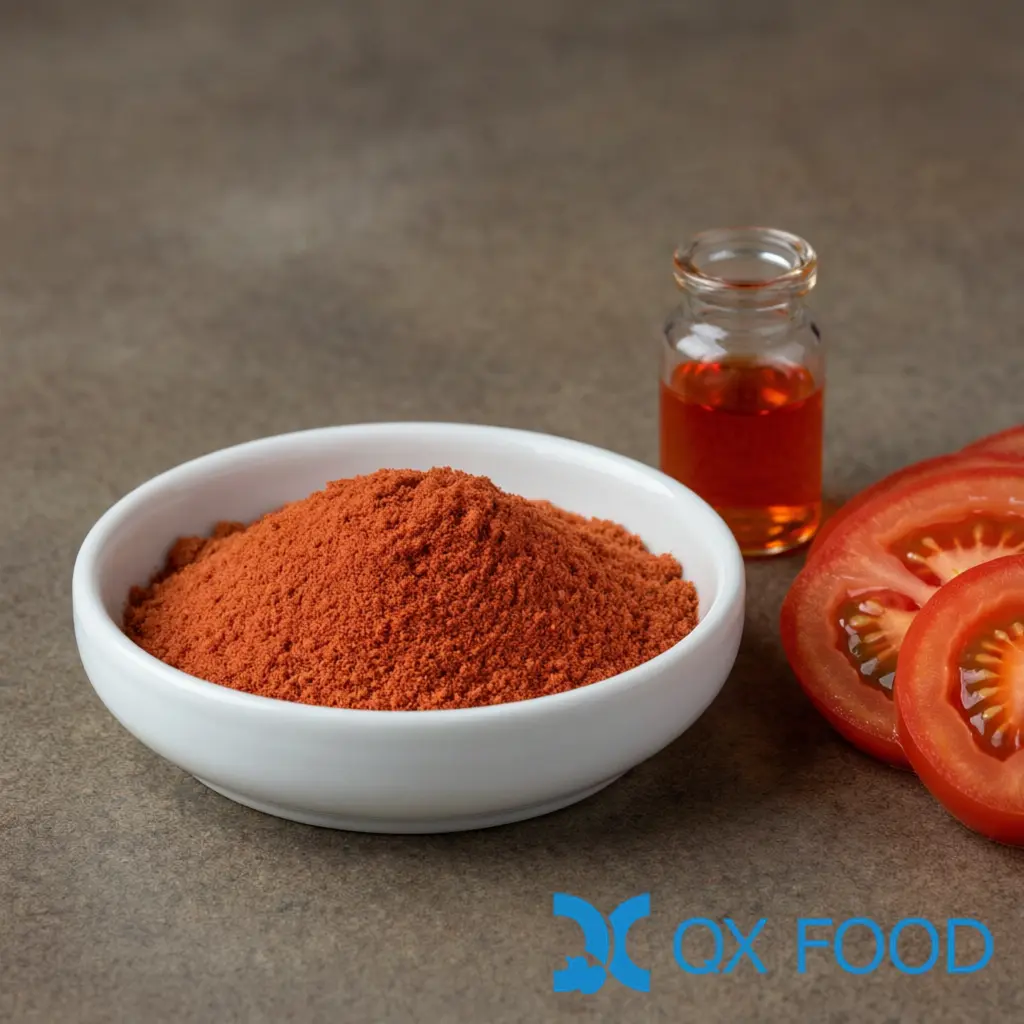
Lycopene can reach a food in two different ways: as part of a tomato-derived food ingredient such as tomato powder, or through a standardized lycopene color preparation. These routes should not be treated as interchangeable, because pigment concentration, formulation behavior and labeling requirements can differ. Lycopene food color work therefore starts by identifying which ingredient form the product actually needs.
This guide covers the lycopene food color questions that matter in formulation: stability under real processing, matrix and delivery-form behavior, the color contribution of tomato powder, and the regulatory position of lycopene preparations.
Lycopene Color Can Come From Different Ingredient Forms
Tomato powder contributes lycopene-derived red color as part of its overall tomato composition, alongside other carotenoids, sugars, acids, insoluble solids and tomato flavor. A standardized lycopene preparation is a different ingredient: a pigment concentrate formulated for a color function, often as an oil suspension or a dispersible powder. Deciding which one fits starts with the ingredient function, not with the pigment name.
Why Lycopene Is Red
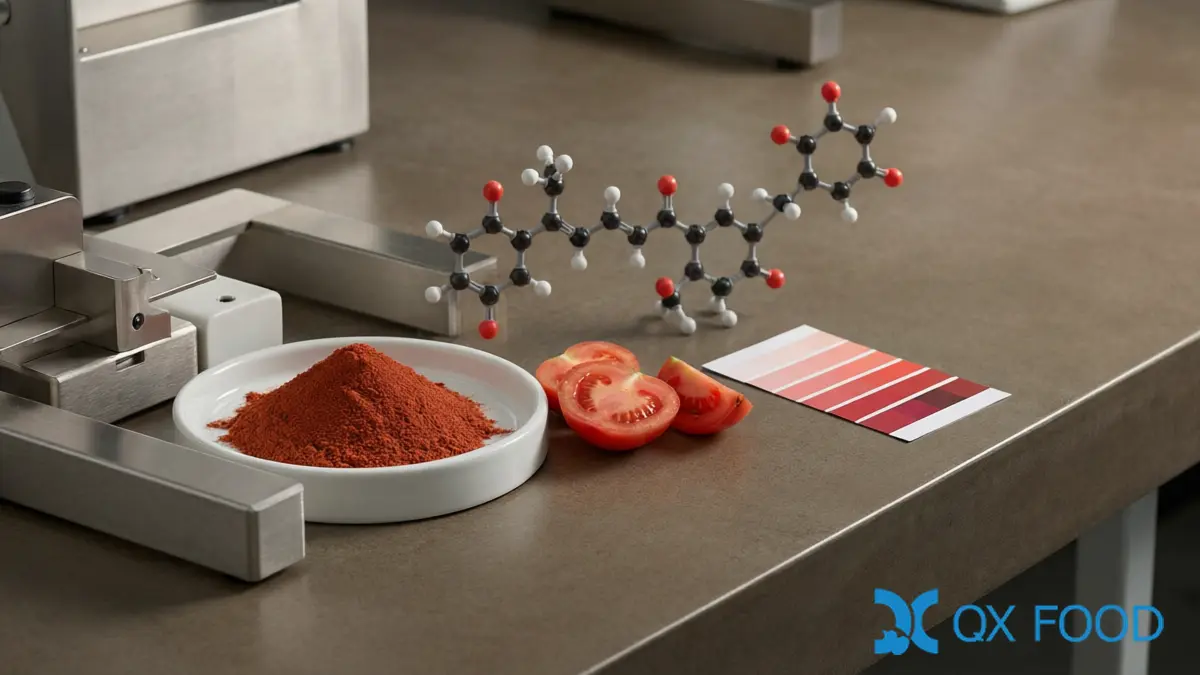
Lycopene is a carotenoid whose long chain of conjugated double bonds absorbs visible light and reflects the red that tomatoes are known for.
- Color: the conjugated system determines the absorption of visible light; isomerization and chemical change shift how that color reads.
- Lipophilicity: lycopene itself is lipophilic, but commercial delivery systems can be formulated for different matrices.
- Antioxidant chemistry: lycopene can participate in antioxidant reactions, but any nutrition or health positioning for a finished food must be evaluated separately under the applicable claim rules.
Stability Is a Time-Temperature-Matrix Problem
Thermal behavior should be treated as a time-temperature-matrix problem rather than a single temperature limit. Heating can cause isomerization, oxidation or degradation, but it can also change lycopene extractability from a tomato matrix. The relevant endpoint for a color application is therefore pigment retention and finished-product color after the actual process, not a universal maximum processing temperature.
Isomerization, Degradation and Extractability Are Different
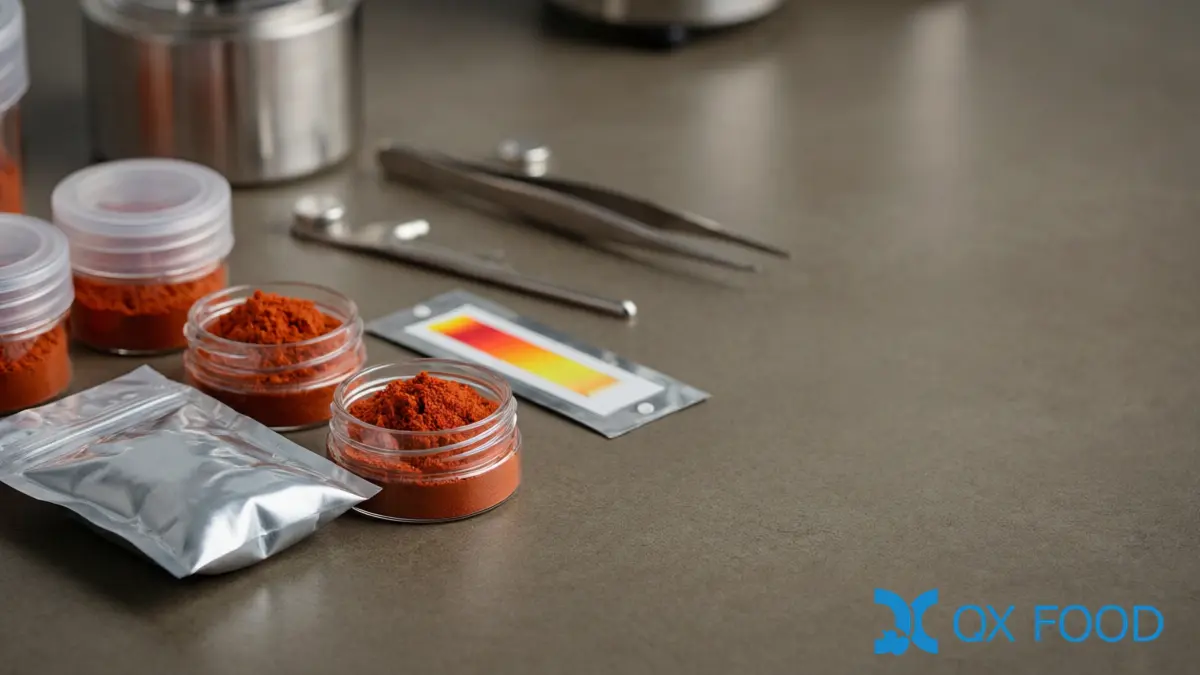
Isomerization, degradation and extractability are three different changes, and they can move in different directions. In a study of tomato puree heated at 60, 80, 100 and 120 degC for one to six hours, moderate temperatures promoted isomerization, while the higher temperatures and longer times increased the amount of lycopene that could be extracted from the puree matrix, so the measured lycopene change could not be read as simple destruction (effect of heating on the stability of lycopene in tomato puree).
Both temperature and residence time matter, and the interaction needs to be validated in the actual matrix and product.
Matrix and Delivery Form Matter
Matrix composition and the lycopene delivery system can strongly change color and stability behavior, so water-based and fat-based applications should be evaluated separately rather than ranked by matrix alone. Water-dispersible and oil-based preparations exist for different systems, and light and oxygen exposure can contribute to degradation. Packaging, oxygen management, antioxidant systems or encapsulation may improve retention, but the protection strategy should be validated for the selected preparation and food matrix.
Drying and powder formulation can substantially change lycopene retention and storage stability; the effect depends on the drying process, carrier system, moisture conditions and packaging. Reviews note that dehydrated tomato products need careful processing and moisture- and oxygen-controlled storage to retain lycopene well (lycopene in tomatoes: properties affected by food processing).
Tomato Powder Is Not the Same as a Lycopene Color Concentrate
Tomato powder can contribute lycopene-derived red color as part of its overall tomato composition. It also contributes other carotenoids, browned or process-derived color, sugars, acids, insoluble solids and tomato flavor, so it is not a standardized pigment carrier: tomato powder is not the same as lycopene concentrate. Where color is the engineering target, the two ingredient forms answer different formulation questions.
Do Not Use a Generic Lycopene Range for Tomato Powder
Lycopene content in tomato powders can vary substantially with cultivar, raw-material maturity, concentration and drying process. For example, one study of cherry and plum tomato powders reported 211.53-246.02 mg/kg under its specific drying conditions (drying temperature and storage effects on tomato powder quality). This is one reason a generic tomato-powder lycopene range should not be treated as an industry specification.
Where lycopene is an engineering input, use the selected grade’s measured specification or batch data rather than a generic tomato-powder range.
Set Color Targets in the Finished Product
Define the finished-product color target using instrumental values such as L*a*b* where appropriate, then validate visually and instrumentally after processing and storage. Measured lycopene concentration is not automatically the same as finished-product redness: dispersion, matrix, processing and other color components all sit between the pigment number and the color the consumer sees.
Natural Red Selection Is a Matrix Decision
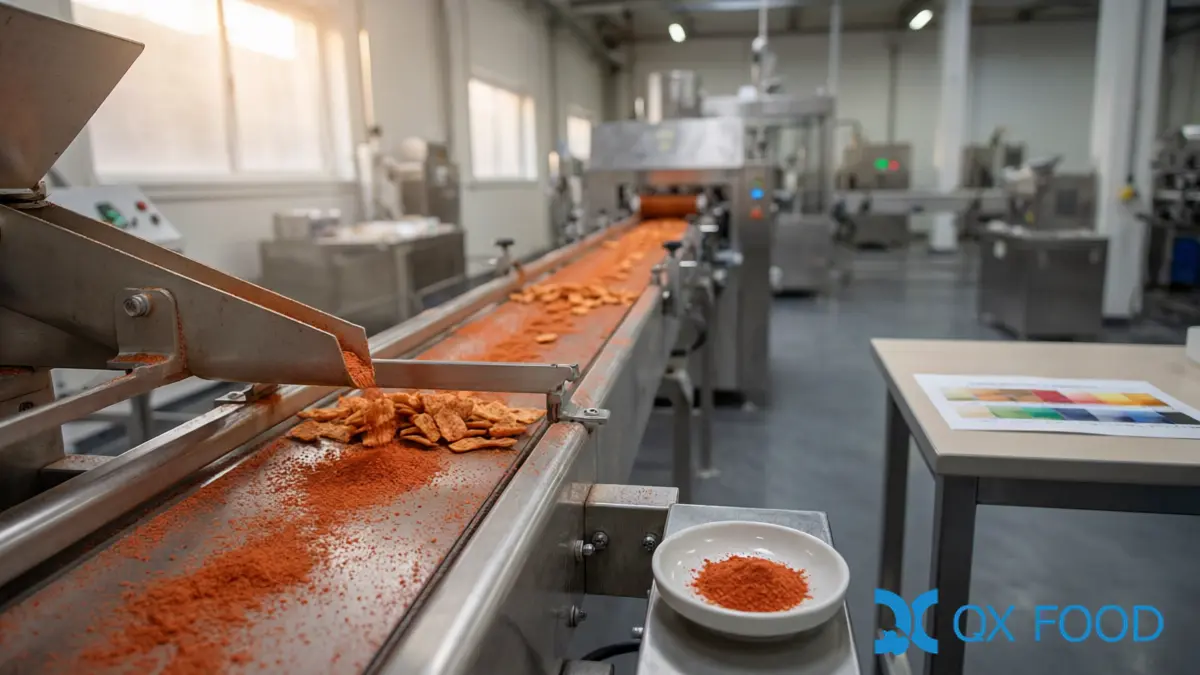
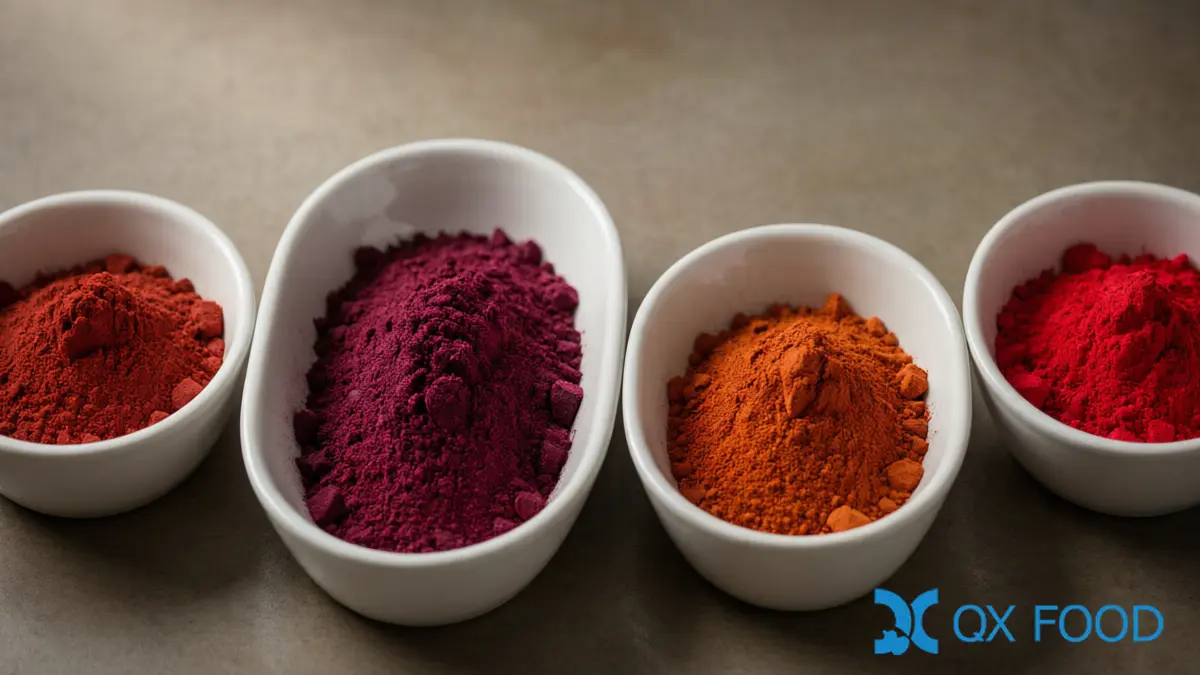
Natural red selection depends on hue, solubility and dispersion form, pH behavior, heat, light and oxygen sensitivity, regulatory status, label target and the finished matrix:
| Color source | Character | Points to evaluate |
|---|---|---|
| Lycopene (tomato) | Red-orange carotenoid color, tomato-derived | Delivery form, matrix fit, thermal and light behavior in the actual product |
| Beetroot red (betanin) | Red-purple, water-soluble | Heat sensitivity and pH behavior in the target system |
| Paprika (capsanthin) | Warm orange-red | Flavor carryover and hue direction in the product |
| Carmine | Bright red | Sourcing, label and allergen considerations for the market |
| Synthetic reds | Stable, intense | Label and market-positioning constraints |
Regulatory Status Depends on Ingredient Form and Market
Tomato powder used as a conventional multi-component food ingredient can naturally contribute red color as part of its overall ingredient function. Standardized lycopene preparations used specifically as food colors are a different regulatory case, and may fall under specific color-additive rules. In the EU, lycopene used as a food color is authorized as E160d, and EU color additives are subject to the applicable food-category conditions of use (EFSA food colours).
In the United States, tomato lycopene extract and concentrate are permanently listed as color additives exempt from certification under 21 CFR 73.585 (FDA regulatory status of color additives). Labeling should therefore be reviewed according to the ingredient form, intended function and destination market.
What Specifications to Request
- Ingredient form and composition: whole tomato powder vs a lycopene preparation, and any carrier or delivery system.
- Color and pigment data where controlled: instrumental color values and any measured lycopene specification.
- Stability or trial data for the intended application, where available.
- Raw-material and process information: cultivar, maturity and processing can affect pigment content, but these belong in supplier or product documentation where relevant rather than being assumed to appear on every batch COA.
- Batch COA for the analytical parameters specified for the selected grade.
How QXFOOD Documents Tomato Powder Grades
QXFOOD supplies tomato-powder grades with product-specific specifications and batch documentation, including organic TMP-H20 and the conventional seasoning grades used in red-and-flavor systems. Where lycopene content or instrumental color values are controlled for a selected grade, the applicable specification and test data should be confirmed before color-engineering trials. The wider tomato-powder formulation context is covered in the tomato powder applications guide.
Questions About Lycopene Color
Is tomato powder the same as lycopene food color?
No. Tomato powder is a multi-component tomato ingredient that can naturally contribute red color, while standardized lycopene preparations used as food colors may fall under specific color-additive rules. In the EU, lycopene used as a food color is E160d; in the United States, tomato lycopene extract and concentrate are listed color additives exempt from certification under 21 CFR 73.585.
Does cooking destroy lycopene color?
Not at one universal temperature. Time, temperature, matrix, oxygen, light and delivery form all interact, and heating can even change how much lycopene can be extracted from a tomato matrix. Validate pigment retention and finished color across the actual time-temperature profile of the product.
Does higher lycopene content always mean a redder finished food?
No. Pigment concentration is one variable; dispersion, matrix behavior, processing and other color components also decide the finished color. Set targets instrumentally and visually in the finished product.
Is lycopene E160d in the EU?
Where lycopene is used as a food color in the EU, it is authorized as E160d, and its use is subject to the applicable food-category conditions. Tomato powder used as a food ingredient rather than as a color additive is a different case and should be reviewed on its own ingredient and labeling position.