Organic Tomato Powder for Food Manufacturing
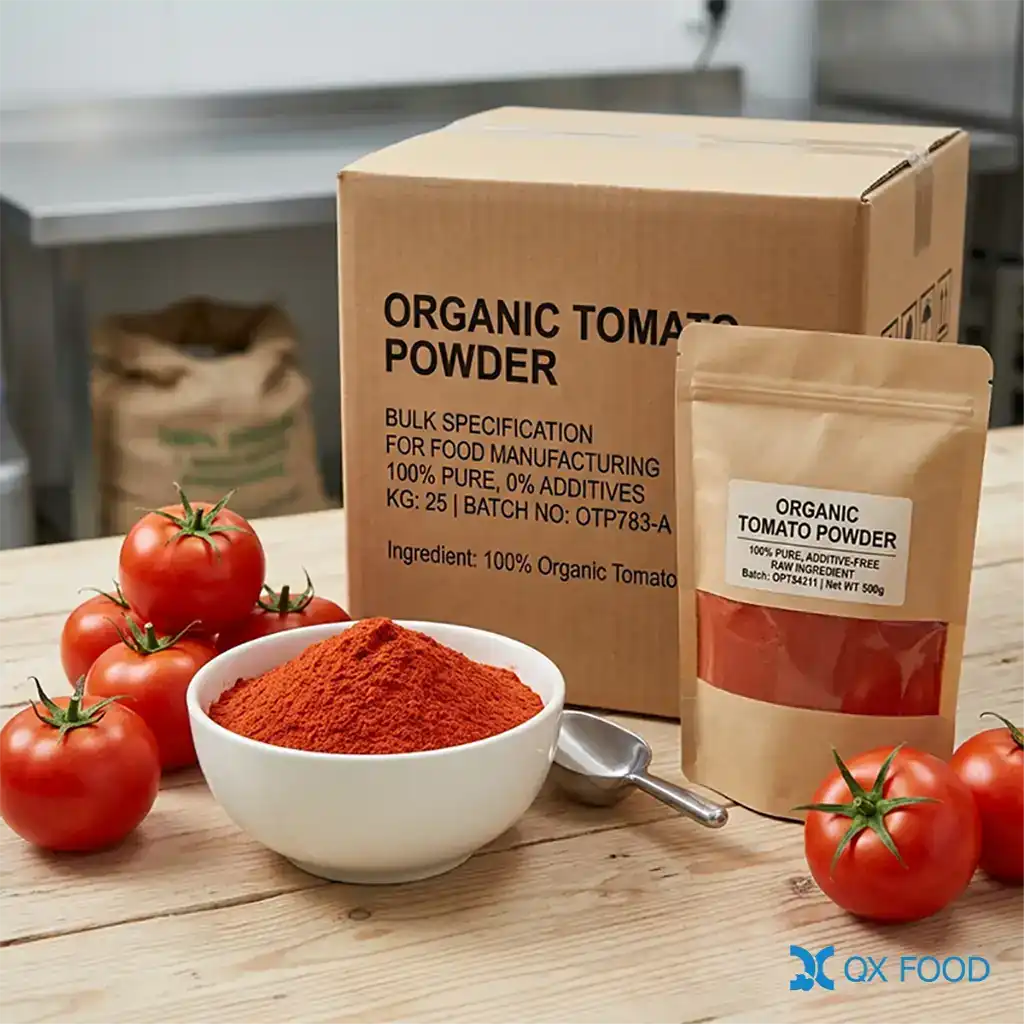
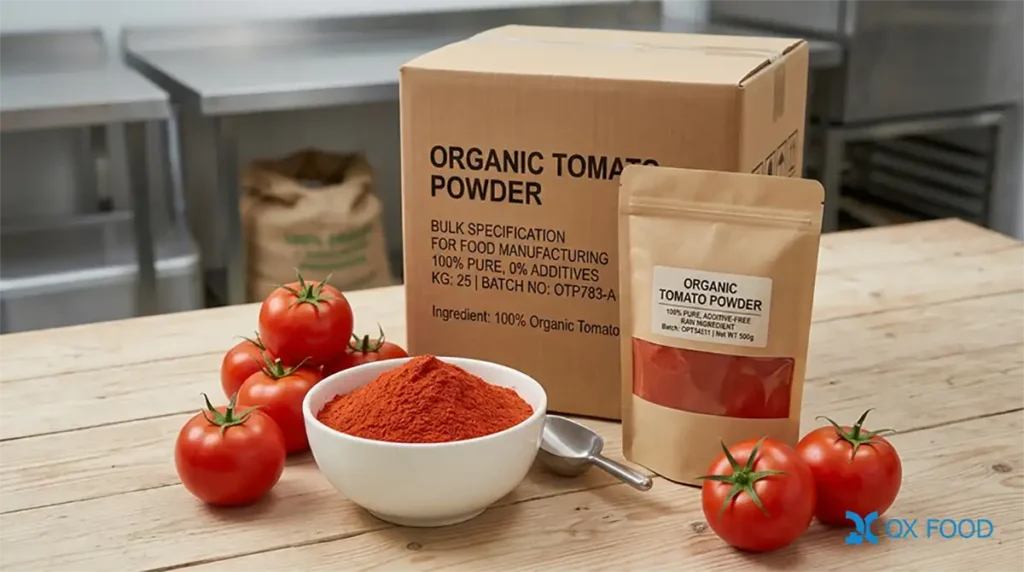
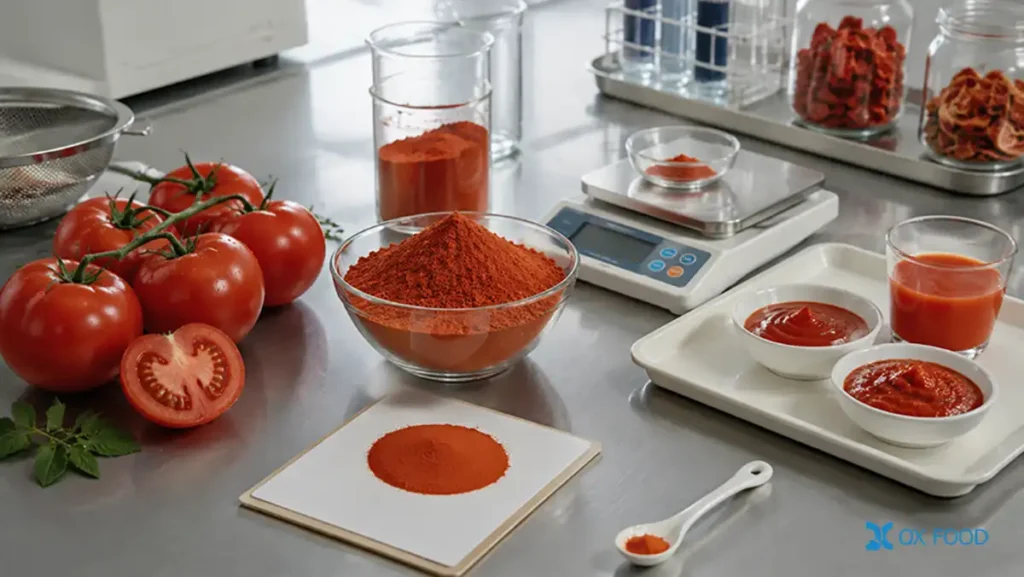
Organic tomato powder TMP-H20 is made directly from selected fresh tomatoes and processed as a spray-dried tomato powder for industrial food applications. It contains no additives, preservatives, added colorants, carriers, or silicon dioxide, giving manufacturers a pure tomato ingredient for clean-label formulation.
This pure tomato powder provides natural tomato flavor, tomato-red color contribution, and controlled acidity in a shelf-stable dry format. It can be evaluated in soups, sauces, seasoning blends, bakery products, beverages, dairy applications, instant foods, and other products that need tomato character without adding a formulated sweet-sour seasoning system.
TMP-H20 belongs to the natural plant powder range. Buyers that need ready-formulated tomato snack seasonings can compare the application-specific products in the compound seasoning powder range.
Pure Tomato Powder Product Specifications
| Product Name | Organic Tomato Powder |
| Model | TMP-H20 |
| Raw Material | Selected fresh tomatoes |
| Formula | Pure tomato powder; no additives, preservatives, added colorants, carriers, or silicon dioxide |
| Physical State | Powder |
| Main Process | Spray drying |
| Flavor Direction | Natural tomato flavor |
| Moisture | ≤5.00 g/100g |
| Total Acid | 5.00-9.00 g/100g |
| Lycopene | ≥100 mg/100g |
| Ash | ≤12.00 g/100g |
Current-batch COA values should be reviewed before commercial approval. The specification provides a basis for comparison, while flavor, color, solubility, and processing performance should be tested in the finished product.
Natural Tomato Powder for Soups, Sauces, and Seasoning Blends
TMP-H20 allows manufacturers to introduce tomato solids in a dry format without using a pre-formulated compound seasoning. The powder can contribute tomato flavor and color while leaving the formulation team in control of salt, sweetness, acidity, herbs, spices, and other ingredients.
Food Manufacturing Applications
- Soups and instant foods: tomato ingredient for dry soup mixes, meal cups, noodle bases, and ready-meal formulations.
- Sauces and dips: supports dry sauce mixes, reconstitution trials, and tomato-based sauce development.
- Seasoning blends: natural tomato powder for custom snack, kitchen, and compound seasoning systems.
- Bakery: can be evaluated in savory doughs, crackers, fillings, and tomato-flavored baked products.
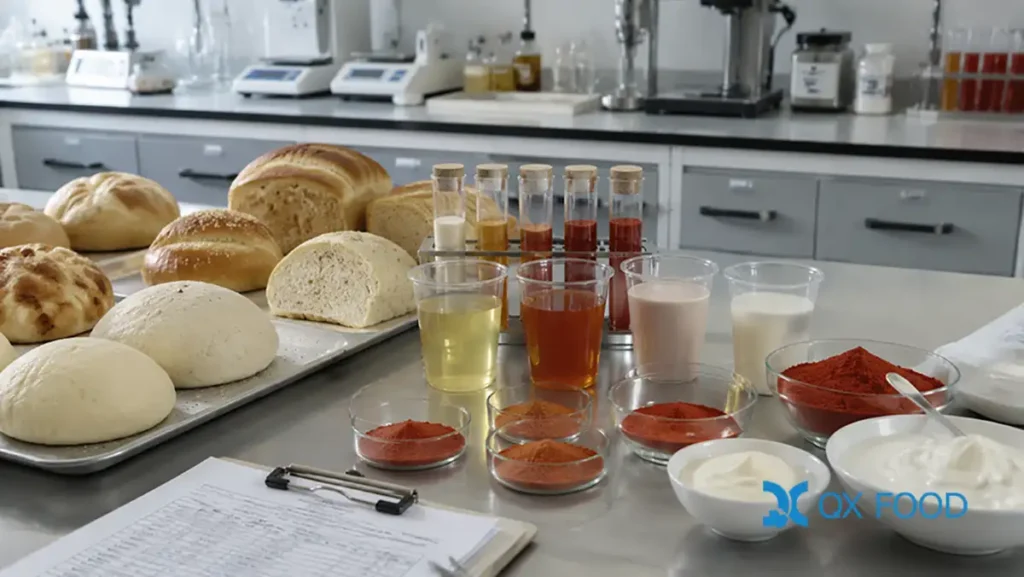
- Beverage and dairy: use only after application testing for flavor, acidity, dispersion, stability, and finished-product compatibility.
Application ranges vary by food system. Beverages, snacks, bakery, dairy, soups, sauces, and other foods require different starting levels, so the final dosage must be established through laboratory and pilot testing.
For vegetable powder systems that need a milder sweetness or a light red-orange color contribution, formulators can also evaluate our natural carrot powder alongside tomato powder in controlled bench trials.
Reconstitution, Dispersion, and Sauce Trials
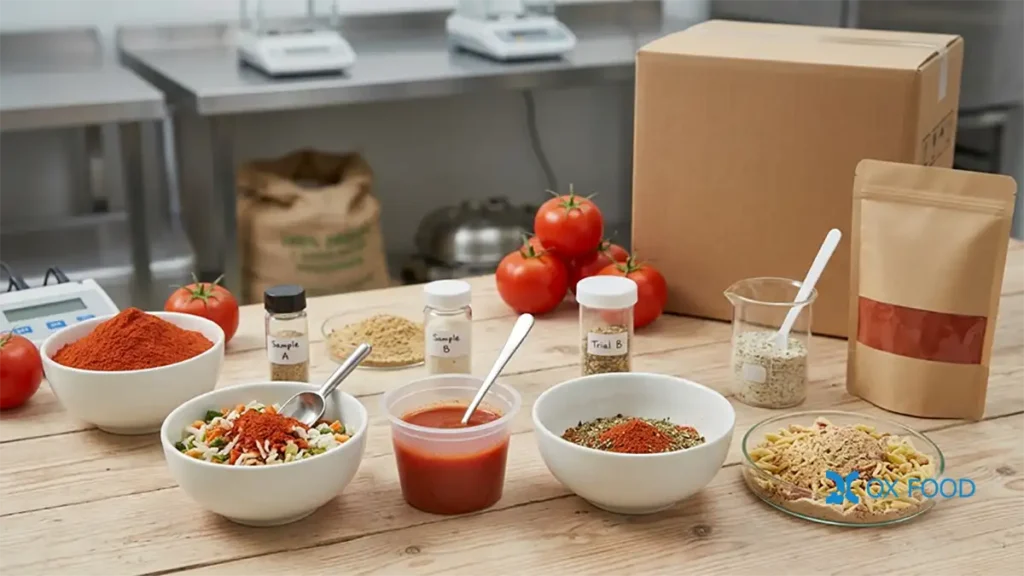
When evaluating tomato powder for soups and sauces, use the same water ratio, temperature, shear, salt, oil, starch, and holding time planned for production. Record wetting time, lumping, visible sediment, color after hydration, tomato aroma, acidity, and flavor after heating. A dry powder that disperses well in water may behave differently in a thickened sauce or an oil-containing soup base.
For sauce development, compare at least two addition levels and add the powder before and after the main heating step. This helps the formulation team judge color development, cooked versus fresh tomato character, aroma retention, and whether acidity needs adjustment elsewhere in the recipe. For soup or noodle bases, also evaluate the powder with HVP, yeast extract, vegetable powders, spices, and the intended fat system.
Additive-Free Tomato Powder for Clean-Label Development
Because TMP-H20 is made only from selected fresh tomatoes, it gives product developers a short ingredient declaration and separates clearly from formulated tomato seasoning powders. The absence of carriers, anti-caking agents, added colorants, preservatives, and flavorings makes this clean label tomato powder suitable for projects where the buyer wants tomato powder as a direct vegetable ingredient.
Clean-label suitability still depends on the complete finished product, destination-market rules, processing, and buyer documentation requirements. Claims on the finished food should be reviewed case by case.
Organic, Pure, and Natural Positioning
Organic tomato powder is the primary product entity. Pure tomato powder describes the one-ingredient formula, while natural tomato powder describes the selected fresh tomato origin and natural flavor/color contribution. These terms should be used accurately and without unsupported health or therapeutic claims.
Pure Tomato Powder or Formulated Tomato Seasoning?
Choose H20 when the formulation team needs full control over salt, sweetness, acidity, and top notes. Choose a tomato seasoning powder when a ready-developed flavor balance is more useful:
- TMP-H15 Sweet-Sour Tomato Seasoning Powder for snack coatings.
- TMP-H16 Tangy Tomato Seasoning Powder for instant noodles and soup bases.
- TMP-H17 Rich Tomato Flavor Seasoning Powder for puffed snacks.
- TMP-H18 Ketchup-Style Tomato Seasoning Powder for fried and spicy snacks.
- TMP-002 Tomato Seasoning Powder as the general tomato seasoning option.
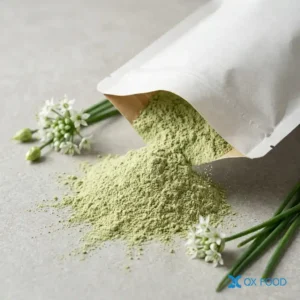
Another active plant-powder option is Chive Flower Powder. Additional vegetable powder links can be added as the Natural Plant product range is published.
Samples, Packaging, and Supporting Documents
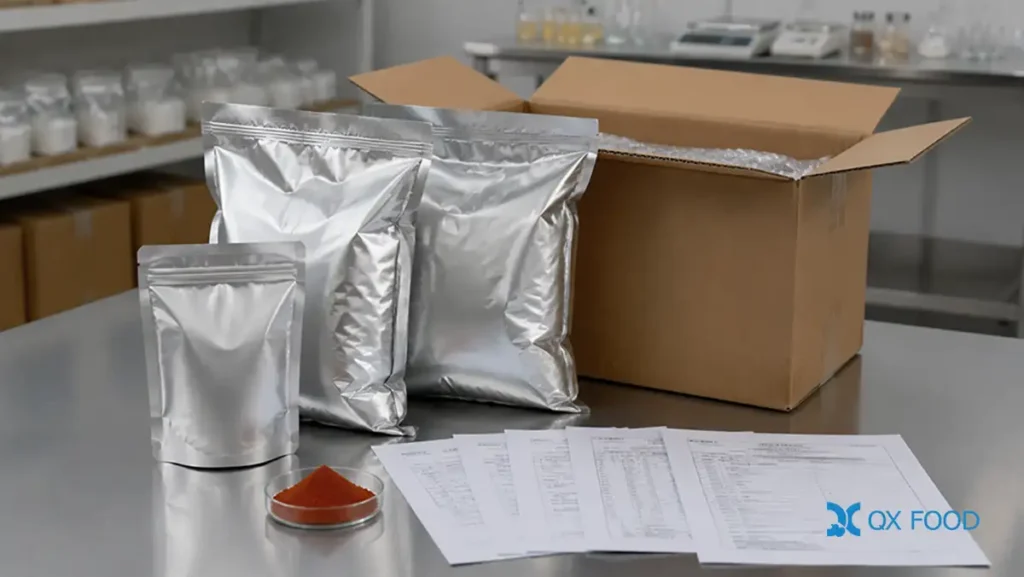
- Standard pack: 2 x 10 kg aluminum foil inner bags in a double-corrugated carton.
- Sample: 1 kg.
- MOQ: 1 MT.
- Shelf life: 18 months under recommended storage conditions.
- Storage: sealed in a cool, dry place below 25°C and below 60% relative humidity.
- Custom packaging: available according to buyer requirements.
A current-batch COA, product specification, ingredient declaration, relevant certificates, packaging information, and supporting documents are available for buyer review as applicable.
Bulk Purchasing Evaluation
Before approving bulk organic tomato powder, compare the sample and current-batch documents with the intended finished product. Buyers should review ingredient declaration, sensory profile, color, moisture, acidity, microbiological requirements, packaging integrity, storage conditions, and destination-market documentation. Any organic, clean-label, or finished-product claim should be checked against the applicable documents and local rules.
For repeat purchasing, define acceptable variation in color and tomato character as well as the numerical specification. Agricultural raw materials can show natural sensory variation, so an agreed sample, COA review, and application trial provide a more practical approval basis than appearance alone.
FAQ
What is TMP-H20 made from?
It is made directly from selected fresh tomatoes and contains no additives, preservatives, added colorants, carriers, or silicon dioxide.
Is TMP-H20 the same as tomato seasoning powder?
No. TMP-H20 is pure organic tomato powder. TMP-H15 to TMP-H18 and TMP-002 are formulated tomato seasoning powders with different application profiles.
Where can organic tomato powder be used?
Potential applications include soups, sauces, seasoning blends, instant foods, bakery products, beverages, and dairy products, subject to application testing.
What should buyers test in an organic tomato powder sample?
Buyers should review flavor, color, acidity, dispersion, solubility, heat and process compatibility, dosage, storage behavior, and the current-batch COA.
Can TMP-H20 packaging be customized?
Yes. Packaging specifications can be discussed according to sample, pilot, and bulk procurement requirements.
How should spray-dried tomato powder be tested in soups and sauces?
Test it at the intended water ratio, temperature, shear, salt, oil, starch, and holding time, then compare wetting, sediment, color, acidity, tomato aroma, and flavor after heating.
Which documents should a bulk buyer review?
Review the current-batch COA, product specification, ingredient declaration, packaging information, and applicable certificates and supporting documents for the destination market.