
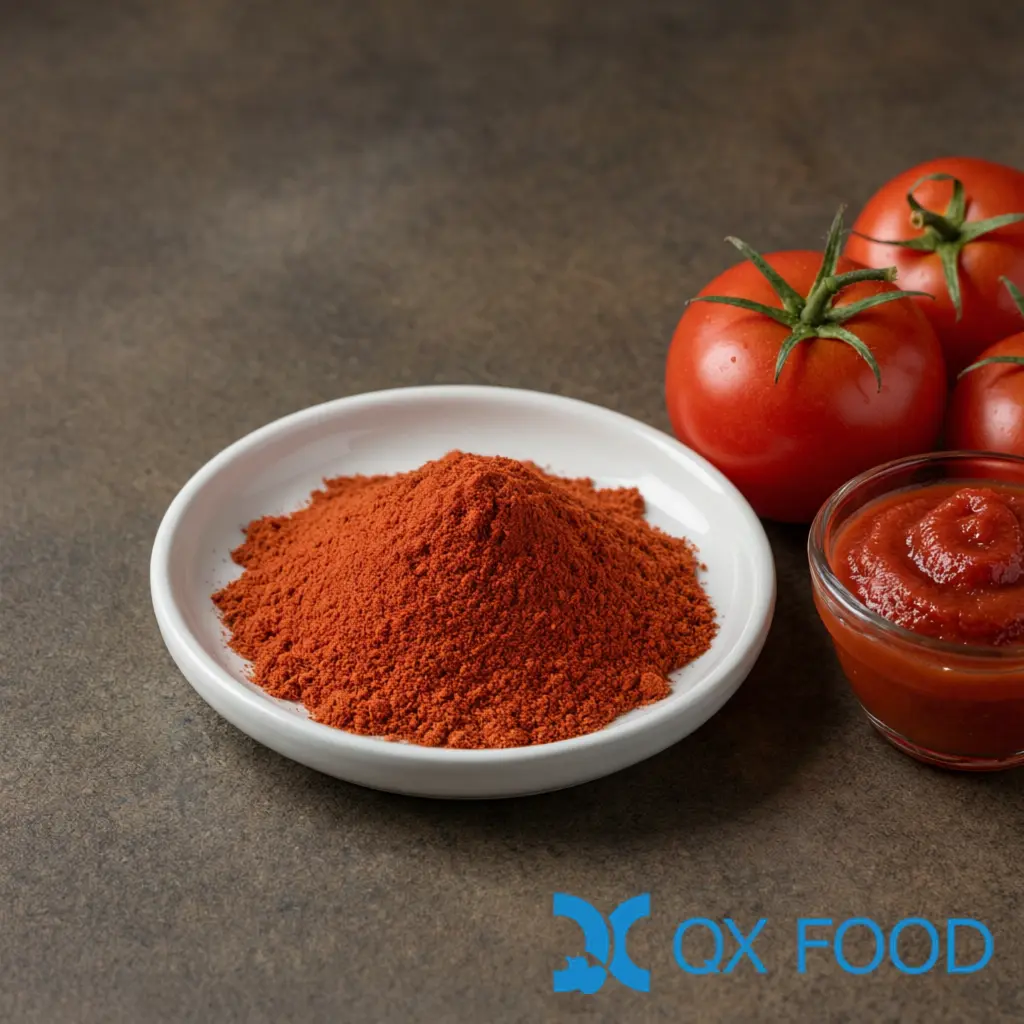
Tomato powder applications start with a simple question that is often skipped: which tomato ingredient are you actually using? Pure tomato powder, carrier-containing tomato powder and formulated tomato seasoning powder are different products with different specifications, and they should not be treated as one category. That question sits at the start of any tomato powder applications decision.
This guide covers tomato powder applications for food manufacturing: how to identify the ingredient type first, then match it to the process and finished-product target across snacks, noodles, sauces and color-driven systems.
Tomato Powder Is a Category, Not One Specification
Products used in tomato-powder applications fall into several distinct categories. Pure tomato powder is a dehydrated tomato ingredient, while carrier-containing dried tomato ingredients and formulated tomato seasoning powders have different compositions and functions. Application fit therefore starts by identifying the product type, then the process and finished-product target.
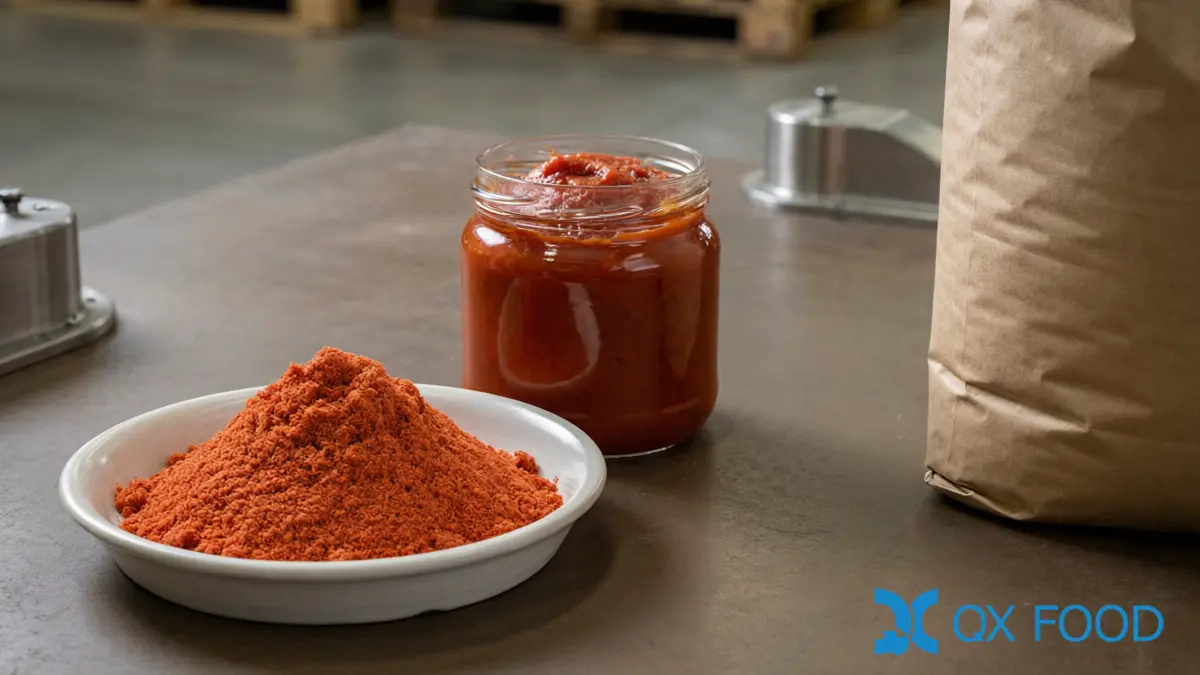
Start With the Ingredient Type
| Ingredient type | What it is | How to use the specification |
|---|---|---|
| Pure tomato powder | Tomato-derived dry ingredient | Evaluate tomato solids, acidity, color, moisture and sensory |
| Carrier-containing tomato powder | Tomato material plus a drying or standardization carrier | Separate tomato-derived and carrier solids in the balance |
| Organic tomato powder | Organic status layered onto the actual grade | Verify composition and certification for the market |
| Tomato seasoning powder | Formulated flavor system | Evaluate the complete formula and application performance |
Organic tomato powder is an organically certified grade whose composition and sensory performance still need grade-specific evaluation, and a formulated seasoning powder carries added sugars, acids, carriers and flavor materials that change both solids and taste.
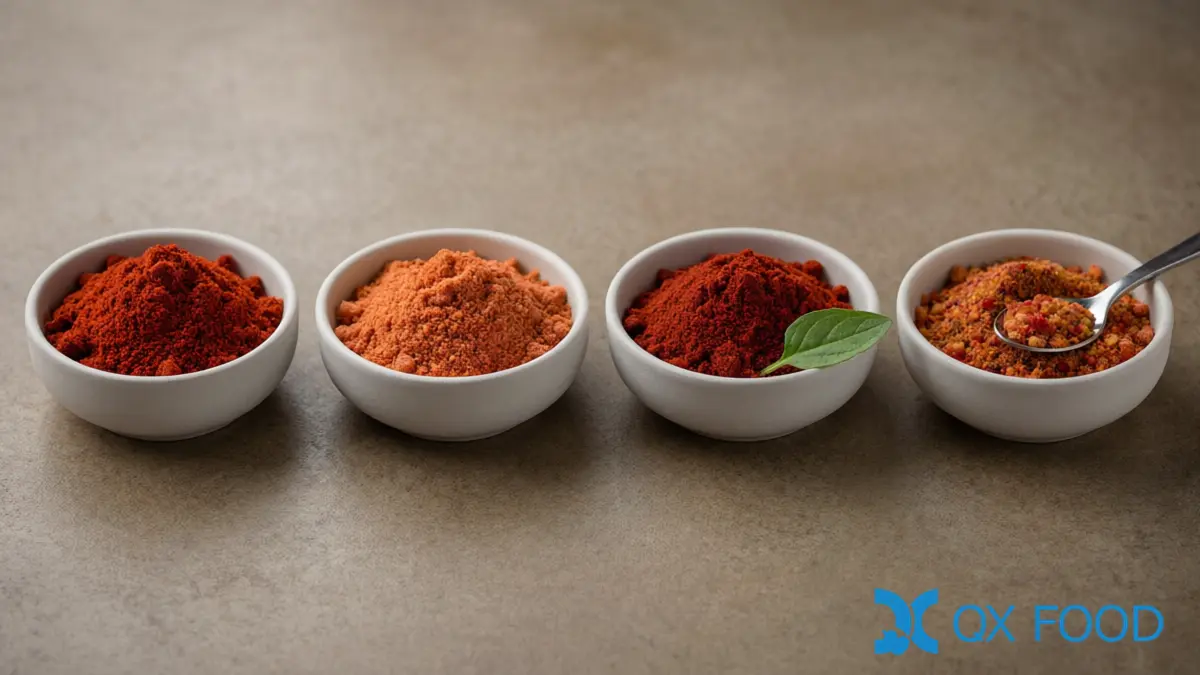
What Tomato Powder Can Contribute
A tomato powder can contribute tomato flavor, red-orange color, acidity and dry solids to a formula, but every contribution is grade-specific. Drying changes tomato aroma and color, and the result depends on the drying technology and the selected grade; comparative studies show that different drying methods produce clearly different flavor profiles, with spray-dried samples linked to more cooked or tinned tomato character (impact of drying technologies on tomato flavor). Application trials should therefore use the actual powder rather than assuming one fixed fresh-tomato profile.
Snack Seasonings: Evaluate the Complete Coated Product
Tomato is one of the most recognizable snack seasoning profiles, and the coating system must deliver the flavor, hold through the coating line and stay stable in the bag. Tomato level should be established in the complete seasoning blend and coated snack, because the required amount depends on the selected grade, salt-acid-sweet balance, carrier system, coating pickup and target sensory profile.
For the adhesion mechanics and coating line parameters, see the snack seasoning application guide, and for moisture and flow behavior in tomato-heavy blends, the powder caking prevention guide.
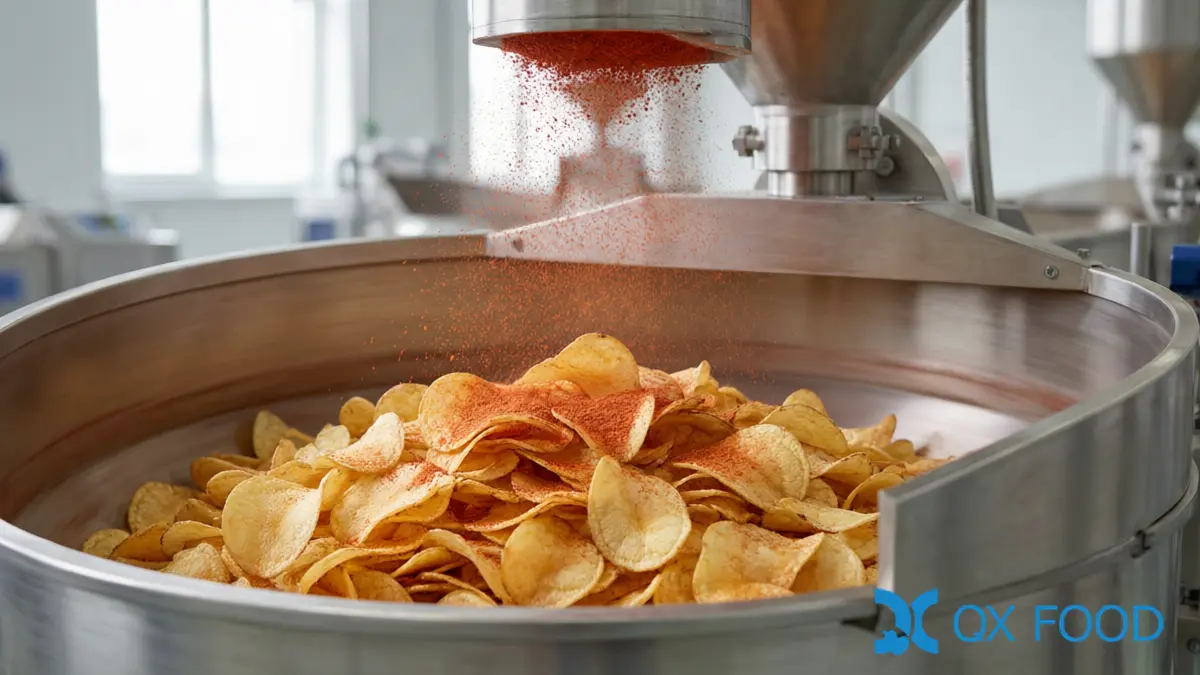
Instant Noodles and Dry Mixes: Evaluate the Complete Preparation System
In dry noodle seasoning sachets and dry sauce mixes, tomato powder is often the more practical form. Other product architectures may place tomato material in a wet sauce, paste or separate component, so the seasoning format and the whole preparation system should be reviewed together rather than assuming every instant product needs a dry tomato powder.
Reconstitution should be set from the selected grade, the intended solids level, viscosity and finished-product target rather than from a universal water ratio, and the tomato powder vs paste guide covers form conversion in detail.
Sauces and Wet Systems: Powder Is One Form Option
Wet sauce and soup systems can use tomato paste, puree or a reconstituted tomato powder depending on the process and finished-product target. Fresh tomato, tomato paste and tomato powder create different water, packaging, storage and handling requirements, and the relevant comparison depends on the actual product format; for example, unopened aseptic paste and opened paste have different storage requirements.
The savory foundation that tomato powder completes in soup systems is covered in the soup base guide.
Color-Driven Applications Need Separate Color Validation
Where red color is the primary driver, tomato powder contributes lycopene-derived color as part of its overall tomato composition, but measured lycopene content is not automatically the same as finished-product redness, and stability depends on time, temperature, matrix and delivery form. Validate the color in the finished product under the actual process rather than assuming a fixed color contribution, and see the lycopene food color guide for the full framework.
Moisture and Flow Are Complete-System Properties
Moisture uptake, caking and flow should be evaluated for the selected grade and the complete seasoning blend under the actual storage and filling conditions. Sugar content, carrier type, water activity, particle size and packaging all influence behavior, so a powder should not be treated as inherently hygroscopic or automatically free-flowing by category. Flow aids may be one formulation option, but their need and effectiveness should be determined from the complete blend, packaging and environmental conditions.
What to Compare When Selecting a Tomato Powder
- Ingredient composition: pure tomato powder, carrier-containing powder or formulated seasoning, and the complete ingredient statement.
- Tomato-derived solids, kept separate from carrier or seasoning solids.
- Flavor and sensory direction, evaluated in the actual application.
- Acidity and pH, and the salt or sweetener balance where present.
- Color contribution, validated in the finished product where color matters.
- Moisture, water activity or flow-related parameters that are relevant and controlled for the selected grade.
- Particle and reconstitution behavior in the intended process.
- Documentation: product specification, applicable batch data and destination-market information.
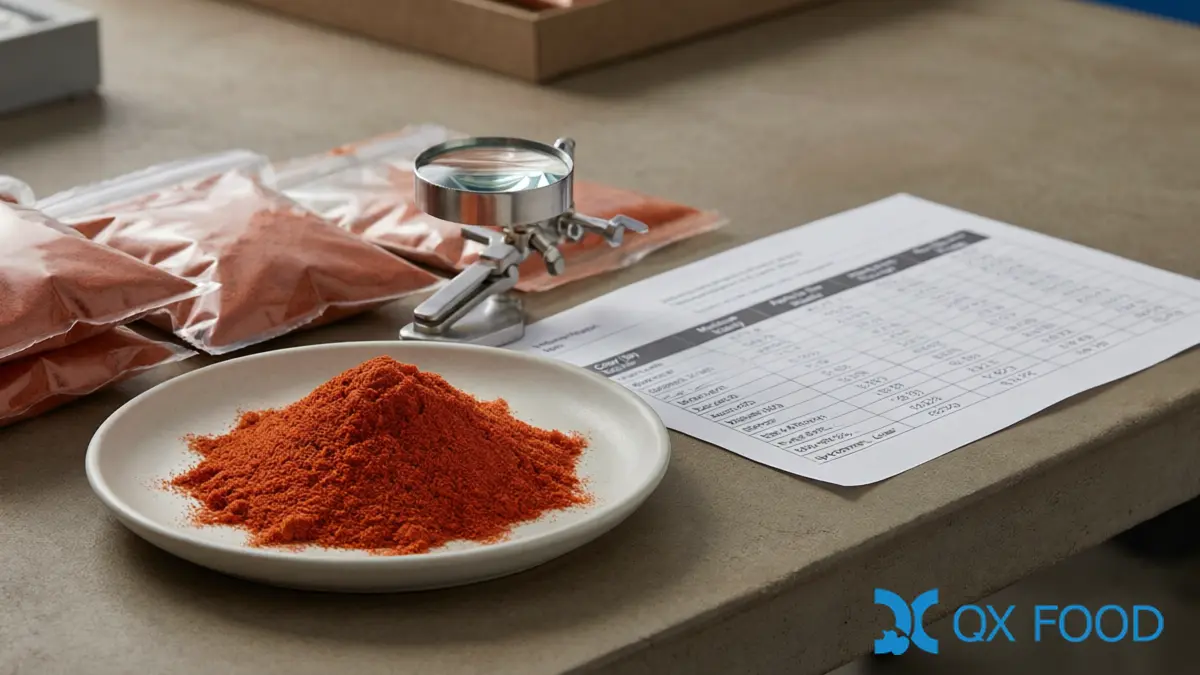
How QXFOOD Separates Tomato Powder and Tomato Seasoning Grades
QXFOOD supplies product-specific specifications and batch documentation for its tomato range. The analytical parameters reported on the batch COA depend on the selected grade, while composition, process and other product information should be confirmed from the applicable specification and supplier documentation.
Where instrumental color is a controlled requirement, the product specification and applicable batch test data should be reviewed rather than assuming L*a*b* appears on every COA. The published range distinguishes pure tomato ingredients from formulated seasoning grades: TMP-H20 organic tomato powder is positioned for applications requiring a pure tomato ingredient, tomato-derived solids or tomato color contribution, while tomato seasoning powder TMP-002, TMP-H16, TMP-H17, TMP-H15 and TMP-H18 are formulated flavor systems for application-specific seasoning work. Certification documentation for organic programs is covered in the organic tomato powder certification guide.
Tomato Powder Application Questions
Is every tomato powder a pure tomato ingredient?
No. A pure tomato powder, a carrier-containing dried tomato ingredient and a formulated tomato seasoning can have different compositions and declarations. Review the selected grade’s ingredient statement rather than relying on the product category name alone.
How much tomato powder should I use?
There is no universal percentage. The required amount depends on the selected grade, the complete seasoning blend, the coating or dosing system and the target sensory profile. Establish the level in the actual finished product.
How much water should I add to tomato powder?
There is no universal ratio. Set reconstitution from the selected grade, the intended solids level, viscosity and finished-product target, then validate in the application.
What should I compare when selecting a tomato powder grade?
Composition and ingredient type first, then tomato-derived solids, sensory direction, acidity, color contribution, moisture and flow behavior, particle and reconstitution performance, and the applicable specification and batch documentation.