
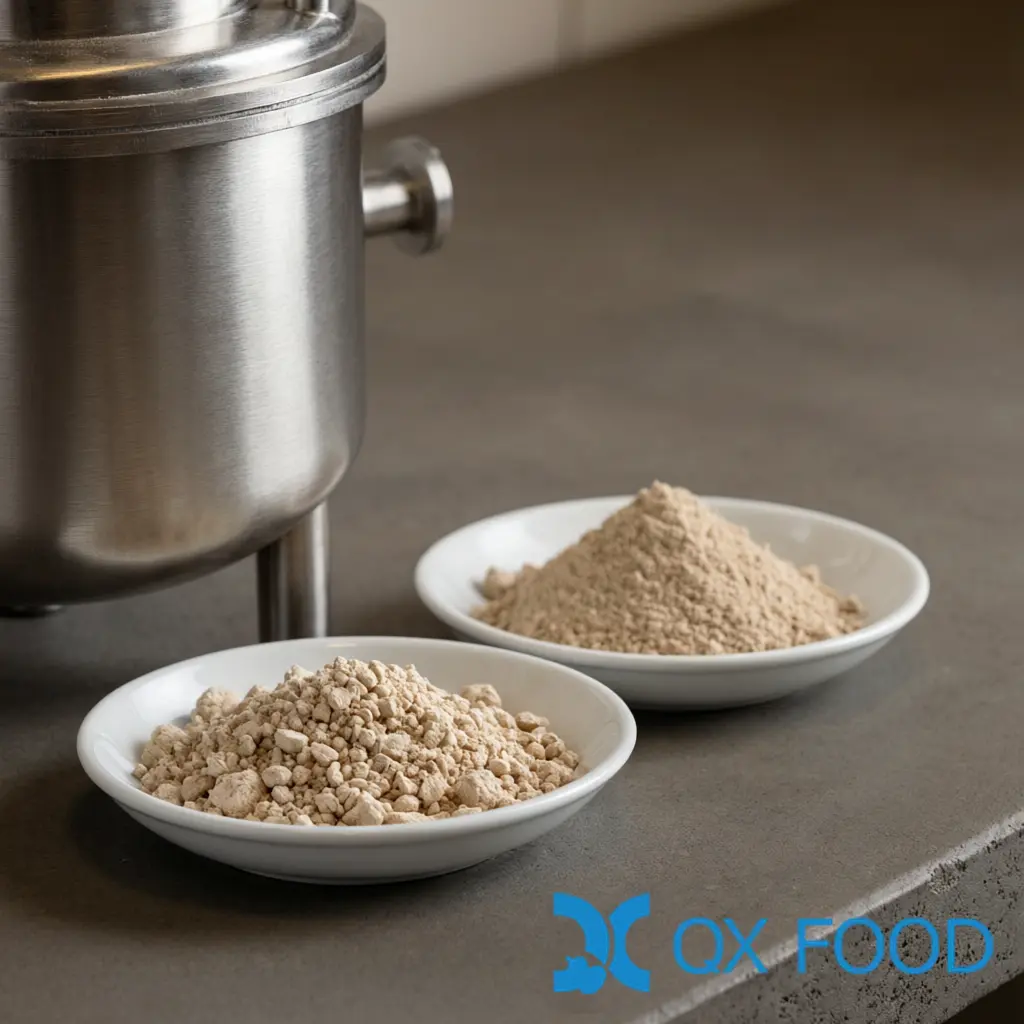
There is no single HVP production process. This guide focuses specifically on acid-hydrolyzed vegetable protein (acid-HVP), where plant protein is treated with hydrochloric acid and then refined into liquid or powder grades. Enzymatic HVP follows a different hydrolysis route and should not be treated as the same process.
The process helps explain a certificate of analysis (COA), but a COA value should not be reverse-engineered to one single manufacturing step. Most finished specifications are influenced by several upstream and downstream variables together, and the purpose of this guide is to show where those influences sit.
A Typical Acid-HVP Process Flow
A typical acid-HVP line moves through the following stages, although individual plants vary the details:
- Protein feedstock preparation.
- Acid hydrolysis of the protein.
- Cooling and neutralization of the hydrolysate.
- Clarification and any refining steps.
- Concentration and standardization.
- Finishing as a liquid grade or drying into a powder.
- Release testing and documentation.
The feedstock decision is discussed in the HVP raw material selection guide, which covers protein sources and their influence on the finished grade.
Hydrolysis Is a Process Window, Not a Fixed Recipe
Acid-HVP production uses hydrochloric acid under elevated temperature for a controlled time. Acid concentration, temperature, reaction time and raw-material composition all influence the resulting hydrolysate, so commercial process conditions should be treated as process-specific rather than as one universal recipe.
Raw-material protein content affects the amount of protein-derived nitrogen entering the process, but the finished-product total-nitrogen specification also depends on solids, salt, concentration and any downstream standardization.
Acid concentration, temperature and reaction time jointly influence hydrolysis and the chemical composition of the resulting HVP. Their effects should be considered as a process window rather than as a simple “more acid or more time equals better hydrolysis” rule, because harsher conditions can also shift amino-acid composition, degradation products, color, aroma and byproduct formation.
Why Acid Hydrolysis Creates a 3-MCPD Control Requirement
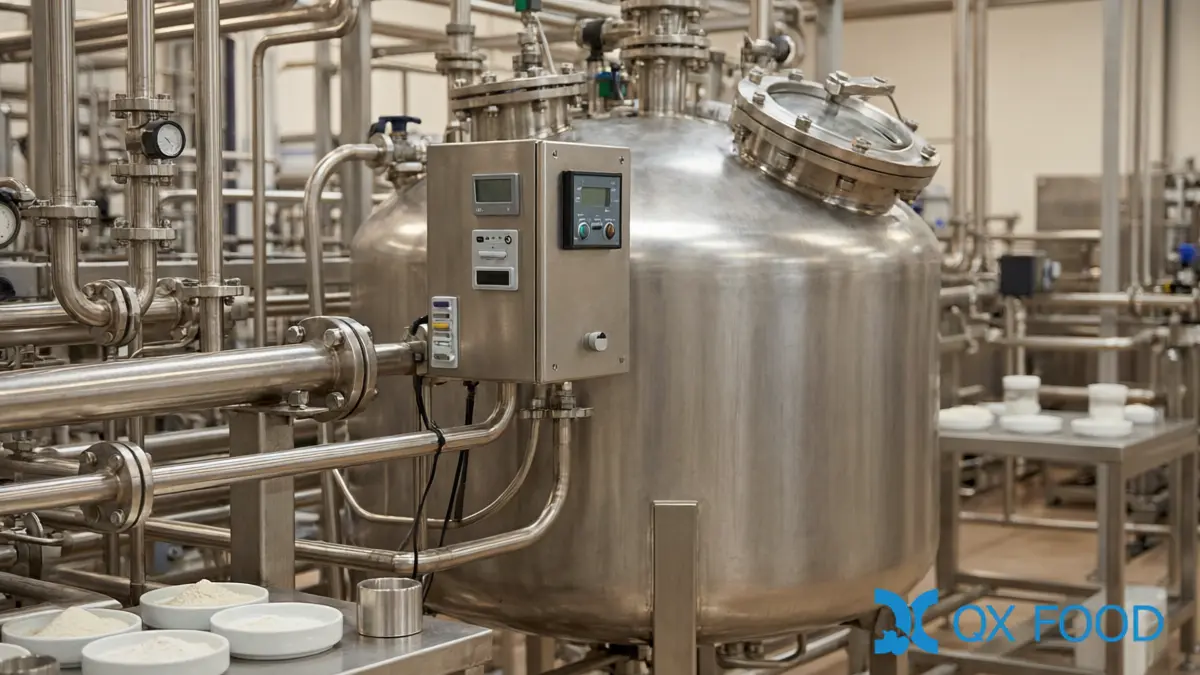
Hydrochloric-acid-mediated hydrolysis is the classic formation route for chloropropanols such as 3-MCPD in HVP, which makes contaminant control an important process and compliance consideration for acid-HVP. Formation involves the reaction of chloride with glycerol or lipid-derived precursors under the acidic, heated conditions, and the finished result depends on feedstock composition, process conditions and any mitigation steps (3-MCPD in soy sauce: formation, reduction and detection).
Enzymatic HVP does not use the classic hydrochloric-acid-mediated pathway associated with 3-MCPD formation in acid-HVP, although contaminant control still belongs to the complete finished-product and process assessment. For EU programs, the finished product should be evaluated against Regulation (EU) 2023/915 using the applicable dry-matter basis (Commission Regulation (EU) 2023/915).
Neutralization Changes pH and Adds Salt
After the target hydrolysis step, the hydrolysate is cooled and neutralized to move the system out of the strongly acidic reaction conditions and toward the required downstream pH.
When hydrochloric acid is neutralized with a sodium base, sodium chloride is generated as part of the chemistry. Producing a lower-salt finished grade may therefore require downstream salt reduction, an alternative process strategy or other grade-specific standardization; it should not be described simply as choosing a different neutralization pH.
Clarification and Optional Color and Flavor Refining
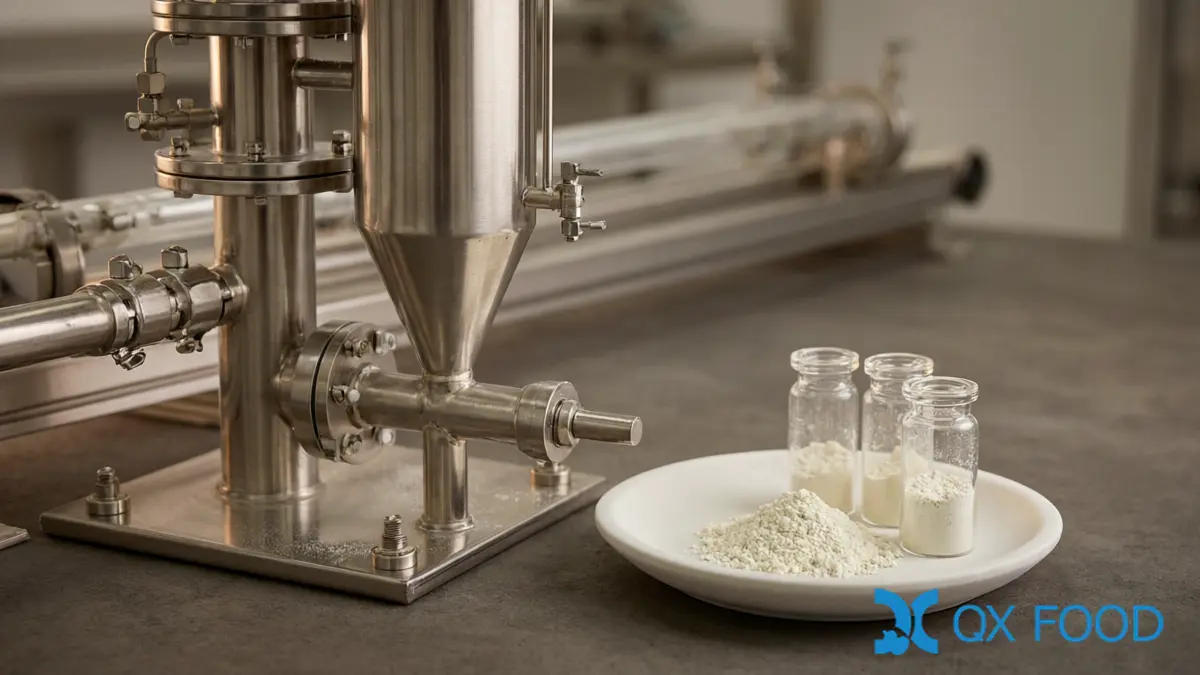
After hydrolysis and neutralization, insoluble material may be removed by filtration or other clarification steps. Depending on the target grade, activated-carbon or other refining treatments may also be used to modify color or sensory character.
Finished color should not be attributed to this step alone: raw material, hydrolysis conditions, refining, concentration and subsequent thermal processing can all contribute.
Concentration Changes Solids, Not Hydrolysis
Concentration increases the solids content of the hydrolysate and changes the concentration of constituents reported per unit mass or volume. It does not by itself create additional protein hydrolysis or independently determine the amino-nitrogen-to-total-nitrogen ratio.
Liquid and Powder Grades Diverge During Finishing
After clarification and concentration, the hydrolysate may be standardized as a liquid grade at its specified solids level, or further converted into a powder depending on the product. The liquid vs powder HVP guide covers the form decision in detail.
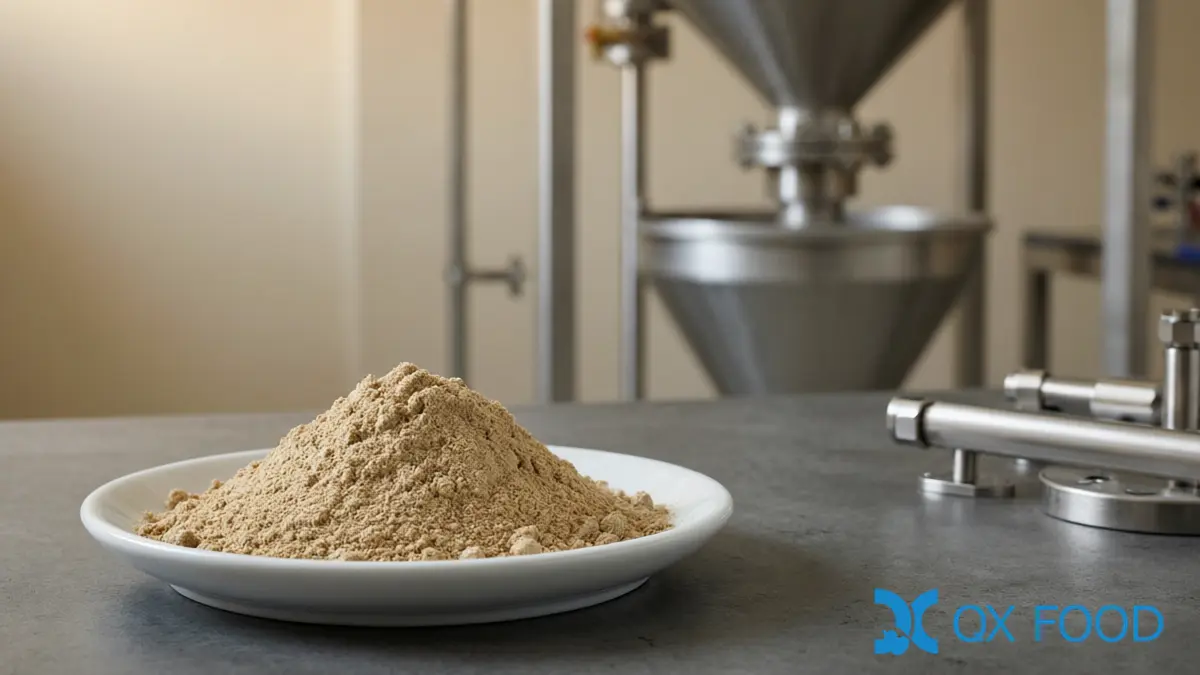
Some spray-dried HVP formulations may include a carrier or other solids, while others may be produced without an intentionally added carrier. Where a carrier is used, its effect on powder handling, solids composition, flavor dilution and labeling should be evaluated for that specific grade. The finished moisture specification is grade-specific and should be checked on the product specification and batch COA, and powder behavior such as flow and caking risk in storage depends on the complete formulation and drying conditions.
What Amino Nitrogen and Total Nitrogen Can, and Cannot, Tell You
Amino nitrogen reflects free amino groups associated with protein hydrolysis, with contributions from free amino acids and peptide termini depending on the analytical method. Together with total nitrogen and other grade information, it can help characterize the hydrolysate, but it is not a standalone flavor-intensity score.
In a defined process and analytical method, the relationship between amino nitrogen and total nitrogen may help characterize hydrolysis, but the ratio should not be interpreted as a direct sensory-intensity scale.
How Process History Appears on a COA
A finished specification is influenced by multiple variables, and the useful reading is to check each value against the process stages that can affect it rather than mapping one step to one number:
| Process stage | What may be monitored | What the buyer should not infer automatically |
|---|---|---|
| Raw material | Identity, protein-related specs, relevant contaminants | Finished flavor or total nitrogen from raw protein alone |
| Hydrolysis | Acid and process conditions, hydrolysis-related analytical data | Final sensory intensity from one process number |
| Neutralization | pH, salt-related effects | Low salt from a pH target alone |
| Clarification and refining | Insolubles, clarity, color where applicable | That final color is caused only by filtration |
| Concentration and standardization | Solids, concentration basis | That the AN/TN ratio is created by evaporation |
| Drying and finishing | Moisture, particle and powder characteristics | Flow or caking from moisture alone |
| Finished release | Total nitrogen, amino nitrogen, salt, moisture or solids, contaminants, microbiology, sensory and spec conformance | That any one result proves the whole process |
What Process Evidence Buyers Should Request
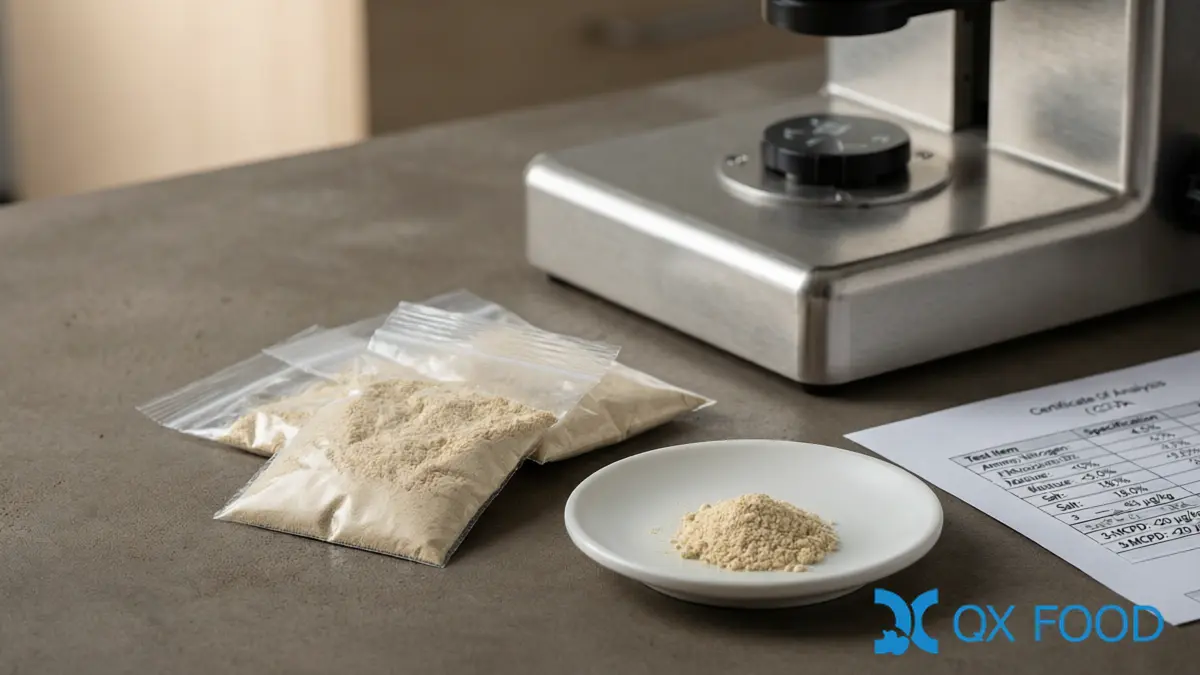
When qualifying an acid-HVP supplier, the evidence that supports a grade includes: a process-flow summary; the current product specification; a representative or current-batch COA; contaminant-control evidence for the applicable markets; raw-material and allergen information; and change-control information where relevant. The wider qualification framework is covered in the HVP supplier qualification guide.
How QXFOOD Documents Selected Grades
QXFOOD supplies acid-hydrolyzed HVP liquid and powder grades with product-specific specifications and batch documentation, including per-lot COAs covering nitrogen, amino nitrogen, salt, moisture or solids, color and applicable contaminants. The exact process route and finishing steps should be confirmed for the selected grade; FSA soy powder, YSA soy liquid and the wider HVP category each carry this documentation.
Questions Buyers Ask About HVP Production
Is all HVP made by acid hydrolysis?
No. Acid hydrolysis is one route; enzymatic hydrolysis and hybrid approaches also exist and produce different sensory and specification profiles. This guide describes the acid-HVP route specifically.
What creates the salt in acid-HVP?
Neutralizing hydrochloric acid with a sodium base generates sodium chloride as part of the chemistry, which is a major salt source in acid-HVP. The finished salt level of a grade also depends on its specification and any downstream processing.
Does concentration increase amino nitrogen or the AN/TN ratio?
Concentration raises the concentration of constituents per unit mass or volume, but it does not by itself create additional hydrolysis, so it should not be expected to raise the amino-nitrogen-to-total-nitrogen ratio.
Why is 3-MCPD monitored in acid-HVP?
Hydrochloric-acid-mediated hydrolysis is the classic formation route for 3-MCPD in HVP, which makes contaminant control part of the process design. Finished-product testing should follow the destination-market rules, such as Regulation (EU) 2023/915 evaluated on the applicable dry-matter basis.
Does every HVP powder use a spray-drying carrier?
No. Some grades are produced without an intentionally added carrier, while other formulations may include carriers or additional solids. Carrier use should be confirmed from the product specification or ingredient documentation, while the batch COA should be used to verify the analytical characteristics specified for the finished grade.