
For formulators using HVP in instant noodles, the ingredient’s final contribution is not determined in the sachet alone. The noodle cake, other seasoning components, water volume and preparation conditions all affect the product the consumer actually tastes in the finished bowl.
This guide focuses on soup-style instant noodles, where HVP may be delivered through a dry seasoning sachet or another savory component. Dry or drained noodle formats require a different evaluation endpoint.
The Sachet Is Not the Finished Product
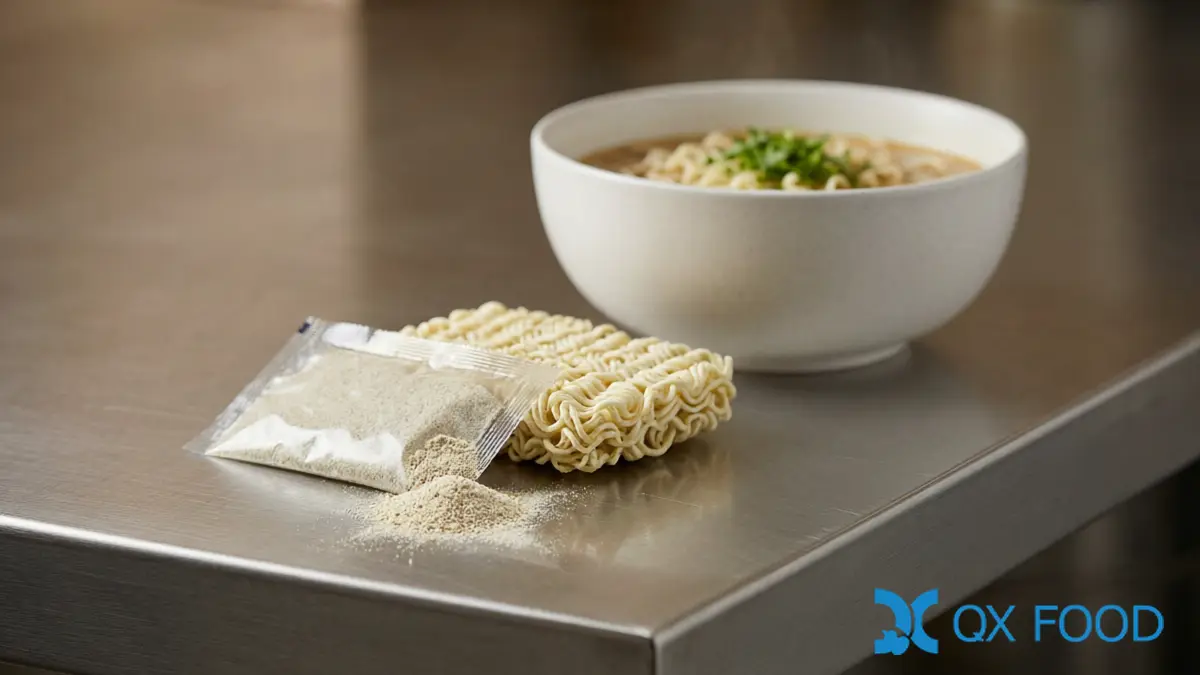
The seasoning system, the noodle cake and the preparation step each change what reaches the consumer, which is why a bench evaluation of the sachet powder alone is not the finished-product test. The evaluation endpoint for soup-style noodles is the prepared bowl under the manufacturer’s instructions.
HVP Is One Component of the Complete Seasoning System
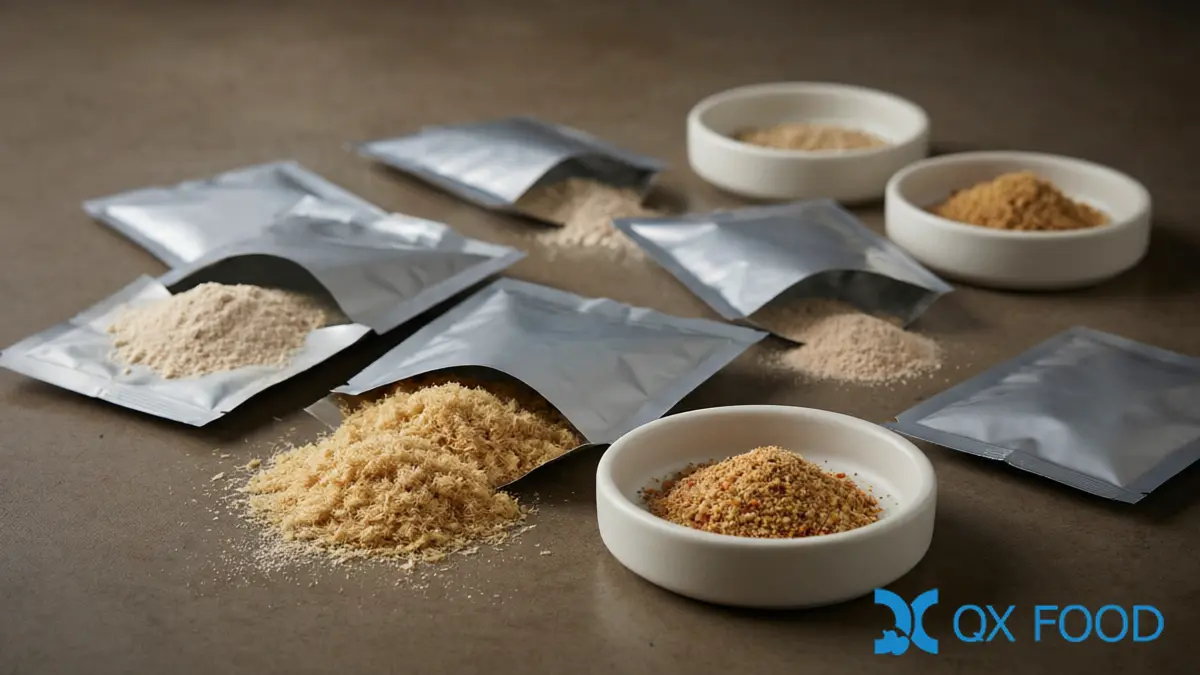
Depending on the product, the seasoning system may be split across dry powder, oil, paste or sauce sachets. HVP may contribute through one of those components, but its role and form should be evaluated within the complete kit rather than assumed from the powder sachet alone. The wider architecture is covered in our instant noodle seasoning guide.
Dose Is Set in the Prepared Noodle System, Not by the Flavor Name
Two chicken noodle seasonings can require different HVP levels if their salt targets, other savory materials, sachet size, water volume, noodle cake and selected HVP grades differ.
Dose should therefore be established against the prepared product under the intended consumer preparation conditions rather than copied from a chicken, beef or seafood percentage range. Nitrogen specification describes the grade; it does not independently predict broth intensity or required dose.
Sachet Percentage Is Not the Finished-Bowl Dose
The HVP percentage in a seasoning sachet does not by itself describe its concentration in the prepared product. Sachet weight, water volume, noodle mass, preparation method and the distribution of flavor materials across multiple sachets all affect the consumer endpoint. Cross-country data show substantial variation in instant-noodle pack sizes and, where reported, prepared serving sizes. This is one reason dry-weight or sachet-level comparisons alone do not fully describe the consumed product (variations in sodium content of instant noodles across countries).
Choose the Grade From the Prepared Product
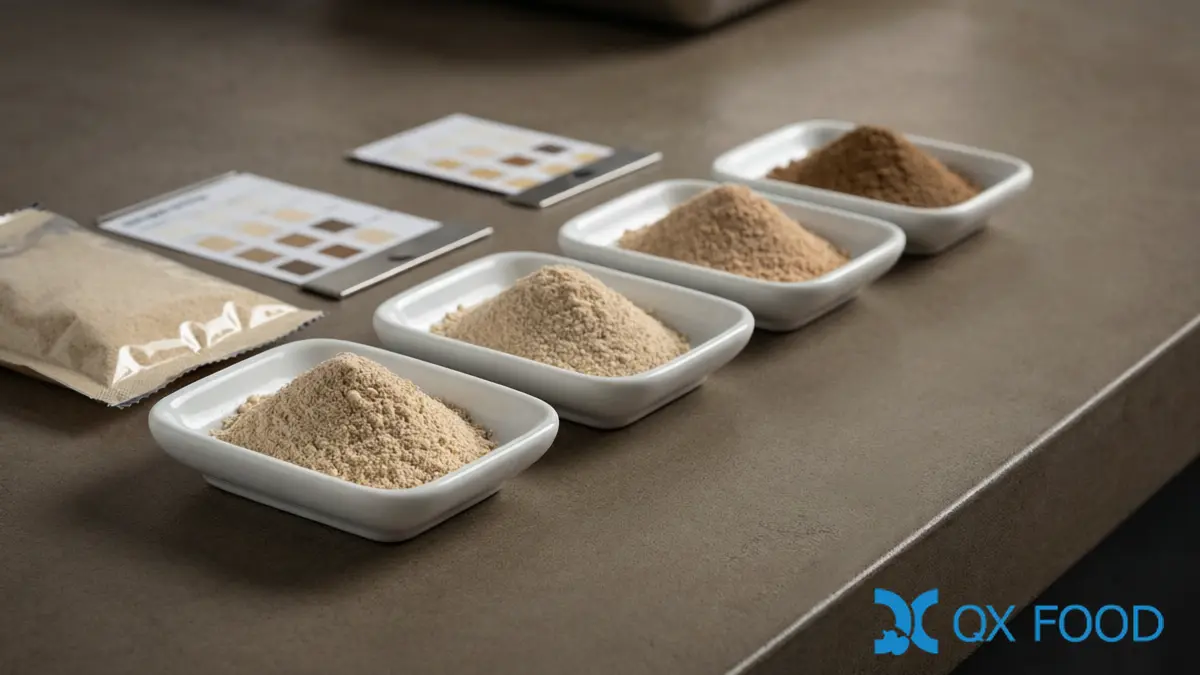
Candidate grades should be compared on sensory direction in the prepared broth, salt contribution, color, dispersion or dissolution behavior, nitrogen specification, allergen constraints and compatibility with the intended seasoning format.
A chicken noodle does not automatically require soy HVP, and a clear seafood broth does not automatically require corn HVP. Color can constrain the choice, but protein source and nitrogen specification do not independently determine the finished broth profile. QXFOOD grades such as FSA and FYA can be evaluated as candidates rather than fixed answers, alongside the wider HVP powder series.
Reconstitution Depends on the Actual Preparation Instructions
The finished broth should be evaluated using the manufacturer’s intended water volume, temperature and preparation time. The selected grade should disperse or dissolve adequately under those conditions, and reconstitution should be checked in the complete seasoning system rather than assumed from the HVP form alone. The noodle cake and any oil or paste sachet can also affect broth appearance and how the flavor materials release.
Balance Savory Performance Against Total Sodium
HVP may contribute savory intensity that helps a reduced-sodium noodle seasoning remain acceptable, but many HVP grades also contribute sodium. Total sodium should therefore be evaluated in the complete prepared product together with sensory performance rather than assuming that a specific HVP addition will support a fixed percentage reduction.
The sodium range across instant noodle products is wide both between and within markets, which is exactly why a fixed reduction claim does not survive product-level review (sodium content of instant noodles across countries).
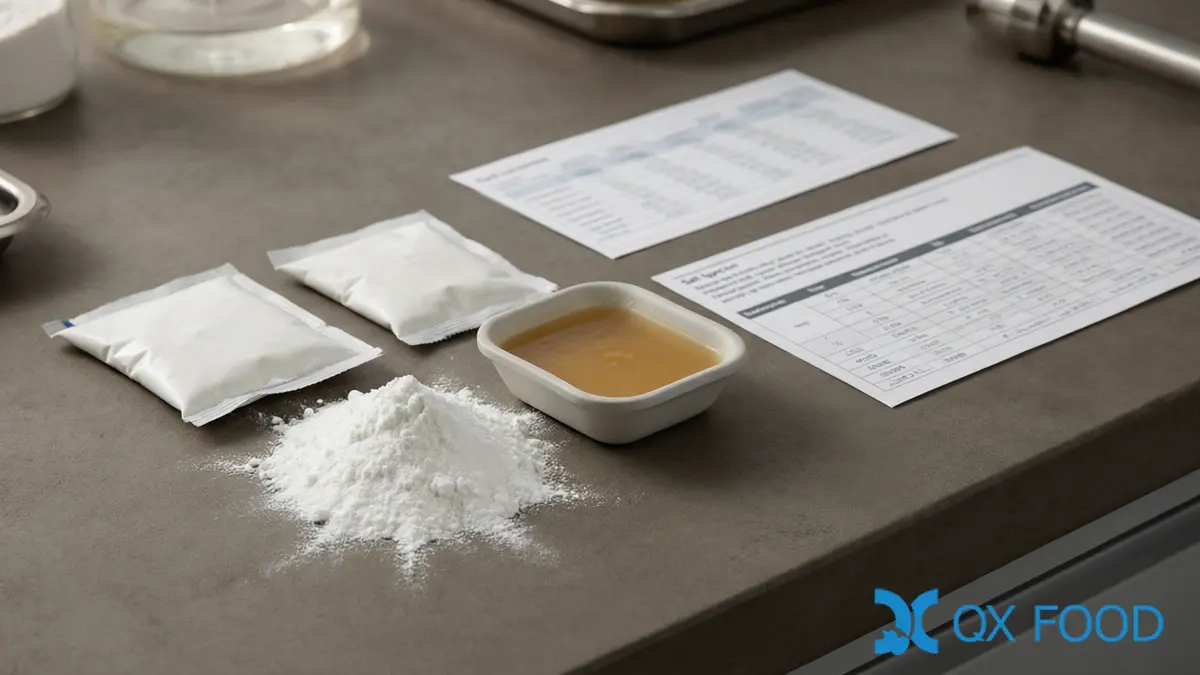
Powder Flow Is a Complete-Blend Property
Moisture sensitivity, flow and caking behavior should be evaluated for the selected grade within the complete seasoning blend and under the actual storage and filling conditions. The powder caking prevention guide covers the dry-system discipline in more detail.
What to Compare When Selecting HVP for Noodle Seasonings
- Sensory direction: evaluated in the prepared broth under the intended preparation conditions.
- Salt and sodium: contribution at the intended sachet and serving levels.
- Color: impact on the broth and any clear-broth requirement.
- Dispersion and dissolution: behavior in the complete seasoning system at the intended water temperature.
- Powder behavior: flow, moisture sensitivity and caking in the blend and on the filling line.
- Nitrogen specification: a grade descriptor to be interpreted alongside sensory evaluation, not as a standalone broth-intensity score.
- Applicable contaminant requirements: for EU programs, verify 3-MCPD against Regulation (EU) 2023/915 using the applicable dry-matter basis.
How QXFOOD Evaluates Candidate Grades
QXFOOD compares HVP candidates for noodle-seasoning applications on grade specifications, sensory direction in the prepared broth, salt contribution, color, dispersion and relevant powder characteristics. Final behavior in the complete kit and the bowl should be confirmed in the buyer’s own process and preparation conditions.
Questions Noodle Formulators Ask
How much HVP goes into an instant noodle seasoning?
There is no standard level. The right amount depends on the salt target, other savory materials, sachet size, water volume, noodle cake and the sensory target of the prepared product. Dose is established in the prepared bowl under the intended preparation conditions, not from the flavor name.
Does higher amino nitrogen mean stronger noodle broth?
No. Nitrogen figures describe the grade; they do not independently predict broth intensity. The finished flavor should be evaluated in the prepared noodle system under the actual preparation conditions.
Can HVP support sodium reduction in noodle seasonings?
Possibly, but the calculation must use the total sodium of the complete prepared product. HVP may contribute savory intensity, while some grades also contribute sodium, so sensory performance and total sodium should be evaluated together at the intended serving.
Can HVP replace directly added MSG in an instant noodle seasoning?
It can be evaluated as part of a reformulation, but HVP is not a 1:1 sensory replacement for MSG and it contributes its own flavor, salt and other solids. Label claims must follow destination-market rules. In the United States, FDA states that foods containing hydrolyzed vegetable protein cannot claim “No MSG” or “No added MSG” (FDA questions and answers on MSG).