
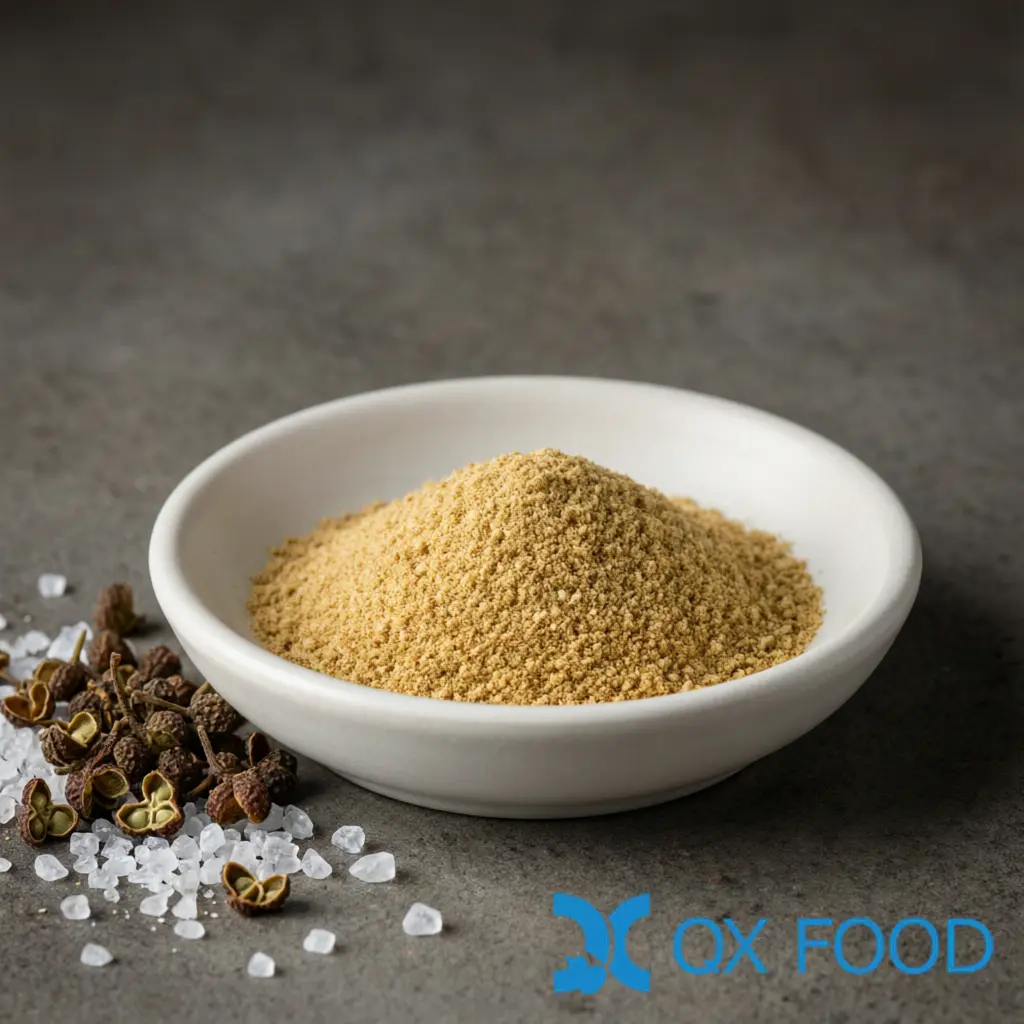
Pepper salt seasoning is a compound seasoning used in snack coatings, fried foods, nuts and other savory applications. Commercial formulations may combine salt with Sichuan pepper, white pepper and supporting ingredients, with particle size, flowability, adhesion and flavor consistency adjusted for the target process.
This guide covers common flavor profiles, formulation variables, industrial performance, food-safety considerations and the specifications buyers can use when evaluating suppliers. Relevant reference frameworks include the Codex General Standard for Food Additives (GSFA, food category 12.2.2 seasonings and condiments), Codex CXS 150-1985 for food-grade salt, CXS 326-2017 for white pepper, GB/T 30391-2024 for Sichuan pepper and GB 31644-2018 for compound seasonings.
Common Pepper Salt Flavor Profiles
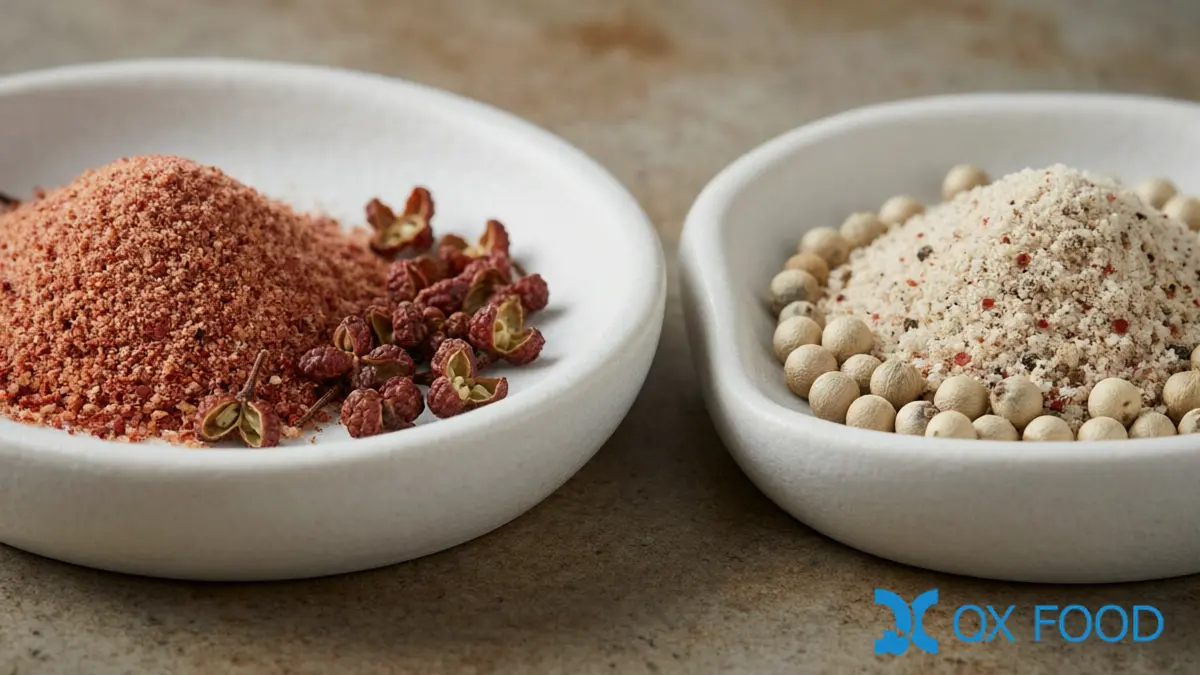
Traditional Sichuan-style pepper salt commonly combines salt with roasted Zanthoxylum pericarp for a numbing effect with citrus-floral top notes. Other Chinese pepper-salt formulations may use white pepper, garlic, five-spice components or additional aromatics depending on regional style and target application; there is no single fixed Cantonese recipe.
Which profile you specify depends on your target market. Products aimed at the Sichuan-inspired numbing trend need the prickly-ash version with defined numbing character. Products positioned as general savory snacks, like potato chips or roasted nuts, may use white-pepper or blended profiles.
What Drives Performance in Production
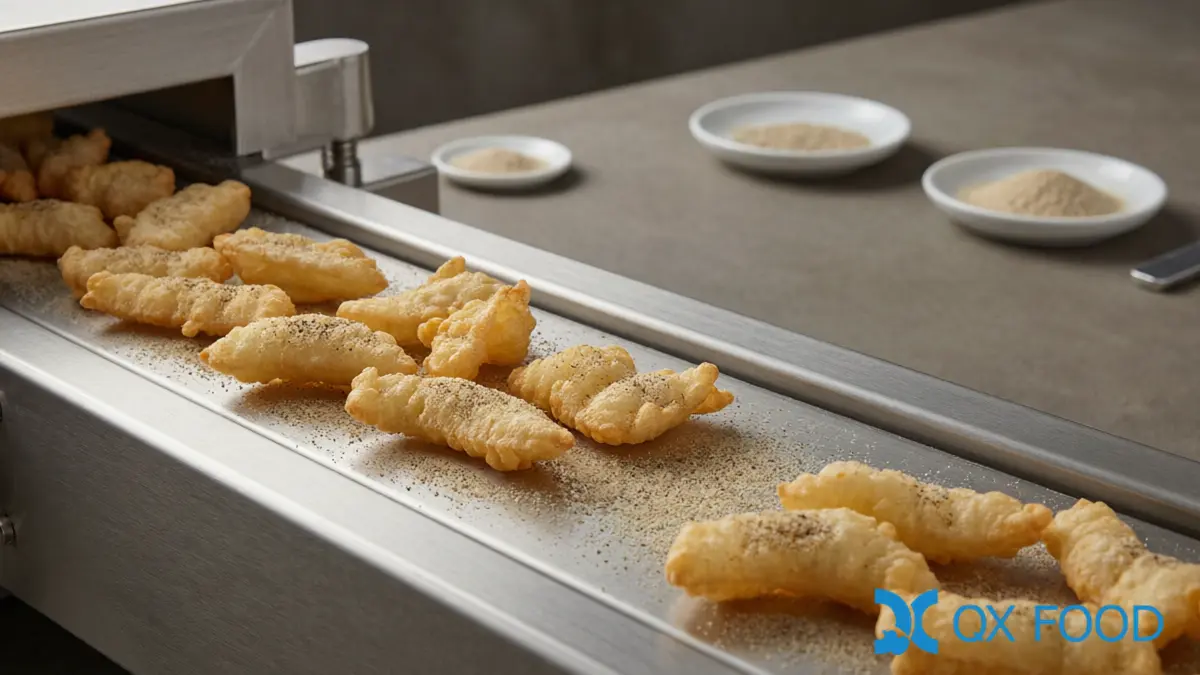
Production performance is mainly affected by particle size, adhesion, flowability and flavor consistency:
- Particle size: a controlled and reasonably uniform particle-size distribution can improve coverage and reduce segregation. The appropriate sieve range depends on the substrate, dosing system and desired appearance.
- Adhesion: seasoning retention depends on the substrate surface, oil level and application method, such as tumble coating, dusting or spraying.
- Anti-caking: moisture exposure, ingredient composition, particle-size distribution and packaging affect flowability. Where an anti-caking agent is used, the additive and use level should follow destination-market regulations and be limited to the amount required to achieve the intended technical effect.
- Numbing consistency: for prickly-ash styles, numbing consistency may be controlled through a defined sensory reference, supplier specification and, where required, instrumental measurement of hydroxy-α-sanshool or related sanshool compounds. For the numbing ingredient itself, see our sichuan pepper sourcing guide.
Flowability, Caking and Particle-Size Control
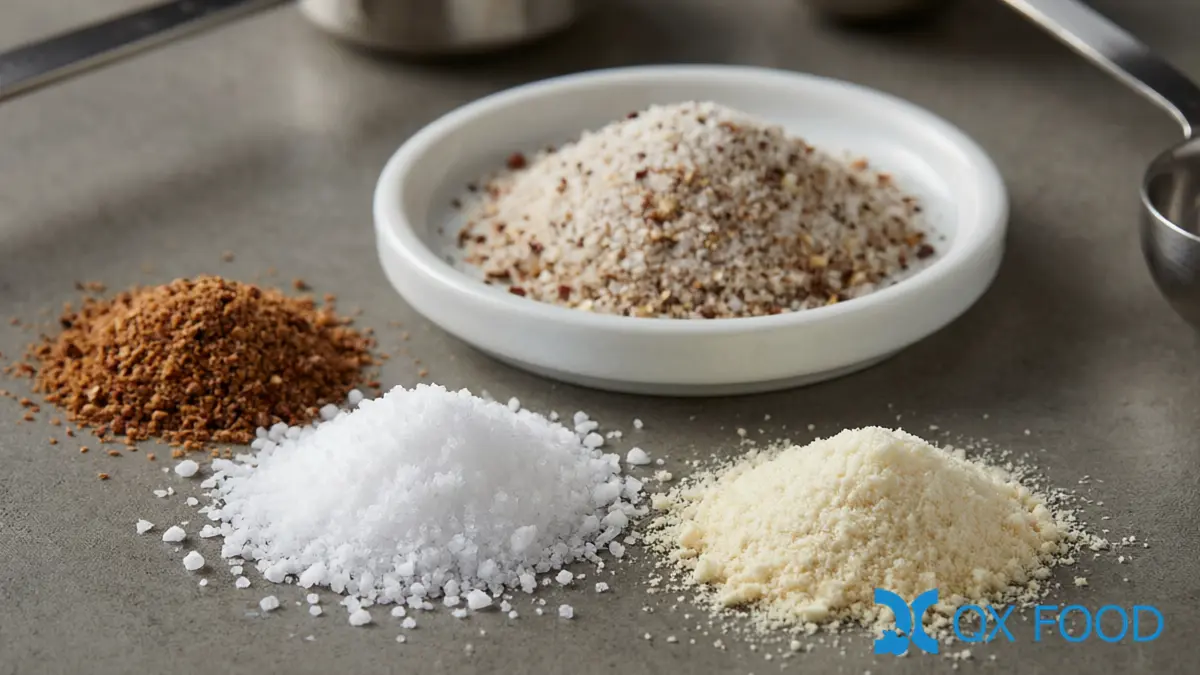
Particle-size distribution should be matched across salt, spice and carrier components where practical. Large differences in particle size and bulk density between components can increase segregation during transport and feeding. Salt crystal form and particle size can influence surface coverage and adhesion, so the final selection should be verified on the buyer’s coating equipment and substrate.
Application Specification Matrix
Commercial pepper salt seasoning is a formula-defined blend based on salt and Sichuan pepper, white pepper or other aromatic components. Depending on the formulation, it may also include sugar, garlic, flavor enhancers, carriers or approved anti-caking agents. There is no single standard ratio; salt level, spice level and the supporting components are set against the target application, dosage, sensory profile and cost structure.
Confirm whether the supplier can adjust salt-to-spice ratio, particle size and permitted additives to match the intended application.
| Parameter | Snack Dusting | Fried Foods | Nut Coating |
|---|---|---|---|
| Particle size | Fine, uniform; line-specific | May allow more visible particles | Fine to medium; coating-specific |
| Salt level | Formula-defined | Formula-defined | Formula-defined |
| Spice level | Sensory target | Sensory target | Sensory target |
| Flowability | Verify on dosing equipment | Verify during dusting | Verify during tumble coating |
| Adhesion | Evaluate after oil application | Evaluate post-fry | Evaluate after tumble/spray |
| Acceptance method | Line trial + reference sample | Line trial + reference sample | Line trial + reference sample |
Application-Specific Formulation
The same pepper salt base may require different physical and sensory adjustments across applications. For snack seasoning systems more broadly, the snack seasoning application guide covers the full application picture. For fried-food dusting, a slightly coarser particle size may give the visible crystalline coating customers expect. For chip seasoning, a finer, uniform particle size adheres better to the oiled surface. For nuts, the powder needs enough adhesion to survive tumbling without clumping. Final selection should be verified on the buyer’s coating equipment and substrate.
Application-specific development may involve adjustment of particle size, salt-to-spice ratio and permitted additives to match the intended process and finished-product target.
Working with a Supplier on Development
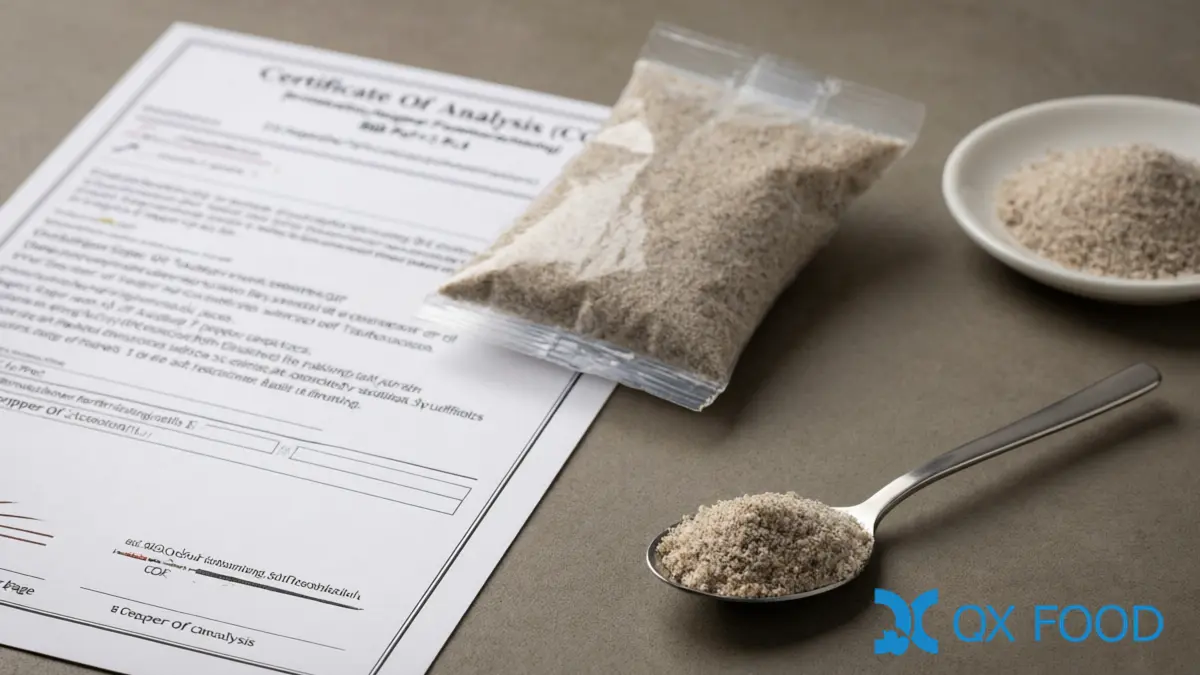
Supplier development should begin with an application brief covering substrate, coating method, target flavor, particle appearance and labeling constraints. Trial samples can then be evaluated under the buyer’s production conditions before the commercial specification is finalized.
The final specification may define particle-size distribution, salt level, moisture or flowability parameters, relevant additives and sensory acceptance criteria. The approved specification should define the parameters used for routine batch verification and COA review.
Food Safety and Regulatory Requirements
Pepper salt seasoning is a low-moisture compound product, so food-safety control follows the logic of low-moisture foods: moisture and water activity management, microbiological specifications, pesticide-residue limits and contaminant control as defined by the destination market. For spice raw materials, where microbial reduction is required, confirm the treatment method, validation target and destination-market acceptance rather than assuming one technology is universally preferred. Finished-blend requirements are buyer- and market-defined and may cover Salmonella and other pathogens, aerobic plate count or other indicator organisms, moisture or water activity, contaminants, additives and allergen declarations. Where Halal or other certifications are required, verify that the certificate covers the specific product and manufacturing site and is accepted by the target customer or market.
For the prickly ash component, pesticide residue compliance matters because Zanthoxylum is sometimes treated during cultivation and limits differ by destination. Ask the supplier to state the applicable residue limits and test method, and retain the relevant test documentation with the lot records where required.
Quality Checks on Incoming Lots
Run these checks when you receive pepper salt seasoning:
- Moisture: verify against the agreed specification where moisture is used as a stability or flowability control parameter.
- Particle size: confirm the agreed sieve distribution where particle size affects dosing, segregation or product appearance.
- Salt content: verify against the contractual formulation or specification where salt level is controlled.
- Numbing test: a sensory check at fixed dosage against your reference sample.
- Microbiological / contaminant testing: review according to the agreed control plan and destination-market requirements.
Sourcing from QXFOOD
QXFOOD supplies pepper salt seasoning powder with fresh prickly ash and a prickly ash flavor variant, both developed for snack and fried food applications.
Buying Checklist
Before you commit to a pepper salt seasoning supplier, run through this checklist:
- Application fit: confirm whether particle size, salt-to-spice ratio and other formulation parameters can be adjusted for the intended application.
- Numbing source: for prickly-ash styles, confirm the Zanthoxylum species and the method used to control numbing intensity.
- COA / test documentation: confirm which agreed physical, chemical and microbiological parameters are reported by lot and which are verified periodically under the supplier’s control plan.
- Anti-caking: confirm the flow aid, use level and declaration on the agreed specification.
- Food-safety system / certification: verify applicable HACCP, ISO 22000, BRCGS, Halal or other documentation according to buyer and destination requirements.
- Sample / line-trial support: can they provide samples and support evaluation under your production conditions before the specification is locked?
- Capacity, lead time and MOQ: confirm available production capacity, minimum order quantity and normal reorder lead time.
References and Standards
- Codex GSFA – General Standard for Food Additives (food category 12.2.2 seasonings and condiments; INS 551 silicon dioxide).
- Codex CXS 150-1985 – Standard for Food Grade Salt.
- Codex CXS 326-2017 – Standard for Black, White and Green Peppers (white pepper reference).
- GB/T 30391-2024 – Sichuan pepper (Huajiao) national standard (China, effective 2025-04-01).
- GB 31644-2018 – National Food Safety Standard for Compound Seasonings (China).
- Codex CXC 75-2015 – Code of Hygienic Practice for Low-Moisture Foods.
- 21 CFR 172.480 – Silicon dioxide food additive regulation (U.S., anticaking maximum 2% by weight).
FAQ
What is pepper salt seasoning?
Pepper salt seasoning is a compound powder of salt and ground Sichuan pepper or white pepper, used as a savory dusting and coating seasoning for fried foods, snacks and nuts.
What is pepper salt used for?
It is used on fried chicken, chips, nuts, seafood, fried mushrooms and crispy pork, and as a base for savory snack blends in Asian-style and fusion products.
What is the difference between Sichuan and Cantonese pepper salt?
Sichuan-style pepper salt uses roasted prickly ash and delivers a numbing effect. Other Chinese pepper-salt formulations may use white pepper, garlic, five-spice components or additional aromatics; there is no single fixed recipe.
Is pepper salt the same as salt and pepper?
Not exactly. Plain salt-and-pepper seasoning generally combines salt with black or white pepper depending on the cuisine. Chinese-style pepper salt may instead use Sichuan pepper, white pepper and additional savory or aromatic ingredients.
Why does my pepper salt seasoning cake in the bag?
Pepper salt seasoning can cake when the blend absorbs moisture during storage. Ingredient composition, particle-size distribution, packaging and storage humidity all affect flowability. Where necessary, an approved anti-caking agent can be specified according to the destination market and product formulation.
What mesh size should pepper salt powder be?
Particle size is buyer- and application-defined. A fine, uniform mesh generally spreads and adheres evenly; a coarser mesh gives visible texture but can increase segregation. Confirm the sieve range against your coating equipment and target appearance.
Can pepper salt seasoning be customized?
Yes, the salt-to-pepper ratio, heat level, mesh size and additional flavoring can be developed for your application, subject to technical feasibility review, sample validation, agreed specifications and batch verification.