
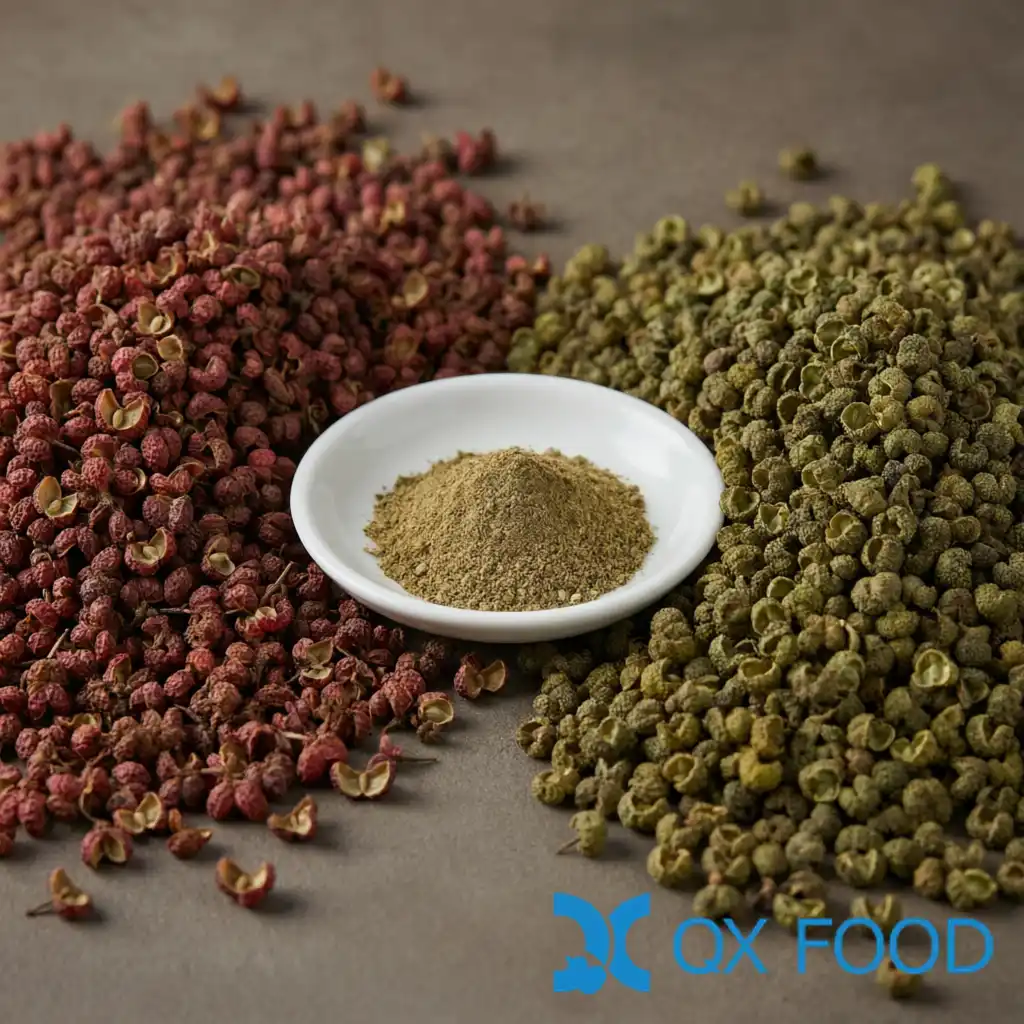
Sichuan pepper is widely used in industrial hot pot bases, chili oils, snack seasonings, braising systems and compound seasonings. For food manufacturers, sourcing performance depends not only on price, but also on botanical species, numbing intensity, volatile oil, seed content, processing method and destination-market compliance.
What industrial buyers often miss is that Sichuan pepper is not a single product: red and green varieties differ in aroma, in numbing strength and in price. One important performance attribute, numbing intensity, is not always captured by a standard COA, because conventional specifications often focus on moisture, volatile oil, ash and safety parameters rather than sanshool content
This guide covers the variety split, the chemistry behind the numbing effect, the quality checks that actually predict flavor performance, and the sourcing questions to ask before you commit.
Red vs Green Sichuan Pepper
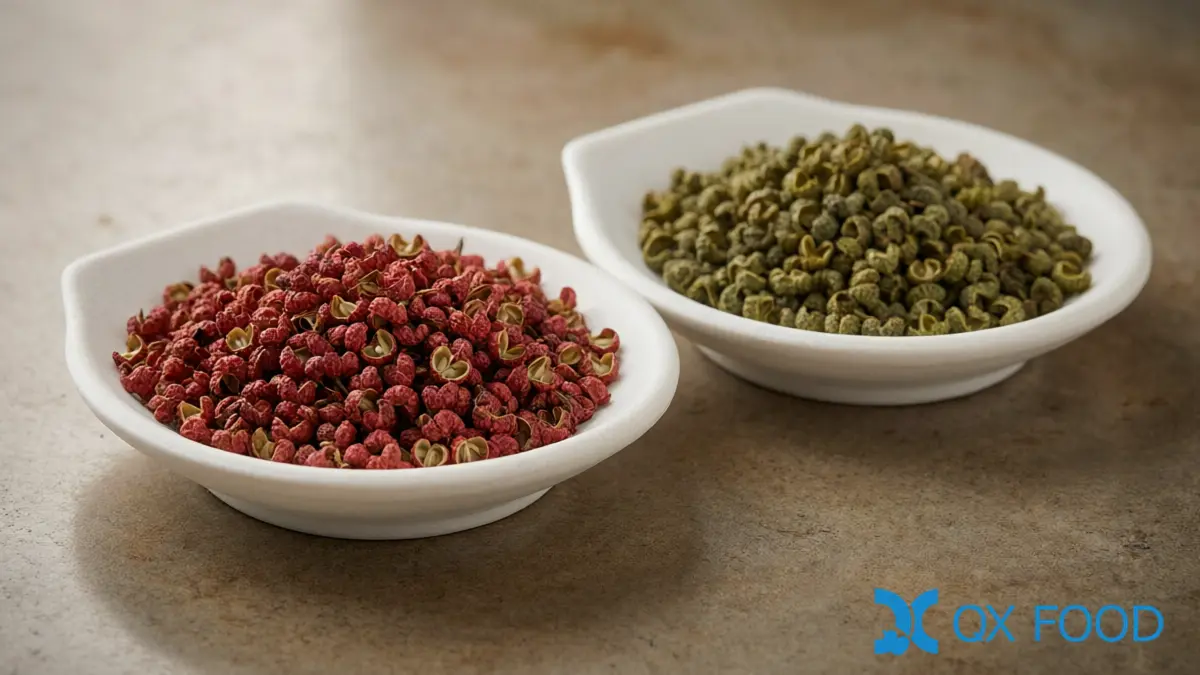
Red Sichuan pepper is commonly associated with Zanthoxylum bungeanum, the classic choice: warm and woody with a floral lift and deep numbing. Its main growing regions are Shaanxi (Hancheng), Gansu (Wudu) and Sichuan itself (Hanyuan). Commercial green Sichuan pepper may include Zanthoxylum armatum and Zanthoxylum schinifolium, depending on origin and trade classification; it is brighter and more citrusy with a sharper tingling sensation, and is produced mainly in Chongqing (Jiangjin) and parts of Sichuan.
The choice between them changes your product. Red pepper suits braised meats, cured meats and traditional five-spice systems where depth matters. Green pepper works in lighter applications, fish dishes, salads and lighter products where a fresh citrus lift is wanted. Some manufacturers blend both, using red for depth and green for top-note brightness.
The Chemistry of the Numb
The numbing sensation, the ma la feeling that defines Sichuan food, comes from hydroxy-alpha-sanshool, an alkylamide that activates multiple somatosensory pathways, with rapidly adapting mechanosensory fibers playing an important role in the characteristic tingling sensation (Bautista et al., 2008; Hagura et al., 2013). Where capsaicin produces burning and piperine produces sharpness, sanshool produces a tingling, vibrating sensation often described as a mild electrical buzz.
This is why oil content alone does not predict numbing performance. A lot with high volatile oil can smell excellent yet numb weakly, because sanshool concentration is separate from essential oil yield. For products where numbing is the selling point, hot pot bases and numbing snack seasonings, buyers should ask for sanshool-related testing or at minimum run a sensory evaluation against a reference sample.
Whole, Ground or Oleoresin
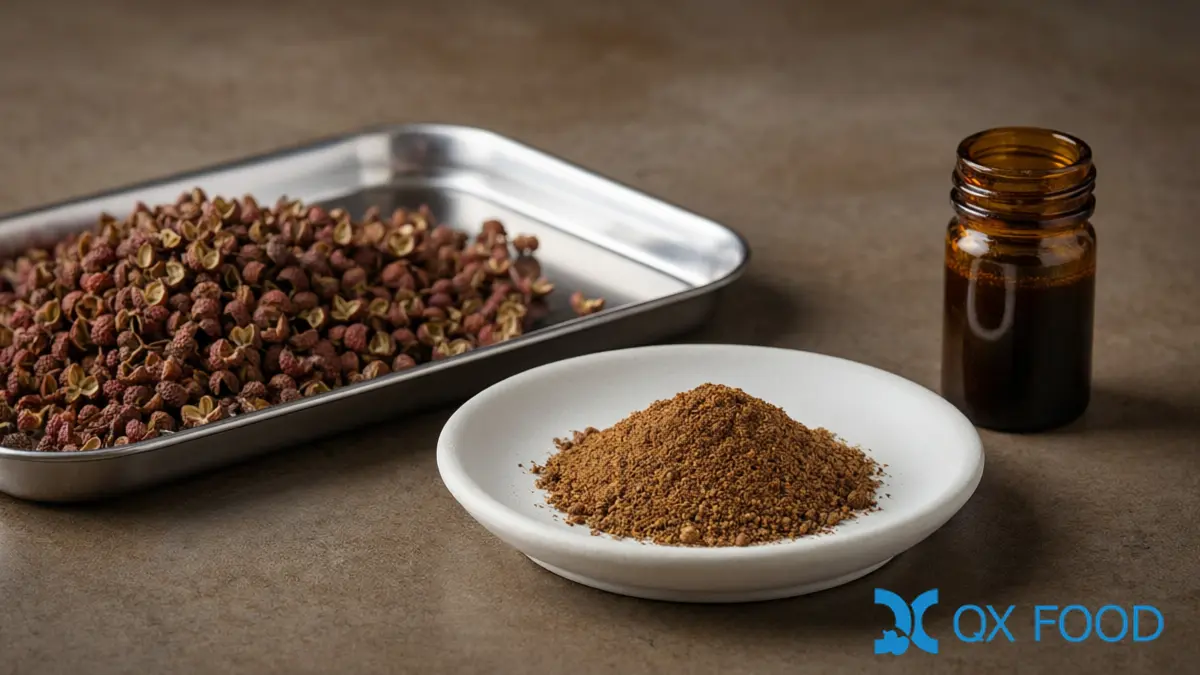
Sichuan pepper is available in three commercial forms, and each changes your spec:
- Whole: dried pericarps with seed content controlled according to the agreed grade or specification, best for hot pot bases and braising where visual presence matters. The seed-to-pericarp ratio affects yield and cost.
- Ground: commercial ground products are commonly supplied in buyer-specified mesh ranges such as 40-80 mesh, depending on application. Ground material loses numbing potency faster and needs airtight packaging.
- Oleoresin or extract: useful where concentrated dosing, easier formulation control, or more standardized sensory intensity is required, depending on the agreed extract specification.
For most seasoning manufacturers, whole and ground cover the practical range, with oleoresin chosen when concentrated dosing or batch-to-batch standardization matters more than whole-spice character.
Typical Analytical Specification
| Parameter | GB/T 30391-2024 Reference | Example Buyer-Defined Requirement | Reference Method |
|---|---|---|---|
| Moisture | ≤12.0% (whole and ground) | ≤10-12%, depending on contract | GB 5009.3-2016, Method III (distillation) |
| Volatile oil – whole | Grade 1 ≥3.0; Grade 2 ≥2.5 mL/100g | Buyer-defined target | GB/T 30385 |
| Volatile oil – powder | Grade 1 ≥2.5; Grade 2 ≥1.5 mL/100g | Buyer-defined target | GB/T 30385 |
| Total ash | ≤10.0% | Buyer-defined target | GB 5009.4-2016 |
| Seed content (whole) | ≤3.0% | May be tightened by contract | GB/T 12729.5 |
| Stalk content (whole) | ≤3.0% | May be tightened by contract | GB/T 12729.5 |
| Foreign matter | Not detected | Not detected | GB/T 12729.5 |
| Moldy pepper | Not detected | Not detected | Sensory inspection |
| Microbiology | Not specified in this product standard | Buyer- or destination-specific limits | Contract-defined |
| Pesticide residues | Not specified as an MRL table in this standard | EU MRLs / U.S. EPA tolerances or exemptions / destination requirements | Accredited multi-residue testing (GC-MS / LC-MS) |
The numerical GB/T requirements shown above are based on the cited Chinese standards. Microbiological and pesticide-residue requirements are not specified in GB/T 30391-2024 and should therefore be defined according to the buyer’s specification and destination-market regulations. Final contractual limits should be confirmed in the purchase specification and lot-specific documentation.
Quality Checks That Predict Performance
Run these checks on every candidate lot:
- Pericarp content: seeds add weight with little contribution to aroma or numbing effect; a high seed-to-pericarp ratio means more of the purchased weight is non-functional. Specify maximum seed content.
- Aroma intensity: evaluate the sample against an approved reference using a standardized sensory protocol under consistent test conditions; a trained sensory panel is more reliable than a single evaluator.
- Numbing evaluation: a standardized taste test at a fixed dosage, rating onset, intensity and duration.
- Moisture: GB/T 30391-2024 specifies a maximum moisture content of 12.0%. Buyers may set tighter contractual limits depending on packaging, transit conditions and storage requirements.
- Pesticide residue: confirm the test method and limits, especially for EU-destined product.
- Color consistency: color should be consistent with the agreed variety and approved reference sample. Fading, discoloration or excessive variation may indicate aging, oxidation, or suboptimal drying and storage conditions.
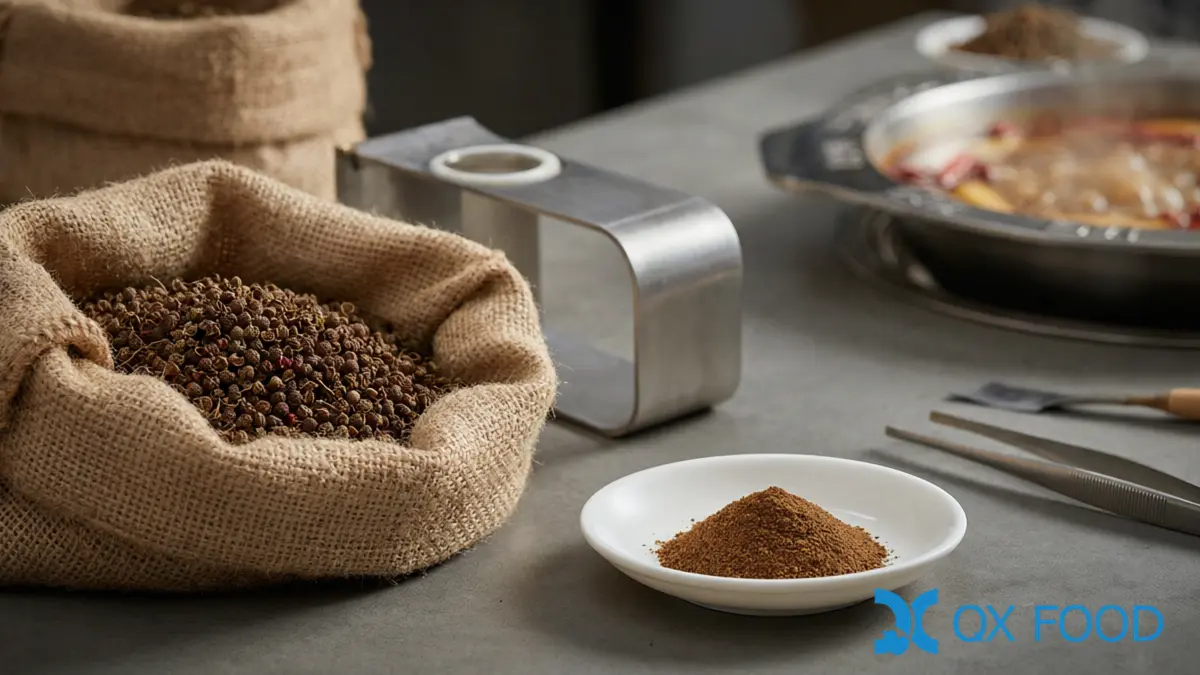
One practical note on evaluation: ask the supplier to send a sealed reference sample alongside the COA, and keep it as your internal benchmark. Sensory drift is easier to catch when you compare every incoming lot against a fixed reference under the same test conditions.
Adulteration and Substitution Risks
Because whole Sichuan pepper is priced by weight and appearance, the two classic risks are seed loading and species substitution. Seeds contribute substantially less to the characteristic aroma and numbing performance than the pericarp, so excessive seed content increases non-functional weight and reduces overall flavor value. Species substitution can create unexpected differences in aroma, numbing intensity, chemical composition and compliance documentation, since lookalike Zanthoxylum species or imported material of unknown origin may carry different residue profiles.
The practical defense is the same for both: buy from suppliers who can document origin and sorting, specify maximum seed content in writing, and run a sensory check on every incoming lot. A simple visual inspection of a representative sample can quickly reveal excessive seed or stalk content, while rubbing the pericarps and evaluating the released aroma can help identify freshness and sensory differences that may not appear on a standard COA.
Negotiating Price and Terms
Sichuan pepper prices vary by crop year, origin, grade, seed content, sorting level and processing requirements. Significantly lower quotations may therefore reflect differences in specification rather than a true like-for-like price advantage. Agree the grade and processing requirements in writing, and compare quotations using the same specification and Incoterm.
For volume buyers, forward purchasing after harvest can reduce exposure to later seasonal price movements, while spot prices depend on crop availability and remaining inventory. Confirm MOQ, packaging (25 kg bags or drums), lead time and whether steam sterilization is included, since these terms change the effective cost as much as the unit price does.
Quality Standards and Certification
For export procurement, buyers commonly request documented food-safety and quality-management systems such as HACCP or ISO 22000, depending on the buyer and destination market. Commonly requested documentation includes a lot-specific COA covering core quality parameters, together with pesticide-residue and microbiological test reports where required by the buyer or destination market. For markets with strict import requirements, pesticide-residue compliance is particularly important because permitted limits vary between destinations and Zanthoxylum is sometimes treated during cultivation.
Sterilization is a separate decision. Different decontamination methods can affect aroma, volatile compounds and microbial reduction differently. Buyers should specify the required microbial limits, confirm the treatment method with the supplier and check whether it is included in the quoted price, because sterilization can add meaningfully to cost and lead time.
For halal-certified markets, verify that the halal certificate is valid and that its scope covers the specific Sichuan pepper product and manufacturing site. Documentation should therefore be treated as part of the agreed product specification and verified before shipment.
Dosing and Formulation Notes
Sichuan pepper dosage is highly application-specific because sensory intensity changes with botanical species, sanshool concentration, particle size, product format and processing conditions. There is no universal inclusion rate, so industrial buyers should validate dosage through application trials against a defined sensory target.
Heat processing changes the picture. Thermal processing affects both the extraction and stability of numbing compounds. High-temperature or prolonged processing can change hydroxy-alpha-sanshool levels, so processing conditions can influence the dosage required to achieve a target sensory profile. Application trials under actual production conditions are therefore more reliable than generic usage tables.
Supply Chain Notes
Sichuan pepper is typically harvested once a year, around July to September depending on region and origin, so annual contracting matters.
One common sourcing route is to work with an exporter or ingredient supplier that can coordinate origin control, processing, testing and export documentation. Ask how the pepper was dried (sun vs mechanical), whether it was steam sterilized, and how long it has been stored, because aroma and numbing potency both fade with age.
Sourcing from QXFOOD
QXFOOD supplies Sichuan pepper powder for industrial food manufacturing and seasoning applications. Supply options include whole sorted pericarps, coarse cracked and fine ground powder in 40, 60 or 80 mesh, with custom milling available on request. Lot-specific COAs cover moisture, volatile oil, ash, seed content and heavy metals; steam sterilization can be arranged upon request, and certificate of origin documentation is available for export shipments. Packaging can be customized to your line requirements.
For a quotation, send us your required mesh size, target application, estimated order quantity and destination country, and we will prepare a matching specification and evaluation sample.
Related reading: our spice procurement guide covers supplier qualification, the hot pot spice guide shows how Sichuan pepper integrates into complete base systems, and the spice grinding guide covers grinding specs for powder production.
FAQ
What is Sichuan pepper used for?
Sichuan pepper is used in hot pot bases, chili oils, braised dishes, marinades, snack seasonings, five-spice blends and any product needing the characteristic numbing sensation of Sichuan cuisine.
Is Sichuan pepper the same as black pepper?
No. Sichuan pepper is the dried pericarp of Zanthoxylum species and produces numbing via hydroxy-alpha-sanshool, while black pepper is Piper nigrum and produces heat via piperine.
Why does Sichuan pepper make my tongue tingle?
Hydroxy-alpha-sanshool acts on multiple somatosensory pathways, producing a tingling, vibrating sensation perceptually distinct from capsaicin-driven heat. In a human psychophysical study, the tingling was matched to a mechanical vibration of approximately 50 Hz (Hagura et al., 2013).
What is the difference between red and green Sichuan pepper?
Red Sichuan pepper (Zanthoxylum bungeanum) is warm, woody and deeply numbing. Green Sichuan pepper (Zanthoxylum armatum or Zanthoxylum schinifolium) is brighter and citrusy with a sharper tingle. They suit different applications.
How should Sichuan pepper be stored?
Store in a cool, dry, low-temperature environment in sealed, moisture- and light-protective packaging. Numbing potency and aroma fade with age; shelf life depends on product form, packaging and storage conditions, so buyers should follow the supplier’s validated shelf-life specification.
What is the shelf life of Sichuan pepper?
Shelf life depends on product form, packaging and storage conditions. Ground Sichuan pepper generally loses aroma and numbing intensity faster than whole pericarps, so buyers should follow the supplier’s validated shelf-life specification.
Is Sichuan pepper safe for food use?
Sichuan pepper is widely used as a culinary spice, but regulatory requirements depend on the botanical species, product form and destination market. Industrial buyers should verify product identity, pesticide residues, microbiological limits and applicable import requirements before commercial use.
References and Industry Standards
Geographical Indication Sources
- GB/T 47140-2026 – Quality Requirements for Product of Geographical Indication: Hanyuan Red Pepper.
- CNIPA – Geographical Indication Product Protection Requirements: Wudu Huajiao.
- CNIPA – Geographical Indication Product Protection Requirements: Jiangjin Huajiao.
- DB61/T 1171-2025 – Quality Requirements for Geographical Indication Product: Hancheng Dahongpao Huajiao.
Industry and Regulatory Standards
- GB/T 30391-2024 – Huajiao Pepper (Szechuan Pepper), Standardization Administration of China.
- GB 5009.3-2016 – Determination of Moisture in Foods (Method III: distillation).
- GB/T 30385-2013 – Spices and Condiments: Determination of Volatile Oil Content.
- GB 5009.4-2016 – National Food Safety Standard: Determination of Ash in Foods.
- GB/T 12729.5-2020 – Spices and Condiments: Determination of Extraneous Matter Content.
- U.S. EPA – Setting Tolerances for Pesticide Residues in Foods.
- European Commission – EU Pesticides Database.
Scientific References
- Bautista, D. M., et al. (2008). Pungent agents from Szechuan peppers excite sensory neurons by inhibiting two-pore potassium channels. Nature Neuroscience, 11(7), 772-779. DOI: 10.1038/nn.2143.
- Hagura, N., Barber, H., and Haggard, P. (2013). Food vibrations: Asian spice sets lips trembling. Proceedings of the Royal Society B, 280(1770), 20131680. DOI: 10.1098/rspb.2013.1680.