
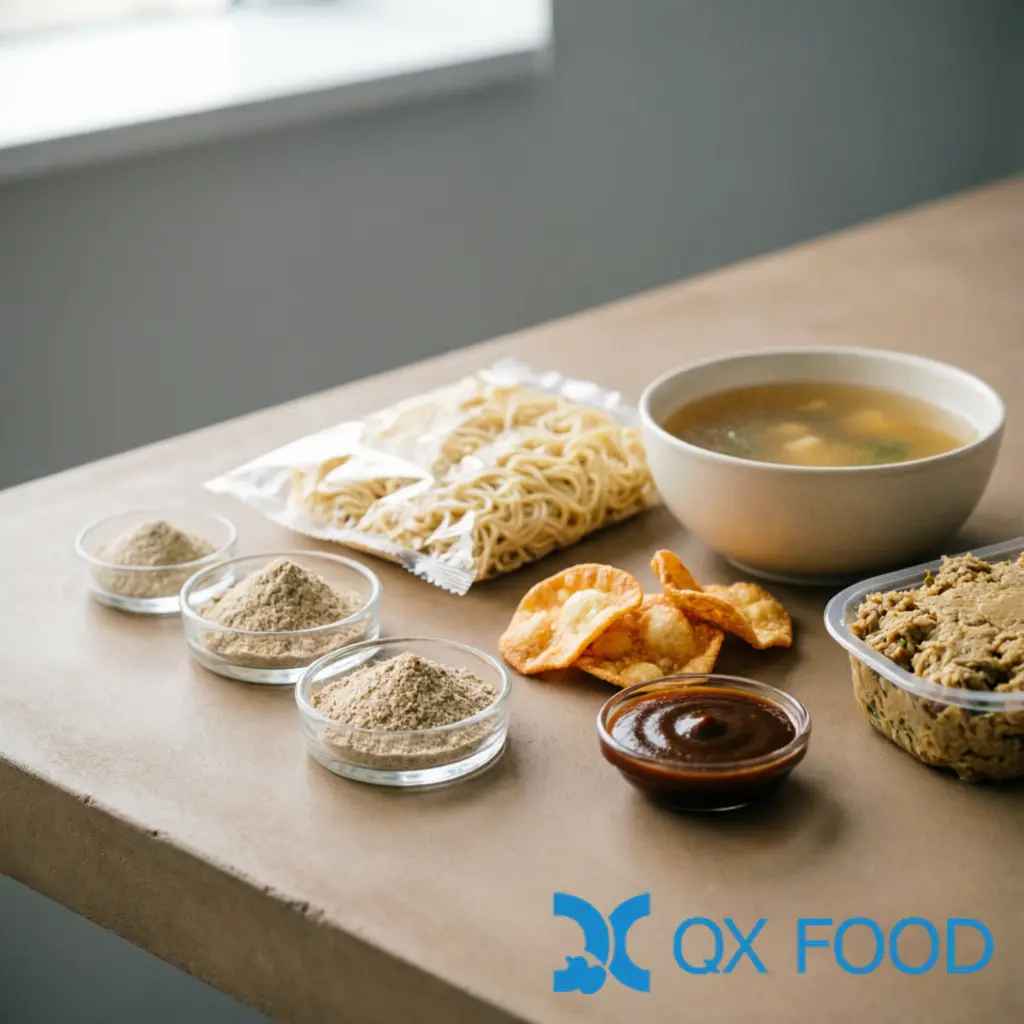
For 2027 planning, five practical savory development directions are layered flavor profiles, fermented and umami-building systems, performance requirements in convenient formats, taste-first plant-based development, and application-specific customization. These are evidence-based planning directions, not guaranteed outcomes for every market. For a manufacturer, the real test is whether a flavor survives the process, fits the target cost, and remains recognizable in the finished food.
Flavor trend lists are easy to publish. Product decisions are harder. A seasoning that sounds interesting in a presentation still has to work in a noodle sachet, snack coating, soup base, sauce, ready meal, or meat-alternative formulation. It also has to be testable against a brief. This review turns 2025-2026 industry research and reliable customs-trade records into a practical 2027 development agenda for food manufacturers.
Savory Flavor Trends 2027: The Short Version
| 2027 direction | What it means in product development | What a manufacturer should test |
|---|---|---|
| Layered savory profiles | More attention to the opening note, body, finish, and regional familiarity rather than one dominant flavor label | Profile balance at the intended dosage and after the real process |
| Fermented and umami-building systems | Fermented notes and savory foundations used as parts of a system, not as vague “more umami” claims | Raw-material declaration, sensory target, salt contribution, format, and documentation |
| Convenience-format performance | Flavor designed for sachets, dry mixes, coatings, soups, sauces, and ready meals | Dispersion, process exposure, finished-product tasting, and cost in use |
| Taste-first plant-based development | Greater focus on familiar savory cues and overall eating quality | Taste and texture together, with price and ingredient constraints included in the brief |
| Application-specific customization | Standard products used as a starting point for a defined manufacturing project | Feasibility, sample performance, agreed specifications, and batch verification |
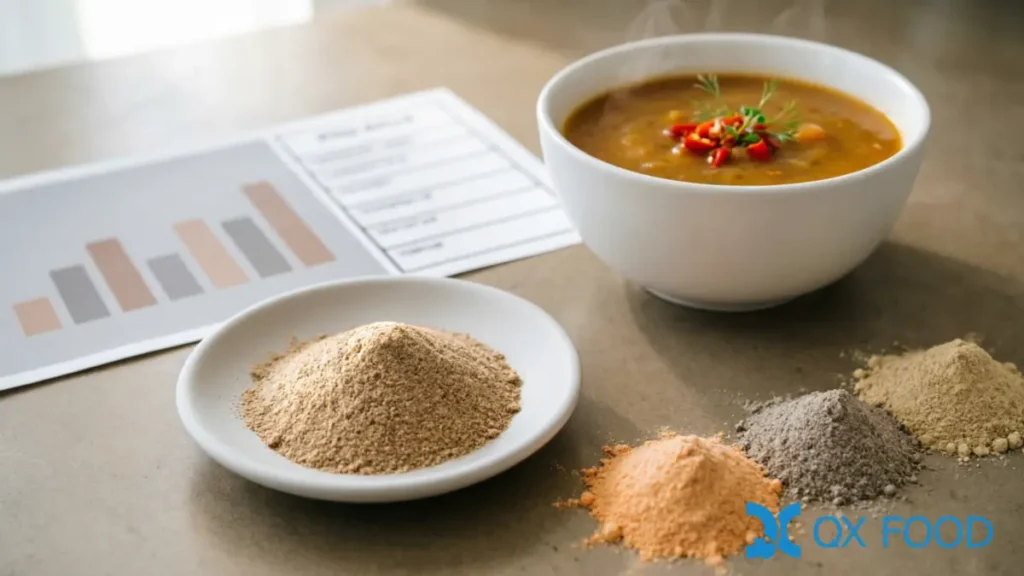
Why This Outlook Starts With Manufacturing Reality
The Institute of Food Technologists’ Outlook 2026 points to layered flavor, fermentation, savory notes, cross-cultural combinations, and modern interpretations of familiar foods. Those signals are useful, but they become commercially relevant only after they are translated into an application brief.
Cost pressure is part of that brief. In a separate IFT survey of nearly 350 food-system professionals, 81% selected value or affordability among the leading factors shaping consumer decisions. That does not mean the lowest-cost flavor wins. It means a new flavor direction has to justify itself through finished-product impact, processing fit, dosage, or a clearer market position.
Convenient food remains too large to treat as a side application. The World Instant Noodles Association reports 123.067 billion servings worldwide in 2024. Instant noodles are only one part of the convenience-food market, but the figure shows why dry flavor delivery, sachet performance, regional adaptation, and cost in use deserve a central place in savory development.
1. Layered Profiles Are More Useful Than One-Word Flavor Trends
“Smoky,” “fermented,” “roasted,” or “spicy” may be enough for a trend slide. They are not enough for a manufacturing brief. A buyer needs to define what appears first, what provides the middle, what remains after swallowing, and how the profile changes in the final food. The same broad flavor idea can behave very differently in a dry snack coating and a hot soup.
This is where cross-cultural inspiration needs restraint. A regional cue can make a product more distinctive, but copying a named cuisine without understanding its flavor structure often produces a caricature. A better approach is to identify the useful sensory elements: fermented depth, roasted aroma, allium top notes, tomato body, heat shape, or a particular balance of salt and sweetness. Those elements can then be tested in the actual application.
For 2027, a good flavor brief should answer three plain questions:
- What should the buyer notice in the first bite or sip?
- What should carry the profile through the middle of the eating experience?
- What finish is acceptable after processing, storage, and preparation?
That language is less fashionable than a trend name, but it is far more useful to R&D, procurement, and a seasoning supplier working on the same project.
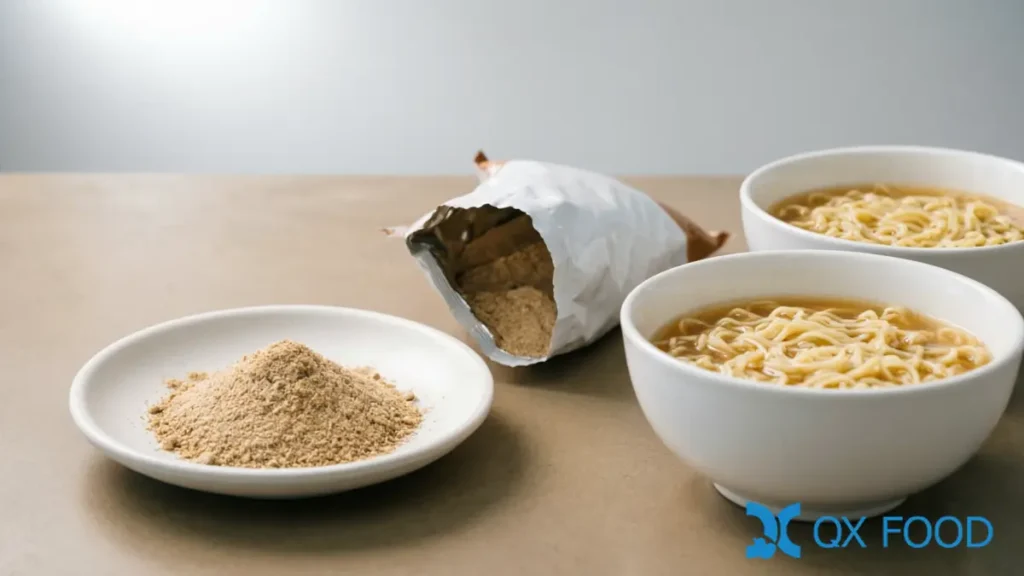
2. Convenience Formats Reward Flavor That Survives the Process
An instant-food flavor is not evaluated in the ingredient bag. It is evaluated after mixing, filling, storage, and consumer preparation. A soup base may be diluted in hot water. A noodle sachet may combine powder, oil, and dehydrated vegetables. A snack coating has to distribute across a moving surface and remain balanced at a relatively low application rate. A ready-meal sauce may face heating and holding before it reaches the consumer.
Read instant food flavor trends as process questions. Does the target profile remain clear after the intended heat exposure? Does the dry system disperse as required? Does the finished dose make commercial sense? A broad market forecast cannot answer those questions for a specific formula.
Dry fermented ingredients provide one practical route for some applications. QXFOOD’s soy sauce powder for instant-food systems is documented as a spray-dried powder made with fermented soy sauce and used in sauce packets and seasoning sachets. It is an example of translating a liquid fermented reference into a dry manufacturing format; the correct dosage and finished-product result still require application testing.
Other familiar building blocks can serve different jobs. Tomato powder for noodles and seasoning systems can be evaluated where a manufacturer needs a tomato-based direction in instant noodles, compound seasonings, or soups. One ingredient will not solve the whole profile; each component needs a defined role.
Beyond soy sauce powder, chicken extract powder for snack seasoning (CFP-H24) and beef flavor seasoning powder (BFP-H25) demonstrate how meat-forward savory profiles survive dry manufacturing.
3. Fermentation and Umami Need Better Specification, Not More Hype
Fermentation and umami are often used as catch-all marketing terms. Buyers need something more precise. Is the project looking for a fermented aroma, a soy-sauce character, a rounded savory base, longer finish, or support for another top note? Is the ingredient a powder, liquid, or paste? What does it contribute to salt, color, allergen declaration, and the overall ingredient list?
Reliable customs records add useful context. In QXFOOD’s reviewed HVP dataset covering records from August 2023 through July 2026, 2,179 unique lines were classified as food-relevant. Indonesia, the Philippines, Vietnam, and Malaysia accounted for 1,516 of those lines, or 69.6% of the reviewed sample. The 2025 record count was 19.2% higher than 2024 within that dataset.
A separate soy-sauce-powder review used a much narrower confirmed set: 37 records, of which 34 were associated with the Philippines, Indonesia, Vietnam, and Malaysia. Both datasets are reliable for the included records and the calculations made from them. They do not, by themselves, establish total global market size or global market share. What they do show is real cross-border procurement activity around savory ingredient systems in Southeast Asia and a reason to investigate those markets more closely.
For buyers, product names alone are weak sourcing filters. The customs review found model codes, packaging references, batch wording, and trade-document signals across the records. A useful request for quotation should identify the application, product format, required documents, target specification, and sample-validation plan instead of asking only for “umami powder” or “fermented seasoning.”
The practical side of fermented ingredients — soy sauce, vinegar, bean paste and miso powders — is covered in our fermented paste powders guide, which walks through how each format behaves in dry seasoning systems.
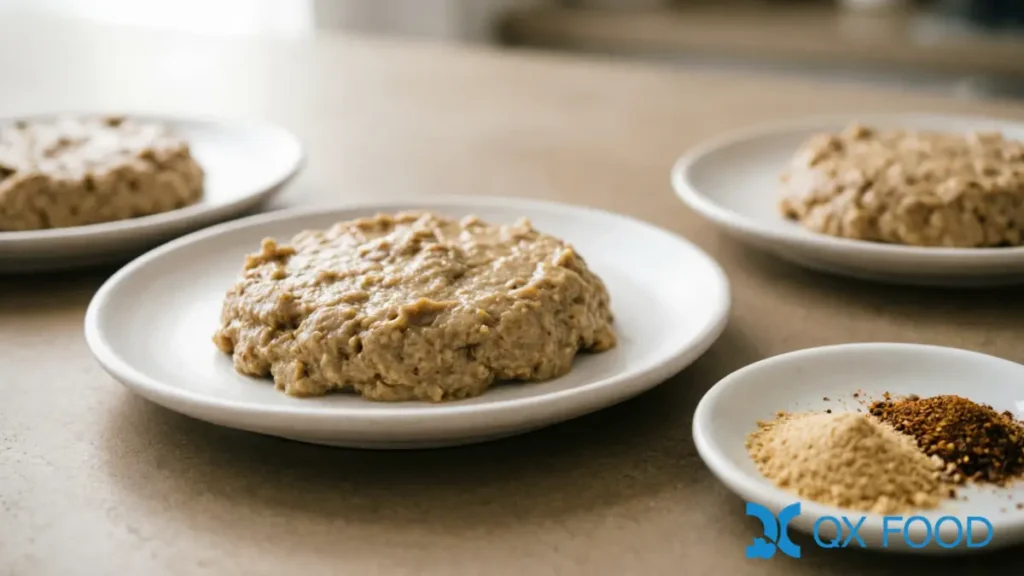
4. Plant-Based Savory Development Is Still a Taste Problem
Plant-based positioning can bring many goals into one project, but consumers still have to enjoy the food. The Good Food Institute’s market research overview identifies taste and price as major adoption barriers. In its February 2026 U.S. consumer snapshot, based on 3,009 adults surveyed in November 2025, 40% of lapsed users cited taste or texture and 37% cited cost. Among all respondents, 31% said matching the taste and texture of the conventional product could persuade them to purchase.
Those percentages describe the U.S. survey, not the global market. The formulation problem is familiar elsewhere: flavor, texture, preparation, and price are experienced together. A stronger top note will not necessarily repair a thin middle or an unfamiliar finish, so the finished product needs to be tested as a whole.
Recognizable plant-derived ingredients can contribute to that system when they fit the brief. QXFOOD’s garlic powder for savory formulation is documented for applications including snacks, meat seasoning, soups, and sauces. In a plant-based project, it can be considered as one familiar flavor element, not as proof of a complete formulation result or a broad dietary claim.
For the plant-based side of the same conversation, our chili pepper guide for B2B food manufacturers shows how natural spice powders deliver recognizable savory cues at industrial scale.
Garlic powder for savory formulation is already a familiar element in plant-based briefs; pairing it with tomato seasoning powder builds a recognizable savory base.
5. Custom Flavor Solutions Move Closer to the Application
A standard seasoning can be a sensible first sample. It is rarely the whole development brief. Different manufacturers use different base ingredients, processes, serving sizes, packaging formats, and acceptance methods. Even when two projects use the same flavor name, they may need different color, salt contribution, aroma intensity, heat stability, or finish.
QXFOOD treats standard products as practical starting points. Across the product range, relevant parameters, color, flavor profile, and formulation direction can be discussed according to the manufacturer’s application, destination-market requirements, and acceptance criteria. Any specific target remains subject to technical feasibility, sample validation, agreed specifications, and batch verification.
For buyers comparing compound seasoning powder solutions, this changes the first conversation. Instead of asking whether a supplier can make “a stronger flavor,” send the actual development constraints:
- finished food and intended preparation method;
- base formula or reference sample;
- target sensory direction and unacceptable notes;
- processing temperature, time, and addition point;
- target dosage range to be tested;
- ingredient, allergen, labeling, and destination-market requirements;
- packaging format and estimated annual volume;
- how the sample and later batches will be accepted.
That brief creates a better basis for evaluating a standard product such as chicken seasoning powder for compound seasoning applications, or for deciding that a customized direction should be tested instead. It also prevents “customizable” from becoming an empty promise. The agreed sample and specification, not the marketing adjective, should define the project.
If you are moving from trend reading to specification writing, the chili sourcing guide covers the quality standards, certifications and sourcing checklist that apply to savory ingredients in general.
What the Data Tells Us, and Where It Stops
| Evidence | Useful conclusion | Conclusion it does not support |
|---|---|---|
| IFT flavor and consumer research | Layered savory profiles, fermentation, familiarity, value, and affordability are relevant development considerations | A guaranteed 2027 sales result for a specific flavor |
| WINA 2024 demand table | Instant noodles are a large global format with meaningful seasoning-system requirements | The size of the entire convenience-food or seasoning market |
| GFI U.S. consumer research | Taste, texture, and cost remain material issues in U.S. plant-based purchasing | A universal percentage for all countries or all plant-based foods |
| QXFOOD customs-data reviews | The reviewed records show cross-border activity and a Southeast Asian concentration within the included datasets | Total global market share, a customer relationship, or a product-performance claim |
A limited claim with a clear source is more useful than an impressive number used outside its scope. Keeping those boundaries visible also makes the article easier to update when new 2027 evidence becomes available.
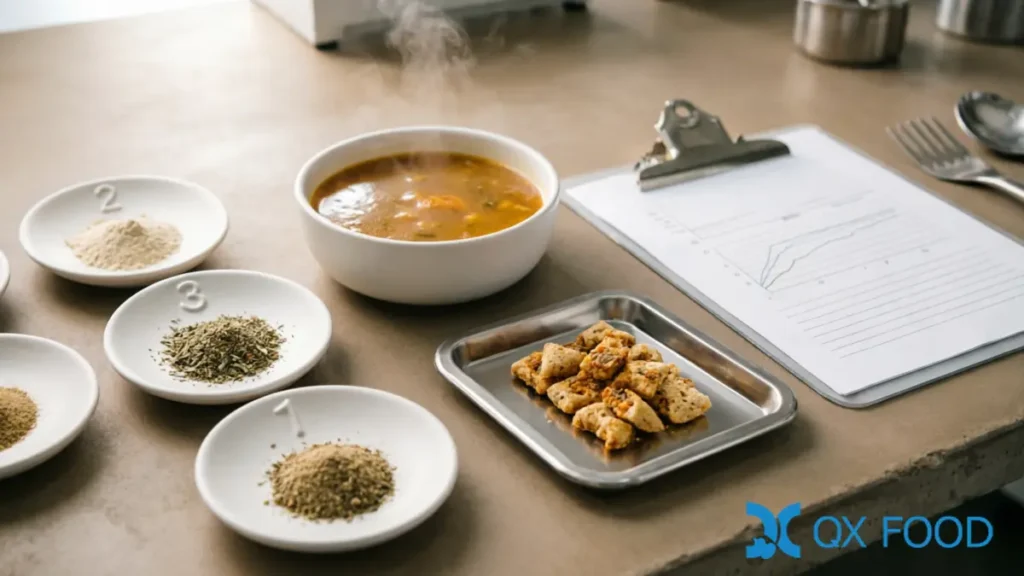
A Practical 2027 Product-Development Checklist
- Name the finished application. “Savory seasoning” is too broad. State whether the product is for a noodle sachet, snack coating, soup, sauce, ready meal, or another defined format.
- Describe the sensory job. Separate top note, body, finish, color, aroma, and any notes that must be avoided.
- Provide the process. Include heat exposure, mixing sequence, addition point, dilution, and preparation method.
- Set a test range, not a marketing promise. Evaluate dosage and cost in the finished product before fixing a commercial specification.
- List documentation requirements early. Ingredient, allergen, certification, COA, labeling, and destination-market needs should be reviewed before a volume order.
- Agree how samples will be judged. Use a reference, sensory panel, measurable parameter, or another acceptance method both parties understand.
- Plan batch verification. The approved sample should lead to agreed specifications and a repeatable check for commercial batches.
None of these steps is complicated on its own. Their value is that procurement, R&D, quality, and the supplier can use the same brief and judge the same sample.
Frequently Asked Questions
What are the main savory flavor trends expected for 2027?
For 2027 planning, five practical savory development directions are layered flavor profiles, fermented and umami-building systems, performance requirements in convenient formats, taste-first plant-based development, and application-specific customization. These are evidence-based planning directions, not guaranteed outcomes for every market.
Why are fermented and umami flavors relevant to convenient foods?
They can help manufacturers build savory depth in formats such as seasoning sachets, soups, sauces, and dry mixes. The ingredient format, salt contribution, allergen declaration, processing conditions, dosage, and finished-product taste still need to be evaluated for each application.
How should manufacturers evaluate a savory seasoning system?
Start with the finished application, sensory target, process conditions, dosage range, ingredient and documentation requirements, and cost in use. Then compare samples in the actual food, agree the specification, and define how commercial batches will be verified.
What matters most in plant-based savory flavor development?
Taste and texture should be evaluated together, with cost and processing constraints included from the start. Familiar savory cues may help, but no single ingredient can guarantee the finished eating experience.
Can savory flavor profiles be customized for different applications and markets?
Relevant parameters, color, flavor profile, and formulation direction can be discussed for a defined application and market. Any specific target remains subject to technical feasibility, sample validation, agreed specifications, and batch verification.
For related reading on how processed savory ingredients perform in instant food, see our chili processing guide, which explains the seven chili forms and their manufacturing roles.
Sources and Data Notes
- Institute of Food Technologists: Outlook 2026 Flavor Trends
- Institute of Food Technologists: What Consumers Want in 2026
- World Instant Noodles Association: Global Demand Table
- Good Food Institute: Market Research and the February 2026 U.S. Consumer Snapshot: Plant-Based Meat
Research cutoff: August 3, 2026. Customs figures in this article come from QXFOOD’s reviewed user-provided trade datasets. They describe the included records and are not presented as total global market size or market share.
Start With the Product, Not the Trend
A trend can help frame the first conversation, but it cannot replace a product brief. Start with the finished application, define a sensory target that can be tested, document the processing conditions, and agree how a sample becomes a commercial specification. That is the point where a promising flavor direction becomes a workable manufacturing project.
Share your target application, desired savory profile, processing requirements, custom packaging needs, and estimated annual volume. Our global trade division will respond within 1 business day.