What Is Pure Cinnamon Powder CP-K47?
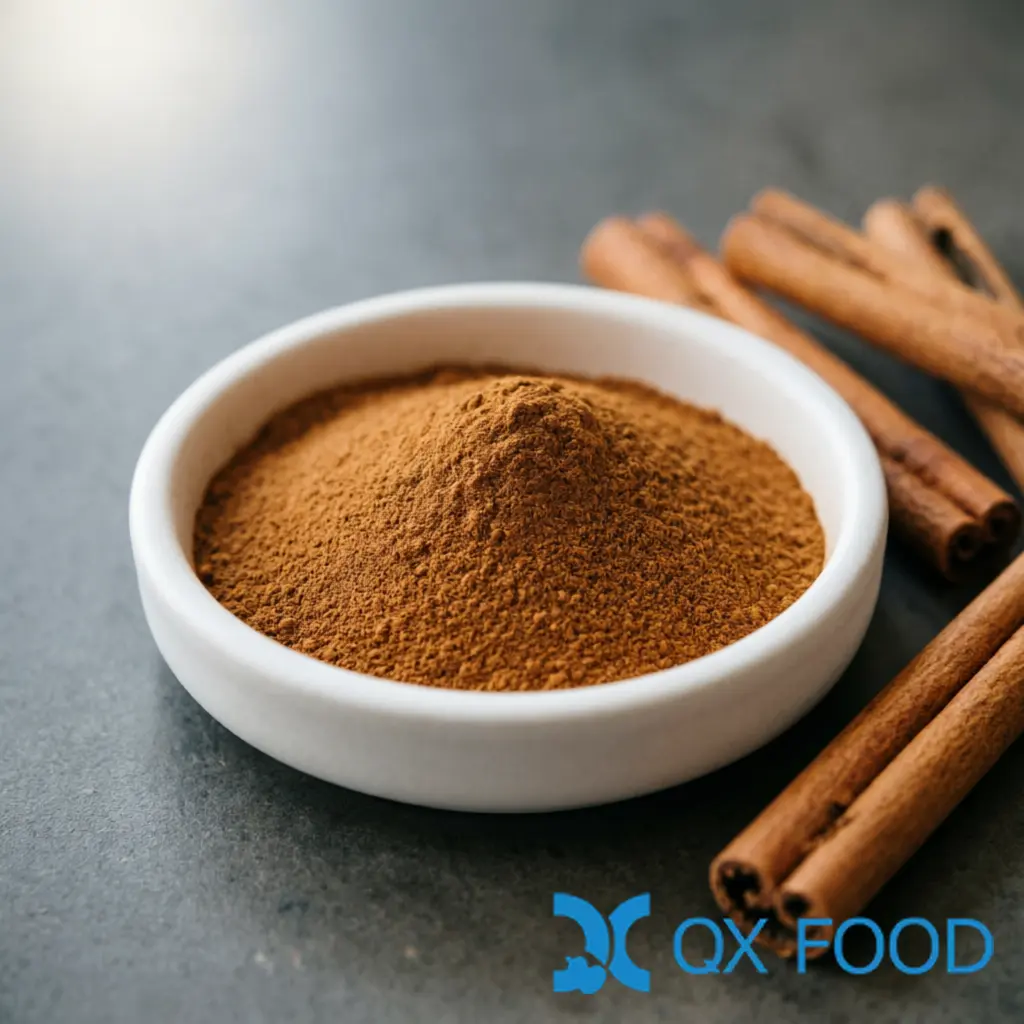
Pure cinnamon powder CP-K47 is finely ground from the dried inner bark of Cinnamomum trees — both Cassia and Ceylon varieties, depending on the lot and the buyer’s specification. The bark is peeled from the tree, dried under controlled conditions to preserve volatile oil content, then ground and sieved to a consistent fine powder. No carriers, no anti-caking agents, no flavor enhancers — just ground cinnamon bark.
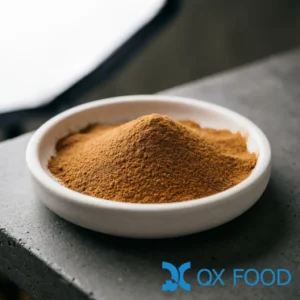
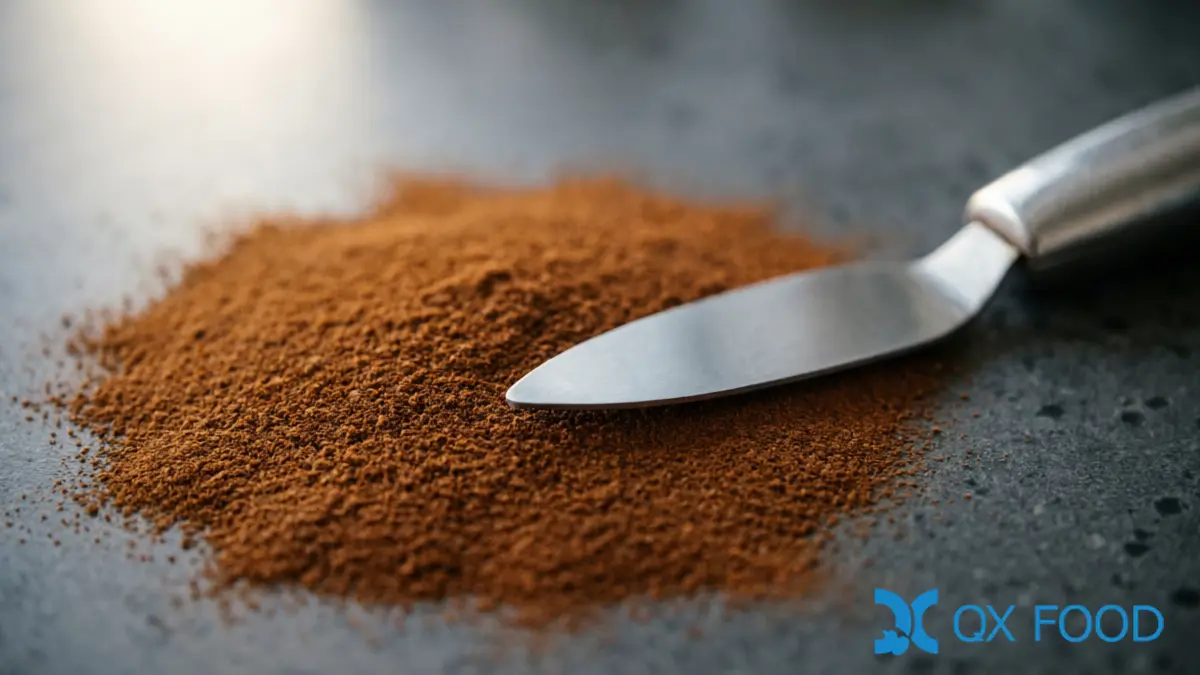
The reddish-brown color of pure cinnamon powder comes from the natural pigments in the bark — primarily cinnamaldehyde, the same compound that gives cinnamon its characteristic warm, sweet aroma. In food manufacturing, the color matters: a pale, washed-out cinnamon powder signals either over-drying (volatile oil loss) or bark from immature trees. A deep reddish-brown powder like CP-K47 signals that the bark was harvested at the right maturity and dried without scorching. The volatile oil content drives aroma intensity; the moisture spec (4.03 g/100g against an 8.0 g/100g ceiling) tells you the drying was thorough enough for stable storage but not so aggressive that the oils burned off.
Microbiological control on pure cinnamon powder CP-K47 runs tight: aerobic plate count at 90 CFU/g (ceiling 10,000), coliforms below detection at 0.3 MPN/g, Salmonella not detected in 25g. For a pure cinnamon powder going into bakery mixes, beverage premixes, or ready-to-eat foods — especially products that do not go through a thermal kill step after the cinnamon is added — those numbers give the formulation and QA teams the headroom they need across the entire ingredient bill.
Specification Data — Standard Grade
| Parameter | Unit | Standard | Measured | Method |
|---|---|---|---|---|
| Moisture | g/100g | ≤8.00 | 4.03 | GB 5009.3 |
| Aerobic Plate Count | CFU/g | ≤10,000 | 90 | GB 4789.2 |
| Coliforms | MPN/g | ≤0.3 | <0.3 | GB 4789.3 |
| Salmonella | /25g | Not detectable | Not detected | GB 4789.4 |
| Appearance | — | Fine powder, uniform reddish-brown | Reddish-brown powder | Q/HKSP 0002S |
| Odor & Taste | — | Characteristic warm, sweet, aromatic | Compliant | Q/HKSP 0002S |
| Impurities | — | No foreign debris visible | No foreign debris visible | Q/HKSP 0002S |
Cassia vs Ceylon Cinnamon: What the Buyer Needs to Know
Most pure cinnamon powder traded in B2B volumes comes from Cassia cinnamon (Cinnamomum cassia), not Ceylon cinnamon (Cinnamomum verum). The two are related but not interchangeable in formulation. Here is what matters for the buyer making a purchasing decision.
Cassia cinnamon is darker, thicker-barked, and carries a higher cinnamaldehyde content — typically 1–4% volatile oil, of which 80–95% is cinnamaldehyde. This is the cinnamon that most consumers and food manufacturers mean when they say “cinnamon.” It has a strong, sweet, pungent flavor that holds through baking and processing. Pure cinnamon powder from Cassia is the standard for commercial baking, beverage syrups, cereal coatings and spice blends.
Ceylon cinnamon is lighter in color, thinner-barked, and carries a more delicate, floral aroma with lower cinnamaldehyde and a higher proportion of eugenol. It is sometimes called “true cinnamon” and commands a premium price in certain markets — particularly in Europe and in specialty food segments. However, Ceylon cinnamon’s volatile profile is more sensitive to heat, and its flavor can degrade noticeably during baking or extrusion. For a product that undergoes high-heat processing, Cassia is usually the safer specification. For a cold-application product like a beverage syrup or a no-bake dessert mix, Ceylon may be worth the premium if the target market recognizes and values the difference.
The coumarin question comes up often enough to address directly: Cassia cinnamon contains naturally occurring coumarin at levels that can be a labeling consideration in certain EU markets. Ceylon cinnamon contains negligible coumarin. If your product is destined for a market with coumarin labeling requirements or if your customer specification includes a coumarin limit, mention this early in the inquiry — the QA team can provide lot-specific coumarin data or source Ceylon-specific lots for qualified orders.
How Pure Cinnamon Powder Performs in Food Manufacturing
Bakery and Baked Goods
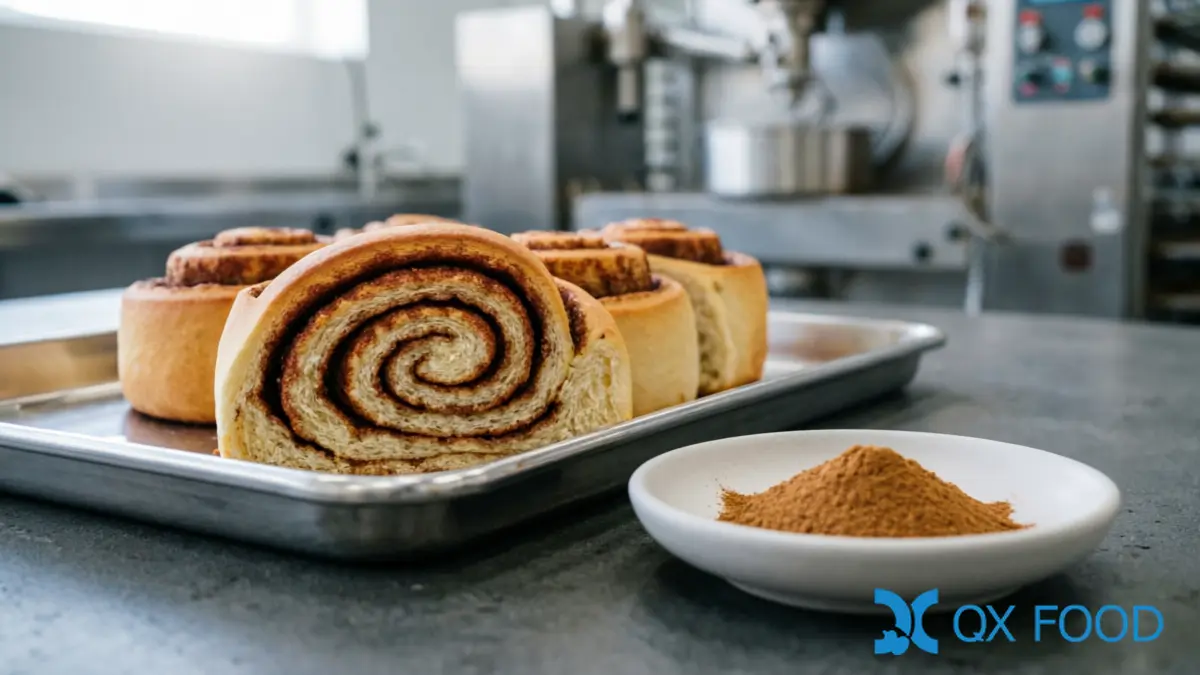
Pure cinnamon powder is one of the defining flavors in commercial bakery — cinnamon rolls, coffee cakes, muffins, cookies, sweet breads, and breakfast pastries. In a dry bakery mix, cinnamon powder is blended with flour, sugar, leavening agents and other spices. The volatile oils in pure cinnamon powder begin releasing at around 60°C and peak during the bake — which is why cinnamon-forward baked goods fill a production facility with aroma and why the cinnamon note survives the oven. At typical bakery dosage levels of 0.5–2% of the dry mix weight, pure cinnamon powder provides recognizable flavor intensity without overpowering the other ingredients.
A practical note for bakery formulators: cinnamon powder inhibits yeast activity at higher concentrations (above roughly 2% of flour weight), because cinnamaldehyde is antimicrobial. This is not a problem in chemically leavened products like muffins and cookies, but in yeast-leavened cinnamon breads or rolls, keep the cinnamon dosage in check or adjust the proofing time to compensate.
Hot Beverages and Beverage Premixes
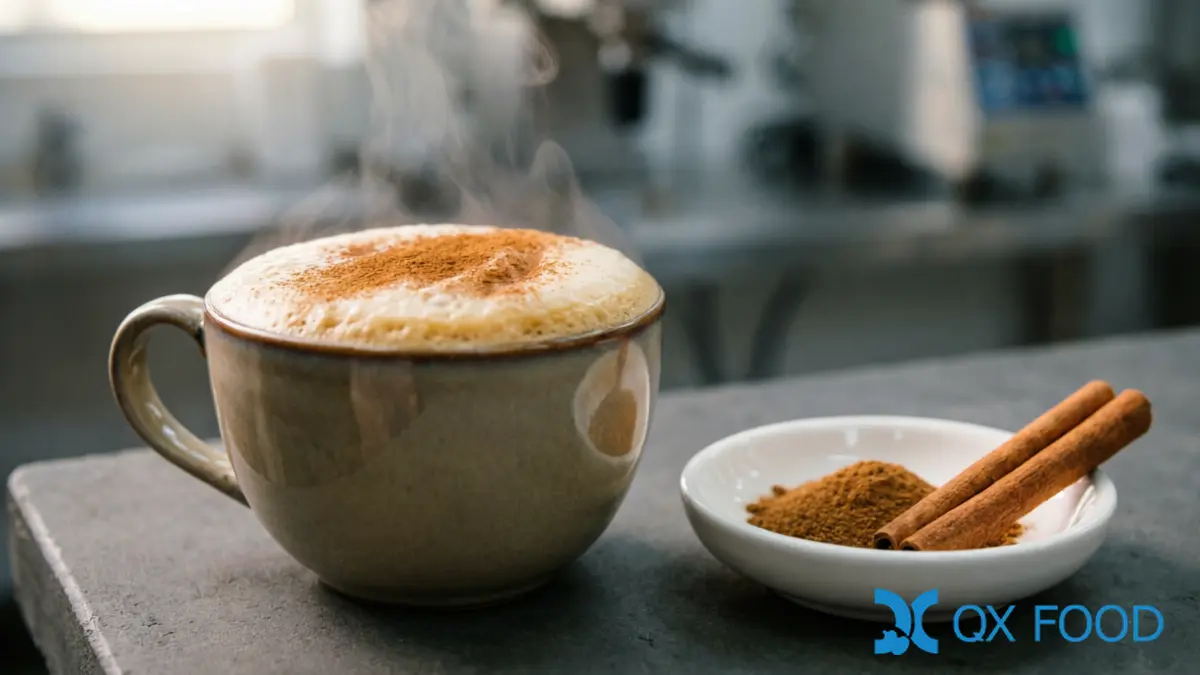
In hot beverage applications — coffee, tea, hot chocolate, chai latte mixes — pure cinnamon powder disperses into the hot liquid and releases its volatile oils almost immediately on contact with water above 80°C. For instant beverage premixes (the dry powders that consumers or foodservice operators reconstitute with hot water), cinnamon powder is typically included at 0.3–1.0% of the premix weight. The fine particle size ensures that the cinnamon powder does not settle into a visible sludge at the bottom of the cup — a common complaint with coarser cinnamon grades in instant beverages.
In cold-brew and ready-to-drink beverage applications, the dispersion challenge is different: cinnamon oils are not water-soluble and will separate without an emulsifier or a carrier system. Pure cinnamon powder works better in dry premixes that are reconstituted at the point of consumption than in shelf-stable liquid beverages, unless the formulation includes an emulsification system that keeps the cinnamon particles suspended.
Spice Blends and Seasoning Mixes
Pure cinnamon powder is a foundational component of warm spice blends: pumpkin pie spice, apple pie spice, chai masala, garam masala, Chinese five-spice, and Middle Eastern baharat. In a commercial spice blend, cinnamon typically constitutes 10–30% of the blend by weight, depending on the blend’s profile. The reddish-brown color of pure cinnamon powder contributes visually to the blend’s appearance — a blend that uses a faded, pale cinnamon reads as lower quality on the shelf and in the mixing bowl. Buyers sourcing cinnamon powder for a spice blend that will carry their own brand should evaluate the color of the incoming cinnamon powder as carefully as the aroma and microbiological specs.
Savory Applications: Marinades and Meat Seasoning
Pure cinnamon powder is not only a baking ingredient. In savory food manufacturing — Middle Eastern meat marinades, North African tagine seasoning blends, Greek moussaka spice mixes, and certain Southeast Asian curry pastes — cinnamon provides warmth and aromatic depth without sweetness. In a dry marinade for lamb or beef, cinnamon powder is typically used at 0.5–2% of the seasoning blend. The cinnamaldehyde contributes a subtle heat that complements cumin, coriander and paprika in these blends. Cinnamon also functions as a natural antioxidant in meat systems — the polyphenols in the bark slow lipid oxidation during storage, which can extend the shelf life of seasoned meat products by a matter of days compared to an unseasoned control.
Particle Size, Packaging and Shelf Stability
Pure cinnamon powder CP-K47 is a natural single-ingredient spice. The warm, sweet, aromatic flavor profile comes from the cinnamon bark itself — there is no flavor addition, no carrier agent, no processing aid beyond the water used in bark preparation. The reddish-brown color, volatile oil content and particle size are all functions of the raw bark input and the grinding and sieving parameters. For buyers who need a specific particle size distribution — finer for instant beverage premixes, coarser for visible cinnamon swirls in baked goods — the mesh specification can be discussed at the sample stage. This is a physical adjustment, not a formulation change.
Standard packaging covers sample pouches for evaluation, mid-volume cartons for pilot runs and initial production, and bulk drums or sacks for full container loads. Private-label packaging — branded bags, custom carton sizes, multi-layer barrier packaging for volatile oil retention — can be arranged for qualified OEM orders.
Storage: sealed container, cool dry environment, no direct sunlight, away from strong odors. The volatile oils in pure cinnamon powder — primarily cinnamaldehyde, which makes up 80–95% of the bark’s essential oil — are sensitive to oxygen and light over time. Under proper conditions (below 25°C, below 60% humidity), the shelf life is 18 months from production. For longer storage or high-humidity production environments, nitrogen-flushed packaging is recommended.
Quality Systems and Documentation
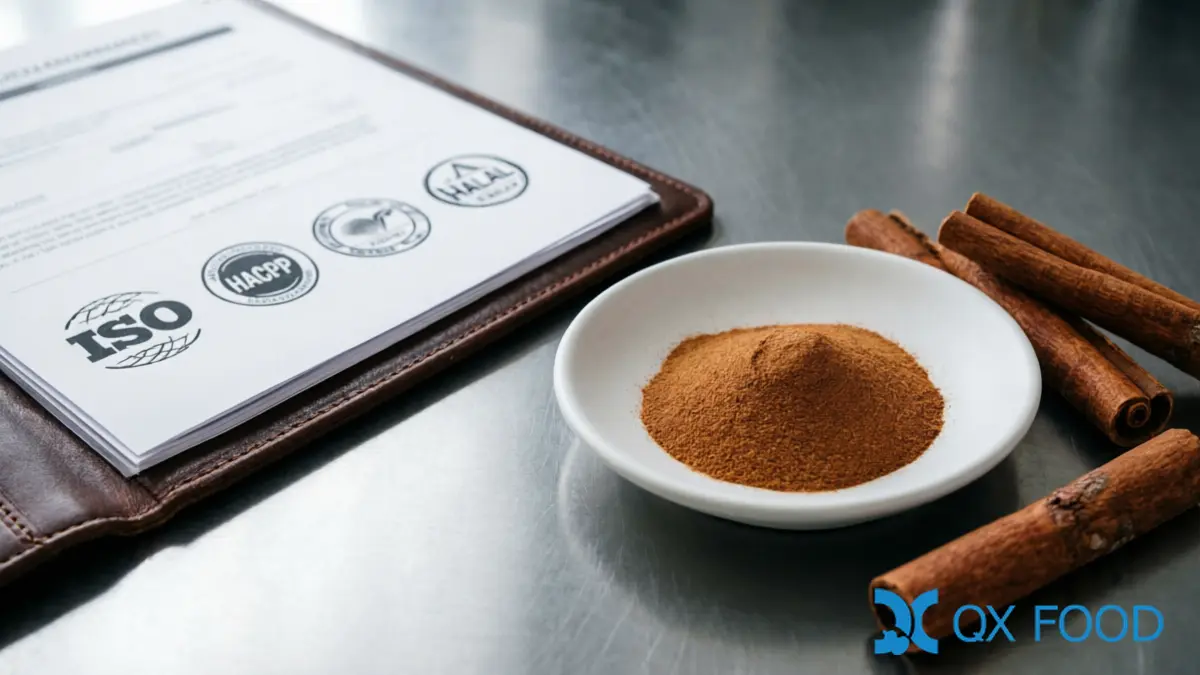
The production facility operates under an integrated quality management system:
- ISO 9001:2015 — quality management system
- ISO 22000:2018 — food safety management system
- HACCP — hazard analysis and critical control points
- HALAL — certified by an accredited halal certification body
Each shipment comes with a batch-specific COA. Additional testing — heavy metals, pesticide residues, volatile oil content by steam distillation, coumarin by HPLC, allergen screening — can be arranged on request. Compliance with Codex Alimentarius guidelines for spices is maintained. Country-specific import requirements should be communicated early.
Related reading: Cinnamon’s dual role in hot pot and bakery snack coatings.
Frequently Asked Questions
Is this pure cinnamon powder Cassia or Ceylon cinnamon?
Pure cinnamon powder CP-K47 is primarily sourced from Cassia cinnamon (Cinnamomum cassia), which is the variety that most commercial food manufacturers use. Cassia has a higher cinnamaldehyde content, a stronger sweet-pungent flavor, and better heat stability during baking and processing than Ceylon cinnamon. If your application or target market specifically requires Ceylon cinnamon (Cinnamomum verum) — for example, for a product destined for a European market with coumarin labeling concerns — mention this during the inquiry stage. Ceylon-sourced lots can be arranged for qualified orders, subject to availability and longer lead time.
What is the coumarin content of this pure cinnamon powder, and does it matter for my product?
Cassia cinnamon naturally contains coumarin, a compound that is monitored in certain markets — particularly the European Union, where food products containing cinnamon may be subject to coumarin limits. The coumarin content of pure cinnamon powder CP-K47 varies with the bark source and lot. If your product is destined for an EU market or if your customer specification includes a coumarin ceiling, mention this in the inquiry. The QA team can provide lot-specific coumarin data or arrange Ceylon-sourced lots (which contain negligible coumarin) for qualified orders. For the majority of non-EU markets, coumarin is not a labeling or regulatory concern at normal cinnamon usage levels.
Does pure cinnamon powder CP-K47 contain any additives or anti-caking agents?
No. Pure cinnamon powder CP-K47 is 100% ground cinnamon bark — no silicon dioxide, no maltodextrin, no anti-caking agents, no flavor enhancers. The moisture content (4.03 g/100g) keeps the powder free-flowing in dry-blend operations without chemical flow aids. If your ingredient label needs to read “cinnamon” alone, this grade supports that.
Will pure cinnamon powder inhibit yeast in my dough products?
Cinnamaldehyde — the main volatile compound in pure cinnamon powder — has antimicrobial properties that can inhibit yeast activity at higher concentrations, typically above 2% of flour weight. For yeast-leavened products like cinnamon rolls or cinnamon bread, keep the cinnamon dosage at or below 2% of flour weight, or allow additional proofing time to compensate for the slight inhibition. For chemically leavened products like muffins, cookies and quick breads, yeast inhibition is not a concern — the baking powder or baking soda provides the leavening, and the cinnamon does not interfere with that chemistry.
Can I get pure cinnamon powder in a specific particle size for my application?
Yes. The standard grade is a fine powder, but coarser grinds and tighter mesh specifications can be discussed at the sample stage. A finer grind works better in instant beverage premixes where rapid dispersion is needed; a slightly coarser grind creates visible cinnamon swirls in baked goods. This is a physical specification adjustment — sieving mesh change — not a formulation change. Reference a sample or provide the target mesh range when you inquire.
How should I store pure cinnamon powder to maintain volatile oil quality?
Store pure cinnamon powder in a sealed container in a cool, dry environment below 25°C with humidity below 60%. Keep away from direct sunlight and strong odors — the volatile oils (primarily cinnamaldehyde) are sensitive to oxidation. Opened bags should be re-sealed immediately or the contents transferred to an airtight container. Under proper storage, shelf life is 18 months; opened stock used within 60 days retains the best aromatic quality. Nitrogen-flushed or vacuum-sealed packaging can be discussed for longer storage intervals.
Is this pure cinnamon powder Halal-certified?
Yes. The manufacturing facility holds active Halal certification. Pure cinnamon powder is a single-ingredient plant product — dried, ground cinnamon bark — and the production process involves no animal-derived materials, no ethanol, and no processing aids that conflict with Halal requirements. The certificate is included in the standard documentation package.
Explore Our Natural Spice Powder Range
Pure cinnamon powder CP-K47 is part of the Natural Plant Powders family. Buyers building a spice portfolio often evaluate these grades alongside:
Turmeric Powder TP-K37 — curcumin 4.5 g/100g, natural color and seasoning base.
Garlic Powder GP-B06 — pure ground garlic for snack seasonings and savory blends.
Onion Powder OP-B03 — spray-dried onion powder for dry seasonings and soups.
Ginger Powder DGP-W01 — pure ground dried ginger for bakery, beverage and savory applications.
For the full category view, visit the Natural Plant Powders category page.