
What Is Whole Fig Fruit Powder FIG-15?
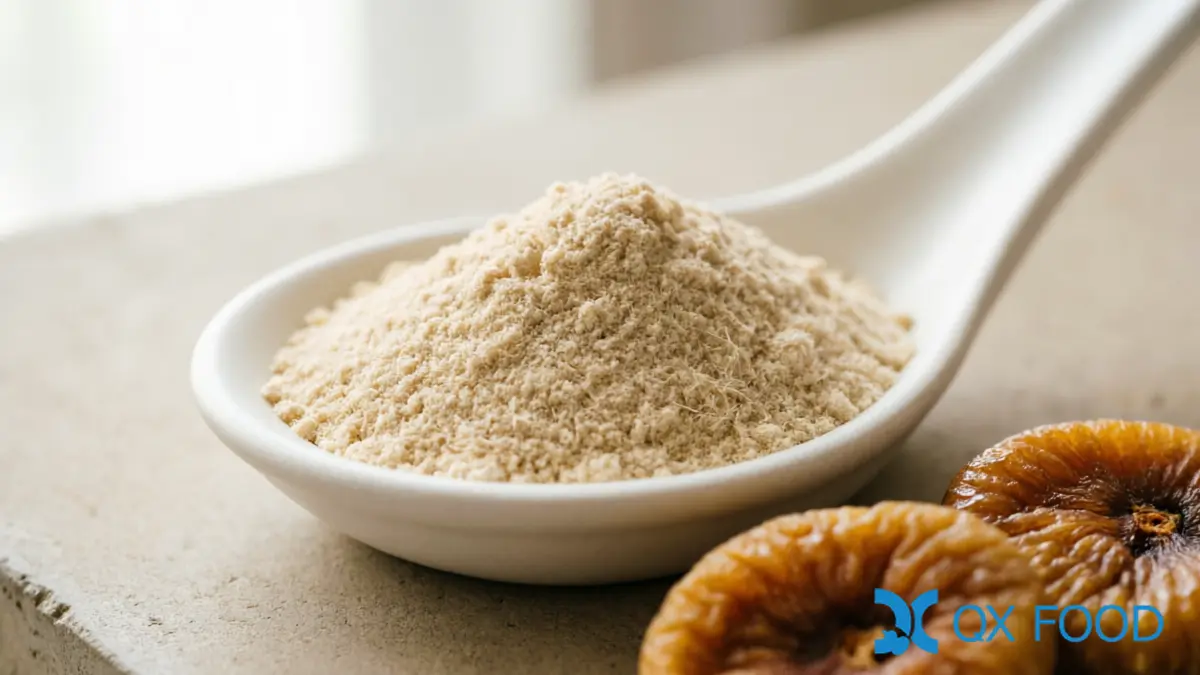
Fig powder made from whole fruit is a growing ingredient category, and FIG-15 is the whole-fig format: every part of the fruit is in the powder. For buyers comparing fig powder suppliers, the key questions are whether the powder retains peel, pulp and seeds, how the drying process affects flavor, and what fiber and sugar levels the specification guarantees.
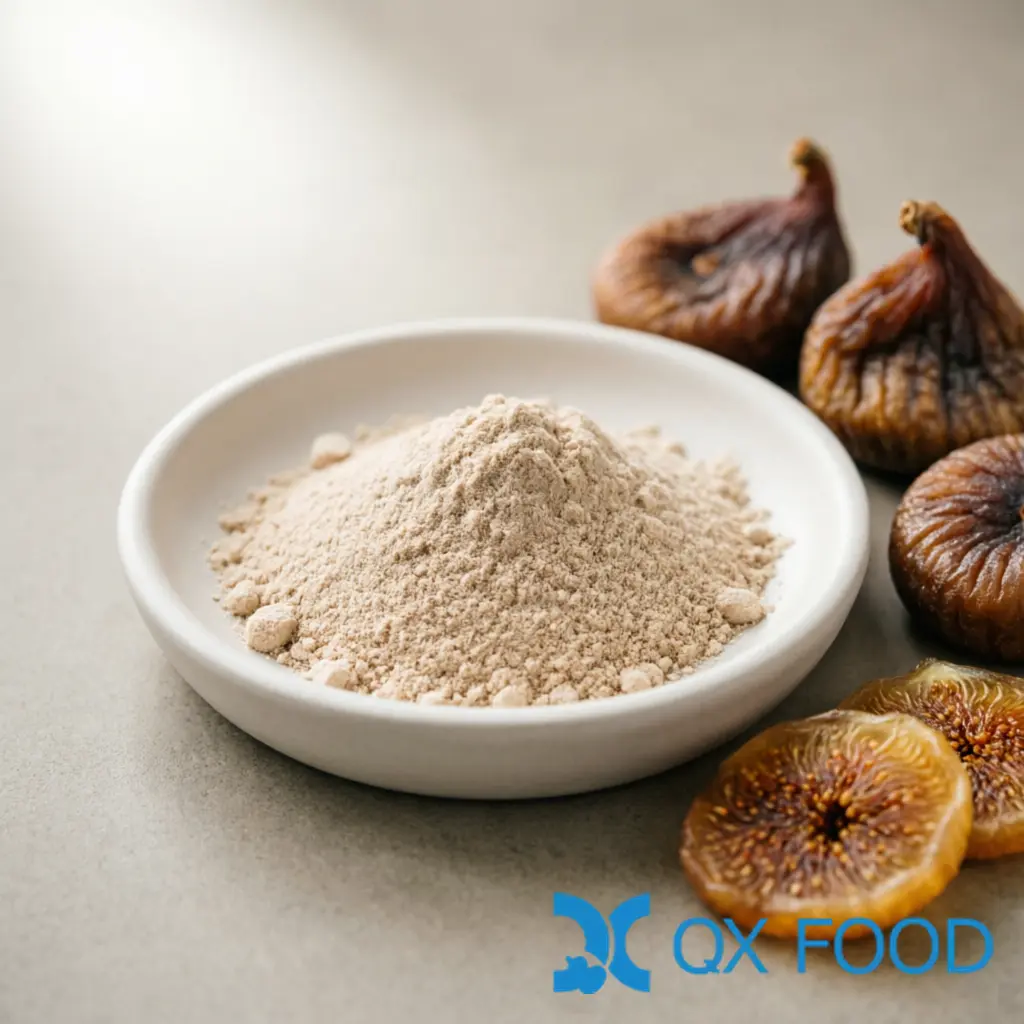
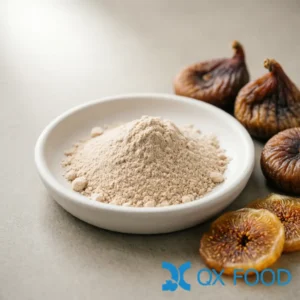
Whole fig fruit powder FIG-15 is made from fresh whole figs (Ficus carica) grown in Shandong, processed through a complete line: raw material inspection, sorting, stem removal, bubble washing, sanitizing rinse, dewatering, slicing, heat pump dehydration, cooling, coarse milling, ultrafine grinding, vibratory sieving, metal detection, sterilization and packaging. The powder retains every part of the fig — peel, pulp and seeds — with no juice extraction and no fiber removal.
That last point is what separates FIG-15 from many fig products on the market. Spray-dried fig juice powder starts from extracted juice, which strips out most of the fiber and seed material. Whole fig fruit powder keeps the complete fruit profile: the natural sugars, the dietary fiber from peel and pulp, and the texture contribution that whole-fruit ingredients bring to bakery and beverage formulas.
Why Buyers Choose Whole Fig Powder from QXFOOD
Fig powder is a versatile fruit ingredient, and buyers evaluating fig powder suppliers tend to weigh the same factors: whole-fruit composition, drying technology, fiber content and food-safety documentation.
Fig powder is a versatile fruit ingredient, and buyers evaluating suppliers tend to weigh the same factors: whole-fruit composition, drying technology, fiber content and food-safety documentation.
- Whole-fruit composition — peel, pulp and seeds are all retained. This preserves the natural fig profile and the functional fiber that extracted juice powders cannot deliver.
- Heat pump dehydration — low-temperature drying protects the natural nutrition and flavor better than high-heat processing, keeping the authentic fig taste in the finished powder.
- High soluble dietary fiber — the specification calls for soluble dietary fiber ≥12.0 g/100g, which supports fiber claims in cereal, bakery and meal replacement products.
- No artificial flavors or colorants — the flavor and color come from the fruit itself, which fits clean-label formulation strategies.
- Full safety panel — each batch is tested for moisture, ash, total sugar, soluble dietary fiber, inorganic arsenic, lead, aerobic plate count, coliforms, Salmonella, Staphylococcus aureus and aflatoxin B1.
- Food-safety certified — produced under ISO9001, ISO22000 and HACCP systems with HALAL certification.
Whole Fig Powder vs Spray-Dried Fig Juice Powder
Buyers comparing fig ingredients often need the difference explained clearly, because both are sold as “fig powder” but they are functionally different products:
| Factor | Whole Fig Fruit Powder FIG-15 | Spray-Dried Fig Juice Powder |
|---|---|---|
| Raw material | Whole fresh figs | Extracted fig juice |
| Fiber | Retained (soluble dietary fiber ≥12.0 g/100g) | Largely removed during extraction |
| Seeds and peel | Included | Excluded |
| Flavor intensity | Full, natural fig profile | Sweet, juice-like, lighter |
| Typical uses | Bakery, cereal, meal replacement, seasoning | Beverages, flavor systems |
Formulators choosing between the two should decide based on what the finished product needs: whole-fruit fiber and texture point to FIG-15; a clean, dissolvable sweet fig note points to juice powder. For fiber-fortified bakery, breakfast cereal and meal replacement applications, the whole-fruit format is the technically appropriate choice.
Key Specifications of Whole Fig Fruit Powder FIG-15
FIG-15 is produced to GB/T 10220 with factory and type inspection per the standard test methods. Reference specification below:
| Item | Standard | Test Method |
|---|---|---|
| Color / Appearance | Conforms to standard sample | GB/T 10220 |
| Moisture | ≤5.00 g/100g | GB 5009.3 |
| Ash | ≤5.00 g/100g | GB 5009.4 |
| Total Sugar | 45.0–65.0 g/100g | GB 5009.8-2016 |
| Soluble Dietary Fiber | ≥12.0 g/100g | GB 5009.88-2014 |
| Inorganic Arsenic | ≤0.1 mg/kg | GB 5009.11 |
| Lead | ≤0.8 mg/kg | GB 5009.12 |
| Aerobic Plate Count | ≤10000 CFU/g | GB 4789.2 |
| Coliforms | ≤0.3 MPN/g | GB 4789.3 |
| Salmonella | Not detectable / 25g | GB 4789.4 |
| Staphylococcus aureus | ≤100 CFU/g | GB 4789.10 |
| Aflatoxin B1 | ≤5.0 µg/kg | GB 5009.22-2016 |
Packaging options: 100 g aluminum foil bag, 1 kg aluminum foil bag, 10 kg carton, 20 kg carton, 25 kg fiber drum, with customized packaging available. Shelf life 12 months stored in a sealed container in a cool, dry place below 25°C and 60% humidity. MOQ 1 MT with 1 kg samples available.
Bakery and Cereal Applications
Fig powder is one of the most flexible fruit ingredients for bakery lines, and whole-fruit fig powder in particular.
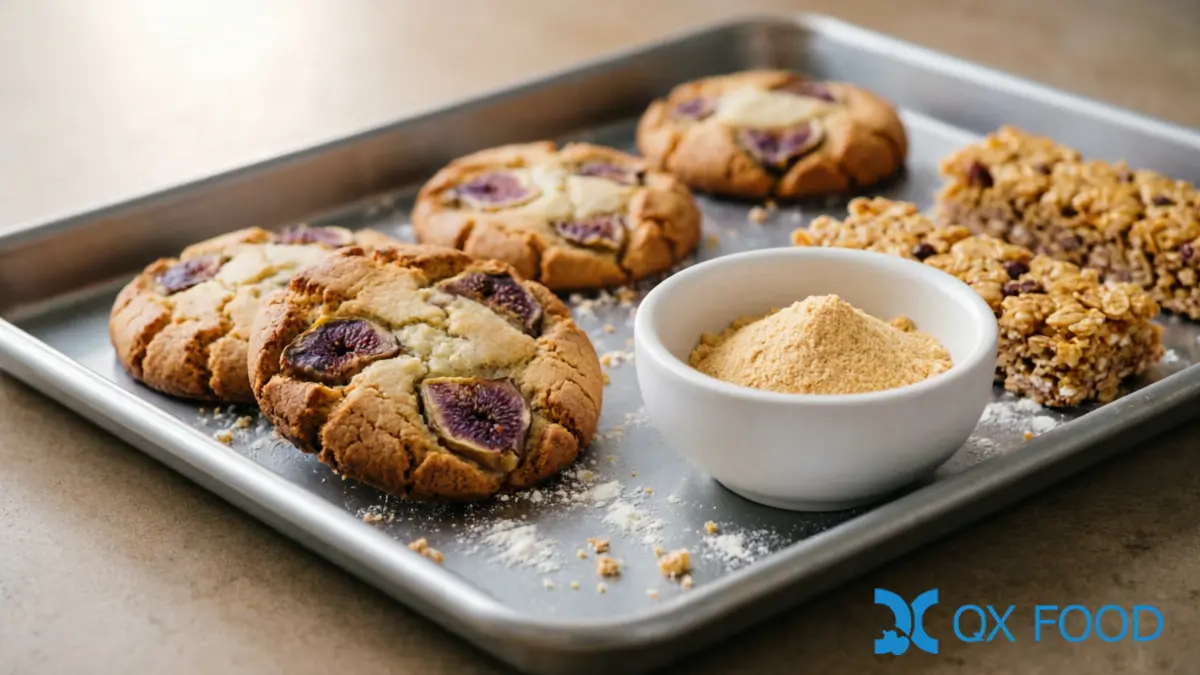
Whole fig fruit powder brings three functions to bakery and cereal products: natural sweetness, fiber and moisture management. In cookies, bars and baked goods, fig powder contributes sweetness with a lower added-sugar profile than straight sugar, while the retained fiber improves the nutritional label. Published work on fig powder-enriched cookies shows the ingredient can be incorporated at meaningful levels while maintaining acceptable sensory quality, which makes it attractive for fiber-fortified bakery lines.
In breakfast cereal and granola, whole fig powder works as both a flavoring and a binding ingredient. Its natural sugars caramelize during baking to support texture, and its fiber helps hold clusters together. For bakeries reformulating toward cleaner labels, replacing part of the sugar or artificial sweetener with whole fig fruit powder is a practical first step, with the total sugar content of the formula validated against the target label.
Beverage, Meal Replacement and Seasoning Applications
Fig powder in beverage formats is usually expected to dissolve quickly, but whole-fruit fig powder brings more than flavor.
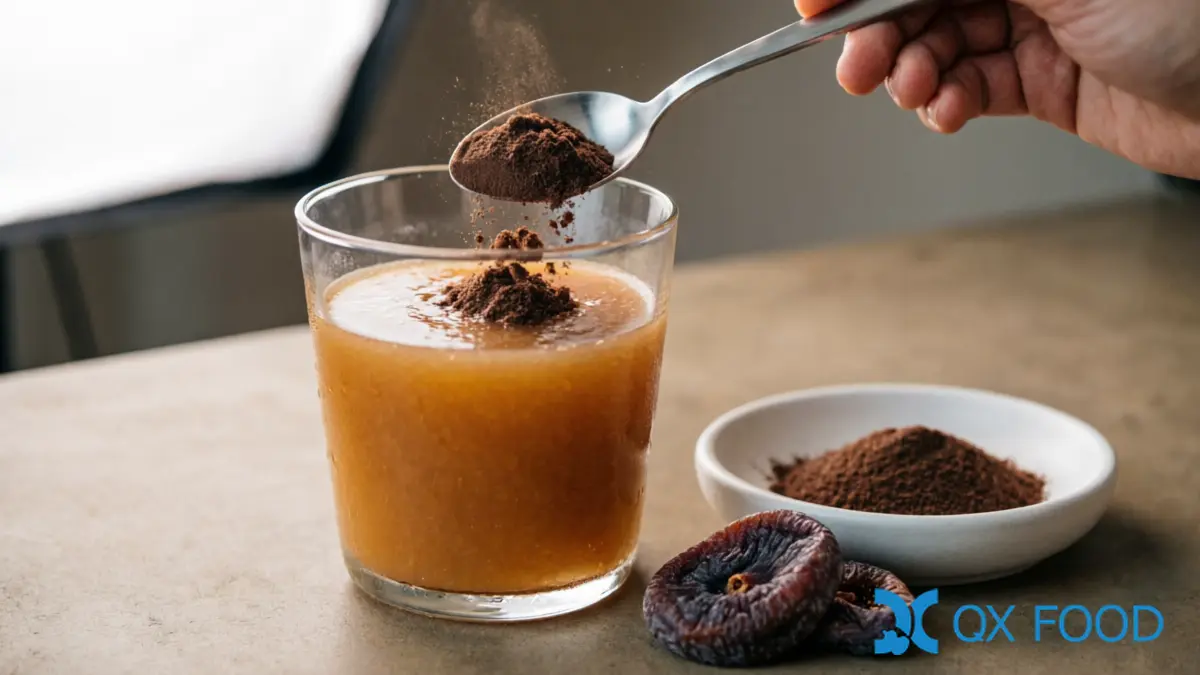
In solid beverage blends, whole fig fruit powder delivers a natural fig flavor base and contributes soluble fiber to the finished drink. It blends well with tea powders, cocoa and grain powders, and can be used as a natural sweetening note that reduces the need for added sugar in instant mixes. The fine, free-flowing powder disperses readily in dry beverage formulations.
Meal replacement and dietary supplement products use whole fig powder for its fiber content and natural sweetness. The soluble dietary fiber ≥12.0 g/100g specification supports fiber-oriented product claims, and the whole-fruit profile fits supplement formats where consumers expect recognizable, plant-based ingredients. In compound seasonings, fig powder adds a subtle fruity sweetness that balances savory profiles, particularly in sauces, rubs and seasoning blends aimed at the natural-foods segment.
Fig Powder for Snack Foods and Confectionery
Fig powder is also a natural sweetening and texturing ingredient for snack foods and confectionery. In snack bars and fruit-based snacks, whole fig powder binds the matrix while contributing natural sugars and fiber, which lets formulators reduce added sugar and improve the fiber line on the nutrition label. In confectionery, fig powder adds a fruity depth that complements chocolate, nuts and caramel, and its fine particle size means it blends without grittiness.
For snack manufacturers, whole fig powder has an additional advantage over fig juice powder: the retained fiber helps structure the snack and slows moisture migration, which extends shelf life in soft-bake formats. Fig powder can also be dusted or coated onto cereal clusters and granola pieces before baking, where its natural sugars caramelize to improve color and adhesion. Whether the target is a clean-label snack bar, a fiber-fortified cookie or a fruit-based filling, whole fig fruit powder delivers flavor, fiber and functionality from a single fruit ingredient.
Buying Whole Fig Powder: What to Verify with Your Supplier
When sourcing fig powder in bulk, buyers should verify four things with any supplier before committing volume. First, the fruit format: confirm the powder is made from whole fruit rather than extracted juice, because the fiber and seed content change the functional behavior of the ingredient. Second, the drying method: low-temperature drying such as heat pump dehydration preserves flavor better than high-heat processing, and the difference shows up in the finished product’s aroma. Third, the specification sheet: check total sugar, soluble dietary fiber, moisture and the full pathogen and heavy-metal panel against your target label and market requirements. Fourth, the allergen declaration: confirm whether the formulation includes carriers such as maltodextrin, and whether those carriers declare allergens for your destination market.
QXFOOD publishes these details openly for FIG-15: whole-fruit composition, heat pump dehydration, a full COA panel, and an honest allergen declaration that flags the maltodextrin carrier. That transparency is the point of buying fig powder from a documented supplier — the specification sheet and the certificate of analysis should answer your incoming QC questions before the container arrives, not after.
Quality Systems and Documentation
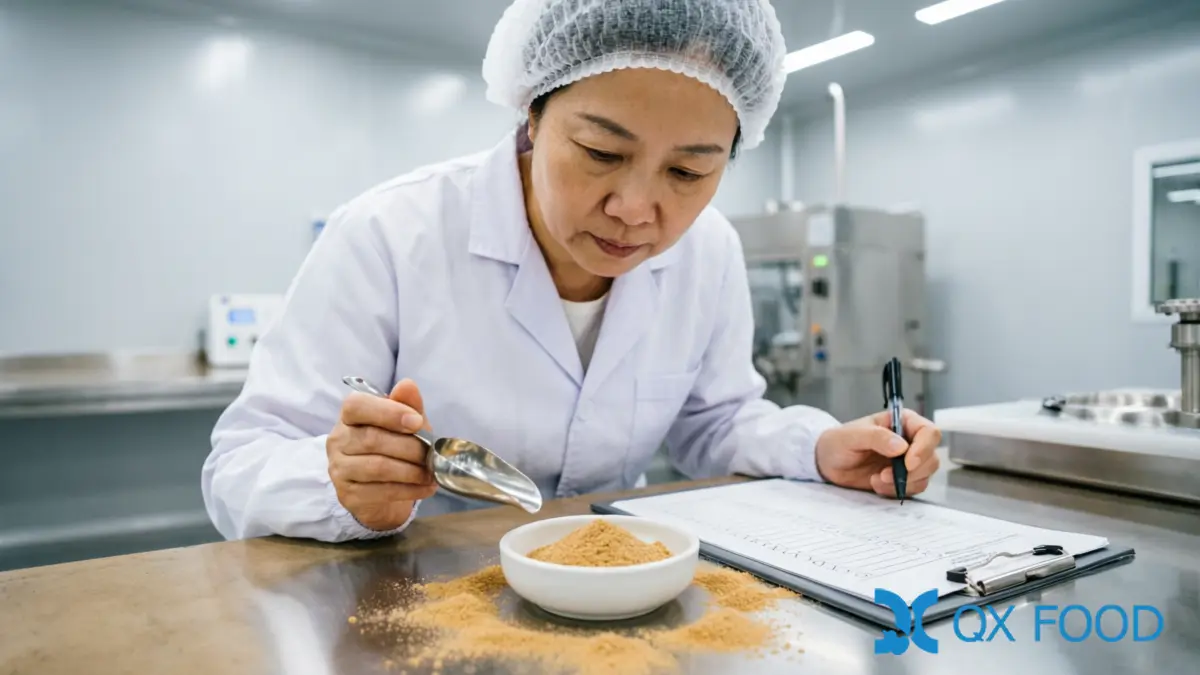
QXFOOD supplies whole fig fruit powder from a documented supply chain: fresh figs sourced from Shandong, processed under ISO9001 and ISO22000 management systems, with HACCP controls covering washing, dehydration, grinding, sieving, metal detection and packing steps. Every production batch carries a certificate of analysis covering color, appearance, odor, impurities, moisture, ash, total sugar, soluble dietary fiber, aerobic plate count, coliforms and aflatoxin B1, with heavy metals and pathogens tested per the type inspection schedule — so your incoming quality control can verify the lot against the agreed specification.
Food safety compliance follows GB 2760 for food additives and GB/T 10220 for product quality. Note that the raw material declaration for FIG-15 includes food-grade maltodextrin, which contains wheat allergen — please confirm the specific formulation with the sales team before use in allergen-free product lines. For export markets, QXFOOD works with buyers to confirm the relevant destination-market requirements before shipment, so compliance claims are only made against agreed specifications and verification.
Related Products in the Natural Plant Powders Range
Fig powder FIG-15 is part of the Natural Plant Powders family. Buyers sourcing a full fruit powder portfolio often evaluate these products alongside:
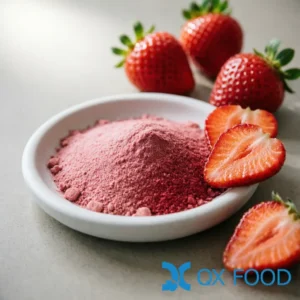
Strawberry Powder STB-18 — spray-dried strawberry powder for bakery, dairy and beverages.
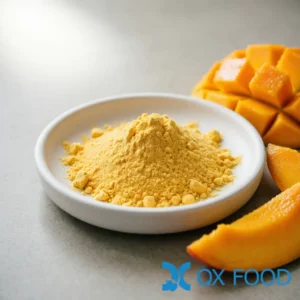
Mango Powder MGO-15 — spray-dried mango powder for solid drinks, yogurt and ice cream.
For the full category view, visit the Natural Plant Powders category page.
Related reading: Fruit powders in bakery snack coating and snack seasoning.
For hot-drink and dessert lines, pair whole fig powder with cocoa powder COP-K41 or matcha powder MP-K40 for layered bakery-beverage profiles.
Frequently Asked Questions
What is the difference between whole fig fruit powder and fig juice powder?
Whole fig fruit powder is made from the entire fresh fig — peel, pulp and seeds — with no juice extraction and no fiber removal. Fig juice powder is made from extracted juice that is then spray dried, which removes most of the fiber and seed material. FIG-15 is the whole-fruit format, which is why it is also called whole fig powder or whole fig fruit powder in the market.
Does FIG-15 contain allergens?
The raw material declaration lists food-grade maltodextrin, which contains wheat allergen. Please confirm the specific formulation with the sales team before use in allergen-free product lines.
What is the soluble dietary fiber content?
The specification requires soluble dietary fiber ≥12.0 g/100g, measured per GB 5009.88-2014.
Can whole fig powder be used in baked goods?
Yes. Whole fig fruit powder contributes natural sweetness, fiber and moisture management to cookies, bars, cereal and other baked products, and can partially replace sugar in reformulated recipes.
What is the shelf life of FIG-15?
12 months when stored in a sealed container in a cool, dry place below 25°C and 60% humidity.
Is FIG-15 suitable for solid beverages?
Yes. The fine, free-flowing powder disperses in dry beverage blends and contributes a natural fig flavor base with soluble fiber.
What certifications does FIG-15 hold?
FIG-15 is produced under ISO9001, ISO22000 and HACCP food safety systems and is HALAL certified.