
Central Kitchen Flavor Standardization: How Powdered Ingredients Solve the Consistency Problem
Central kitchen flavor standardization is the defining operational challenge of a foodservice model expanding at 10.55% CAGR in China through 2035 (Spherical Insights, 2025). As restaurant chains, delivery brands and catering groups consolidate production into central kitchens, the same dish must taste the same across hundreds of outlets — and the gap between “the chef’s version” and “the network’s version” is where brands lose customers. Powdered ingredients have become the engineering answer to that gap. This article examines why central kitchen flavor standardization fails — and how the model’s leaders implement it, how powder systems fix it, and what the shift means for foodservice buyers and their ingredient suppliers.
Why Flavor Drifts When Kitchens Scale
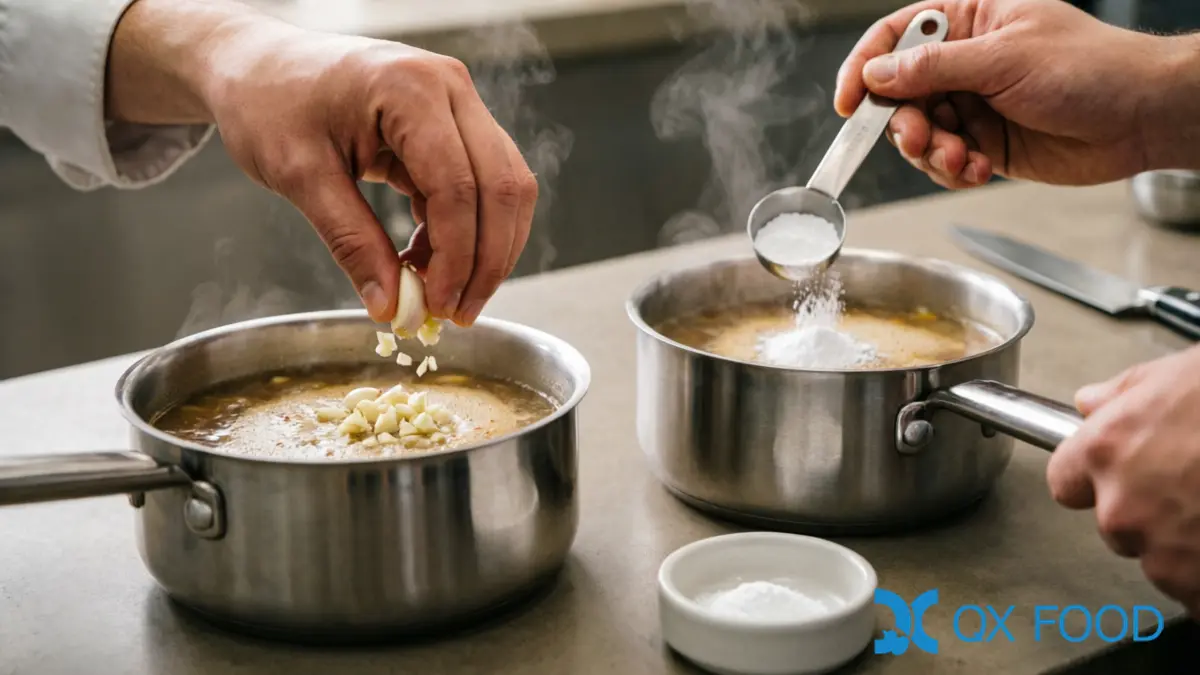
Every central kitchen flavor program faces the same five drift sources, and they compound:
- Skill variance — different line cooks season differently; a recipe measured in “to taste” cannot replicate at 10,000 servings.
- Fresh ingredient variability — garlic, ginger and chilies vary by season, origin and storage; fresh aromatics are the least stable flavor input in any kitchen.
- Batch and equipment variance — kettle size, cooking time and cooling rates differ between production runs and sites.
- Cold-chain interruption — fresh and semi-finished components degrade between the kitchen, the warehouse and the outlet.
- Documentation gaps — recipes that live in chefs’ heads do not survive staff turnover.
A central kitchen engineering review in the journal Trends in Food Science & Technology describes the shift from traditional processing to quantified, standardized and mechanized production as the defining feature of the model (Wang et al., 2023) — and seasoning is the last function to standardize in most operations.
Powdered Ingredients as the Standardization Tool
Central kitchen flavor standardization rests on one principle: make the flavor input measurable, stable and identical every time. Powdered ingredients deliver all three:
- Measurable — powders dose by weight with gram-level precision; a formula book can specify 12.5 g of garlic powder per 10 kg of sauce instead of “two cloves”.
- Stable — low-moisture powders hold flavor for 12-18 months under cool storage, removing seasonality and cold-chain fragility from the flavor equation.
- Identical — a defined mesh and COA-verified volatile oil content make each batch of powder equivalent to the last.
For the operational benefits of dried ingredients in food manufacturing — shelf life, logistics efficiency and flavor consistency — Silva International’s analysis of dried ingredients covers the practical side of the same argument.
The Powder Substitution Map for Central Kitchens
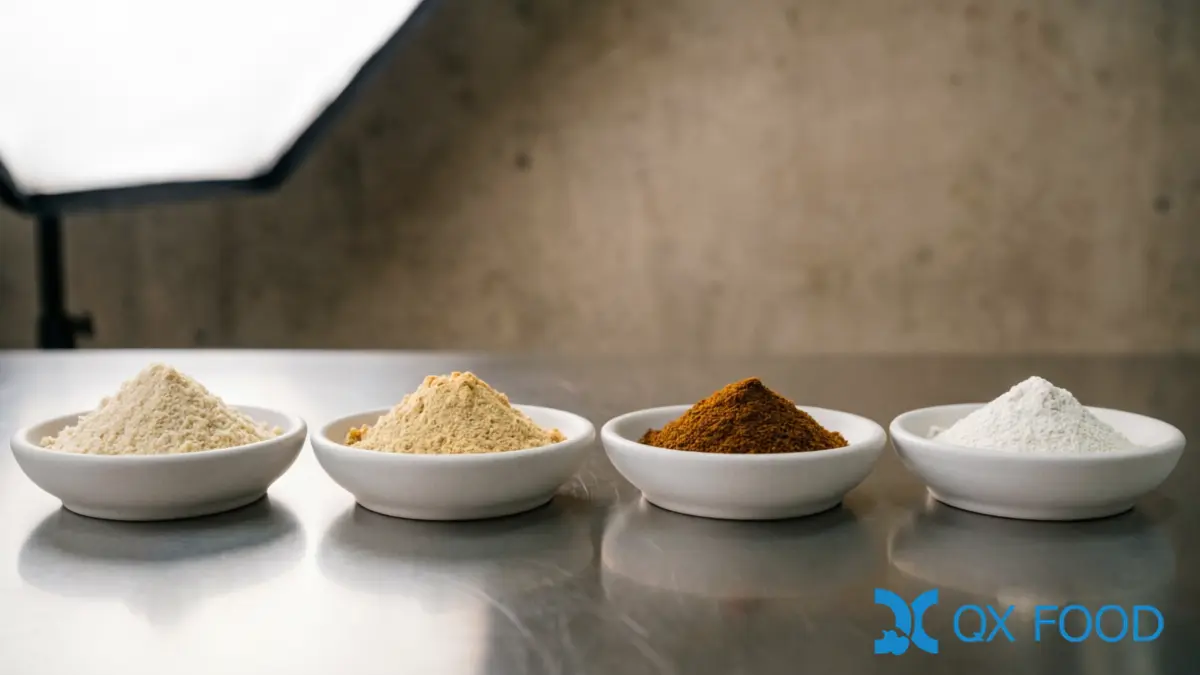
Central kitchen flavor standardization does not mean replacing every fresh ingredient — it means replacing the flavor-critical, high-variance ones. The practical substitution map looks like this:
| Fresh Input | Powder Replacement | Standardization Gain |
|---|---|---|
| Garlic | Dehydrated garlic powder GP-W04 | Fixed pungency, no peeling/chopping variance, 12-month stability |
| Ginger | Dried ginger DGR-27 | Fixed warming heat, no seasonal variation |
| Whole star anise | Star anise STA-23 (whole or ground) | Consistent anethole delivery in braises and stocks |
| Soy sauce (liquid) | Brewed soy sauce powder FSP-BH | Weight-based dosing, no drums or cold storage |
| White pepper | White pepper WPP-K44 | Fixed heat and aroma, no grinding variance |
Each substitution converts a variable input into a specification-controlled one — the core mechanism of central kitchen flavor standardization.
The Quantified Recipe: From Chef Memory to Formula Sheet
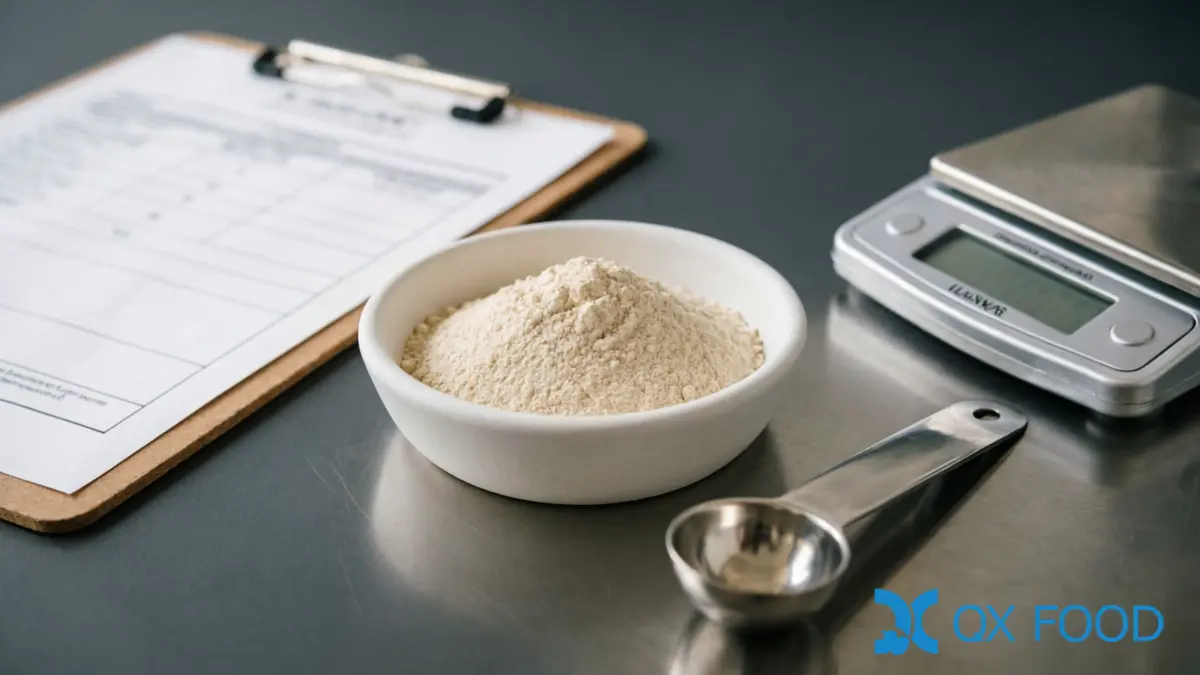
The discipline that makes central kitchen flavor work is the quantified recipe. Central kitchens that standardize successfully convert every signature dish into a formula sheet with three sections:
- Base formula — weights of every component per 10 kg of finished product, including the powder seasoning layer.
- Process specification — cooking temperature, time, cooling curve and holding steps.
- Acceptance criteria — Brix, color value, viscosity or sensory benchmark that defines “correct” before dispatch.
With a powder-based base formula, the acceptance criteria become achievable: the same 12.5 g of garlic powder and 30 g of soy sauce powder produce the same measured result on line one as on line nine.
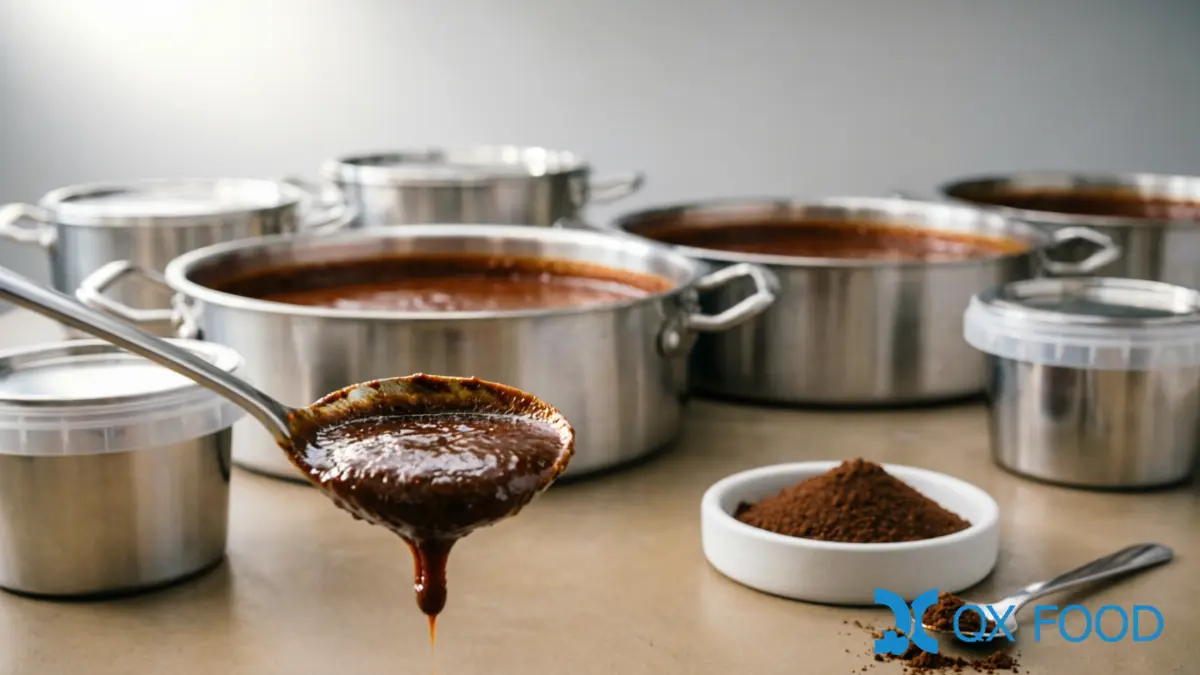
What Central Kitchen Standardization Costs — and Saves
The trade-off in central kitchen flavor standardization is real and should be stated plainly. Powdered ingredients cost more per kilogram than fresh produce at market price, and the flavor character shifts slightly — dried garlic lacks the raw pungency of fresh, brewed soy sauce powder lacks the liquid’s mouthfeel. What the trade buys:
- Labor savings — no peeling, chopping, grinding or fresh-stock management in each outlet.
- Yield control — powder dosing eliminates the 5-15% yield variance of fresh prep.
- Waste reduction — dried ingredients have minimal trim loss and long shelf life.
- Audit-ready consistency — every batch is traceable to a formula, a COA and a lot number.
For the regulatory side of ingredient declarations in foodservice products, the USDA FSIS guidance on natural flavors on meat and poultry labels shows how dried spices and powders are treated in US labeling — relevant for export-oriented chains.
The Supplier Dimension: What Central Kitchens Should Demand
Central kitchen flavor standardization is only as strong as the powder supply chain behind it. The buyers who succeed demand five things from their seasoning suppliers:
- COA on every lot — volatile oil, moisture, mesh and microbiology, comparable across batches.
- Mesh specification — defined particle size so dosing equipment and recipes behave identically.
- Batch traceability — each lot linked to origin, harvest and processing dates.
- Custom blend capability — the supplier can lock a proprietary formula and blend to it repeatably.
- Stability documentation — volatile oil retention data at 3 and 6 months for the finished blend.
QXFOOD’s central kitchen ingredient set — garlic GP-W04, ginger DGR-27, soy sauce powder FSP-BH, star anise STA-23, cassia CP-B04, clove CLO-D11 and white pepper WPP-K44 — ships with per-lot COAs, ISO9001, ISO22000, HACCP and HALAL certification, and supports proprietary blend locking for chain-scale formulas.
For the full category view, visit the Fermented & Brewed Powders category page.
Request central kitchen samples through the contact form on this page and our application team will support your standardization program.
Central kitchen output often ships as ready meals, which is where our sauce pack development guide takes over, and stability in transit is covered by the flavor stability guide.
Frequently Asked Questions
What causes flavor inconsistency in central kitchens?
The five main drift sources are skill variance between cooks, fresh ingredient variability, batch and equipment variance, cold-chain interruption, and undocumented recipes. Powdered, spec-controlled ingredients remove the first two almost entirely.
How do powdered ingredients standardize flavor?
Powders dose by weight with gram-level precision, hold flavor for 12-18 months in cool storage, and carry defined mesh and volatile oil specs — so the same measured input produces the same flavor output every time, across every production line.
Do I need to replace all fresh ingredients with powders?
No. Replace only the flavor-critical, high-variance inputs — garlic, ginger, soy sauce and ground spices. Fresh produce can remain for texture and visual identity; the powder layer carries the flavor that must be identical.
Is dried garlic as good as fresh in central kitchen recipes?
It is different but more controllable: dried garlic powder delivers fixed pungency without seasonality or prep variance. The flavor character shifts slightly — which is why acceptance criteria should be re-benchmarked against the powder-based formula, not the fresh-based one.
What is a quantified recipe?
A formula sheet specifying weights per 10 kg of product, process parameters (temperature, time, cooling) and measurable acceptance criteria. It converts chef memory into reproducible production instructions.
Do powdered ingredients cost more?
Per kilogram, usually yes — but total cost often falls after labor, yield loss, waste and cold-chain savings are counted. The economic case should be evaluated on cost per consistent serving, not ingredient price alone.
What should a central kitchen demand from a powder supplier?
COA on every lot, defined mesh specifications, batch traceability, custom blend capability with locked formulas, and stability documentation. These five requirements make the powder supply chain compatible with standardization.