
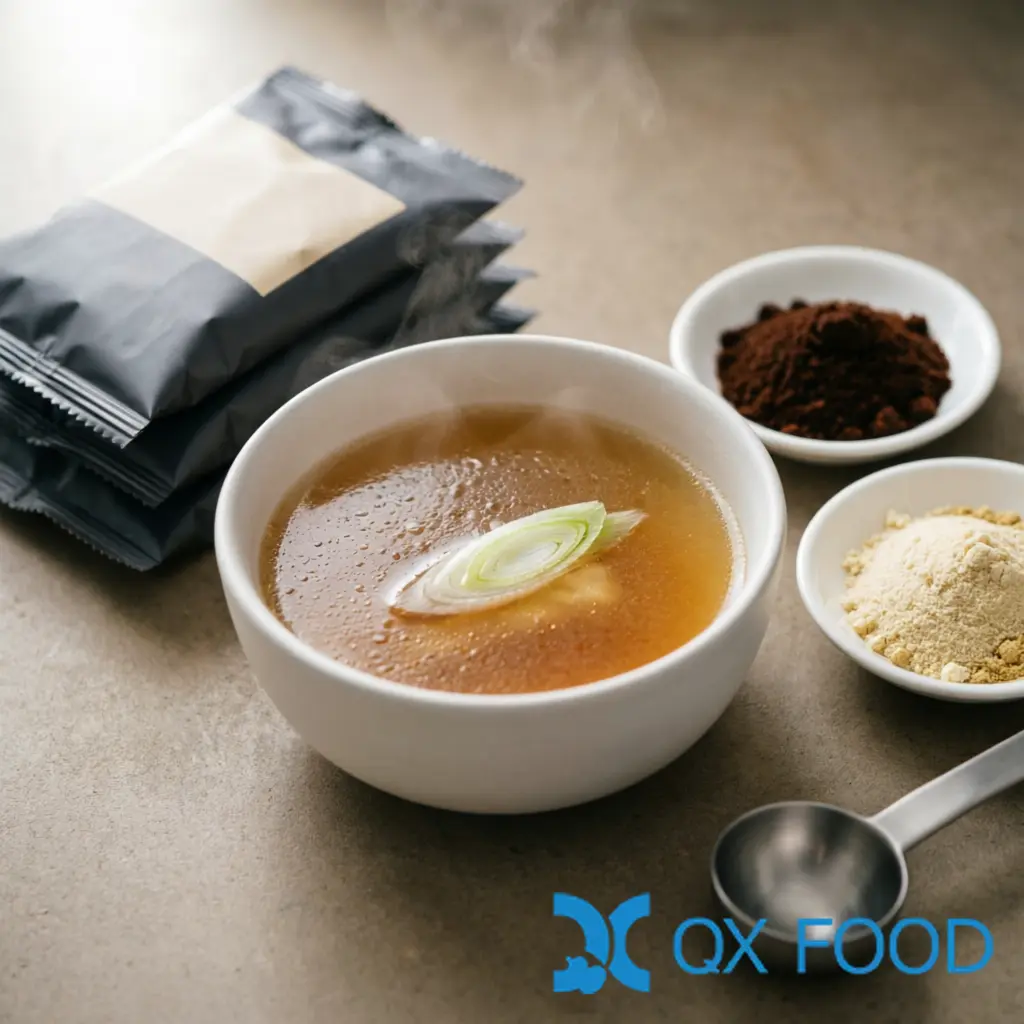
Flavor Stability in Instant Soups and Self-Heating Foods: A Manufacturer’s Guide
Instant soup and self-heating food production places unique demands on seasoning systems. The self-heating food packaging market reached USD 73.5 billion in 2025 and is projected to grow past USD 115 billion by 2035 (Persistence Market Research, 2025), driven by outdoor, military and convenience segments. For manufacturers, the commercial promise of this category depends on one engineering problem: keeping flavor stability flavor stability of an instant soup or self-heating meal intact from the seasoning line to the consumer’s bowl. This guide covers the failure modes, raw material choices and verification steps behind flavor stability in instant soup, retort and self-heating products.
Why Heat and Time Destroy Soup Flavor
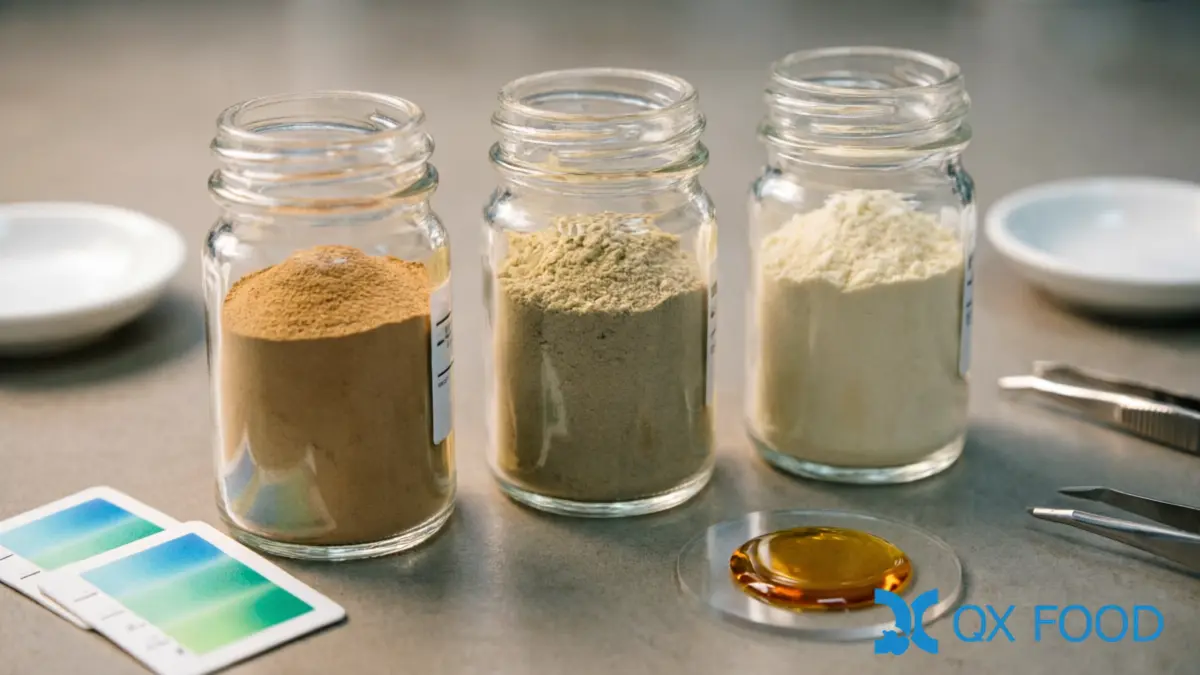
Flavor stability failures in instant soup and self-heating products happens through three measurable mechanisms, and every seasoning system fails through one of them first.
- Volatile compound loss — the aromatic molecules that carry garlic, ginger, spice and brewed-soy character evaporate or oxidize during retort, hot fill or the self-heating reaction itself. Terpenes and sulfur compounds are the most vulnerable.
- Moisture-driven degradation — any water activity above the powder’s specification triggers hydrolysis, caking and accelerated Maillard side reactions that flatten the flavor profile over shelf life.
- Oxidative rancidity — fats in seasoning bases and spice oils oxidize under heat and light, generating off-notes that mask the intended broth character.
Instant soup producers face all three simultaneously because the product experience depends on rapid hot-water extraction, while the logistics chain exposes powders to months of ambient storage and temperature swings.
Low-Moisture Raw Materials as the Stability Foundation
The single most effective flavor stability measure in instant soup formulation is starting with low-moisture raw materials. Dehydrated garlic powder with moisture below 6% and brewed soy sauce powder with tightly controlled moisture hold their flavor compounds far longer than borderline lots, because water activity drives every degradation pathway in the list above.
Dehydrated garlic powder GP-W04 and Japanese-style brewed soy sauce powder FSP-BH are examples of low-moisture powders designed for exactly this duty cycle. Garlic contributes the savory pungency that anchors chicken, pork and vegetable soup profiles, while brewed soy sauce powder supplies the fermented umami depth that survives retort conditions far better than liquid soy sauce, which introduces water and its own oxidation risk into the sachet.
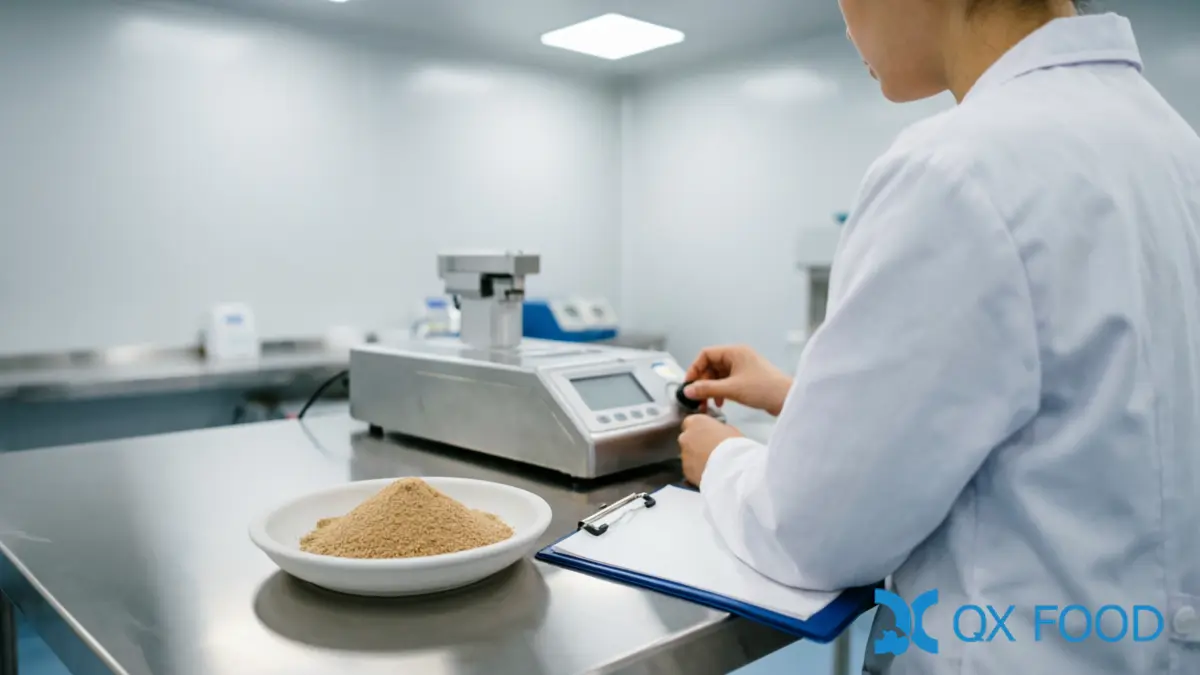
Manufacturers should verify moisture on arrival with a rapid moisture analyzer, reject lots above specification, and store powders below 25°C in sealed packaging. These three habits prevent more seasoning failures than any other quality measure.
Ginger, Pepper and Root Spices in Retort and Hot-Fill Duty
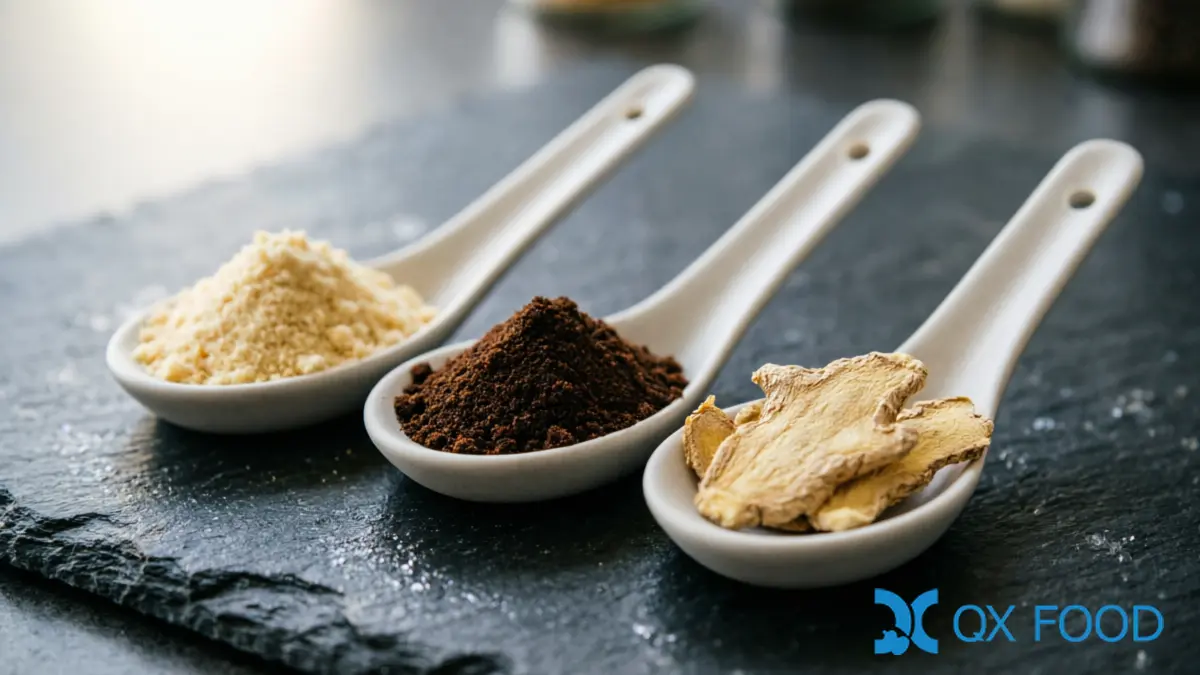
Root spices behave differently under heat than leafy aromatics, which makes them structurally important in heat-processed soup and self-heating products. Dried ginger DGR-27 holds its pungent warmth through retort cycles, and pure white pepper powder WPP-K44 contributes the sharp, clean heat that survives hot fill without the bitterness some chili types develop under prolonged heating.
The formulation principle for heat-processed soup is simple: build the aroma budget on heat-stable components (ginger, pepper, fermented powders, white pepper) and treat volatile herbs as top-notes added late in the process or protected by encapsulation. When a retort cycle runs at 115-121°C, the difference between a heat-stable and a heat-sensitive spice becomes obvious in a single batch.
Encapsulation and Carrier Systems for Volatile Protection
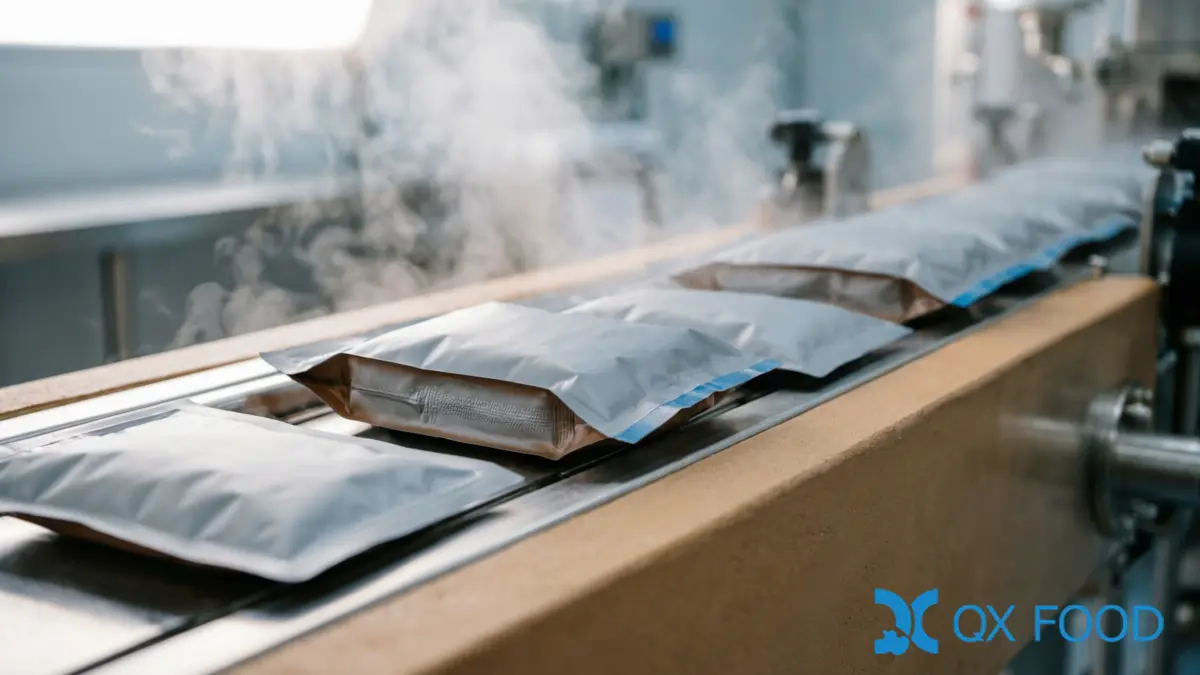
For the most volatile components, manufacturers have three practical options beyond formulation rearrangement.
| Approach | Mechanism | Best Fit |
|---|---|---|
| Spray-dried powders | Flavor encapsulated in a carbohydrate matrix | Brewed soy sauce, chicken base, fruit powders |
| Fat-coated granules | Oil phase shields volatiles from moisture | Garlic, ginger, spice oils in paste sachets |
| Dual-sachet separation | Powder and paste packed separately | Self-heating meals with liquid seasoning |
Dual-sachet separation is underused in instant soup. By keeping the powder seasoning and any oil-based component in separate sachets, manufacturers remove moisture-oil contact for the entire shelf life, and the two combine only in the bowl. This single packaging decision frequently extends sensory shelf life by months without changing the formula.
Batch Verification: What to Test Before Scale-Up
Flavor stability claims belong in the lab, not the marketing brief. Before scaling an instant soup or self-heating seasoning system, run these five verification steps:
- Moisture profile — measure water activity of the finished seasoning blend, not just individual powders.
- Volatile oil retention — compare volatile oil content at blending, after 30 days and after 90 days of ambient storage.
- Retort simulation — run the seasoning through the actual thermal cycle and compare sensory profiles pre- and post-cycle.
- Shelf-life tasting — trained panel evaluation at 0, 3 and 6 months against a locked reference.
- Dissolution check — confirm complete dispersion in water at the labeled serving temperature within the claimed time.
Raw material COA values feed directly into steps one and two. When a supplier’s certificate lists moisture, volatile oil content and microbiology, it gives the manufacturer the data needed to model stability before production — which is why dried ginger DGR-27, whole star anise STA-23 and cassia powder CP-B04 ship with full documentation for this workflow.
Building a Stability-First Seasoning Supply Chain
Flavor stability is a supply chain property as much as a formulation property. The manufacturers who succeed at flavor stability in instant soup and self-heating categories share three sourcing habits:
- Specify stability-relevant parameters — moisture, volatile oil, particle size and microbiology on every PO, not just the first one.
- Qualify the supplier’s storage and batch traceability — ask where the powder was stored, for how long, and whether each batch is traceable to harvest and processing dates.
- Audit batch consistency — compare COA values across consecutive batches; drift in moisture or volatile oil predicts flavor drift before it reaches consumers.
For the full category view, visit the Natural Plant Powders category page.
Request samples through the contact form on this page and our application team will help you qualify powders against your thermal process and shelf-life target.
For the formulation context behind these stability parameters, start with our instant noodle seasoning flavor system guide, then see how the same principles scale into prepared meal sauce pack development.
Frequently Asked Questions
Why does instant soup flavor stability degrade faster than expected?
The three main causes of flavor stability loss are volatile compound loss during heat processing, moisture-driven degradation during storage, and oxidative rancidity of fat-based components. Low-moisture raw materials and sealed, cool storage address all three.
What is the best way to keep garlic flavor stable in retort soup?
Use low-moisture dehydrated garlic powder with a documented moisture spec, protect it from moisture contact during storage, and consider fat-coated granules or dual-sachet separation when the thermal process is severe.
Does brewed soy sauce powder survive retort conditions?
Yes — brewed soy sauce powder is more heat-stable than liquid soy sauce in retort, which makes it a reliable flavor stability anchor and hot-fill processes because it introduces no additional water and its flavor compounds are protected in the dried matrix. It is a common umami backbone in retort soups.
How long can seasoning powders keep their flavor in storage?
With moisture below specification, sealed packaging and storage below 25°C, most dehydrated spice and soy sauce powders retain acceptable flavor for 12-18 months. Verify with volatile oil testing at 30 and 90 days rather than relying on calendar dates.
What is dual-sachet separation and when should I use it?
It means packing powder seasoning and oil-based components in separate sachets so they combine only in the bowl. Use it when the formula contains both moisture-sensitive powders and oils, or when shelf life targets exceed 12 months.
Which spices hold flavor best under high heat?
Root spices and fermented powders — ginger, white pepper, brewed soy sauce powder and HVP systems — are the most heat-stable. Leafy and highly volatile aromatics should be added late or protected by encapsulation.
What should I verify on a supplier COA for soup seasoning stability?
Check moisture content, volatile oil content (for spices), particle size distribution and microbiology. Batch-to-batch consistency of these values is the best predictor of flavor stability at production scale.