What Is Dehydrated Garlic Powder GP-W04?
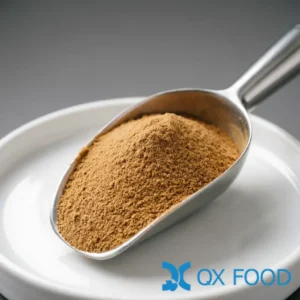
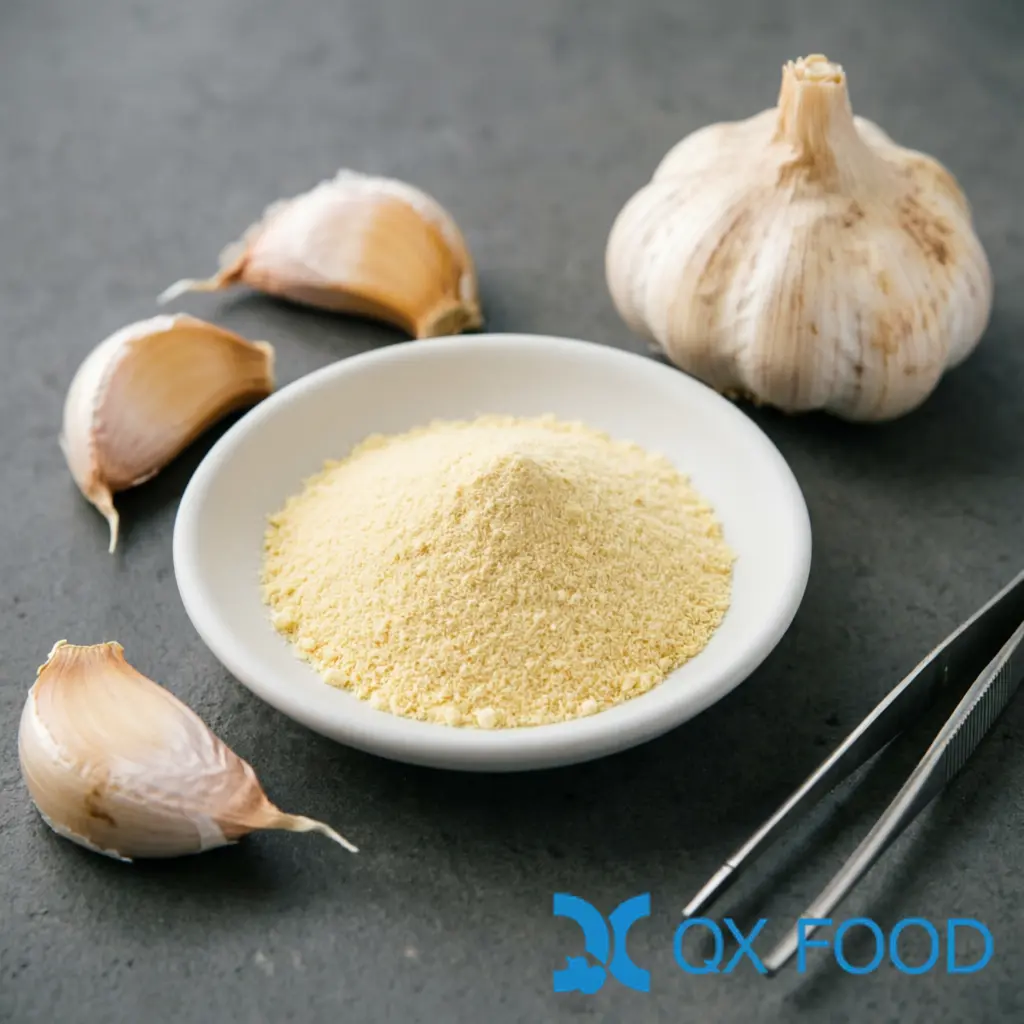
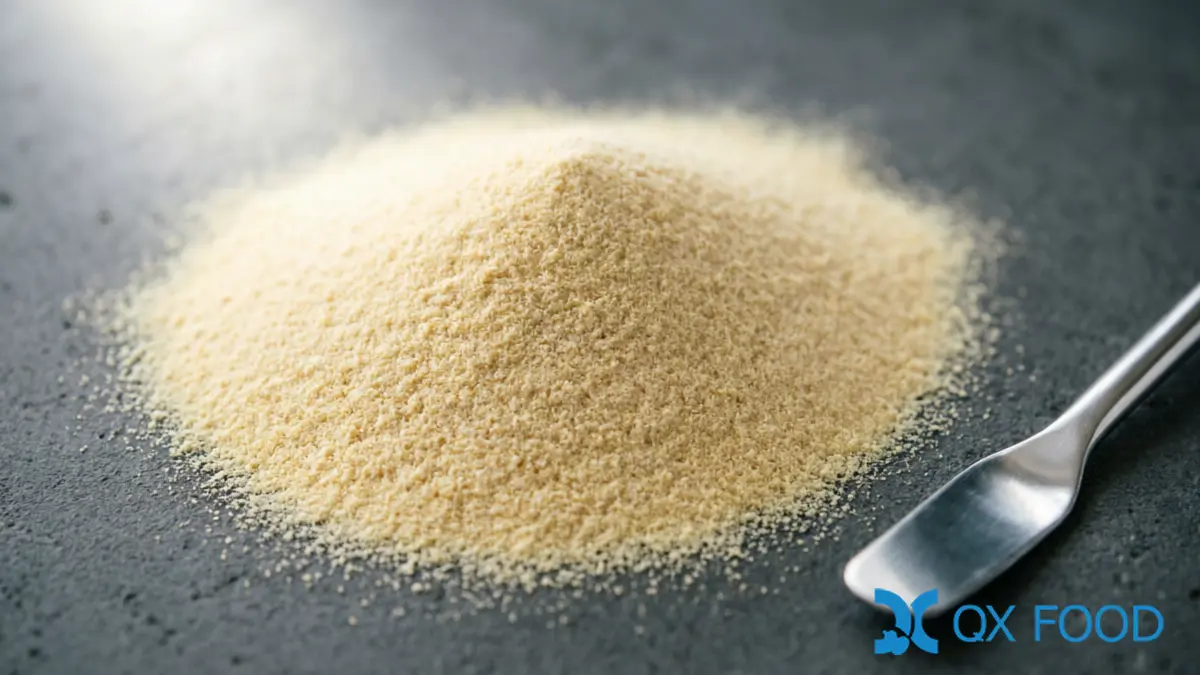
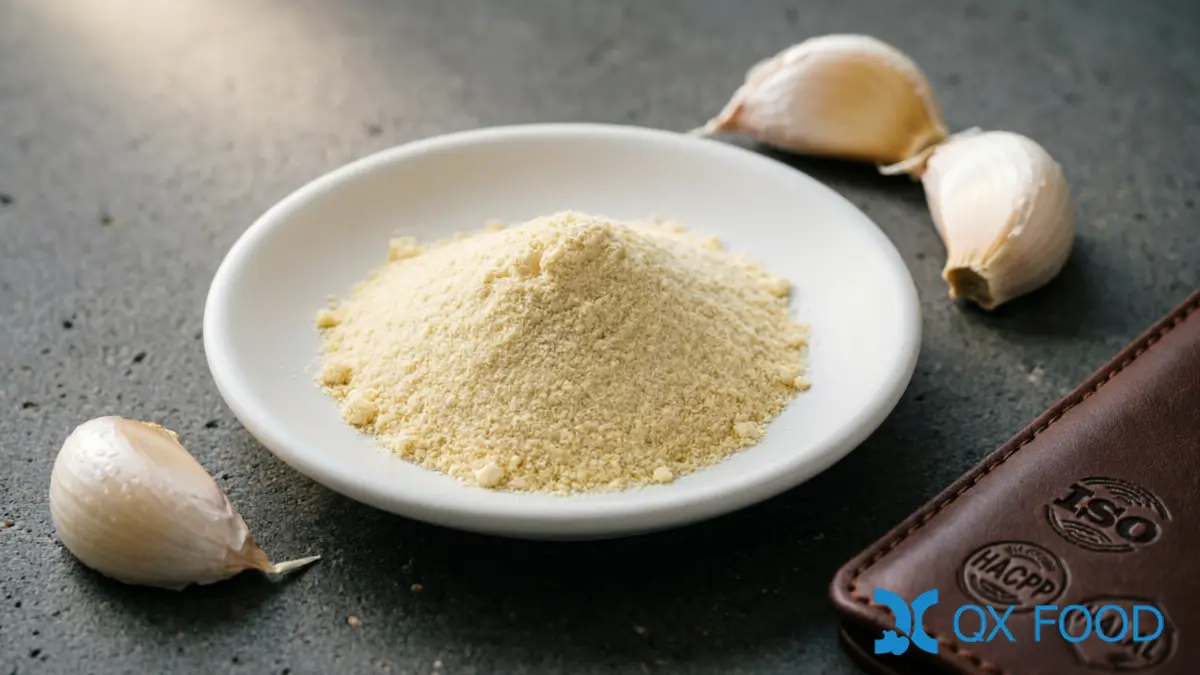
Dehydrated garlic powder GP-W04 starts with whole fresh garlic bulbs from Shandong. The bulbs are cleaned, peeled, sliced and then dried through a low-temperature dehydration process — not high-heat oven drying, which would caramelize the natural sugars and mute the garlic’s characteristic pungency. The dehydrated garlic slices are then ultra-fine crushed and sieved to a consistent pale yellow powder. No additives, no anti-caking agents, no preservatives — just dehydrated garlic, ground.
The sieve residue spec on dehydrated garlic powder GP-W04 tells the practical story: 0.3 g/100g against a 2.5 g/100g ceiling. That means the powder is fine enough that over 99% of it passes through the production sieve. In practical terms, dehydrated garlic powder at this particle size disperses evenly through dry seasoning blends, dissolves quickly in warm water for liquid applications, and does not leave gritty residue on the palate in snack coatings or instant food products. The moisture spec — 4.6 g/100g against a 5.0 g/100g ceiling — keeps the powder free-flowing and stable on the shelf without the help of flow agents.
Heavy metal screening is part of the standard COA for dehydrated garlic powder GP-W04: inorganic arsenic not detected at the 0.1 mg/kg detection limit and lead not detected. The lead line is written against the GB 2762 limit for dried vegetables, 0.8 mg/kg; where a destination market sets a stricter limit, such as ADOGA’s 0.1 mg/kg, the method and reporting limit are agreed as part of the order. For a dehydrated garlic powder going into ready-to-eat snack seasonings, instant noodle sachets, or export markets with tightening contaminant limits, having those numbers on the standard COA saves the buyer a round of third-party testing. Microbiological control is tight: aerobic plate count at 200 CFU/g (ceiling 10,000), coliforms below detection, Salmonella not detected, Staphylococcus aureus under 10 CFU/g (ceiling 100).
Specification Data — Standard Grade
| Parameter | Unit | Standard | Measured | Method |
|---|---|---|---|---|
| Moisture | g/100g | ≤5.00 | 4.6 | GB 5009.3 |
| Sieve Residue (pass rate) | g/100g | ≤2.5 | 0.3 | Agreed product control |
| Aerobic Plate Count | CFU/g | ≤10,000 | 200 | GB 4789.2 |
| Coliforms | MPN/g | ≤0.3 | <0.3 | GB 4789.3 |
| Salmonella | /25g | Not detectable | Not detected | GB 4789.4 |
| Staphylococcus aureus | CFU/g | ≤100 | <10 | GB 4789.10 |
| Inorganic Arsenic (as As) | mg/kg | ≤0.1 | Not detected | GB 5009.11 |
| Lead (as Pb) | mg/kg | ≤0.8 (GB 2762 dried vegetables) | Not detected | GB 5009.12 |
| Appearance | — | Fine powder, pale yellow, uniform | Compliant | GB/T 15691-2026 |
| Odor & Taste | — | Natural strong garlic, no off-odor | Compliant | GB/T 15691-2026 |
The product standard is GB/T 15691-2026 — the Chinese national standard for dehydrated garlic. The sieve residue reading (0.3 g/100g) is the number that matters most for formulators: it tells you that dehydrated garlic powder GP-W04 will disperse without leaving visible specks or gritty texture in a dry seasoning blend, a snack coating or an instant soup base. A coarser garlic powder might carry more visual appeal in a spice rub where the buyer wants visible garlic particles, but for applications where the garlic needs to disappear into the food matrix, a low sieve residue is the specification to watch.
How Dehydrated Garlic Powder Performs in Food Manufacturing
Seasoning Blends and Dry Mixes

Dehydrated garlic powder is one of the core building blocks of commercial seasoning blends. Alongside onion powder, salt, black pepper and paprika, dehydrated garlic powder anchors the savory backbone of all-purpose seasonings, barbecue rubs, poultry seasonings, snack dustings and instant soup bases. The typical inclusion rate for dehydrated garlic powder in a multi-spice seasoning blend is 5–20% by weight, depending on whether garlic is a lead note or a supporting character.
In a dry seasoning blend, dehydrated garlic powder GP-W04 performs two functions simultaneously: it delivers the savory garlic flavor that consumers associate with the product, and it contributes to the powder’s bulk and flow characteristics. The low moisture content (4.6 g/100g) means the garlic powder does not introduce excess water into the blend that could cause clumping over time. The ultra-fine particle size (sieve residue 0.3%) means the garlic powder distributes evenly through the blend during mixing — no pockets of concentrated garlic, no bland spots in the finished seasoning.
Snack Seasoning and Coating Systems
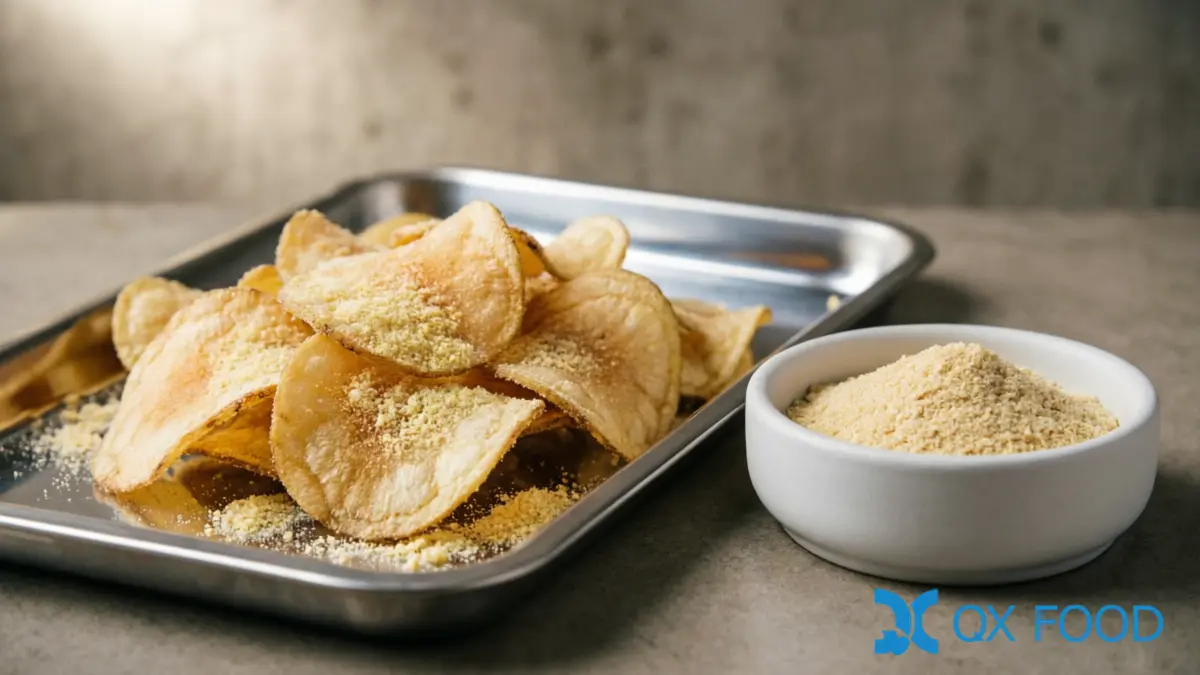
In snack manufacturing — potato chips, extruded corn snacks, coated nuts, popcorn seasoning — dehydrated garlic powder is applied as part of a dry seasoning blend that adheres to the snack surface via an oil-based carrier. The powder needs to be fine enough to stick to the oil film without separating during packaging and distribution. Dehydrated garlic powder GP-W04, with its ultra-fine particle size, stays on the snack surface rather than settling to the bottom of the package. In a typical snack seasoning, dehydrated garlic powder is used at 5–15% of the seasoning blend weight.
The allicin content of dehydrated garlic powder — the sulfur compound responsible for garlic’s characteristic pungency and for much of its documented health functionality — begins to degrade when the powder is exposed to high heat for extended periods. In a baked snack application (surface temperatures around 180–200°C for a short dwell time), a portion of the allicin survives the bake, and the garlic note remains detectable in the finished product. In a fried snack application, the oil layer can partially mask the garlic character, so formulators often adjust the dosage upward or combine dehydrated garlic powder with garlic oil or garlic extract for a multi-layered garlic profile.
Meat Processing and Marinades
In meat processing — sausage manufacturing, marinated meat products, processed poultry, meat patties — dehydrated garlic powder is blended into the dry spice premix before being mixed into the meat emulsion or applied as a dry rub. The typical dosage is 0.3–1.0% of the meat block. Dehydrated garlic powder GP-W04 disperses through the meat matrix during mixing, and because the powder is already dehydrated, it absorbs moisture from the meat rather than adding water — which is important for maintaining the protein-to-water ratio in emulsified products like frankfurters and bologna.
Garlic powder also contributes to the microbial stability of processed meat products. Allicin and its breakdown products have documented antimicrobial activity against a range of foodborne pathogens. While dehydrated garlic powder is not a substitute for proper refrigeration, salt levels and nitrite curing, it provides an additional hurdle in the multi-barrier approach to food safety that most meat processors rely on. This is not a marketing claim — it is a measurable effect that food microbiologists have documented in peer-reviewed studies. In practice, it means a sausage seasoned with dehydrated garlic powder may hold its sensory and microbiological quality marginally longer than an unseasoned control under the same storage conditions.
Instant Food and Soup Bases
In instant noodle seasoning sachets, dehydrated soup bases, and ready-meal sauce powders, dehydrated garlic powder GP-W04 dissolves rapidly in hot water — the ultra-fine particle size means the powder hydrates within seconds of contact with water above 80°C. The garlic flavor releases immediately, which is important in an instant product where the consumer expects the seasoning to work with a simple pour-and-stir action. For manufacturers of instant food products, the consistency of the garlic powder’s flavor intensity from batch to batch is as important as the microbiological spec — a dehydrated garlic powder that varies in pungency from one shipment to the next will produce a final product that tastes different from one production run to the next.
Fresh Garlic vs Dehydrated Garlic Powder: The Manufacturing Trade-Off
Buyers who currently use fresh garlic in their production sometimes ask whether dehydrated garlic powder can replace it. The answer is that it depends on what the garlic is doing in the product.
Fresh garlic brings moisture (around 65% water content), enzymatic activity (the alliinase enzyme that converts alliin to allicin when the garlic is crushed), and a flavor profile that changes during cooking — the initial sharp, pungent character mellows into a sweeter, roasted note as the garlic cooks. Dehydrated garlic powder brings none of the water, all of the flavor intensity in concentrated form, and a stable profile that does not change during storage or processing. One gram of dehydrated garlic powder replaces approximately five grams of fresh garlic in terms of flavor intensity — but the character is slightly different, because the enzymatic conversion from alliin to allicin has already happened during the dehydration process, and some of the more volatile sulfur compounds have been driven off.
In a manufacturing context, the advantages of dehydrated garlic powder over fresh garlic are practical: no peeling, no chopping, no cold-chain storage, no batch-to-batch variation in moisture content throwing off the recipe, no risk of sprouting or mold in storage, and no labor cost associated with preparation. For a sauce manufacturer making tons of product per day, those factors add up. For a small-batch fresh-prepared food manufacturer where the visual cue of fresh garlic is part of the product’s identity, fresh garlic may still be the right choice. The two forms of garlic are not competitors — they serve different production models, and many large-scale manufacturers use both: dehydrated garlic powder for the base seasoning and fresh garlic or garlic paste for the premium-tier product line.
Particle Size, Packaging and Shelf Stability
Dehydrated garlic powder GP-W04 is a natural single-ingredient product — dehydrated garlic, ground and sieved, with no additives, no preservatives, no anti-caking agents and no sulfur fumigation. The pale yellow color is characteristic of properly dehydrated garlic — browning during drying would indicate excessive heat, which caramelizes the sugars and degrades the allicin content.
For buyers who need a specific particle size, the standard ultra-fine grind can be adjusted — coarser for visible garlic particles in dry rubs, finer for instant beverage or soup applications where rapid dissolution is critical. The sieve residue specification (0.3 g/100g on the standard grade) gives a baseline for discussion: if your application requires a tighter sieve spec, mention the target during the inquiry stage.
Standard packaging covers evaluation pouches (100 g or 1 kg aluminum foil bags), mid-volume cartons (10 kg or 20 kg) for pilot and initial production, and bulk drums (25 kg fiber drums) for full container loads. Custom packaging — private-label bags, specific dimensions, multi-layer barrier materials — is available for OEM orders.
Storage: sealed container, cool dry place, away from direct sunlight and strong odors. The volatile sulfur compounds in dehydrated garlic powder are hygroscopic — they absorb moisture from the air, which can initiate clumping and accelerate flavor degradation. Under proper conditions — sealed bag, below 25°C, humidity below 60% — the shelf life is 18 months from production. Opened bags should be re-sealed immediately; opened stock used within 60 days retains the best aromatic quality.
Quality Systems and Documentation
- ISO 9001:2015 — quality management system
- ISO 22000:2018 — food safety management system
- HACCP — hazard analysis and critical control points
- HALAL — certified by an accredited halal certification body
The product standard is GB/T 15691-2026. Each shipment comes with a batch-specific COA. Additional testing beyond the standard panel can be arranged on request. Compliance with Codex Alimentarius guidelines is maintained.
Related reading: Garlic powder across snack seasoning and nut coating systems.
Savory-sweet snack lines combine garlic with mango MGO-15 or matcha MP-K40 for signature dusts.
Frequently Asked Questions
How is dehydrated garlic powder GP-W04 different from standard garlic powder?
Dehydrated garlic powder GP-W04 is made through a controlled low-temperature dehydration process that preserves more of the garlic’s natural allicin content and volatile sulfur compounds than high-heat drying methods. The result is a pale yellow powder with a stronger, fresher garlic character. The sieve residue spec (0.3 g/100g) reflects the ultra-fine grinding step that follows dehydration — this particle size is finer than what a basic garlic powder typically delivers, which matters for even dispersion in seasoning blends and rapid dissolution in instant food applications.
Does dehydrated garlic powder GP-W04 contain any additives or anti-caking agents?
No. Dehydrated garlic powder GP-W04 is 100% dehydrated garlic with no additives, no preservatives, no anti-caking agents, no sulfur fumigation and no artificial flavor enhancers. The low moisture content and natural oil content of the dehydrated garlic keep the powder free-flowing in dry-blend operations without chemical flow aids. If your ingredient label needs to read “garlic” or “dehydrated garlic” alone, this grade supports that.
Is dehydrated garlic powder GP-W04 tested for heavy metals?
Yes. The standard COA includes inorganic arsenic (not detected at 0.1 mg/kg detection limit) and lead (not detected at 0.8 mg/kg detection limit). Both parameters are part of the type inspection schedule. If your importing country requires a broader heavy metal panel — cadmium, mercury, or specific elemental screening — communicate these requirements at the inquiry stage so the QA team confirms availability and turnaround.
Can dehydrated garlic powder replace fresh garlic in my production?
In terms of flavor intensity, one gram of dehydrated garlic powder GP-W04 replaces approximately five grams of fresh garlic — but the flavor character is slightly different, because the enzymatic allicin conversion happens during dehydration rather than during fresh crushing. Dehydrated garlic powder offers practical advantages over fresh garlic in manufacturing: no cold-chain storage, no peeling or chopping labor, consistent moisture content across batches, no sprouting or mold risk, and a stable flavor profile that does not change over the production run. Many manufacturers use both forms: dehydrated garlic powder in the base seasoning blend and fresh garlic or garlic paste in premium-tier products where the fresh garlic identity is part of the brand promise.
Can I get dehydrated garlic powder in a coarser grind for dry rubs?
Yes. The standard grade is ultra-fine powder, but coarser particle sizes can be discussed at the sample stage — useful when visible garlic particles are desired in dry rubs, barbecue seasonings or spice blends where texture matters. This is a physical specification adjustment, not a formulation change.
How should I store dehydrated garlic powder to maintain quality?
Store dehydrated garlic powder in a sealed container in a cool, dry place — below 25°C with humidity below 60%. The dehydrated garlic powder is hygroscopic — it absorbs moisture from the air — so opened bags must be re-sealed immediately after use. Under proper storage, shelf life is 18 months; opened stock used within 60 days retains the best aromatic quality.
Is dehydrated garlic powder GP-W04 Halal-certified?
Yes. The manufacturing facility holds active Halal certification. Dehydrated garlic powder is a single-ingredient plant product — dehydrated garlic — with no animal-derived processing aids, no ethanol and no fermentation steps. The certificate is included in the standard documentation package.
Explore Our Natural Vegetable Powder Range
Dehydrated garlic powder GP-W04 is part of the Natural Plant Powders family. Buyers building a savory ingredient portfolio often evaluate these products together:
Onion Powder OP-B03 — spray-dried onion powder for dry seasonings, soups and snack coatings.
Ginger Powder DGP-W01 — pure ground dried ginger for bakery, beverage and savory applications.
Carrot Powder CRP-H23 — natural vegetable powder for color, flavor and nutritional fortification.
Beetroot Powder — natural red color and earthy-sweet flavor for food and beverage.
For the full category view, visit the Natural Plant Powders category page.