
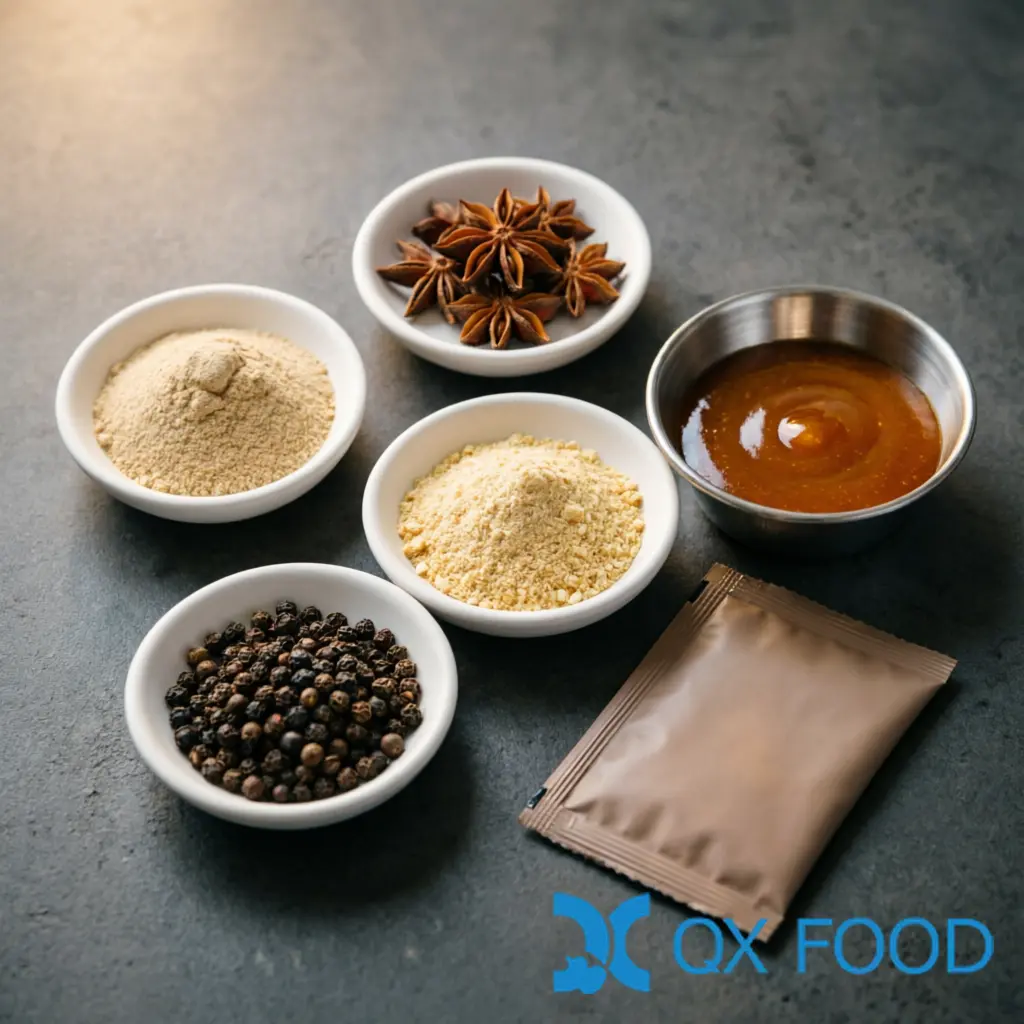
Prepared Meal Sauce Pack Development: From Formula to Batch Consistency
Prepared meal sauce packs are the flavor delivery system of a global prepared meals market valued at USD 190.71 billion in 2025, projected to reach USD 326.50 billion by 2034 (Fortune Business Insights, 2025), with China’s prepared dishes segment alone forecast to reach USD 65.2 billion by 2035 (IndexBox, 2024). For prepared meal factories, the sauce pack carries the product identity — and it faces the harshest conditions in the category: retort or pasteurization heat, months of shelf life and final reheating by the consumer. This guide covers prepared meal sauce pack development from formula architecture to batch consistency, with the raw material decisions that determine whether a sauce survives production.
The Sauce Pack as a Flavor System
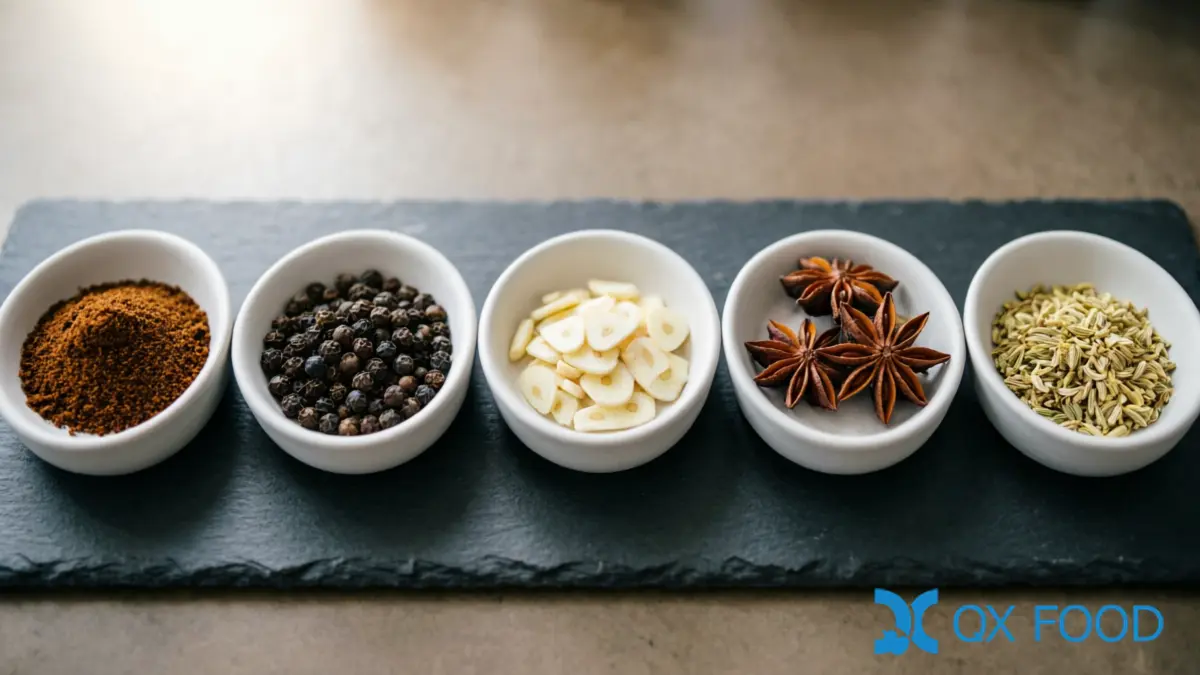
A prepared meal sauce pack is not a single flavor — it is a system with four functional layers that behave differently under heat and storage:
- Umami backbone — brewed soy sauce powder, HVP and yeast extract carry the savory depth. Japanese-style brewed soy sauce powder FSP-BH supplies fermented depth; the choice of backbone defines whether the sauce reads as Chinese braised, Japanese teriyaki or Western roast.
- Spice character — the recognizable identity: star anise STA-23 and cassia powder CP-B04 for braised profiles, clove powder CLO-D11 and fennel powder FP-B01 for aromatic roundness, black pepper BPP-K45 and garlic GP-W04 for universal savory punch.
- Mouthfeel and body — starch, sugar and fat systems that give the sauce its cling and gloss.
- Preservation synergy — salt, acid and water-activity control that keep the pack safe through ambient storage.
Each layer has different heat sensitivity, which is why the development order matters: design the backbone first, then the spice character, then body — and verify at every step against the thermal process.
Retort, Pasteurization and the Flavor Budget
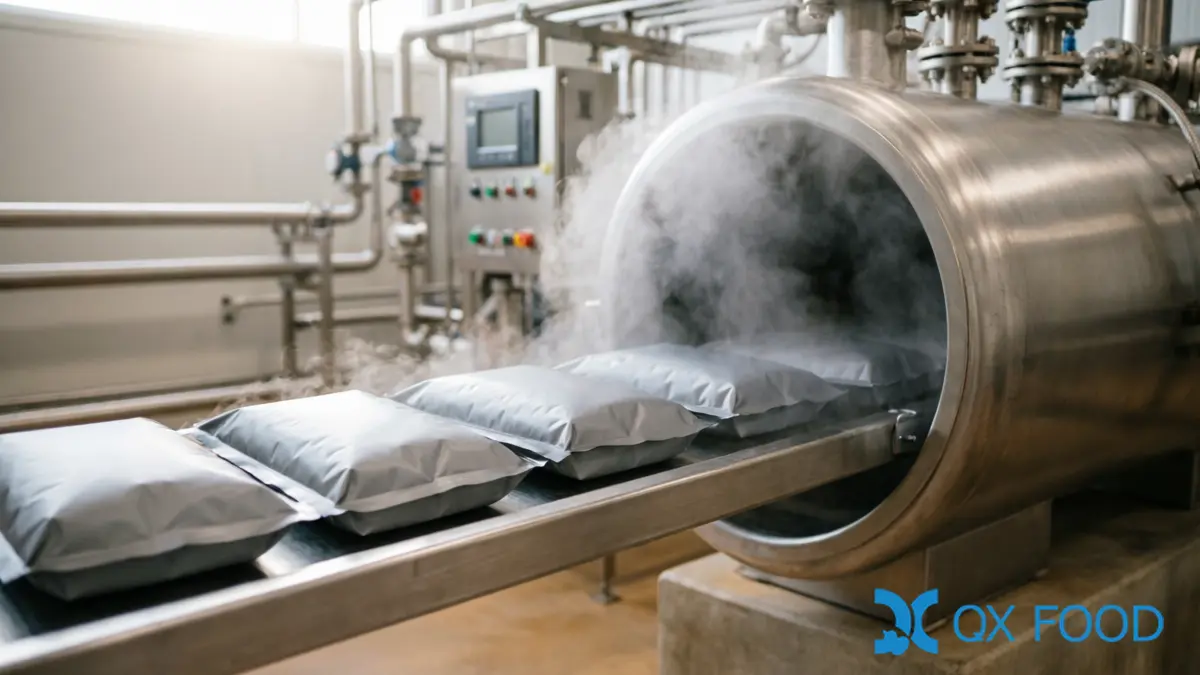
The thermal process is the first constraint in prepared meal sauce pack development. Retort sterilization (typically 115-121°C) and pasteurization (typically 85-95°C) degrade flavor differently:
| Process | Heat Load | Flavor Strategy |
|---|---|---|
| Retort pouch | High (115-121°C) | Heat-stable backbone (soy sauce powder, HVP), reduced volatiles, spice top notes added over-formulated to survive degradation |
| Pasteurized chilled | Moderate (85-95°C) | More volatile freedom, shorter shelf life, fresher profile |
| Hot fill | Low-moderate (85-90°C) | Near-fresh flavor, requires acid or preservative support |
The “over-formulation” technique for retort products is standard practice: because volatile compounds degrade during the cycle, the formula is built with a higher top-note load than the final sensory target, so the post-retort result lands on profile. This requires knowing your raw material’s heat tolerance — the data comes from retort simulation trials, not from supplier brochures.
Powder vs. Paste: Sauce Pack Format Decisions
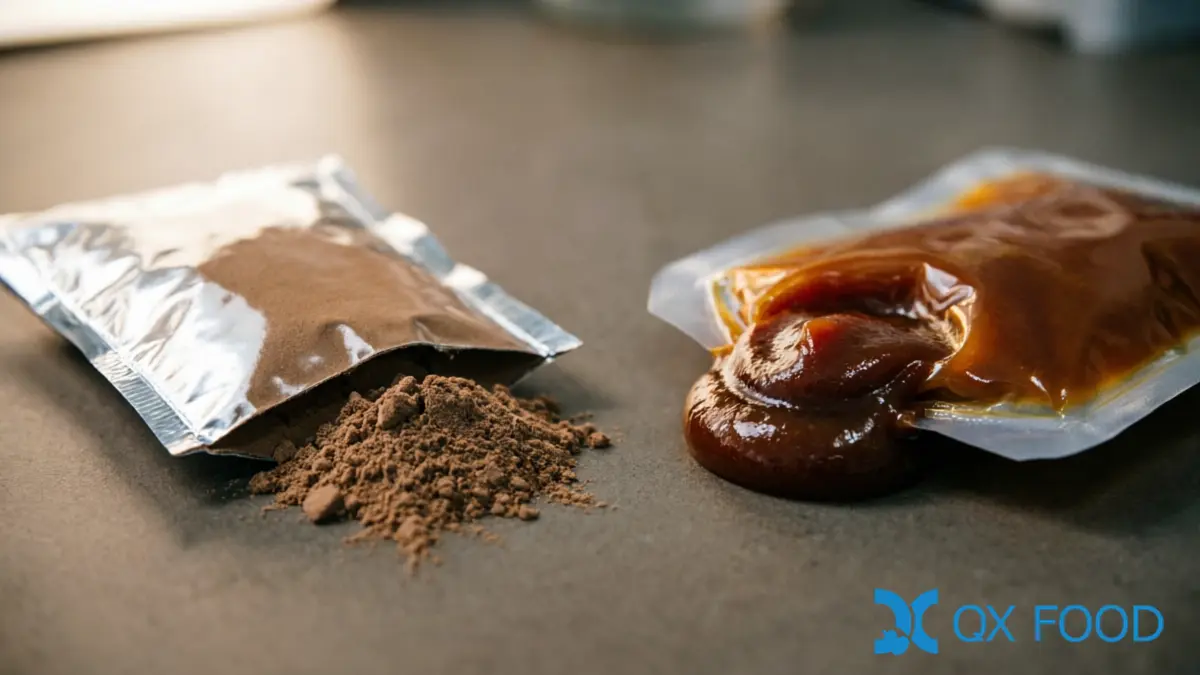
Prepared meal sauce packs come in two dominant formats, and the choice shapes the whole formula:
- Powder sauce packs — water added by the consumer. Best for: logistics weight, ambient shelf life, clean dosing. Requires: fine, free-flowing powders with fast cold-water dispersion, and a formulation that thickens reliably when the consumer adds water.
- Paste sauce packs — ready-to-use liquid or semi-solid. Best for: full mouthfeel, glossy presentation, no consumer mixing step. Requires: retort stability, oil-water emulsion control, and anti-separation formulation.
For powder formats, the same raw materials that serve instant noodle seasoning apply — white pepper WPP-K44 and garlic GP-W04 at 80-120 mesh disperse cleanly and dose precisely. For paste formats, the powder components still matter for flavor, but they must be pre-dispersed to avoid clumping in the paste matrix.
The broader ingredient-selection framework for ready meals is in our ready meal ingredients guide.
Batch Consistency: The Three-Measurement Discipline
Prepared meal sauce pack development ends where production begins: batch consistency. Three measurements protect it:
- Brix or solids — a fast in-line check that the sauce body is on target before filling.
- Viscosity — the mouthfeel parameter that consumers feel first; drift here reads as “the recipe changed”.
- Color value — for soy-based and spice-loaded sauces, color is a flavor proxy; a standardized color reading catches batch drift early.
Behind all three is raw material consistency: a soy sauce powder lot that drifts in nitrogen or a garlic powder lot that drifts in moisture moves the finished sauce even when the process is perfect. This is why COA verification on every spice and powder lot is a production tool, not a paperwork exercise.
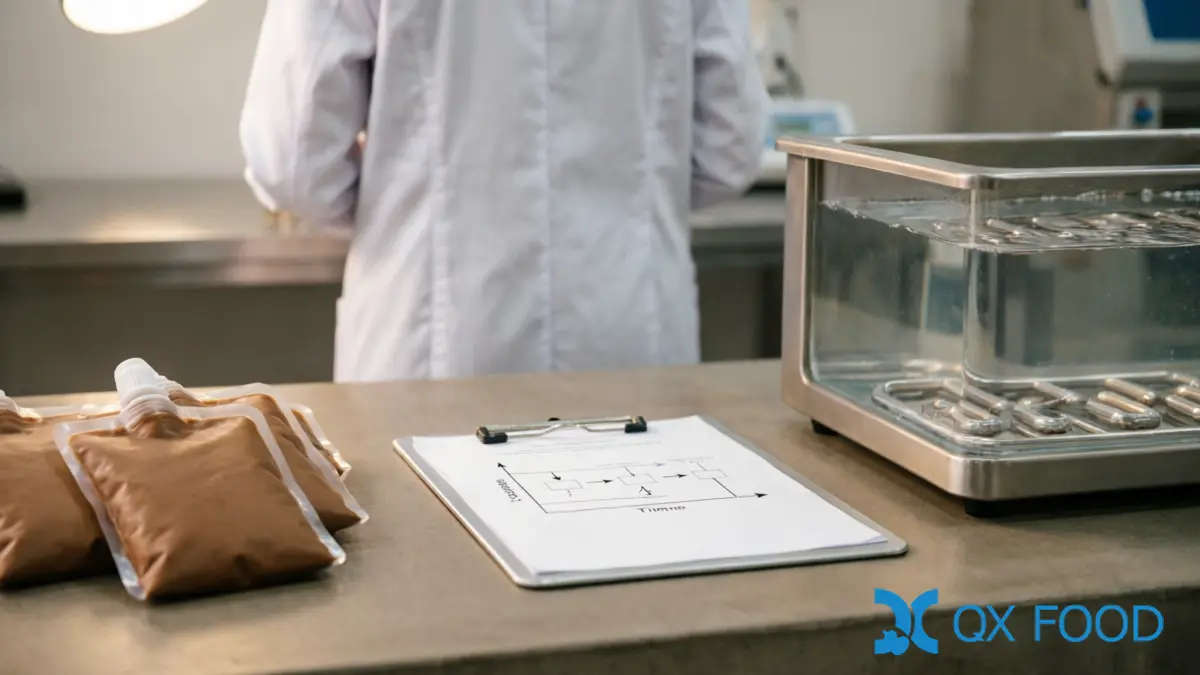
Stability Testing Before Scale-Up
No prepared meal sauce pack should go to production without a defined stability protocol:
- Thermal cycle simulation — run the actual retort or pasteurization curve and compare sensory profiles pre- and post-cycle.
- Accelerated storage — 40°C/75% RH for 30-60 days to surface separation, browning and flavor fade.
- Real-time hold — a 6-month ambient lot retained against the locked reference.
- Reheat test — microwave and stovetop reheating to verify the pack performs at the consumer step.
The retort pouch category has documented long-term stability data, with the retort pouch science overview from ScienceDirect covering the packaging and thermal considerations from extended-duration food programs, confirming that properly formulated and packaged sauces maintain quality over long shelf lives (ResearchGate, 2013). The same discipline applies at commercial scale — with the batch measurements above keeping every production run on the locked reference.
Sourcing for Sauce Pack Production
Prepared meal sauce pack developers should source raw materials with production constraints in mind:
- COA parameters — nitrogen and salt for soy sauce powder, volatile oil for spices, moisture and mesh for all powders.
- Heat-tolerance data — ask the supplier for retort or thermal-test experience with the specific ingredient.
- Batch traceability — every lot linked to origin and processing dates.
- Custom blend support — locked proprietary blends for signature sauces.
QXFOOD’s sauce pack ingredient set — soy sauce powder FSP-BH, star anise STA-23, cassia CP-B04, clove CLO-D11, fennel FP-B01, garlic GP-W04, ginger DGR-27, black pepper BPP-K45 and white pepper WPP-K44 — ships with per-lot COAs, ISO9001, ISO22000, HACCP and HALAL certification, and 1 kg samples for thermal-cycle trials.
For the full category view, visit the Fermented & Brewed Powders category page.
Request prepared meal sauce pack samples through the contact form on this page and our application team will support your thermal-cycle trials.
Sauce packs are often produced in central kitchens — the central kitchen standardization guide covers the upstream consistency problem, and the umami base guide explains the flavor backbone inside the pack.
Frequently Asked Questions
What is a prepared meal sauce pack?
A sauce pack is the flavor delivery system of a prepared meal — a powder or paste sachet carrying the umami backbone, spice character and mouthfeel of the finished dish. It must survive retort or pasteurization heat and months of shelf life before final reheating.
Powder or paste sauce pack?
Powder packs suit weight-sensitive logistics and ambient shelf life, with the consumer adding water. Paste packs deliver full mouthfeel and gloss with no consumer mixing step, but need retort stability and emulsion control. Choose by distribution model and target product experience.
How does retort heat affect sauce flavor?
Retort cycles (115-121°C) degrade volatile compounds, so retort sauces are over-formulated with extra top notes that land on profile after sterilization. Pasteurized chilled products (85-95°C) allow a fresher profile with more volatile freedom.
What is over-formulation?
Building a retort sauce with a higher volatile top-note load than the final sensory target, so that post-sterilization degradation lands the product on the intended profile. It requires retort simulation trials with your actual raw materials.
How do I keep sauce flavor consistent across batches?
Measure Brix or solids, viscosity and color value on every batch, and verify raw material COAs — nitrogen for soy sauce powder, volatile oil for spices, moisture and mesh for powders. Raw material drift is the most common hidden cause of sauce batch drift.
What stability tests should a sauce pack pass?
Thermal cycle simulation, accelerated storage (40°C/75% RH for 30-60 days), a 6-month real-time hold, and a reheat test at the consumer step. Each surfaces a different failure mode before scale-up.
What should a sauce pack raw material COA include?
For soy sauce powder: nitrogen, salt and moisture. For spices: volatile oil, moisture and mesh. For all powders: microbiology. Heat-tolerance data and batch traceability complete the production-grade sourcing profile.