
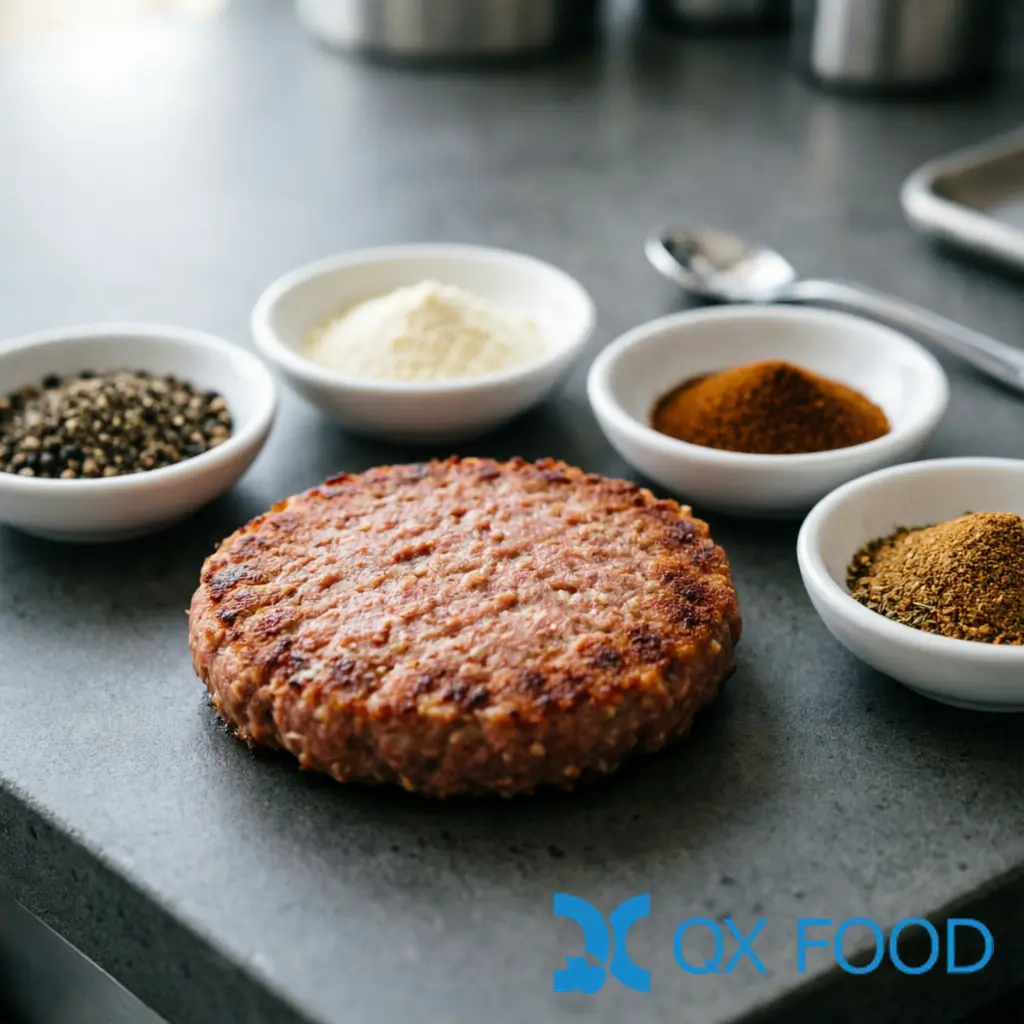
Plant Based Meat Flavor: Building Savory Systems for Meat Analogues
Plant based meat flavor is the technical frontier of a market valued at USD 20.4 billion in 2025 and projected to reach USD 111.7 billion by 2034 (IMARC Group, 2025), with the vegan meat segment growing at 14.55% CAGR through 2031 (Mordor Intelligence, 2025). For plant-based meat producers, flavor is the make-or-break function: the protein base contributes off-notes, the fat system contributes mouthfeel, and the savory layer must deliver the meat-like character that drives repeat purchase. This guide covers plant based meat flavor architecture — off-note masking, umami construction, Maillard-driven process flavor and the spice systems that finish the profile — for production-scale meat analogue lines.
Three Flavor Problems in Every Meat Analogue
Plant based meat flavor development starts by naming the three problems every analogue faces:
- Off-note masking — pea, soy and rice proteins carry beany, grassy and chalky notes that surface in the finished product. Masking is the first job of the flavor system, before any meat character is added.
- Umami construction — meat’s savory depth comes from glutamates, nucleotides and Maillard products; the analogue must rebuild this from plant-derived sources.
- Meat character delivery — the roasted, cooked-meat aroma that consumers recognize; this is the hardest layer and the one that separates premium plant based meat flavor systems from commodity blends.
A review of ingredients used in plant-based meat analogue production confirms that flavorings — spices, herbs, yeast extract, paprika and sugar — are standard components of the formula alongside the protein, fat and binder systems (PMC Foods, 2023). The ingredient overview for plant-based meat analogues is a useful reference when structuring the flavor brief.
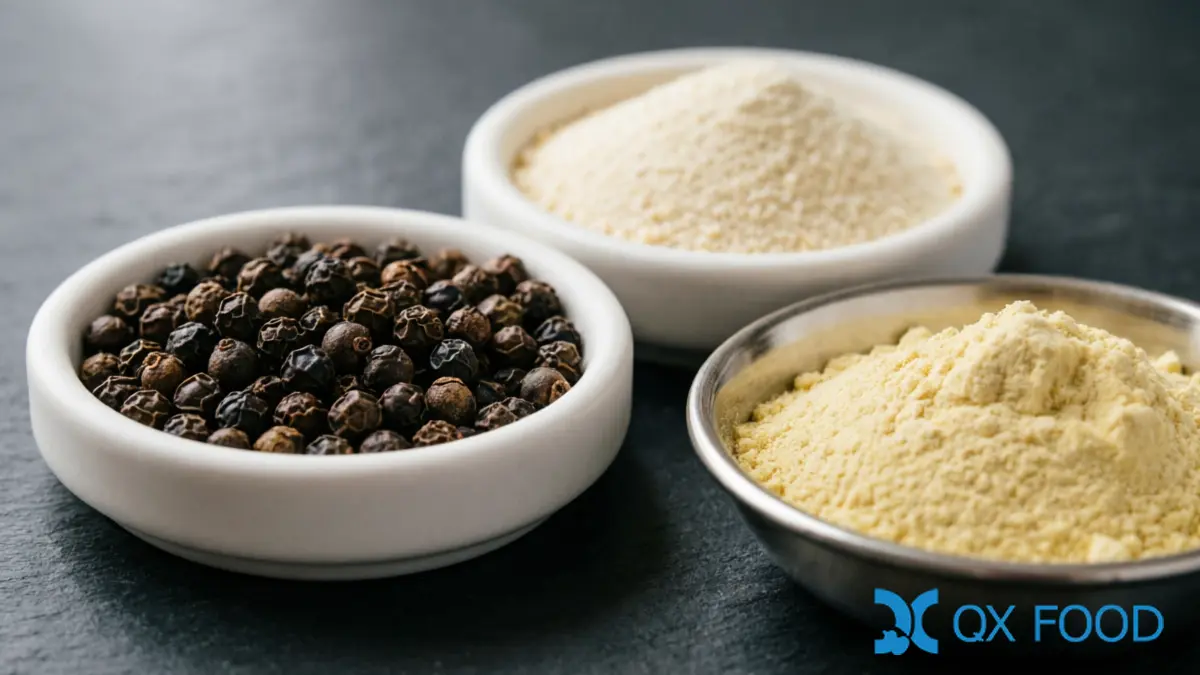
Layer One: Masking the Protein Base
The protein base determines the masking load. Pea protein is the most common base and the most challenging: its beany, grassy notes need active suppression rather than simple flavor overlay. The practical toolkit:
- Smoke and roasted notes — small inclusions of roasted savory components shift perception away from raw protein character.
- Spice warmth — black pepper BPP-K45 and garlic GP-W04 at functional levels distract from beany notes while contributing to the savory profile.
- Maillard precursors — reducing sugars plus amino acids (from HVP or yeast extract) that generate roasted character during cooking, shifting the flavor frame from “raw protein” to “cooked food”.
Masking is evaluated in the finished, cooked product — an off-note that is invisible in the raw mix can dominate after heating, and vice versa.
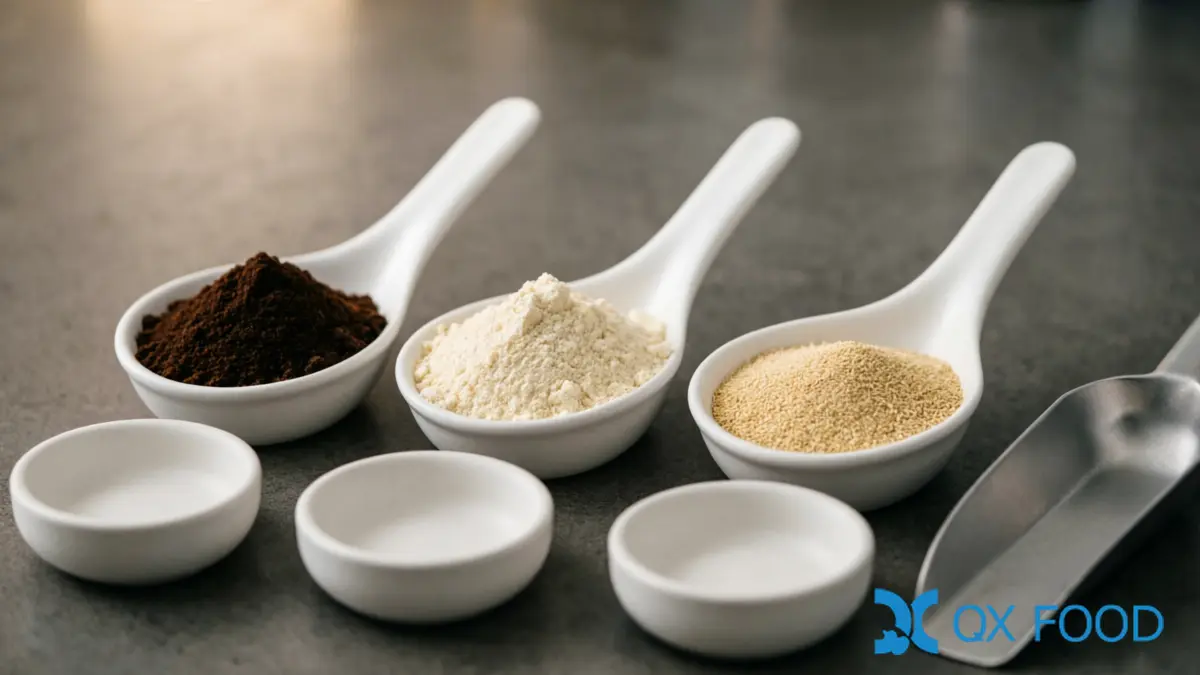
Layer Two: Umami from Plant-Derived Sources
Umami in plant based meat flavor comes from the same chemistry as conventional seasoning, but sourced from plants:
| Umami Source | Character | Role in Meat Analogue |
|---|---|---|
| Brewed soy sauce powder | Fermented, cooked-soy depth | Soy sauce powder FSP-BH supplies dark savory backbone in Asian-style analogues |
| HVP (plant) | Roasted, meaty, brothy | Corn and soy HVP deliver the roast character closest to cooked meat |
| Yeast extract | Brothy roundness, natural nucleotides | Adds mouthfeel and contributes to the IMP/GMP umami synergy pool |
| I+G | Synergy amplifier | Small inclusion multiplies perceived umami 5-8x against the glutamate sources |
The flavor industry’s standard is to combine at least two glutamate sources with a nucleotide amplifier; single-source umami bases read as flat in plant based meat flavor systems. Yeast extract specifically is described by industry sources as a key source of umami in plant-based meat (Angelyeast, 2025).
HVP’s masking and umami roles in analogues are detailed in our HVP for plant-based products guide.
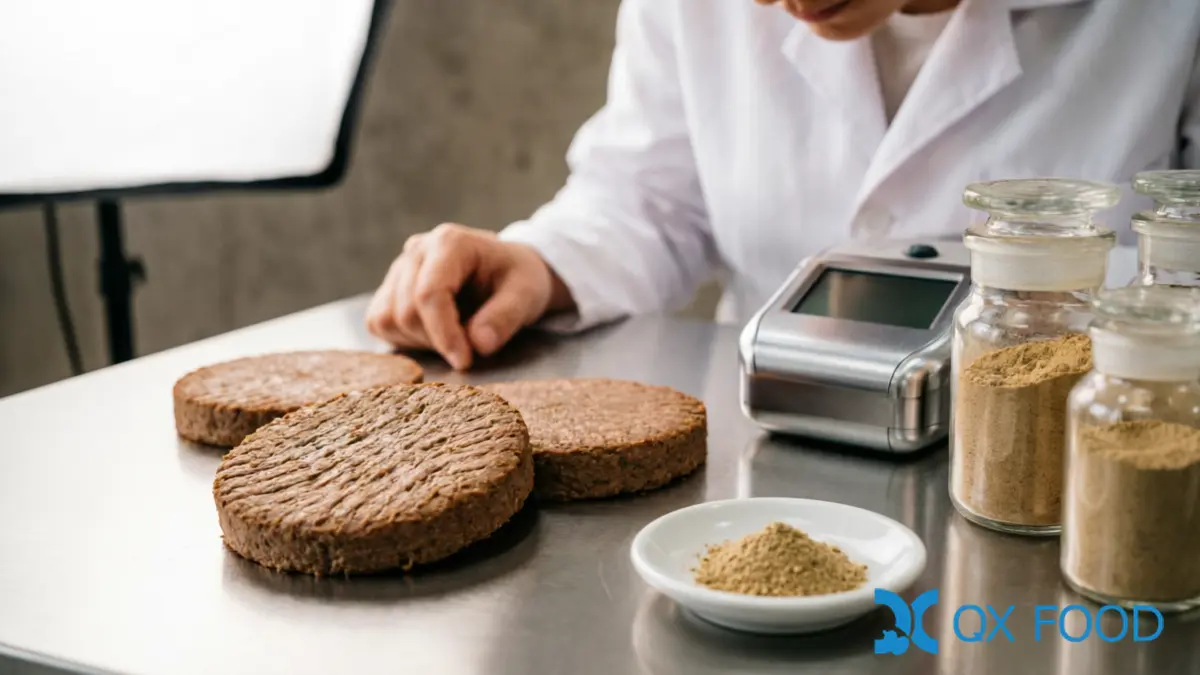
Layer Three: Maillard and Process Flavor
The cooked-meat character that defines premium analogues comes largely from Maillard reaction products — the same chemistry that creates roast aroma in cooked meat. Plant based meat flavor systems use three routes:
- Process flavor generation — reacting reducing sugars with amino acids from HVP or yeast extract under controlled heat to generate meat-like aroma compounds before formulation.
- Cook-in-product precursors — adding precursor systems to the formula that generate Maillard character when the consumer cooks the product; the crust and roast notes develop in the pan.
- Flavor delivery via fat systems — carrying lipophilic aroma compounds in the fat phase so they release during cooking like animal fat does.
The Maillard reaction in plant-based proteins is documented as a key route for savory flavor innovation despite the challenges of the protein matrix (Trilogy Flavors, 2025). The Maillard reaction overview for plant proteins explains the chemistry behind this layer.
Layer Four: Spice Systems That Finish the Profile
Spices do the final shaping of plant based meat flavor — they carry the cuisine identity and cover the residual gaps of the synthetic layers:
- Pepper systems — black pepper BPP-K45 for universal savory punch, white pepper WPP-K44 for clean heat without specks in light-colored analogues.
- Alliums — garlic GP-W04 and ginger DGR-27 carry the savory base of most global meat profiles.
- Braised and roasted families — star anise STA-23, cassia CP-B04 and clove CLO-D11 for Asian-style analogues with braised or five-spice identity.
- Color contributors — paprika and chili systems contribute the cooked color that consumers associate with meat doneness.
The spice layer also solves a labeling problem: spices are clean-label, plant-derived and declaration-friendly, which makes them the preferred carrier of cuisine identity in plant based meat flavor systems.
Process Considerations for Production
Plant based meat flavor systems face the same production realities as conventional savory systems, plus two extras:
- Heat tolerance — analogues are cooked by the consumer (pan, oven, grill), so the flavor system must survive high surface temperatures; volatile top notes need protection or over-formulation.
- Protein-flavor interaction — flavor compounds bind differently to plant proteins than to meat; dosage must be validated in the actual protein matrix, not in water.
- Batch verification — moisture, volatile oil and mesh on every spice lot, plus a locked reference sample for the finished flavor blend.
QXFOOD’s plant based meat flavor ingredient set — black pepper BPP-K45, white pepper WPP-K44, garlic GP-W04, ginger DGR-27, soy sauce powder FSP-BH, star anise STA-23, cassia CP-B04, clove CLO-D11 and fennel FP-B01 — ships with per-lot COAs, ISO9001, ISO22000, HACCP and HALAL certification, and 1 kg samples for matrix trials.
For the full category view, visit the Fermented & Brewed Powders category page.
Request plant based meat flavor samples through the contact form on this page and our application team will support your matrix trials.
The umami layer described here is built in practice in our umami base formulation guide, and the spice layer doubles as the base for seasoned nut and bakery snack coatings.
Frequently Asked Questions
What are the biggest flavor challenges in plant-based meat?
Three: off-note masking (beany, grassy notes from pea and soy protein), umami construction from plant sources, and delivering the roasted cooked-meat character consumers recognize. The flavor system must solve all three in the finished, cooked product.
How do you mask pea protein off-notes?
Use smoke and roasted notes, functional spice levels (black pepper, garlic), and Maillard precursors that generate cooked character during heating. Evaluate masking in the cooked product — off-notes behave differently before and after cooking.
What is the best umami base for plant-based meat?
Combine at least two plant-derived glutamate sources — brewed soy sauce powder and HVP — with a nucleotide amplifier (I+G or nucleotide-rich yeast extract). Single-source bases read as flat; the synergy between sources carries the savory depth.
How does Maillard reaction create meat flavor?
Reducing sugars react with amino acids under heat to generate roasted, meaty aroma compounds. Plant based meat flavor systems use this three ways: pre-generated process flavor, cook-in-product precursors, and fat-phase delivery of lipophilic aroma compounds.
What spices work in plant-based meat?
Pepper (black and white), garlic, ginger, star anise, cassia and clove cover most global profiles. Spices are clean-label and plant-derived, making them the preferred carrier of cuisine identity — and they double as off-note maskers.
How is plant-based meat flavor different from conventional seasoning?
The chemistry is similar, but flavor compounds bind differently to plant proteins than to meat, and analogues face higher consumer cooking temperatures. Dosage must be validated in the actual protein matrix, and volatile top notes need protection or over-formulation.
What should I check on a plant-based meat flavor COA?
Moisture, volatile oil and mesh for spices; nitrogen and salt for soy sauce powder; microbiology for all. Plus a locked reference sample of the finished flavor blend for batch-to-batch verification.