
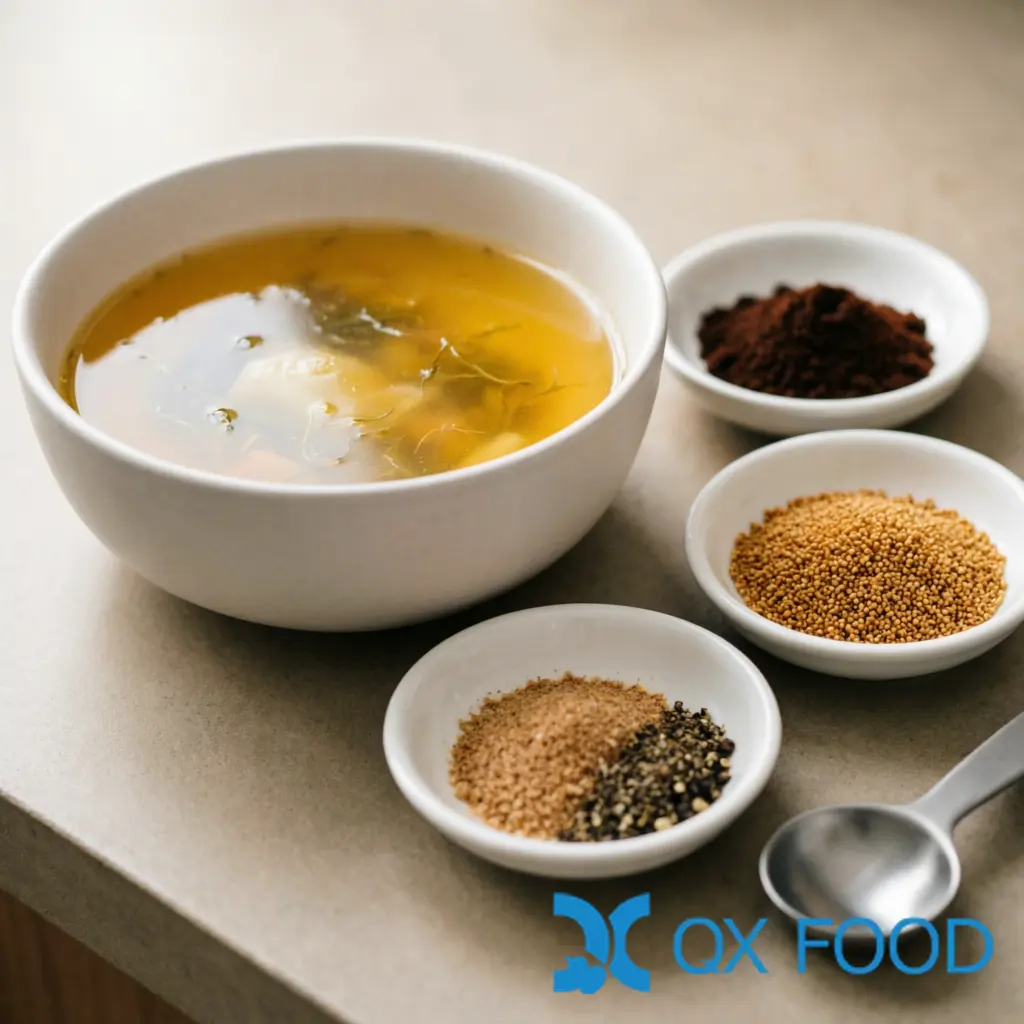
Plant Based Soup and Sauce Umami: Selecting the Right Flavor Base
Plant based soup and sauce production sits inside a global plant based food market valued at USD 238.25 billion in 2025 and projected to reach USD 491.24 billion by 2034 at 8.5% CAGR (Fortune Business Insights, 2025), with US retail plant-based sales at USD 7.9 billion in 2025 (Plant Based Foods Association). While meat analogues dominate the headlines, plant based soup and sauce lines are where most manufacturers actually start — broths, cooking sauces, ready soups and foodservice bases. The bottleneck is always the same: building a clean-label umami base that survives production, retort and shelf life. This guide covers the ingredient selection logic for plant based soup and sauce umami systems — the sources, the synergy math and the specification decisions that separate a flat broth from a repeatable product.
Why Plant Based Soup and Sauce Flavor Fails
Plant based soup and sauce formulas fail in three predictable ways, and each points to a specific ingredient decision:
- Flat, watery umami — a single glutamate source (mushroom powder alone, or yeast extract alone) cannot carry a broth; the palate adapts and the flavor reads as thin.
- Off-notes from the base — vegetable stocks built from onion, celery and carrot bring sulfur and earthy notes that surface after retort, especially in long-shelf-life products.
- Thin mouthfeel — animal broths carry gelatinous body; plant based soup and sauce systems need a body strategy (starches, gums, fiber) that the flavor layer cannot compensate for.
The most common root cause is treating umami as one ingredient instead of a system. The industry standard is a layered base, and the layering logic is the same one used in conventional seasoning — just restricted to plant-derived sources.
The Plant Based Soup Umami Toolkit
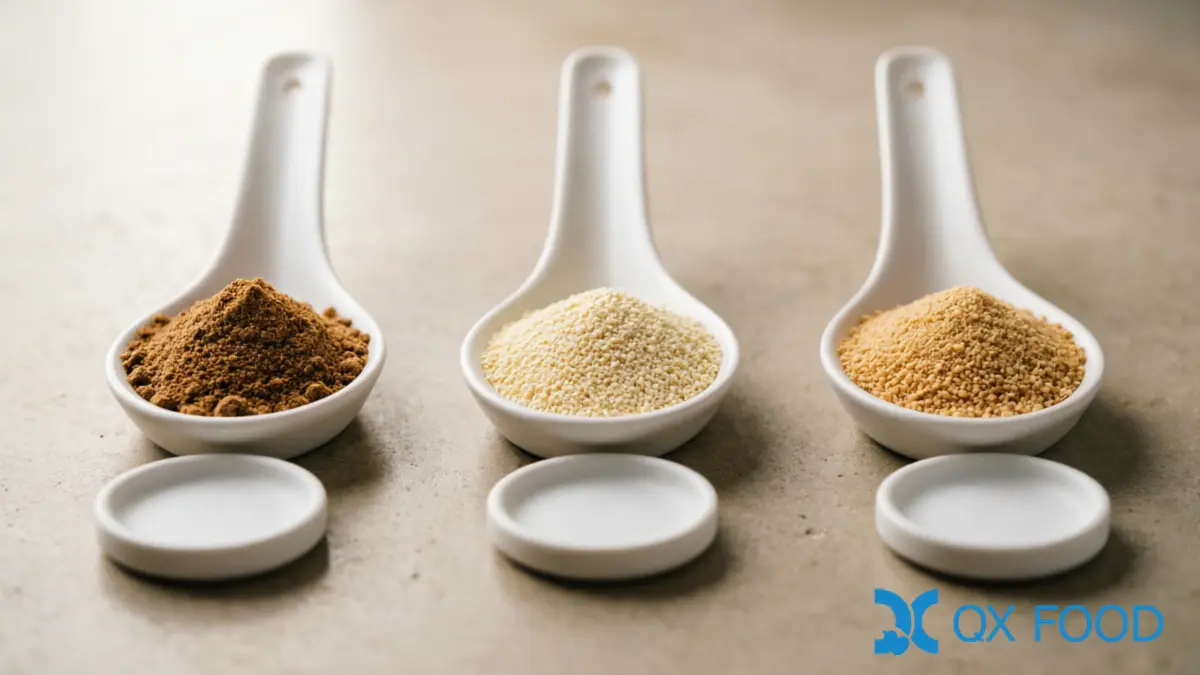
Plant based soup and sauce umami comes from five source families, each with a distinct character:
| Source | Character | Best Role in Plant Based Soup and Sauce |
|---|---|---|
| Brewed soy sauce powder | Fermented, cooked-soy depth, dark savory | Asian broths, braised sauces, ramen bases — brewed soy sauce powder FSP-BH |
| Yeast extract | Brothy roundness, natural nucleotide load | Universal base layer; the mouthfeel carrier of the umami system |
| HVP (plant) | Roasted, meaty, brothy | Roasted vegetable and “chicken-style” broths; the closest plant-derived roast character |
| Mushroom and tomato powders | Earthy-sweet glutamate, color contribution | European-style broths and pasta sauces; natural color bonus |
| I+G / nucleotide amplifiers | Synergy multiplier | Small inclusion (0.05-0.15%) that multiplies perceived umami 5-8x |
The synergy mechanism is the same chemistry documented in every umami reference: glutamates from one source combine with nucleotides from another to produce a perceived intensity far above either alone (Yamaguchi, 1967). A practical formulation reference for sodium-reduced vegetable broth recommends replacing 30% of added salt with a yeast extract and HVP combination (Herbal Isolates, 2025) — the yeast extract umami reference walks through the ratios.
Layering the Base: A Selection Sequence
Selecting ingredients for plant based soup and sauce umami follows a fixed sequence, because each layer changes what the next layer should be:
- Pick the cuisine frame — Asian broths start from soy sauce powder FSP-BH; European broths start from yeast extract plus vegetable powders; roasted profiles start from HVP.
- Add the nucleotide amplifier — yeast extract or I+G that turns the glutamate layer into a synergy system.
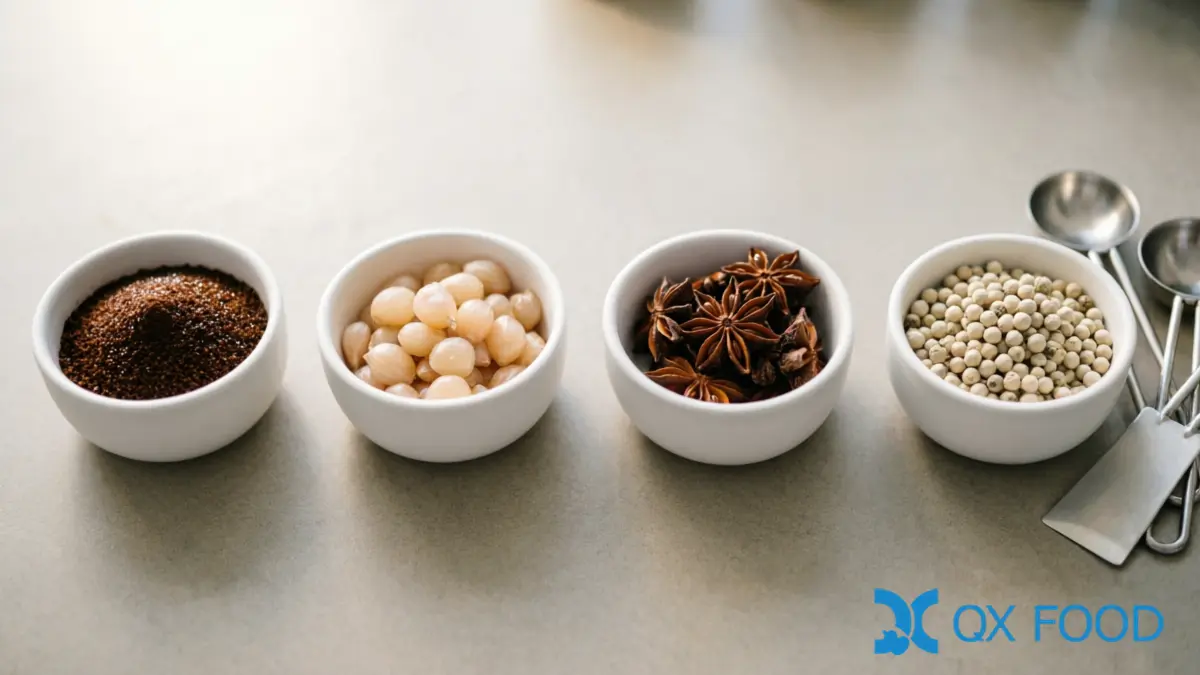
- Build the savory structure — garlic GP-W04, ginger DGR-27 and black pepper BPP-K45 add the cooked-savory notes that anchor the broth.
- Layer the signature spices — star anise STA-23, cassia CP-B04, clove CLO-D11 or fennel FP-B01 for identity; these also mask vegetable-base off-notes.
- Balance with heat and brightness — white pepper WPP-K44 for clean heat, plus acid or a touch of sweetness to round the profile.
Each step has a spec consequence. The umami sources need nitrogen or glutamate documentation, the spices need volatile oil values, and every layer needs moisture and microbiology numbers — the same COA discipline as any savory system.
Clean Label and the Declaration Question
Plant based soup and sauce buyers increasingly demand clean labels, and this changes ingredient selection:
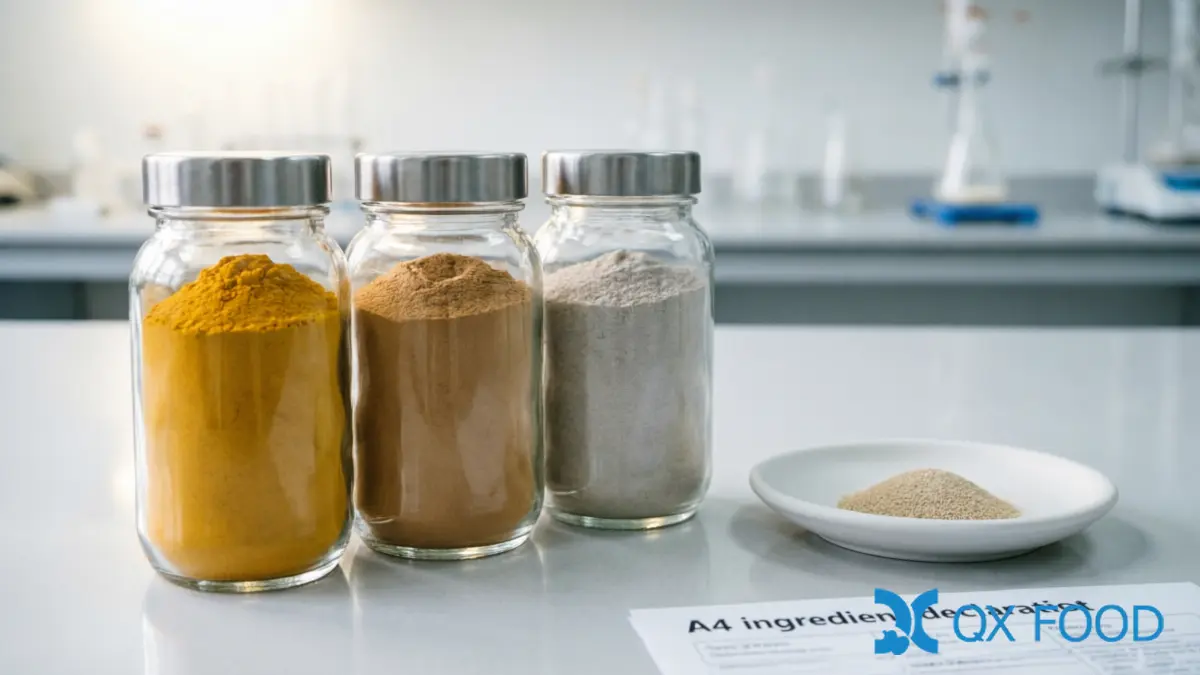
- Yeast extract and HVP are declaration-friendly — both are plant-derived and label as “yeast extract” or “hydrolyzed vegetable protein” without E-numbers.
- I+G is the exception — disodium inosinate/guanylate carries an E-number and triggers “flavor enhancer” labeling in many markets; some brands drop it and rely on nucleotide-rich yeast extract instead.
- Spices are the cleanest flavor layer — whole and ground spices label as “spices”, making them the preferred identity carrier in clean-label plant based soup and sauce formulas.
For the labeling treatment of dried spices and powders in plant-based products, the industry references on natural flavor declarations (USDA FSIS) and the flavorist training materials on yeast/HVP process flavors are useful benchmarks — the Flavorist training reference on yeast extract and HVP covers the process-flavor foundation.
Sourcing Decisions for Production
The ingredient selection for plant based soup and sauce umami ends with four sourcing decisions that determine production performance:
- Powder form over liquid — powders dose by weight, store at ambient, and survive retort without cold-chain handling; the same umami system in liquid form adds logistics cost and stability risk.
- Mesh specification — sauce systems need fine, free-flowing powders (80-120 mesh) for clump-free dispersion in the mixing tank.
- Heat tolerance data — retort cycles degrade volatiles; ask for thermal-test evidence on the spice components, not just the finished blend.
- Batch traceability — every lot linked to origin and processing dates, with COA parameters (nitrogen, volatile oil, moisture) that a QC lab can verify on arrival.
QXFOOD’s plant based soup and sauce umami set — soy sauce powder FSP-BH, garlic GP-W04, ginger DGR-27, black pepper BPP-K45, white pepper WPP-K44, star anise STA-23, cassia CP-B04, clove CLO-D11 and fennel FP-B01 — ships with per-lot COAs, ISO9001, ISO22000, HACCP and HALAL certification, and 1 kg samples for broth trials.
For the full category view, visit the Fermented & Brewed Powders category page.
Request plant based soup and sauce umami samples through the contact form on this page and our application team will support your broth development trials.
Frequently Asked Questions
What makes a plant based soup taste flat?
A single glutamate source cannot carry a broth — the palate adapts quickly. Flatness comes from using one umami ingredient instead of a layered system of glutamates plus a nucleotide amplifier.
What is the best umami base for vegan broth?
Combine a glutamate source (soy sauce powder or HVP) with a nucleotide-rich yeast extract. The two create the umami synergy that neither achieves alone; ratios start around 2:1 glutamate-to-nucleotide and are tuned by sensory testing.
Is yeast extract clean label?
Yes — yeast extract is plant-derived and labels simply as “yeast extract” in most markets. The exception is I+G (disodium inosinate/guanylate), which carries an E-number and may trigger flavor-enhancer labeling; nucleotide-rich yeast extract avoids that.
Can I use soy sauce powder in European-style plant based soups?
Yes at functional levels — 0.5-2% brewed soy sauce powder adds fermented depth that reads as “roasted vegetable” rather than “Asian” in European profiles. It is the most versatile single umami ingredient in plant based soup and sauce work.
Why do my plant based sauces taste earthy after retort?
Vegetable-base sulfur compounds surface under heat. Counter with spice warmth (garlic, ginger, pepper) and roasted HVP notes that shift the flavor frame, and validate in the finished retorted product, not the raw mix.
What COA parameters matter for plant based soup ingredients?
Nitrogen or glutamate documentation for umami sources, volatile oil for spices, moisture and mesh for all powders, and microbiology. Plus heat-tolerance evidence and batch traceability for production-grade sourcing.
How do I add mouthfeel to plant based soup without animal body?
Mouthfeel comes from the body system — starches, gums and fiber — not the flavor layer. Yeast extract contributes a small body lift, but plan a separate thickening strategy (tapioca starch, xanthan, inulin) sized to the target viscosity.