
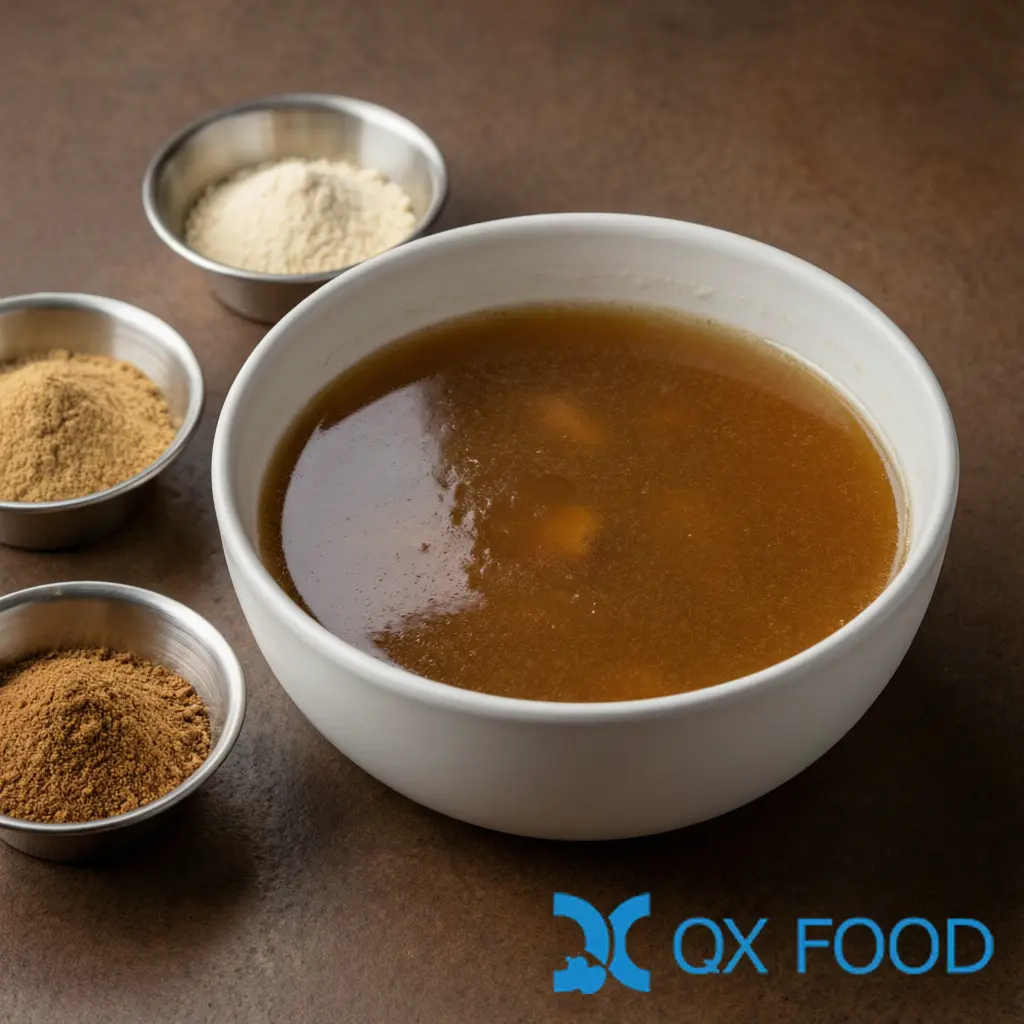
Choosing a meat flavor enhancer for a commercial soup base is not a matter of ranking HVP, yeast extract, thermal-process flavor, meat extract or nucleotides from best to worst. Each can contribute different functions depending on its composition and grade, and the relevant question is which combination closes the sensory and formulation gap in the prepared broth.
This guide compares these meat flavor enhancer ingredient categories by function, composition, process fit, labeling and cost-in-use, with validation based on the finished soup at its intended reconstitution or serving concentration.
Choosing Meat Flavor Enhancers Starts With the Finished Broth
A commercial soup base is a complete system: salt, fat, spices, allium, viscosity, dilution, preparation and thermal process all shape the final result together with the enhancer. The same enhancer blend that works in one broth can taste different in another because these surrounding variables change. The ingredient bag is not the final reference; the prepared broth is.
This is why selection starts by defining the finished-product target: the broth type, the serving or reconstitution concentration, the processing step the base will pass through, and the sensory, cost and label constraints of the destination market. Only then does the meat flavor enhancer question become meaningful: which ingredient or combination closes the gap between the current formula and that target.
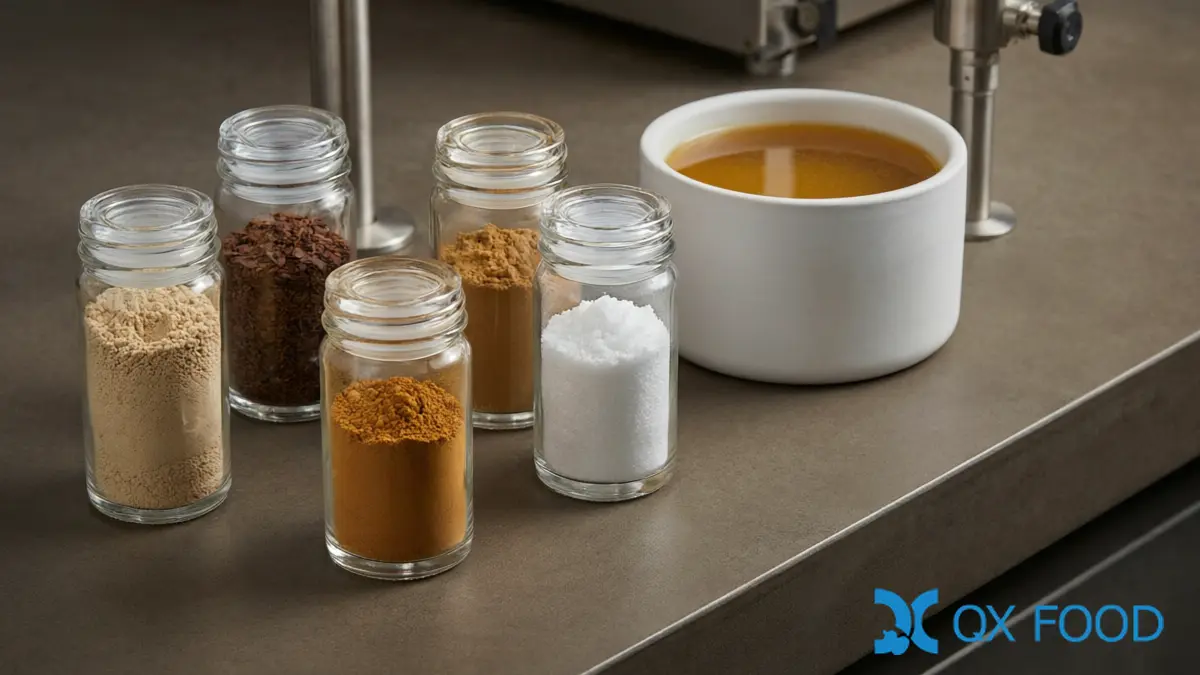
The Enhancer Categories Do Different Jobs, But Not Fixed Ones
Each enhancer category can contribute certain functions, but those contributions depend on the specific grade, composition and application. None of them should be assigned a permanent persona such as low-cost workhorse, roundness ingredient or authentic-meat replacement:
| Ingredient category | What may contribute | What must be checked |
|---|---|---|
| HVP | Free amino acids, peptides, savory character and salt depending on grade | Source, hydrolysis route, nitrogen data, salt, sensory profile, allergens |
| Yeast extract | Glutamate, peptides and/or nucleotides depending on grade | Composition, nucleotide profile where relevant, sensory result in broth |
| Thermal-process flavor | Heat-generated savory, roasted or meat-style notes | Source materials, flavor profile, label status, halal/allergen documentation |
| Meat extract / powder | Animal-derived meat character and solids | Species, composition, salt/fat, halal status where relevant |
| 5′-nucleotides / I+G | Synergistic enhancement of glutamate-related umami | Finished-food level, total savory system and destination-market rules |
Yeast extract illustrates why fixed personas fail: different yeast sources, processing routes and compositions produce clearly different sensory profiles. Research published in 2026 comparing industrial yeast extracts from five yeast sources found significant flavor differences between sources, and other work on beef broths found that viscosity and the surrounding tastants change how yeast extract contributes to flavor, mouthfeel and koku enhancement. Category-level shorthand cannot capture that variation.
Define the Sensory Gap Before Choosing an Ingredient
The practical way to use this guide is to describe the gap in the current base first. Two beef broth projects can need completely different answers: one may need a light-colored, low-sodium, meat-free base for a halal program at a target cost, while another may need actual beef, deep roasted character, rich body and a high-end foodservice profile. No fixed base-type formula can serve both.
| Development target | What to evaluate |
|---|---|
| Savory foundation | Compare actual HVP, yeast-derived or fermented candidates in finished broth |
| Roasted / cooked-meat direction | Evaluate selected thermal-process or meat-derived flavor against the reference |
| Umami amplification | Test nucleotide-containing ingredients with existing glutamate sources |
| Meat-derived identity | Verify actual meat extract/powder composition and species |
| Sodium reduction | Compare total sodium and sensory performance of the whole formula |
| Halal / label policy | Check complete ingredient and certification chain, not ingredient name alone |
| Cost reduction | Compare cost at equivalent prepared-broth performance |
HVP and Yeast Extract: Compare Actual Grades, Not Fixed Roles
HVP and yeast extract are the two most common savory foundations in soup bases, and both are frequently summarized as one flavor each: brothy depth for HVP, roundness for yeast extract. The real comparison runs at grade level. HVPs differ by protein source, hydrolysis route, salt content and nitrogen profile; yeast extracts differ in glutamate, peptide and nucleotide composition and in sensory character. Two products from the same category can differ from each other more than the category averages suggest.
HVP and yeast extract should not be compared through a universal ratio. Their relative levels depend on the selected grades, salt contribution, glutamate and nucleotide composition, target sensory profile and the rest of the formula. Start from the reference broth and adjust by sensory trials at the intended serving concentration.
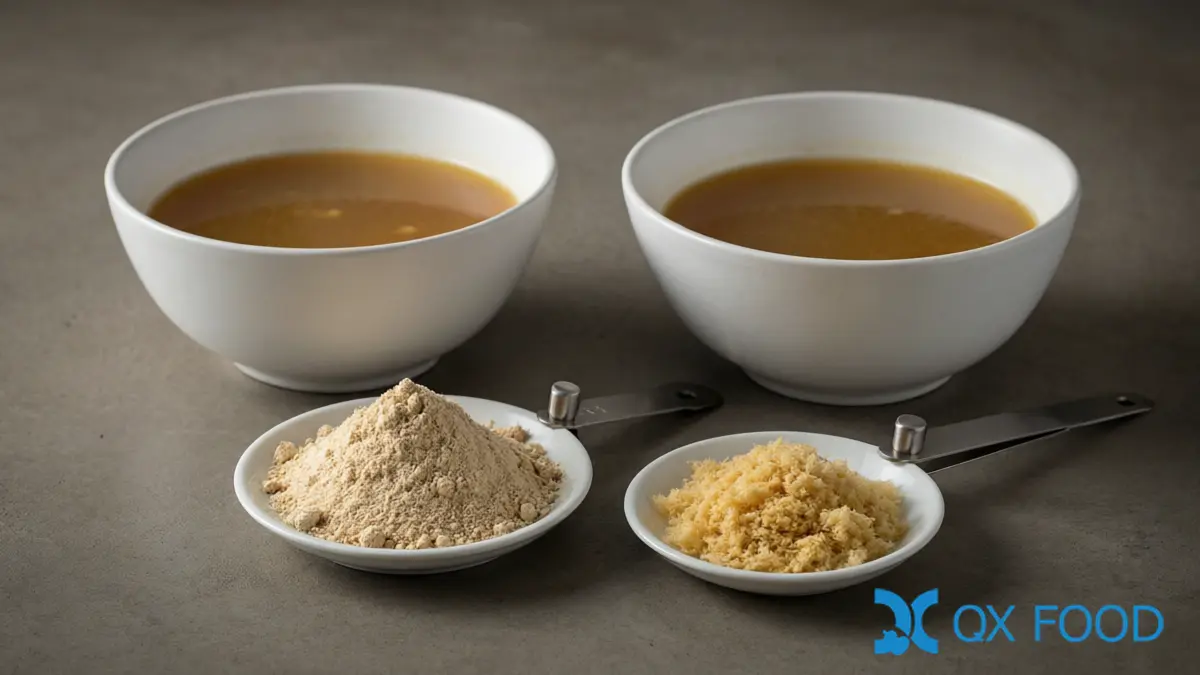
Sensory evaluation also has to run in the real matrix. A study of beef broths showed that viscosity and other tastants affect how yeast extract and related ingredients contribute to flavor, mouthfeel and koku, so an ingredient screened in water or a thin broth will not necessarily behave the same way in the final base.
Thermal-Process Flavors: Source and Process Matter
Under EU Regulation (EC) No 1334/2008, a thermal process flavouring is a product obtained after heat treatment of a mixture of ingredients not necessarily having flavouring properties themselves, of which at least one contains nitrogen (amino) and another is a reducing sugar. The production ingredients may be food, source material other than food, or both, and Annex V limits processing to defined temperature, time and pH conditions.
Two consequences follow for selection. First, the sensory direction of a thermal-process flavor depends on its precursor composition, reaction conditions and any additional flavor materials; it is not one fixed authentic-meat category, so candidates should be evaluated grade by grade against the reference. Second, the definition does not state that thermal-process flavors are meat-free or animal-free — that is a property of the specific product, not of the category.
Use level is product- and application-specific and should be established from the supplier specification and finished-broth trial rather than from a category-wide percentage.
Meat-Derived vs Meat-Free Flavor Systems
Some savory systems are built around animal-derived meat extract or meat powder; others use meat-free enhancer systems. The distinction must be verified per product: a flavor described as beef-style may contain beef, may be built from vegetable protein and reaction precursors, or may combine both, and the label result is different in each case.
A thermal-process flavor may be formulated without meat, but animal-free or pork-free status does not by itself establish halal compliance. Raw materials, processing aids, manufacturing controls and the applicable certification documentation must be verified for the selected product and market. Under JAKIM’s halal certification procedure for international manufacturing, for example, applicants must provide halal certificates or product specifications covering all raw materials and ingredients as well as processing aids, alongside the wider halal assurance documentation.
QXFOOD offers different beef-style flavor systems with different compositions and processing routes. The selected product’s ingredient source, process, allergen status and halal documentation should be reviewed individually rather than inferred from the flavor name — for example, the BFP-H25 natural beef flavor seasoning powder lists beef as its main raw material and contains a soybean-derived ingredient, while the BFP-H26 thermal-reaction beef flavored seasoning powder is a separate process-flavor system. See our halal seasoning guide for the full documentation discipline.
Nucleotide Synergy Depends on the Existing Umami System
5′-nucleotides are especially effective when used in systems that already contain glutamate because of their synergistic umami effect. The practical response therefore depends on the existing glutamate sources, nucleotide product, salt level and serving concentration, and should be established in the finished broth rather than from a fixed percentage.
Evaluate Cost in the Prepared Broth
Cost comparison should be made at the intended prepared-broth concentration, not by ingredient price per kilogram. Two enhancers with very different unit prices may require different use levels and may also change salt, flavor, color or the amount of supporting ingredients needed. Define the reference broth first, then compare total formulation cost only after each candidate reaches an acceptable finished sensory result.
This follows the same logic as concentrate-to-broth evaluation in our bouillon and stock cube guide: the economics are decided at the bowl, after reconstitution at the intended serving concentration, not on the ingredient price list.
Compliance: 3-MCPD, Allergens, Halal and Label Claims
3-MCPD in acid-hydrolyzed HVP
For acid-hydrolyzed HVP, 3-MCPD is an important process-contaminant control point. For EU-bound products, compliance should be checked against Regulation (EU) 2023/915, which sets a maximum level of 20 µg/kg for hydrolysed vegetable protein, expressed on the liquid product at 40% dry matter — corresponding to 50 µg/kg in dry matter, with proportional adjustment for other dry-matter levels. Testing frequency should follow the applicable regulation, the supplier’s control plan and buyer requirements rather than being presented as one universal per-batch rule. Our acid vs enzymatic HVP guide covers the process background.
Label claims and free glutamate
“Clean label” is a buyer-defined purchasing concept, not a universal regulatory category. Yeast extract may fit some buyer ingredient or label policies, but the fit has to be checked against the buyer’s own definition and the destination market’s rules. In the United States, foods containing yeast extract, HVP or autolyzed yeast cannot use “No MSG” or “No added MSG” claims, because these ingredients naturally contain free glutamate; the FDA states this directly in its MSG guidance.
Labeling and certification status therefore have to be verified from the actual product and finished formula, not inferred from the ingredient category. The relevant checks include allergen declaration, species and ingredient source, halal certification scope, and any destination-market claim rules.
What to Verify Before a Soup-Base Trial
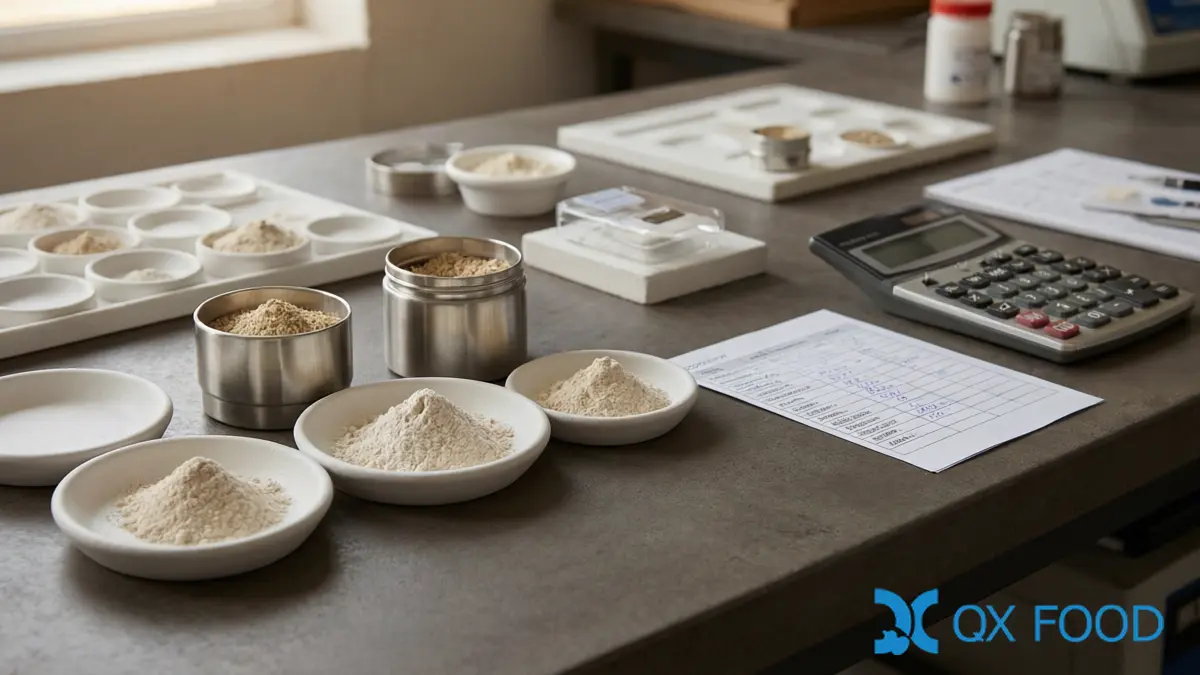
Before comparing candidates, collect the same documentation set for each product and separate what belongs in the specification or technical file from what appears on the batch COA:
- Ingredient composition and declaration.
- Product-specific sensory direction.
- Salt/sodium contribution.
- HVP nitrogen or other analytical parameters where controlled by the specification, without treating them as sensory scores.
- Relevant contaminant and allergen documentation.
- Halal documentation where required.
- Batch COA parameters for the selected SKU.
- Process or source information from the applicable technical specification rather than assuming it appears on the COA.
- Finished-broth application test.
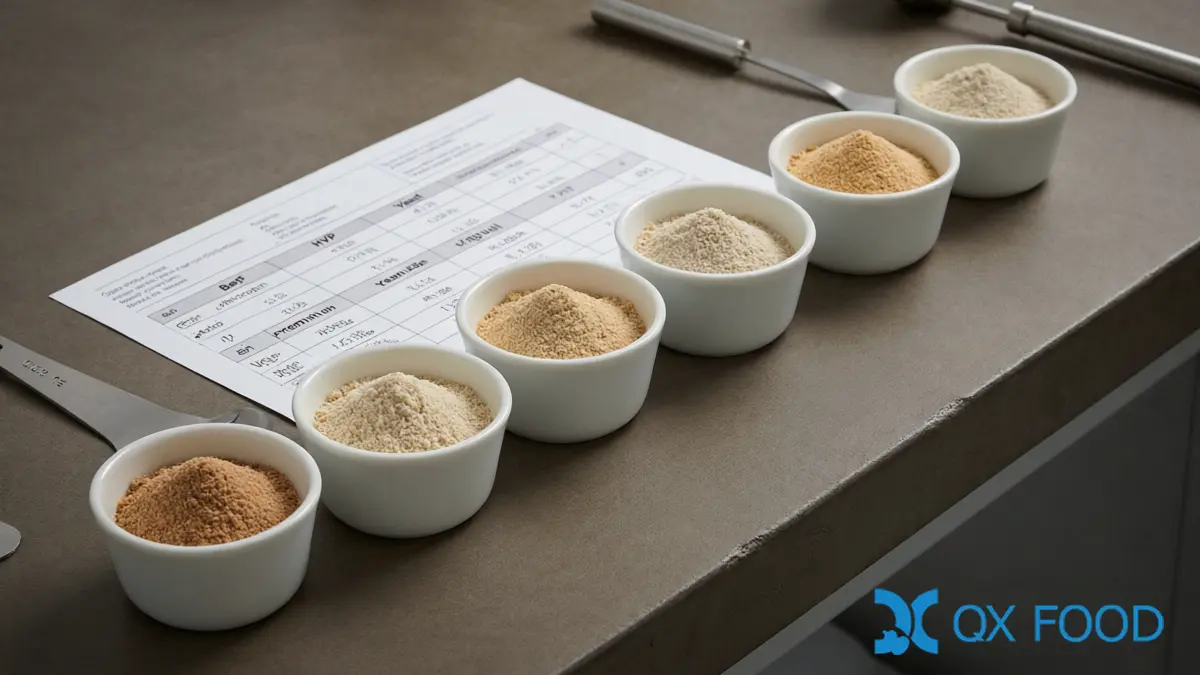
How QXFOOD Supports Soup-Base Development
QXFOOD supplies savory enhancer systems across the categories above: the HVP powder and liquid series (soy and corn based, with different nitrogen and salt specifications), the FSA standard soy HVP grade, and the BFP beef-style flavor systems described above. Which starting point fits depends on the reference broth and the gap you are closing, so the practical step is a comparative trial at your serving concentration.
QXFOOD supplies product-specific specifications and batch documentation for the selected HVP grade. The actual COA parameters, composition, process information and destination-market documents should be confirmed for the selected SKU and batch before formulation approval.
The same sourcing discipline is covered in our spice and ingredient procurement guide, and the layer-by-layer construction logic of savory systems in our umami base formulation guide.
Frequently Asked Questions
What is the best meat flavor enhancer for soup bases?
There is no universal best enhancer. Start from the prepared-broth reference and identify the gap: savory intensity, roasted/meaty character, persistence, sodium, label policy, cost or documentation. Then evaluate the ingredient or combination that addresses that specific gap.
What is the difference between HVP and yeast extract in soup bases?
Both are savory ingredients, but their composition and sensory behavior vary by grade. HVP can differ by protein source, hydrolysis route, salt and nitrogen profile; yeast extracts can differ in glutamate, peptides, nucleotides and sensory character. Compare actual grades in the finished broth rather than using a fixed ratio.
How do thermal-reaction flavors work?
Thermal-process flavors are produced by heating precursor systems containing an amino/nitrogen source and a reducing sugar, under defined time, temperature and pH conditions. The resulting sensory profile depends on the source materials and processing conditions. Meat-free, pork-free and halal status must be verified separately for the selected product.
Is HVP a meat flavor?
No — HVP is hydrolyzed vegetable protein. Its savory, brothy character makes it a functional building block in meat-style soup bases, and grade differences in source, salt and nitrogen specification matter for how it behaves in the finished broth.
How much I+G should I use in a soup base?
There is no universal percentage. I+G or other 5′-nucleotide systems should be evaluated together with the formula’s existing glutamate sources and at the intended serving concentration.
How should label-positioning requirements affect enhancer selection?
Start from the buyer’s own ingredient and claim policy and the destination-market rules. “Clean label” is not one universal legal standard, and yeast extract, HVP, fermented powders and flavors have different declaration requirements. Review the complete finished formula rather than classifying one enhancer category as automatically clean label.