
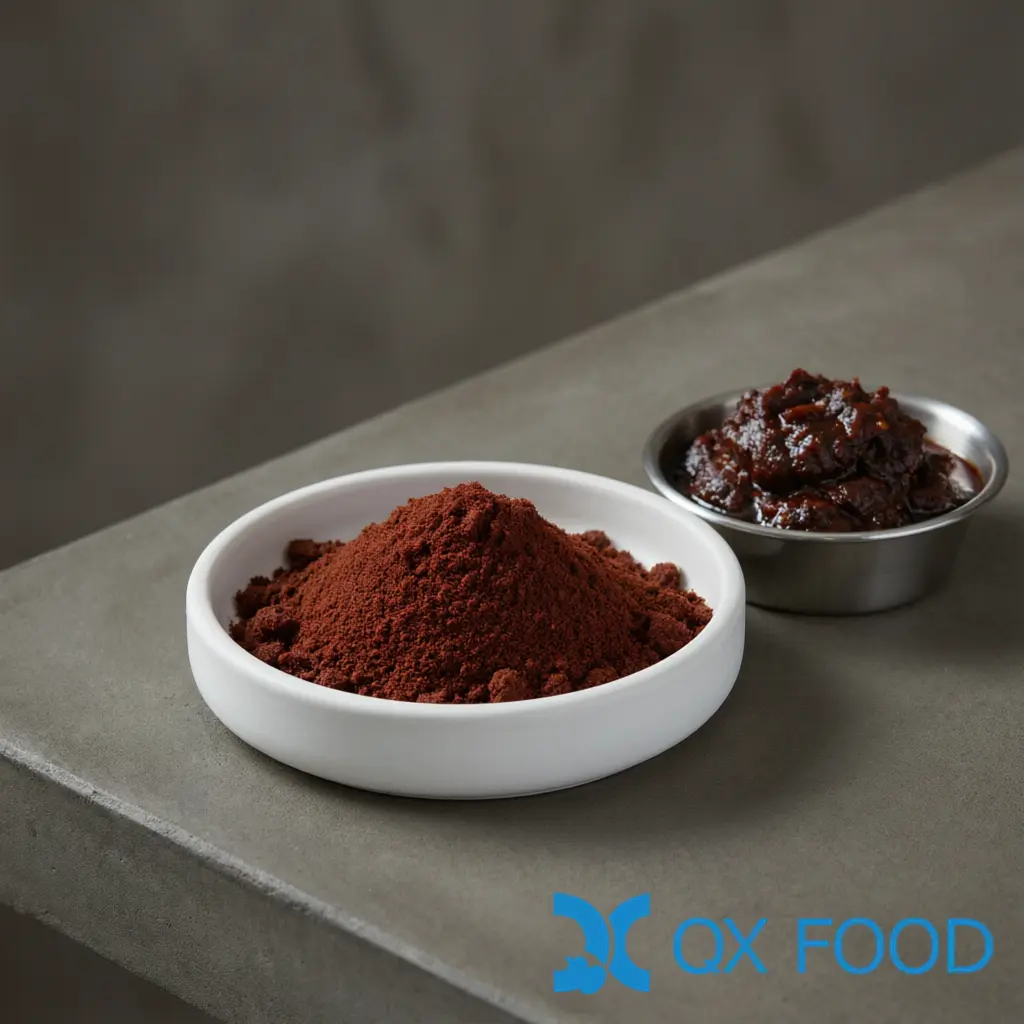
Fermented bean paste powder is not one ingredient specification. Industrial grades may be produced from soybean paste, doubanjiang, fermented black bean paste or other fermented bean systems, and their raw materials, salt, fermentation profile and drying formulation can differ substantially.
For food manufacturers, the first question is therefore not simply how much fermented bean paste powder to use, but which fermented paste the powder comes from and how that specific grade behaves after drying and in the finished product. This guide covers the product types, the application directions, the trial framework and the sourcing records that answer that question.
Fermented Paste Powder Is a Category, Not One Doubanjiang Product
Different fermented pastes produce different powders, and even within one paste type the fermentation profile and salt vary by producer and grade. The category map is a starting point for identifying what a powder actually is:
| Type | Fermented source | Typical direction |
|---|---|---|
| Soybean paste powder | Fermented soybean paste | Broad savory / sauce systems |
| Pixian doubanjiang powder | Fermented broad bean + chili paste | Sichuan / mapo / hotpot |
| Douchi powder | Fermented black soybean | Black-bean savory direction |
| Miso-derived powder | Miso | Japanese-style systems |
| Other fermented paste powders | Product-specific | Application-specific |
The wet-source identity matters because it sets the raw material, salt and fermentation character that the powder starts from. A doubanjiang powder and a soybean paste powder are not interchangeable starting points. The actual fermented source should be identifiable from the product specification and technical documentation, while the finished ingredient declaration should be checked against the applicable destination-market labeling rules.
Doubanjiang Is a Distinct Sichuan Fermented Paste
Pixian doubanjiang is a specific fermented paste from Sichuan: broad beans fermented with chili, salt and a defined production tradition. It is a protected geographical-indication product in China under GB/T 20560, which defines the production area, product characteristics and inspection requirements. Research on the formation of flavor in fermented broad bean paste identifies free amino acids, organic acids, umami peptides and volatile aroma components as the flavor materials built up during fermentation, and reviews of broad bean paste brewing describe how techniques and microbial communities shape the chemosensory result.
These characteristics define the wet feed, while drying determines how much of that profile is retained and how it is released from the powder. Where source identity matters, it belongs in the procurement evidence: the underlying paste, its production route and the applicable standard should be documented rather than inferred from taste.
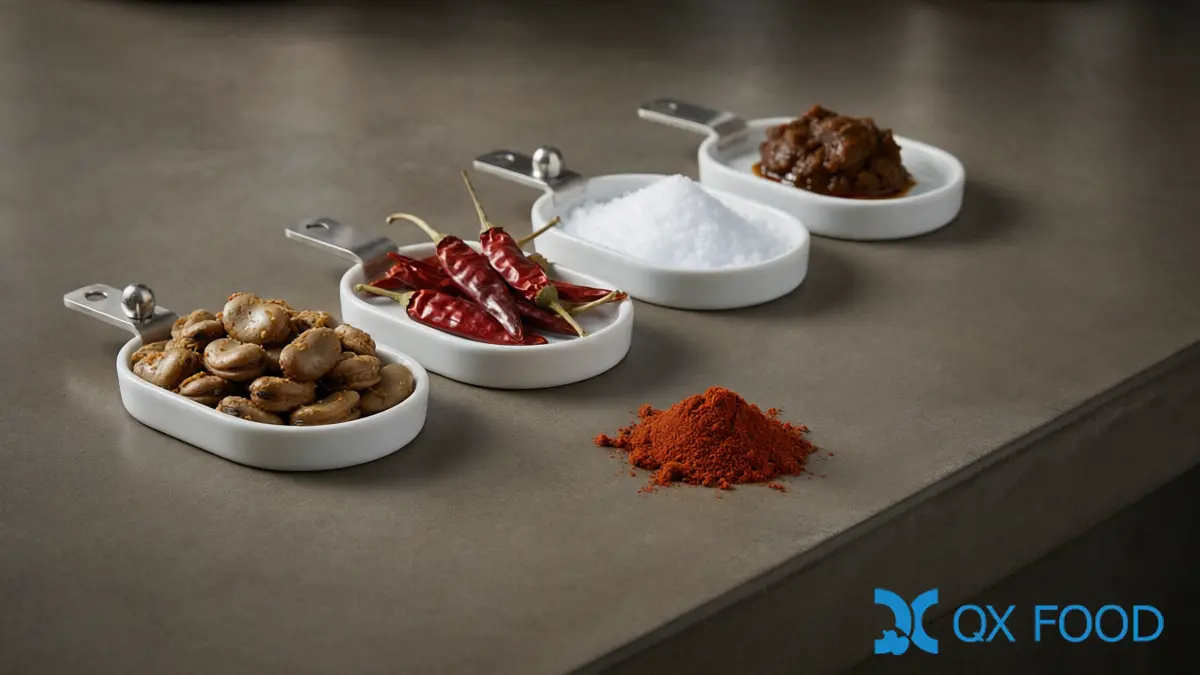
Fermentation Defines the Feed; Drying Creates a Second Quality Layer
The wet paste defines the starting flavor: fermented source, salt, solids and composition. The powder then adds a second layer of variables, because drying is not a neutral step. Carrier type and level, feed solids, drying conditions and downstream handling change aroma retention, flow, caking behavior, dispersion and release.
The same logic carries into the customer’s process. Fermentation defines the starting flavor profile, but drying and the customer’s downstream process create additional changes: frying, baking, retort heating or prolonged hot holding can alter aroma retention and release. Heat stability should therefore be validated with the selected grade in the actual process rather than inferred from the fermented origin of the ingredient.
There Is No Universal Wet-Paste-to-Powder Ratio
A fixed ratio such as one part powder to three or four parts wet paste assumes that the powder and the paste are constant, which they are not. Paste moisture, salt and composition vary, and powders differ in carrier content and solids. Conversion is a specification-based calculation:
- Define the wet paste reference — record moisture or solids, salt, ingredient composition, chili or pungency character where relevant, sensory and viscosity.
- Define the powder — fermented source, carrier, powder solids, salt and composition from the specification.
- Build the mass balance — match on the defined basis (salt contribution, paste solids or use level) rather than on a generic ratio.
- Restore water and body — adjust water, thickener or other formula elements for the finished product target.
- Validate — check flavor, salt, color, viscosity and dispersion in the actual product and process.
Application Map: Where Fermented Paste Powder Fits
The application value of fermented paste powder is real and broad: dry systems gain a fermented layer without wet-paste logistics, and wet systems gain a concentrated dosing form. What changes per application is what has to be validated:
| Application | Why powder may fit | What to validate |
|---|---|---|
| Instant noodles | Dry sachet integration | Prepared broth, salt, dispersion |
| Hotpot | Dry fermented flavor layer | Oil/water system, finished broth |
| Compound seasoning | Dry blending | Total savory system and sodium |
| Sauce mix | Reconstitution | Viscosity, color, dispersion |
| Snacks | Dry coating | Coating pickup, aroma after process |
| Marinades | Dry dosing | Adhesion and cooked sensory |
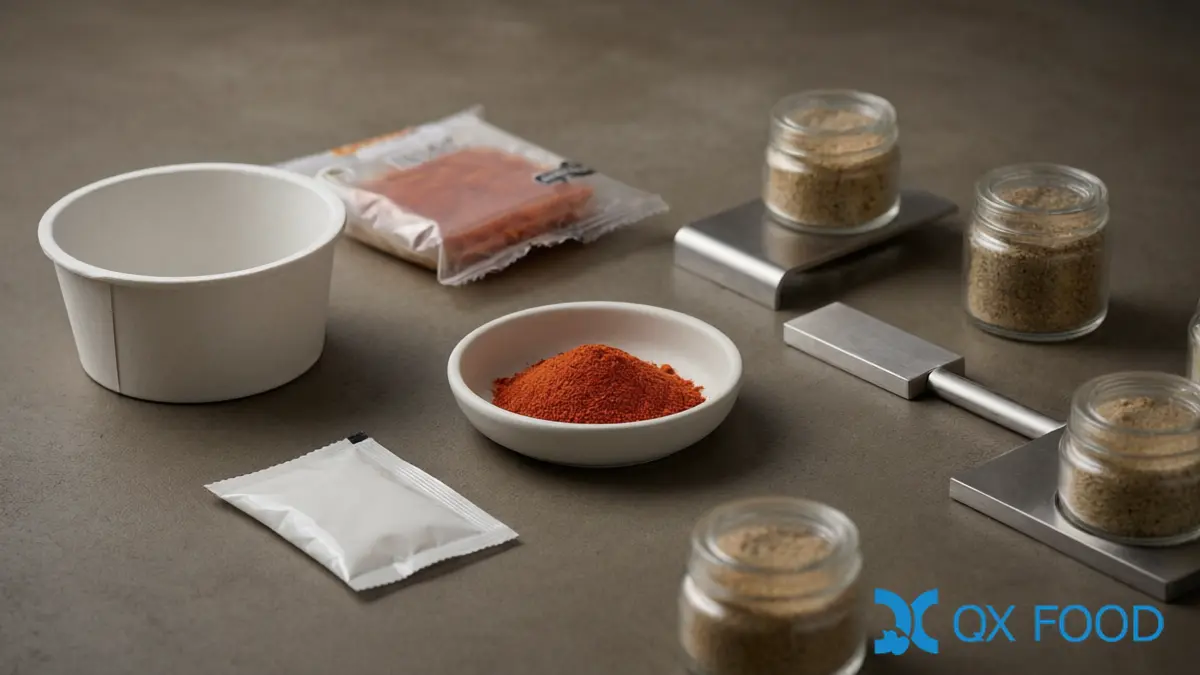
Building Sichuan Profiles: Typical Directions, Not Fixed Recipes
Mapo, mala hotpot, twice-cooked pork and dan dan noodle systems are the classic application directions for doubanjiang-derived powder, and they are commercially valuable profiles for industrial seasoning. Each is best treated as a starting flavor architecture rather than a fixed recipe: the fermented layer provides the base character, chili builds heat and red color, Sichuan pepper adds the numbing dimension, and the rest of the formula follows the manufacturer’s reference product.
The supporting spice systems for these directions are covered in our hot pot spice guide, with ingredients such as star anise, cassia and garlic powder completing the base.
Example Development Framework: Mapo-Style Dry Seasoning
A mapo-style dry seasoning is a useful worked example because it shows how a fermented layer integrates with the surrounding system. The framework below is deliberately given as layers and adjustment variables rather than percentages, because the actual amounts depend on the selected grade, the salt and carrier content of that grade, the chili system and the customer’s reference product:
| Layer | Candidate ingredients | What to adjust |
|---|---|---|
| Fermented base | SP-C doubanjiang powder | Fermented intensity, salt, color |
| Chili layer | Chili powder / chili seasoning | Heat and red color |
| Mala layer | Sichuan pepper | Numbing intensity and aroma |
| Allium | Garlic / onion | Cooked savory balance |
| Savory support | HVP / yeast-derived ingredient where needed | Umami and persistence |
| Texture | Starch / carrier depending on application | Sauce body after preparation |
| Salt / sugar / acid | Formula-specific | Overall balance |
Start from the manufacturer’s reference product rather than from a universal percentage. Adjust one layer at a time and evaluate after the complete preparation process.
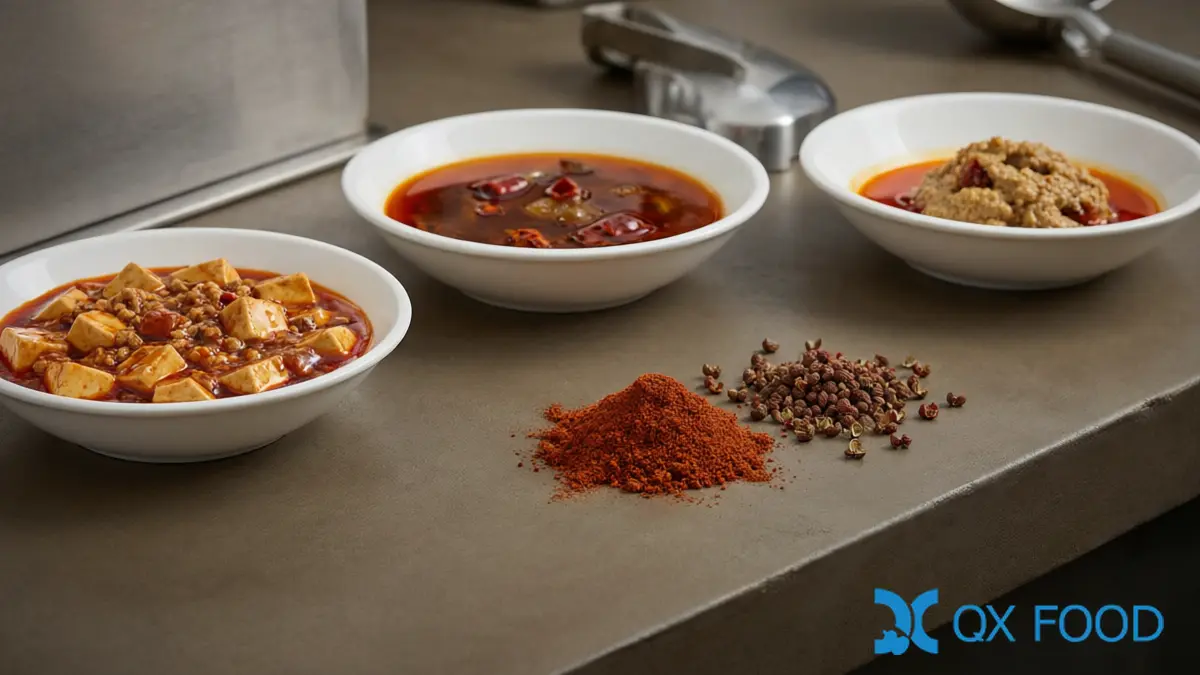
Different Fermented Pastes Are Not Interchangeable
Doubanjiang, douchi, miso and gochujang are different fermented systems with different raw materials, fermentation profiles, salt and sensory character. Swapping one for another in a formula changes the result, and buyers outside East Asia often receive these names as if they were interchangeable. They are not: each brings its own fermented identity.
What is possible is layering. A formula can combine a doubanjiang-derived layer with a douchi note or a miso-derived element where the target profile calls for it, but the combination is a design decision validated by tasting, not a substitution rule.
Moisture, Flow and Reconstitution
Three powder behaviors are often summarized into one storage rule, and they deserve separate treatment. Flow is controlled by the actual grade’s particle, moisture and carrier parameters. Caking risk is product-specific, and no single warehouse relative-humidity limit should be applied to every fermented paste powder — the moisture, water-activity, particle and flow parameters controlled for the selected grade should be reviewed together with its packaging and storage conditions, as covered in our powder caking guide.
Reconstitution is a third question: dispersion is not the same as full solubility. Many paste-derived powders retain insoluble plant solids from the underlying fermented material, so full dissolution should not be assumed. The practical requirement is appropriate dispersion and reconstitution behavior for the selected grade and application, checked for sediment, color and flavor release against the finished-product target.
Specification, COA and Technical Documentation
Three record types answer three questions. The technical documentation identifies the underlying fermented paste, process identity, ingredient composition, carrier and source information. The specification defines the controlled targets for the grade. The batch COA reports the measured parameters for the batch. Fermentation authenticity, aging periods or heat level should not be assumed to appear on the COA, and no universal COA template should be imposed on every grade.
Where a specific parameter matters to the formula, such as chili pungency or salt, it should be confirmed from the applicable specification and supporting documentation for the selected SKU.
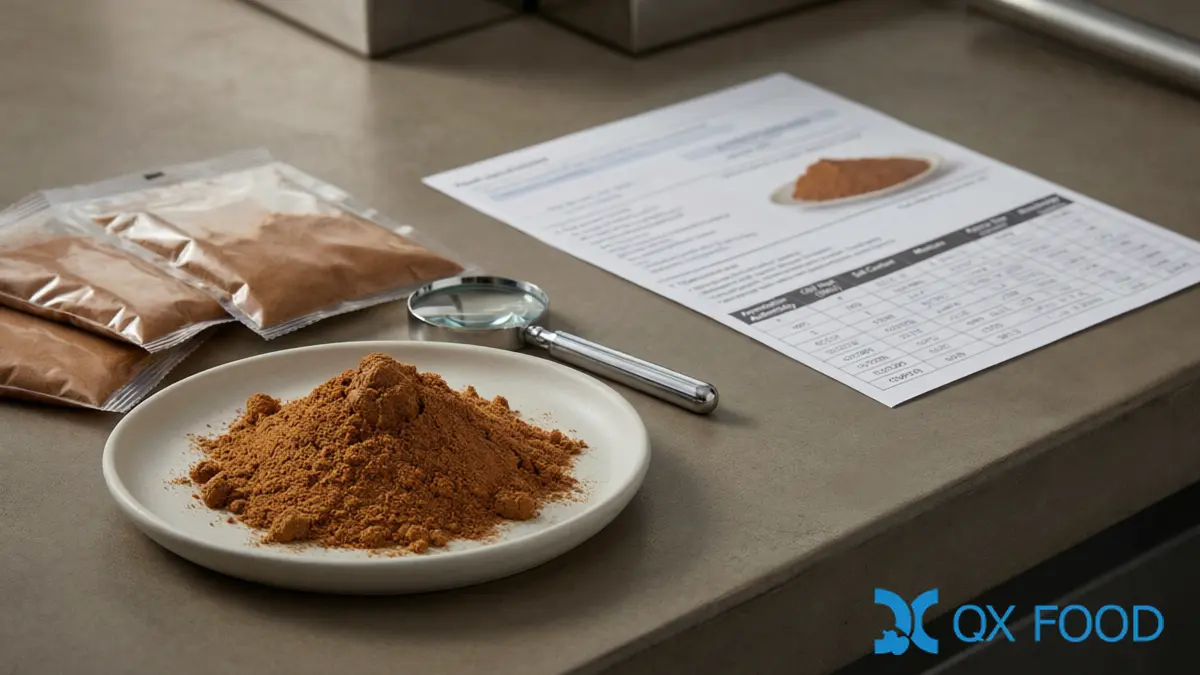
How QXFOOD Fermented Paste Grades Differ
QXFOOD’s fermented paste range covers different fermented sources rather than one doubanjiang product: bean paste powder SP-B is a soybean-paste-derived system, Pixian doubanjiang powder SP-C is the broad-bean-and-chili doubanjiang direction for Sichuan-style work, and Yongchuan douchi powder LSP-A is the fermented black-bean direction. Each grade should be reviewed for its declared source, composition, process route and specification rather than grouped under one label.
QXFOOD provides product-specific specifications and batch documentation for the selected fermented paste powder grade. The analytical parameters reported on the batch COA depend on the SKU and control plan, while source, process identity, ingredient composition and other supporting information should be confirmed from the applicable technical documentation.
The layering logic for savory powder systems is covered in our umami base formulation guide, and particle-size and application-locked specification choices in the formulation by application guide.
Frequently Asked Questions
Is every fermented bean paste powder doubanjiang?
No. The category includes powders from soybean paste, doubanjiang, fermented black bean paste, miso and other fermented systems. Confirm which fermented source the selected powder comes from before formulation.
Is there a standard wet-paste-to-powder conversion ratio?
No. Paste moisture, salt and composition vary, and powders differ in carrier and solids. Work from the paste reference and the powder specification: define the basis, build the mass balance, restore water and body, then validate flavor, salt, color, viscosity and dispersion in the finished product.
Can tasting prove that a powder uses genuine Pixian doubanjiang?
No. Sensory evaluation can screen character, but source identity should be confirmed from the underlying paste documentation, production route and applicable standards such as GB/T 20560.
Does drying preserve the wet paste exactly?
No. Drying formulation, carrier and conditions change aroma retention, release and powder behavior, and the customer’s downstream process changes the flavor again. Validate the selected grade under the actual process.
Does fermented paste powder fully dissolve in water?
Not necessarily. Many paste-derived powders retain insoluble plant solids from the underlying fermented material, so full dissolution should not be assumed. Evaluate dispersion, sediment and reconstitution behavior for the selected grade under the intended preparation conditions.
What should a buyer compare before approving a grade?
The declared fermented source and composition, the specification and technical documentation, the applicable batch COA, and an application trial in the finished product under the customer’s actual process.
Request a Comparative Fermented Paste Powder Trial Set
Tell us your target application, the current wet paste or reference product, the target flavor direction, the preparation method, and the required market or documentation. QXFOOD can then recommend the appropriate fermented paste powder grade for application testing.