

Seasoning formulation changes with the application not because the rules change, but because the matrix, delivery point, heat history and finished-product target change. The same spice can behave differently in a snack coating, a sausage emulsion, a baked dough and a beverage, and each of those systems changes what has to be tested, specified and validated. This guide maps seasoning formulation by application for snack, meat, bakery and beverage teams, and explains why the application defines the questions while the selected SKU defines the specification values.
Quick answer. Application determines what must be validated; it does not determine one universal mesh, dosage or spice form. Snack, meat, bakery and beverage systems differ in matrix, delivery mode, process exposure and finished-product acceptance criteria. Work from those four variables, screen the selected grade under actual or representative process conditions, and let product-specific data set the specification values.
Why Application Changes the Ingredient Question
Black pepper on a snack surface, in a retorted meat sauce and in a ready-to-drink beverage is the same botanical material facing three different physical situations. On the snack, the question is how the powder adheres and releases aroma at the first bite. In the retort, it is which volatiles survive the time and temperature history and what supporting savory components close the gap. In the beverage, it is whether the particles disperse, suspend or sediment, and how the system feels in the mouth. The same spice can behave differently across applications because the matrix, delivery point, heat history, particle requirements and finished-product target change. Application therefore determines what must be tested, not a universal particle size or processing rule.
Four Variables That Change Across Applications
- Matrix. A dry coating, an emulsified meat system, a dough and a liquid beverage hold, release and mask flavor very differently.
- Delivery mode. Surface dusting, in-matrix addition, filling and dissolved or dispersed phases each set their own handling and particle requirements.
- Process exposure. Frying, retorting, baking and hot-filling apply different heat and shear histories, and packaging adds its own storage conditions.
- Finished-product target. Coverage and adhesion, texture and color, aroma retention and mouthfeel are different acceptance languages for the same purchase.
Seasoning formulation for a new project starts by writing these four variables down for the specific product, because they decide which tests and which evidence will matter later.
Snack: Coating and Surface Delivery
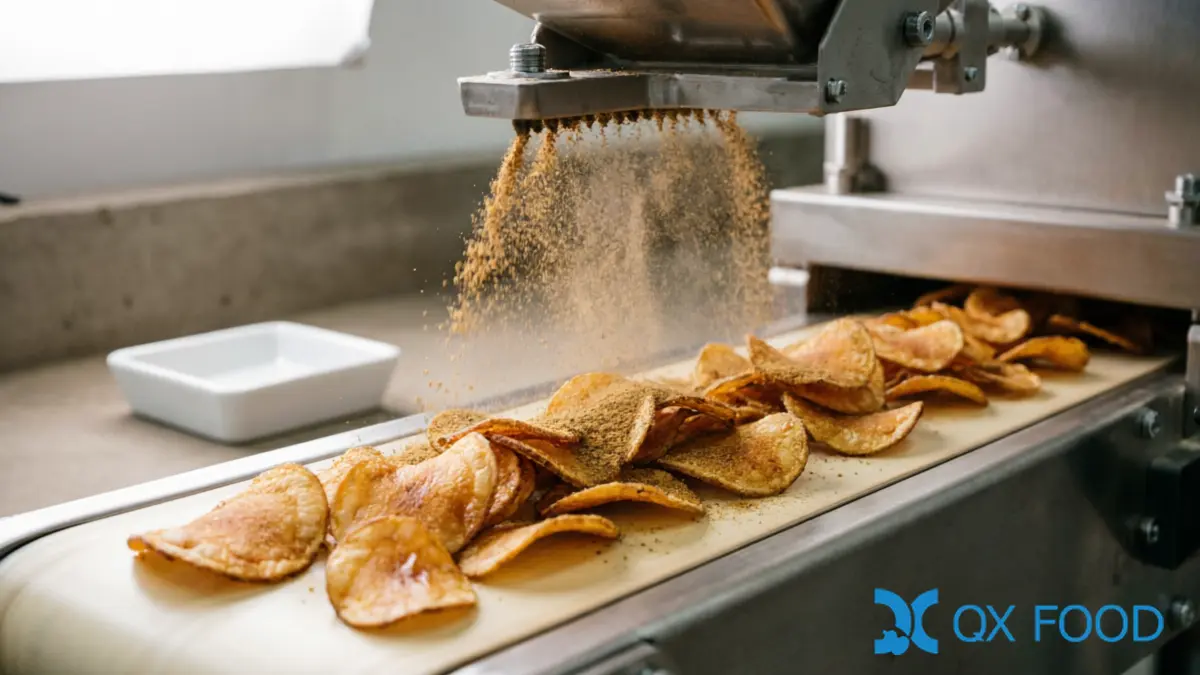
Snack seasoning formulation prioritizes how the powder meets the surface: adhesion, transfer efficiency, coverage and first-bite delivery. Particle size and distribution should be matched to the coating system and the target appearance. Finer particles may improve surface coverage in some systems, while coarser or visible particles may be intentional in others. Validate coating uniformity, transfer efficiency, segregation and sensory delivery under the actual or representative line conditions rather than assuming one mesh range fits every snack line.
The blend architecture may use carriers, salt, sugars, flavor ingredients and visible spice fractions depending on the coating method and sensory target; their ratios and order of addition should be established through application trials rather than a fixed two-layer model. Where color is a controlled attribute, use an appropriate ingredient or finished-product color specification and verify the result in the coated snack. ASTA color may be relevant for selected paprika or chili grades, but it is not a universal color specification for every seasoning system. The coating mechanics behind these choices are covered in our snack seasoning application guide.
Meat: Matrix, Processing and Sensory Integration
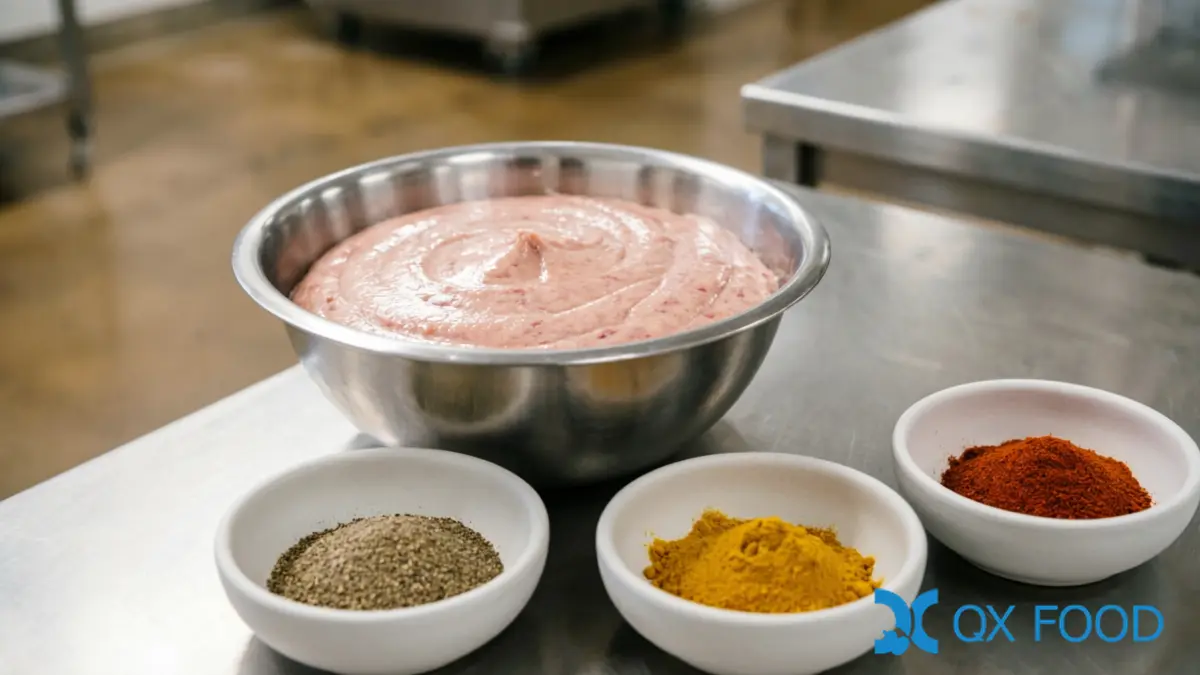
Meat systems add functional expectations that other categories rarely carry, but those expectations depend on the ingredient form, concentration, meat matrix and storage conditions. Some spice-derived compounds have demonstrated antioxidant or antimicrobial effects in specific meat systems; a 2025 systematic review of clove essential oil in meat and meat products found the effect heavily dependent on application form and dose, with direct comparison between studies limited by methodology differences and sensory penalties at higher levels. Do not treat a spice-powder volatile-oil specification as proof of preservative performance: shelf-life or oxidation-control claims require validation in the finished product.
Particle characteristics should fit the product structure and desired appearance. Fine powders may be preferred where visible particles or mouthfeel are undesirable, while other products intentionally retain visible spice particles. Validate the selected grade in the actual chopping, mixing, stuffing and thermal process rather than assigning one universal “emulsion-safe” mesh. Where cured color is a critical attribute, verify the complete seasoning system in the actual cure and thermal process, because ingredient interactions can affect color development and stability. Warm spice systems built around star anise, cassia and fennel remain a practical reference for braised and selected regional meat profiles; the procurement discipline behind meat-grade documentation is detailed in our meat processing spice checklist.
Bakery: Heat History and Product Structure
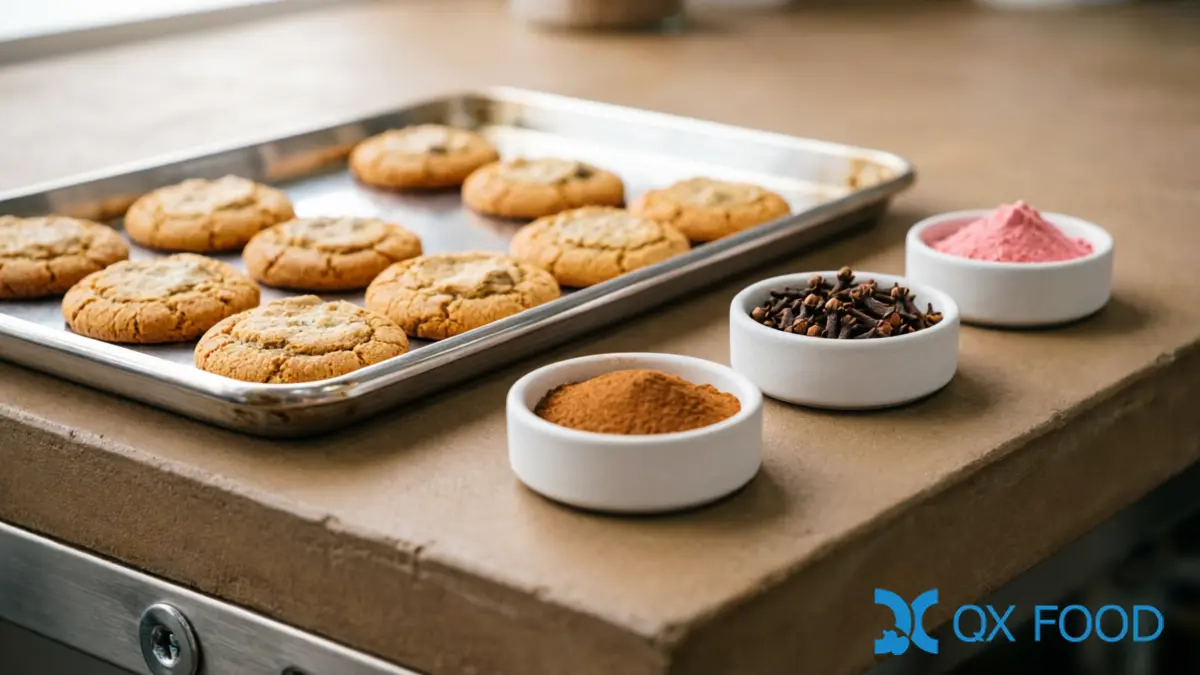
Bakery systems combine dry dosing into doughs, fillings and surface toppings with an oven profile that varies by product. Spice aroma retention through baking is formulation- and process-specific: it depends on the volatile compounds involved, dough moisture and fat, bake time and temperature, and the point of addition. Screen the selected ingredient under the actual oven profile and finished-product matrix rather than assuming that a spice category is inherently bake-stable. Where color is a critical quality attribute, define an appropriate ingredient or finished-product color acceptance method; where flavor and solids are the point, color values do not need to be a formal acceptance criterion.
Beverage: Dispersion, Sedimentation and Mouthfeel
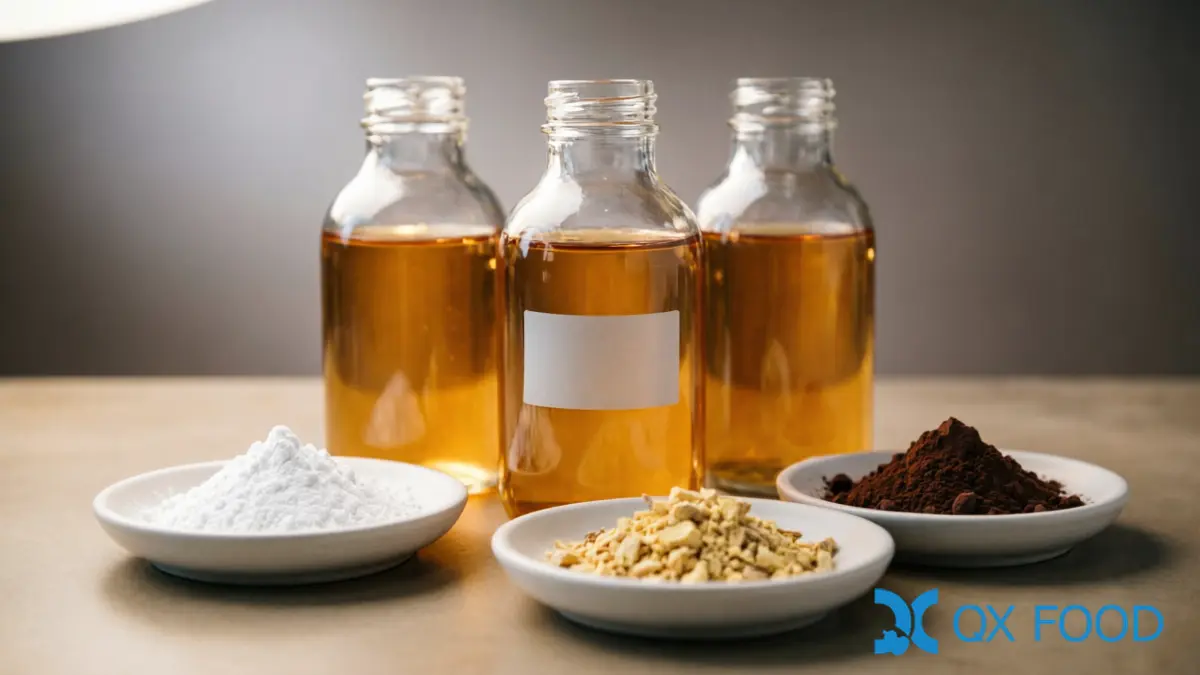
For ground spices and plant powders, distinguish true solubility from dispersion and suspension. Particle-size reduction can change mouthfeel, extraction and sedimentation behavior, but it does not make insoluble plant material fully soluble; powder reconstitution is itself a multi-phase process of wetting, sinking, dispersing and dissolving, as a 2025 Journal of Food Engineering study on powdered cocoa beverage reconstitution describes. Define the finished target first: complete dissolution, stable suspension, controlled sedimentation or a visibly particulate beverage. Then select the ingredient form and processing system accordingly. White pepper or ginger may be evaluated for heat or aromatic character in beverage systems, but visible particles, sedimentation and mouthfeel depend on the selected grade and the beverage system, not on the spice name alone.
Build the Specification From the Application, Not From a Fixed Template
| Question | Snack | Meat | Bakery | Beverage |
|---|---|---|---|---|
| Where is the ingredient delivered? | Surface or coating | Matrix, cure or sauce | Dough, filling or surface | Dissolved or dispersed phase |
| Particle requirement | Coating-specific | Product-specific | Texture and dosing-specific | Mouthfeel and dispersion-specific |
| Thermal exposure | Fry or coating dependent | Cook, smoke or retort dependent | Oven profile | Hot-fill, pasteurization or none |
| Key finished test | Coverage, adhesion, sensory | Sensory, color and texture as relevant | Aroma, color and texture | Dispersion, sediment, mouthfeel |
| Ingredient specification | Selected SKU-specific | Selected SKU-specific | Selected SKU-specific | Selected SKU-specific |
The application defines the questions; the selected SKU defines the specification values. There is no five-row universal template with a mesh, a volatile-oil floor and a moisture level that applies to every seasoning purchase. Parameters such as particle size, volatile oil, moisture, color or microbiology are included when they are relevant to the selected grade and its function, not because they appear on a category template.
Validate Ingredient Performance in the Finished Product
For seasoning formulation, supplier application data can support screening where available, but final validation belongs in the buyer’s formulation and process. Useful evidence may include product-specific specifications, batch documentation, sensory or application references and technical guidance relevant to the selected grade. Retort curves for a finished product are established for that product, package and equipment, not supplied as a generic spice document, so treat any supplier thermal data as orientation rather than as your process validation. Packaging should be selected from the product’s actual moisture, oxygen, aroma and handling requirements rather than from a generic ingredient-category assumption. Product-specific specifications, appropriate batch documentation and supplier change control become more important where ingredient variability affects the finished product.
Specification, Batch COA and Technical Documentation
Three document layers answer different questions. The product specification defines the grade: controlled parameters, limits and the acceptance basis. The batch COA reports the actual measured results required by the specification for a specific lot. Technical documentation carries supporting detail such as the analytical methods used for controlled parameters, application guidance and process information. Which parameters appear in the specification is decided by the selected SKU and its intended function, not by the application category alone.
How QXFOOD Supports Application Trials
QXFOOD supplies spice, savory and plant-powder grades that can be screened for different food applications. Product-specific specifications, available batch documentation, sample quantity and application-support scope depend on the selected SKU and project and should be confirmed before qualification. Representative entry points include:
- Garlic powder and black pepper powder for aromatic and heat layers across applications.
- Hydrolyzed soy protein (HVP) where a seasoning system needs a savory base.
- The raw spices and herbs category for the full published range with its own specifications.
Request application-matched samples through the contact form on this page and the team will support your seasoning formulation by application.
Frequently Asked Questions
Does snack seasoning require one specific mesh?
No. Particle requirements depend on the coating system, the substrate and the desired appearance. Fines may improve coverage in some systems while visible particles are intentional in others. Validate uniformity, adhesion and segregation on the actual or representative line.
Does finer grinding make a spice soluble in beverages?
No. Finer grinding may change dispersion, mouthfeel and sedimentation behavior, but it does not convert insoluble plant solids into dissolved material. Decide whether the target is dissolution, stable suspension, controlled sedimentation or a visibly particulate beverage, then choose the ingredient form and process.
Do meat seasoning spices need an “emulsion-safe” mesh?
There is no universal mesh. Particle characteristics should fit the product structure and desired appearance, and the selected grade should be validated in the actual chopping, mixing, stuffing and thermal process.
How should I specify spices for bakery products?
Start from aroma, color, particle, dosing and the actual bake-process requirements. Screen the ingredient under the real oven profile rather than assuming a spice category is inherently bake-stable, and define color as an acceptance criterion only where it is a critical quality attribute.
What changes across snack, meat, bakery and beverage seasoning formulation?
The matrix, the delivery mode, the process exposure and the finished-product acceptance criteria. Those four variables determine what has to be tested; they do not dictate one universal mesh, dosage or spice form.
Who sets the actual specification values?
The selected SKU, the buyer requirements, the process and the finished target, not the application category alone. The application defines the questions; the SKU defines the values.