What Is Hainan Black Pepper Powder BPP-K36?
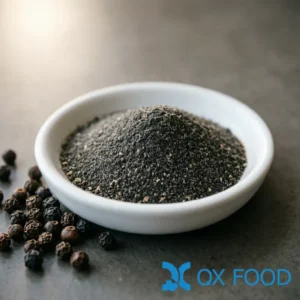
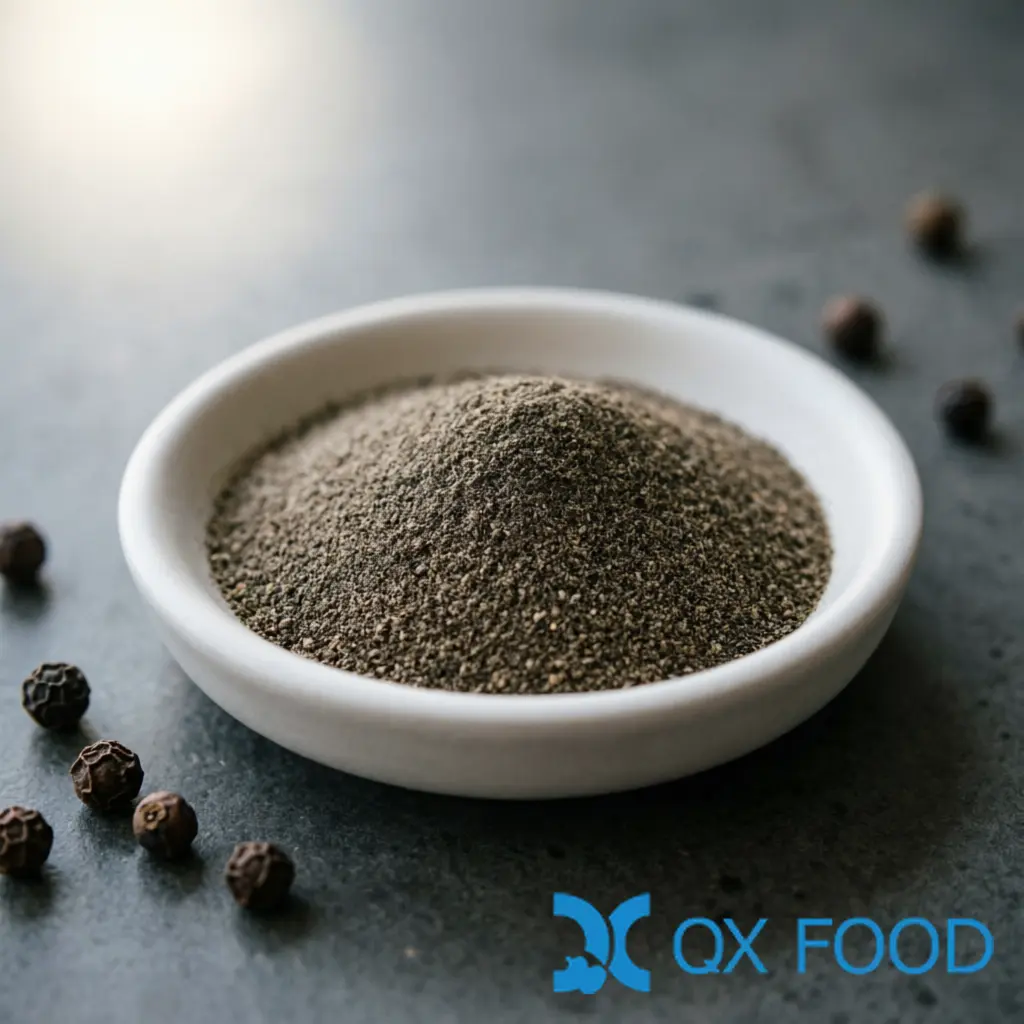
Hainan black pepper powder BPP-K36 is made from black pepper berries grown on Hainan Island — China’s southernmost province with a tropical monsoon climate that closely mirrors the growing conditions of Southeast Asia’s traditional pepper-producing regions. The warm, humid environment and volcanic-derived soils of Hainan produce black pepper berries with a distinctive aromatic profile: warm, spicy and well-balanced, with less of the aggressive front-end heat that characterizes some Vietnamese or Indian pepper varieties. The berries are harvested, cleaned, low-temperature dried to preserve volatile oil content, and then milled under temperature control to produce a fine, smooth black pepper powder that disperses evenly in both dry and wet food systems.
The milling process on Hainan black pepper powder BPP-K36 is the practical differentiator for food manufacturers. Black pepper’s volatile oils — primarily piperine, the alkaloid responsible for pepper’s pungency, along with monoterpenes like pinene, sabinene and limonene that contribute the piney, citrusy and woody aromatic notes — are sensitive to heat. High-temperature grinding can drive off a significant fraction of these volatiles before the pepper powder ever reaches the buyer’s blending room. Low-temperature milling preserves them. The result is a black pepper powder that delivers the full aromatic profile of Hainan pepper — warm spice, subtle pine, a hint of citrus on the finish — rather than a one-dimensional heat that registers as simple pungency on the tongue.
The COA on Hainan black pepper powder BPP-K36 is more comprehensive than what a basic black pepper powder typically provides. Beyond the standard moisture (4.22 g/100g against an 8.0 ceiling), ash (6.4 g/100g total, 0.09 g/100g acid-insoluble) and microbiological panel, the type inspection includes inorganic arsenic (not detected at 0.1 mg/kg detection limit), lead (not detected at 0.8 mg/kg) and Staphylococcus aureus (under 10 CFU/g against a 100 CFU/g ceiling). For a black pepper powder going into ready-to-eat products, export markets with tightening contaminant regulations, or retail-packaged consumer products where food safety documentation is part of the buyer’s compliance package, having arsenic, lead and staph data on the standard COA saves the buyer from arranging third-party testing after the order.
Specification Data — Standard Grade
| Parameter | Unit | Standard | Measured | Method |
|---|---|---|---|---|
| Moisture | g/100g | ≤8.0 | 4.22 | GB 5009.3 |
| Ash (Total) | g/100g | ≤12.00 | 6.4 | GB 5009.4 |
| Acid-Insoluble Ash | g/100g | ≤5.0 | 0.09 | GB 5009.4 |
| Aerobic Plate Count | CFU/g | ≤10,000 | 200 | GB 4789.2 |
| Salmonella | /25g | Not detectable | Not detected | GB 4789.4 |
| Staphylococcus aureus | CFU/g | ≤100 | <10 | GB 4789.10 |
| Inorganic Arsenic (as As) | mg/kg | ≤0.1 | Not detected | GB 5009.11 |
| Lead (as Pb) | mg/kg | ≤0.8 | Not detected | GB 5009.12 |
| Appearance | — | Fine powder, dark grayish-brown | Compliant | GB/T 7901 |
| Odor & Taste | — | Characteristic spicy, aromatic | Compliant | GB/T 7901 |
The product standard is GB/T 7901 — the Chinese national standard for black pepper. The acid-insoluble ash reading (0.09 g/100g) is the cleanliness indicator: acid-insoluble ash reflects the amount of siliceous material — sand, soil, mineral dust — that survives the combustion and acid-digestion steps of the ash test. A reading near the 5.0 g/100g ceiling suggests either poor raw material cleaning or soil contamination at the farm level. A reading of 0.09 g/100g tells the buyer that the pepper berries were properly cleaned before drying and that the production facility’s sieving and magnetic separation steps are functioning as designed.
Hainan Pepper vs Mainstream Origins: What the Origin Means for Flavor
Black pepper’s flavor profile varies measurably with growing region — a fact that spice buyers who have compared pepper from different origins know from experience. Vietnam dominates global black pepper production by volume, producing berries with a sharp, assertive heat and a straightforward pungent character that works well in industrial seasoning blends where the pepper is one note among many. Indian Malabar pepper is renowned for its complex, fruity aromatic profile — higher in pinene and sabinene — and commands a premium in specialty food markets. Indonesian Lampong pepper sits between the two: warm, slightly smoky, with moderate pungency.
Hainan black pepper occupies a position that is distinct from all three. The island’s tropical climate and well-drained volcanic soils produce berries that are aromatic rather than aggressively hot — the piperine content is sufficient to deliver the pepper character that consumers expect, but the flavor profile emphasizes the warm, spicy, slightly sweet notes over the sharp, biting heat. This makes Hainan black pepper powder particularly suitable for applications where the pepper is expected to contribute to the overall flavor complexity of a product rather than simply providing a heat sensation: soups, sauces, stewed meat products, marinated poultry, and compound seasoning blends where the pepper shares the stage with garlic, onion, paprika and other spices.
The practical implication for a buyer is that Hainan black pepper powder BPP-K36 can be used at a slightly higher dosage than a sharper Vietnamese pepper without the product becoming unpleasantly hot — which gives the formulator more room to adjust the pepper character upward for flavor complexity without crossing the pungency threshold that consumers reject. In a pepper-forward product like a steak seasoning or a black pepper sauce, that extra dosage headroom matters.
How Hainan Black Pepper Powder Performs Across Applications
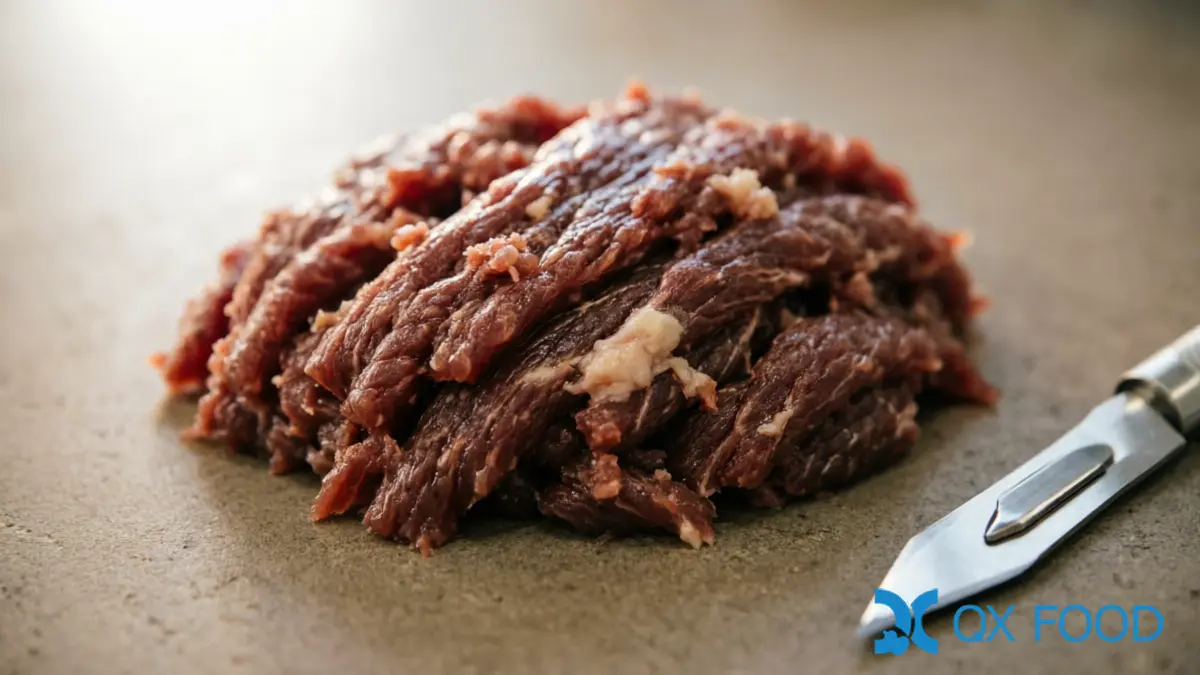
Meat Processing and Marinades
Hainan black pepper powder is used in meat processing across product categories — marinated poultry, seasoned pork cuts, beef patties, sausage formulations, cured meat products — at typical inclusion rates of 0.2–0.8% of the meat block. The low-temperature milled particle size ensures even distribution through the meat matrix during mixing without creating localized pockets of pepper intensity. The piperine component of Hainan black pepper powder contributes a warm, sustained heat that complements the savory character of the meat without masking it — the pepper flavor registers as a background note that supports the meat flavor rather than competing with it.
Black pepper also functions as an antioxidant in meat systems. Piperine and the phenolic compounds in the pepper’s outer pericarp scavenge free radicals and slow lipid oxidation during storage, which helps a seasoned meat product retain its sensory quality longer than an unseasoned control. The effect is not dramatic — black pepper at typical seasoning levels does not replace proper refrigeration or approved antioxidants — but in competitive markets where a few extra days of retail display quality can make a commercial difference, the contribution of black pepper to the product’s overall oxidative stability is worth understanding.
Soups, Sauces and Liquid Seasoning Systems
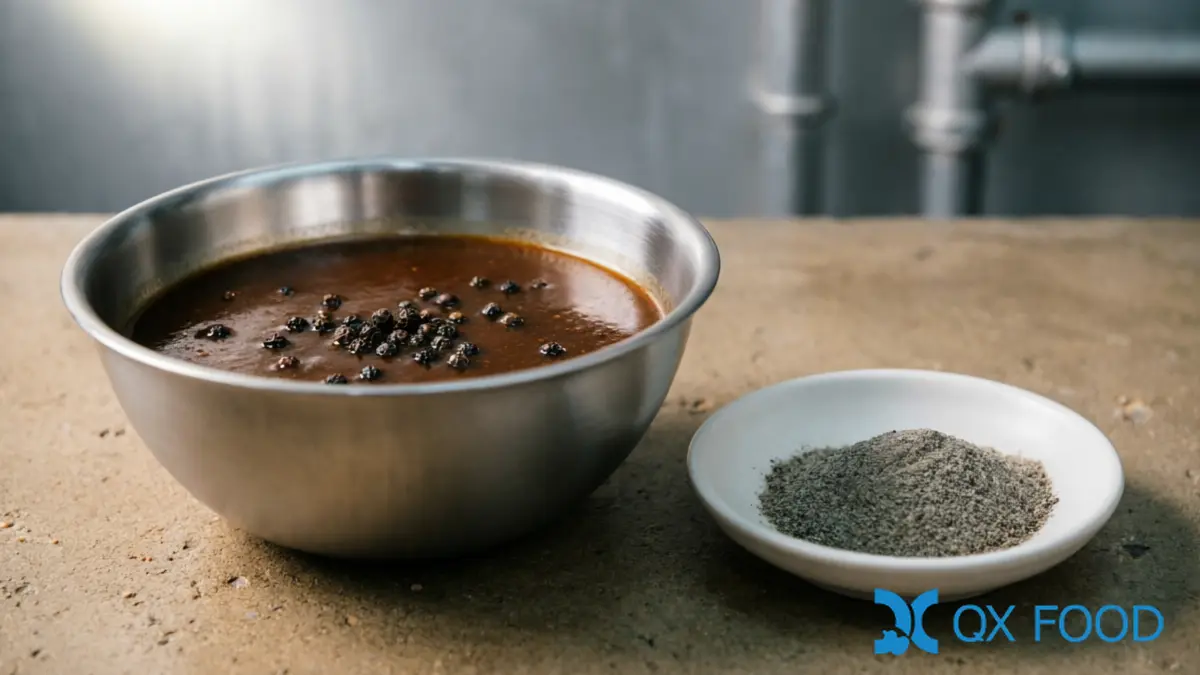
In liquid food systems — soups, broths, sauces, gravies, marinades — Hainan black pepper powder BPP-K36 disperses readily and releases its volatile aroma compounds into the aqueous phase within seconds of contact with hot liquid. The fine particle size means no gritty sediment at the bottom of the pot or the packaging — a common quality complaint when coarser pepper grades are used in clear soups or thin sauces where the pepper particles have no food matrix to hide in.
In retort-packed soup and sauce products, the black pepper powder is subjected to the sterilization cycle alongside the other ingredients. The volatile oils partially survive the retort — piperine is thermally stable at typical retort temperatures, though the more volatile monoterpenes (pinene, sabinene) are partially driven off — so the pepper character in the finished retort product is warmer and less aromatic than in a freshly prepared equivalent. Formulators compensate by adjusting the pepper dosage upward by 20–30% for retort products relative to the fresh-kitchen baseline, accounting for the volatile loss during processing.
Seasoning Blends and Dry Mixes
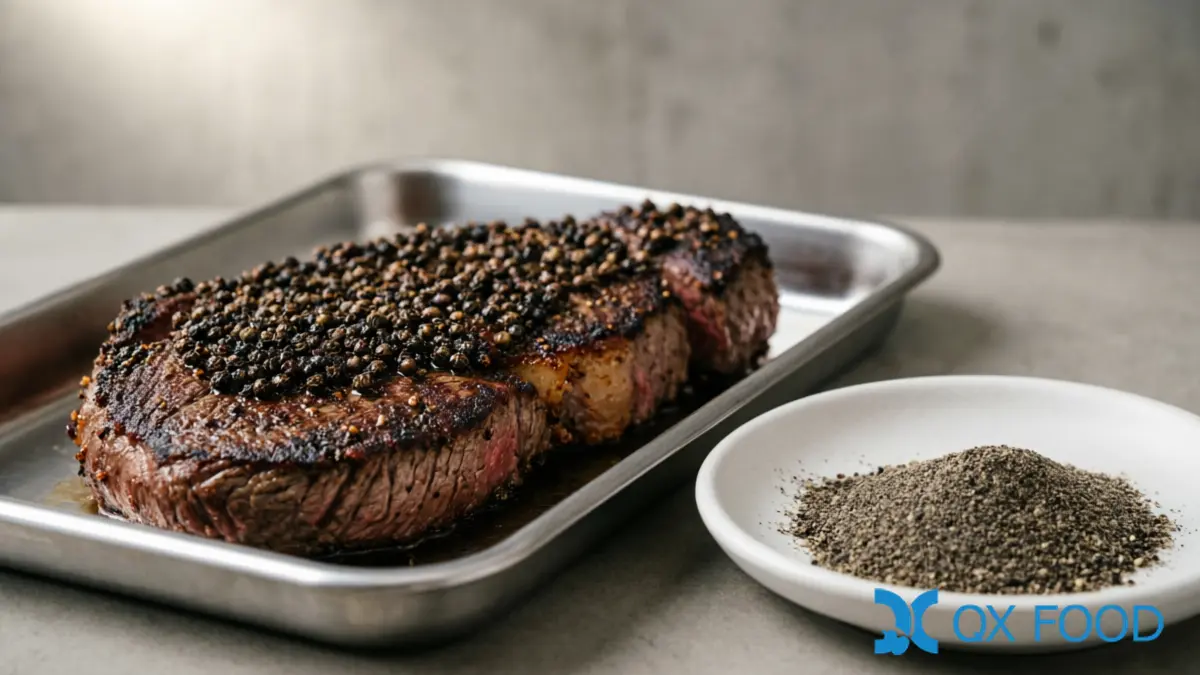
Hainan black pepper powder is a foundational component of commercial seasoning blends — all-purpose seasonings, steak rubs, barbecue seasonings, poultry seasonings, seafood seasonings, and multi-purpose spice mixes. At 5–25% of the seasoning blend weight, the black pepper powder provides the warm spicy backbone that anchors the blend, with the other spices — garlic powder, onion powder, paprika, cumin, chili — building around it. The low moisture content (4.22 g/100g) keeps the black pepper powder stable in multi-component dry blends without introducing excess water that could cause clumping or microbial activity.
The non-caking characteristic of Hainan black pepper powder BPP-K36 is the result of the low moisture content combined with the natural oil content of the pepper — the pepper has enough internal oil to remain free-flowing without added anti-caking agents, but not so much oil that the powder becomes sticky or forms lumps during storage. In a commercial seasoning blend that may sit on a warehouse shelf for months before use, the physical stability of the blend — no clumping, no caking, consistent flow through volumetric filling equipment — is as important as the flavor profile.
Foodservice and Institutional Kitchen Use
Hainan black pepper powder BPP-K36 is also positioned for the foodservice channel — restaurants, catering operations, institutional kitchens, and central commissary production — where the usage volume is lower than industrial food manufacturing but the quality requirements are similar. The universal seasoning character of Hainan black pepper powder — it works across Western roasted meats, Asian stir-fries and soups, Middle Eastern grilled dishes, and fusion cuisine — makes it a practical single-SKU solution for foodservice operators who need a reliable black pepper powder that performs across their entire menu rather than maintaining separate pepper products for different culinary applications.
Nutritional Profile Per 100g
| Nutrient | Value per 100g | NRV % |
|---|---|---|
| Energy | 1,437 kJ | 17% |
| Protein | 10.8 g | 18% |
| Fat | 3.0 g | 5% |
| Carbohydrates | 67.2 g | 22% |
| Sodium | 15 mg | 1% |
The nutritional data is provided for labeling reference. The protein content (10.8 g/100g) reflects the pepper berry’s intrinsic nitrogen content — piperine and other alkaloids, plus structural proteins in the berry tissue. The carbohydrate fraction (67.2 g/100g) is primarily dietary fiber from the pepper’s cell wall material and the pericarp. The sodium reading (15 mg/100g) is negligible for formulation purposes — black pepper does not contribute meaningful sodium to a finished product’s sodium declaration.
Packaging and Shelf Stability
Hainan black pepper powder BPP-K36 is a natural single-ingredient product — ground black pepper with no additives, no anti-caking agents, no fillers and no preservatives. The dark grayish-brown color is characteristic of properly dried and ground black pepper, reflecting the dark outer pericarp that remains intact through the low-temperature milling process.
Standard packaging covers evaluation pouches (100 g or 1 kg aluminum foil bags), mid-volume cartons (10 kg or 20 kg) for pilot runs, and bulk drums (25 kg fiber drums) for container loads. Custom packaging — private-label bags, specific dimensions, barrier materials — is available for OEM orders.
Storage: sealed container, cool dry place, away from direct sunlight. The volatile oils in Hainan black pepper powder are sensitive to oxygen and light. Under proper conditions — sealed, below 25°C, humidity below 60% — the shelf life is 18 months. Opened bags should be re-sealed immediately; the manufacturer recommends using opened stock within 60 days for best aromatic quality.
Quality Systems and Documentation
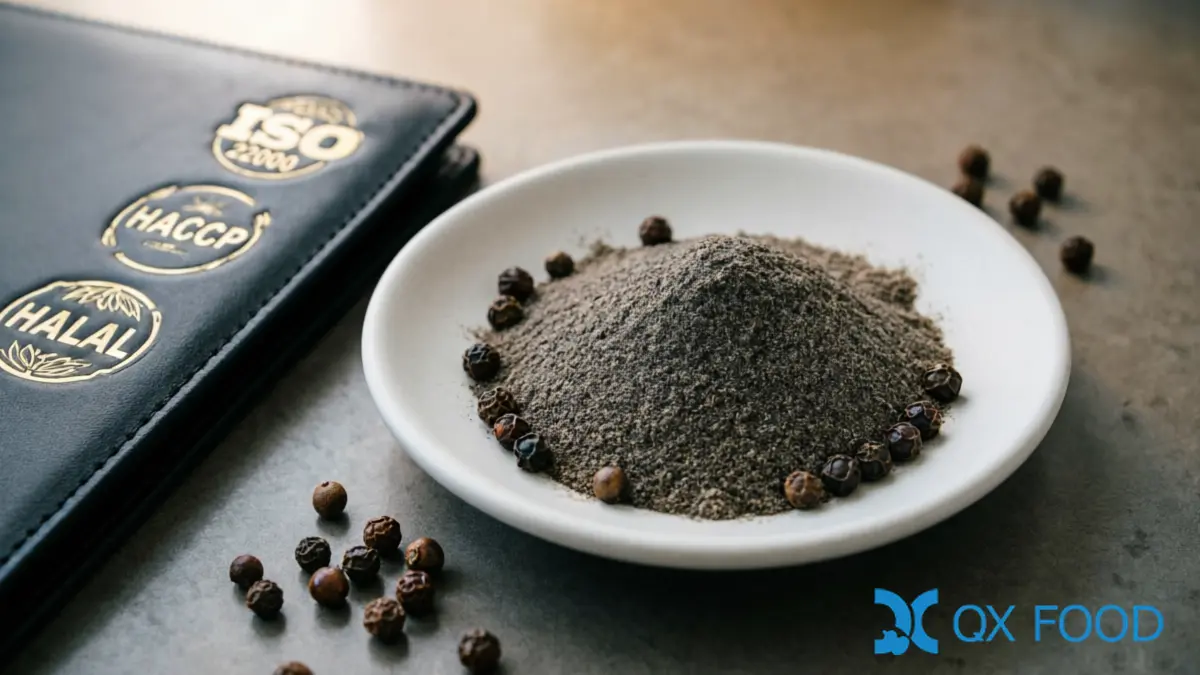
- ISO 9001:2015 — quality management system
- ISO 22000:2018 — food safety management system
- HACCP — hazard analysis and critical control points
- HALAL — certified by an accredited halal certification body
The product standard is GB/T 7901. Each shipment comes with a batch-specific COA covering moisture, ash, microbiology, heavy metals and arsenic. Import documentation — HS Code 09041200 — is included in the standard export package. Compliance with Codex Alimentarius guidelines for spices is maintained.
Frequently Asked Questions
What makes Hainan black pepper powder different from Vietnamese or Indian black pepper?
Hainan black pepper powder has a more balanced, aromatic profile — warm and spicy with subtle sweet undertones — compared to the sharper, more aggressive heat typical of Vietnamese pepper or the complex, fruity character of Indian Malabar pepper. This makes Hainan black pepper powder more versatile across applications: it contributes black pepper flavor that supports other ingredients rather than dominating them. The Hainan growing environment — tropical monsoon climate with volcanic-derived soils — produces pepper berries with a distinctive aromatic balance that buyers who have compared origins can identify in a side-by-side tasting.
Does Hainan black pepper powder BPP-K36 contain any additives or anti-caking agents?
No. Hainan black pepper powder BPP-K36 is 100% ground Hainan black pepper — no silicon dioxide, no maltodextrin, no anti-caking agents and no flavor enhancers. The low moisture content (4.22 g/100g) and natural oil content keep the powder free-flowing without chemical flow aids.
Is Hainan black pepper powder BPP-K36 tested for heavy metals and arsenic?
Yes. The standard COA includes inorganic arsenic (not detected at 0.1 mg/kg), lead (not detected at 0.8 mg/kg) and Staphylococcus aureus (under 10 CFU/g against 100 CFU/g ceiling). These are part of the type inspection schedule. Broader screening can be arranged on request.
What is the HS Code for importing Hainan black pepper powder?
The HS Code is 09041200 — pepper of the genus Piper, crushed or ground. This is the standard customs classification for ground black pepper worldwide. The correct HS code is provided on all export documentation including the commercial invoice and certificate of origin.
Can I use Hainan black pepper powder in retort-packed products without losing flavor?
Piperine — the main pungent compound in black pepper — is thermally stable at typical retort temperatures, so the pepper’s heat character survives the sterilization cycle. However, the more volatile aromatic compounds (pinene, sabinene, limonene) are partially driven off during retort processing. Formulators typically increase the black pepper dosage by 20–30% for retort products relative to fresh-kitchen baseline levels to compensate for volatile loss. The fine particle size of Hainan black pepper powder BPP-K36 ensures it disperses evenly through the liquid phase before retorting, with no gritty sediment in the finished product.
What is the shelf life and how should I store Hainan black pepper powder?
Store Hainan black pepper powder in a sealed container in a cool, dry place — below 25°C with humidity below 60%. The volatile oils are sensitive to oxygen and light. Re-seal opened bags immediately. Shelf life is 18 months under proper storage; opened stock used within 60 days retains the best aromatic quality.
Is Hainan black pepper powder BPP-K36 Halal-certified?
Yes. The manufacturing facility holds active Halal certification. Hainan black pepper powder is a single-ingredient plant product — ground black pepper berries — with no animal-derived materials, no ethanol, and no fermentation steps.
What particle size is Hainan black pepper powder, and can it be customized?
The standard grade is a fine powder produced through low-temperature milling — smooth texture, even dispersion. Coarser or finer particle size specifications can be discussed at the sample stage. This is a physical specification change, not a formulation change.
Explore Our Natural Spice Powder Range
Hainan black pepper powder BPP-K36 is part of the Natural Plant Powders family. Buyers building a full spice portfolio often evaluate these products together:
Turmeric Powder TP-K37 — curcumin 4.5 g/100g, natural color and seasoning base.
Garlic Powder GP-B06 — pure ground garlic for snack seasonings and savory blends.
Cassia Powder CP-B04 — Chinese cassia bark, volatile oil 2.02g/100g, for bakery and meat processing.
Clove Powder CLO-D11 — 80 mesh, volatile oil 17.8g/100g, for meat curing and spice blends.
For the full category view, visit the Natural Plant Powders category page.