Natural Carrot Powder for Food Manufacturing
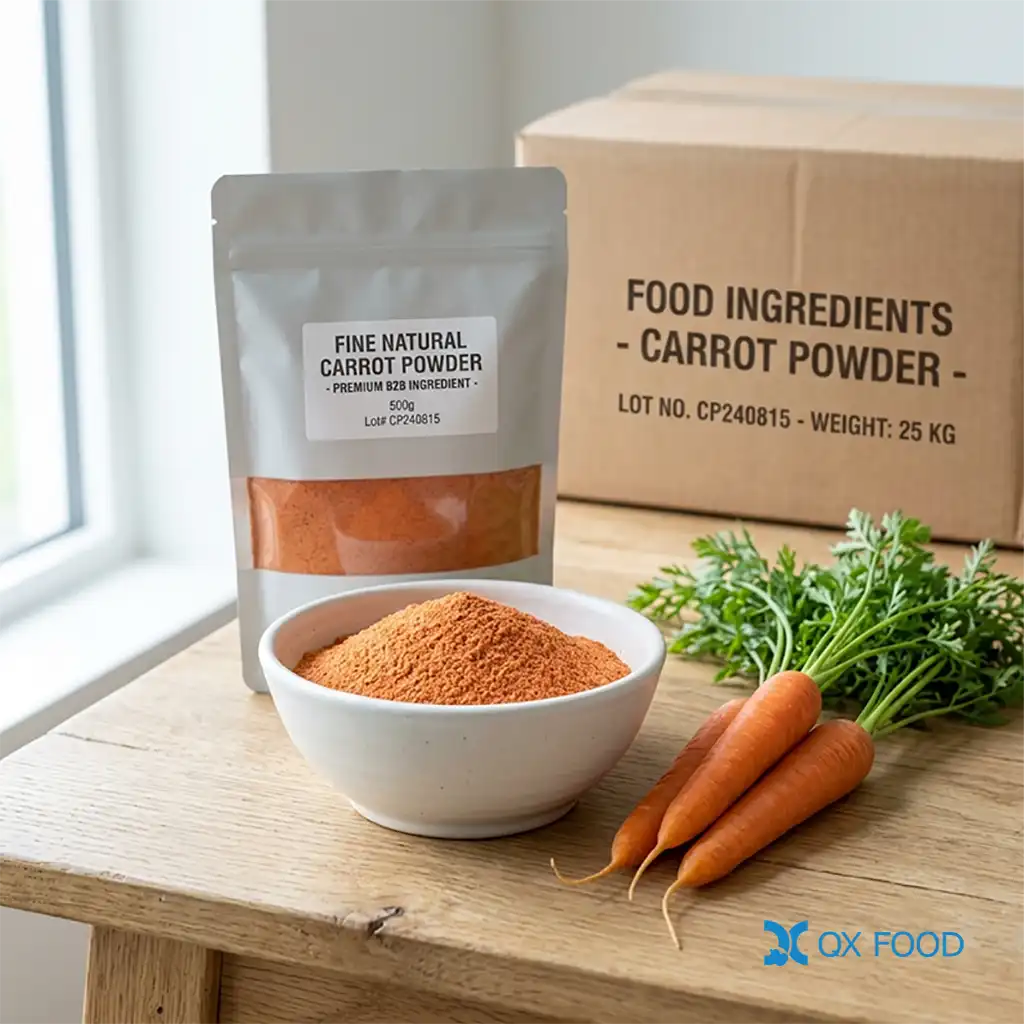
Carrot powder gives a dry recipe the flavor, mild sweetness, and light red-orange color of carrot without introducing fresh vegetable moisture. CRP-H23 is produced from selected carrots by spray drying and is intended for food manufacturers that need a powder they can weigh, blend, and test on an industrial line.
The public ingredient declaration for CRP-H23 is carrot only. No added ingredients, preservatives, or artificial colorants are declared. This distinguishes it from a compound seasoning: the developer remains responsible for salt, sweetness, acidity, aromatics, and the rest of the finished formula.
This natural carrot powder can be trialed in bakery products, noodles, puffed foods, compound seasonings, solid beverages, instant foods, and selected dairy systems. The useful starting point is not a generic dosage: it is a bench sample made with the same heat, pH, fat, sugar, salt, and mixing conditions planned for production.
Explore the natural plant powder range for other vegetable and botanical ingredients. Compare Organic Tomato Powder for tomato-based formulations or Chive Flower Powder for herbaceous savory applications.
Carrot Powder Specifications
The specification table is a screening tool, not the whole approval decision. Procurement and R&D should compare it with the current-batch COA, an agreed sample, and results from the intended food system.
| Product Type | Natural carrot powder |
| Model | CRP-H23 |
| Ingredient | Carrot |
| Physical State | Powder |
| Flavor | Natural, mildly sweet carrot flavor |
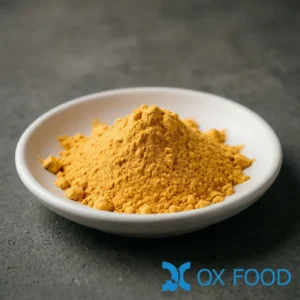
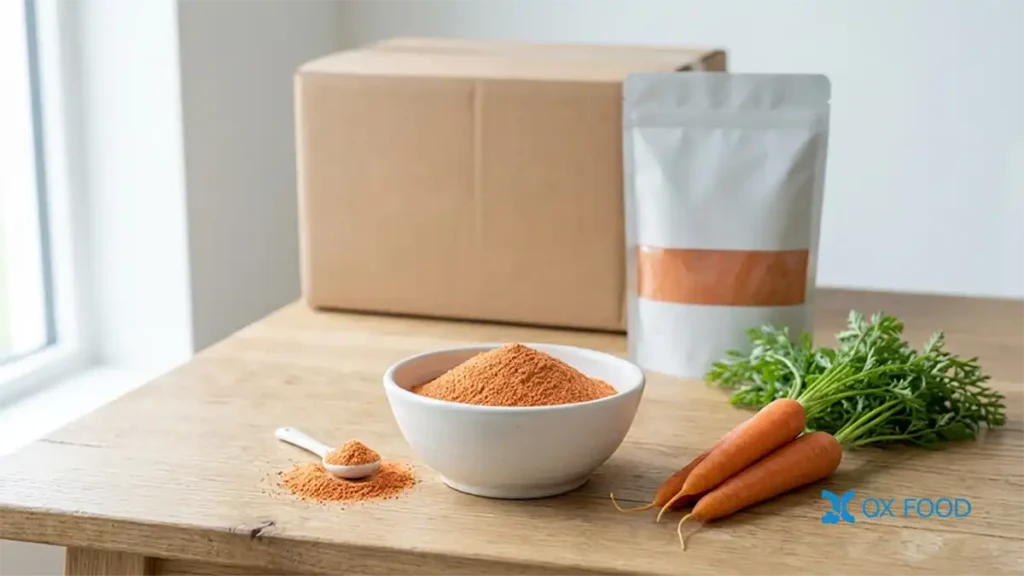
| Color and Appearance | Fine light red carrot powder; compare with the approved sample |
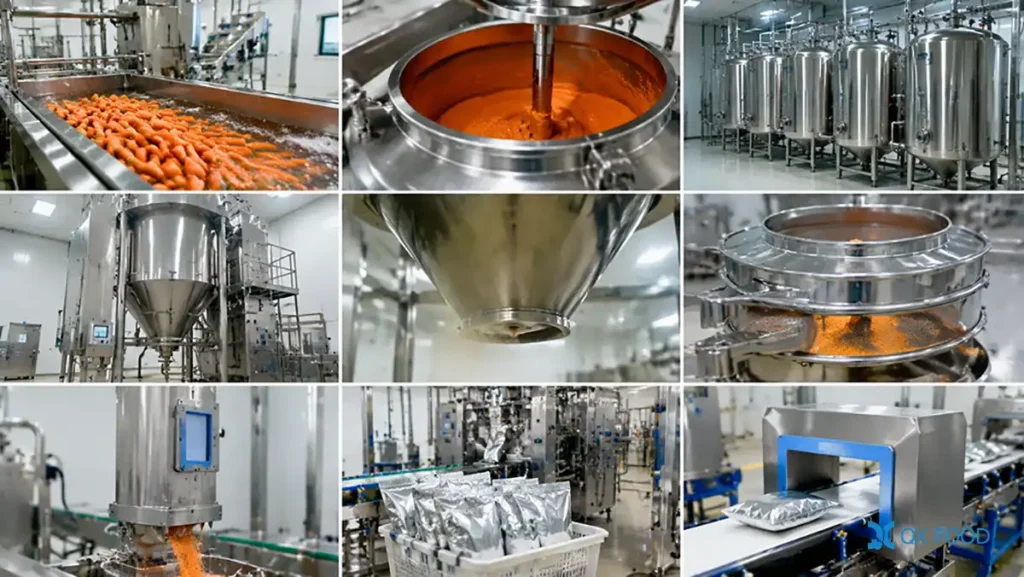
| Main Process | Batching, sterilization, spray drying, sieving, magnetic separation, packaging, and metal detection |
| Moisture | ≤7.00 g/100g |
| Ash | ≤12.00 g/100g |
| Certifications | ISO9001, ISO22000, HACCP, Halal |
A current-batch COA can be provided for review of moisture, ash, sensory indicators, contaminants, and microbiological items. Batch-measured values should not replace the agreed specification or finished-application testing.
Reference Nutritional Information per 100g
| Energy | 1357 kJ |
| Protein | 4.2 g |
| Fat | 1.9 g |
| Carbohydrates | 71.5 g |
| Sodium | 301 mg |
Nutrition declarations for finished products should be calculated and reviewed according to the actual formula, dosage, test method, and destination-market requirements.
Carrot Powder for Bakery, Snacks, and Seasoning Blends
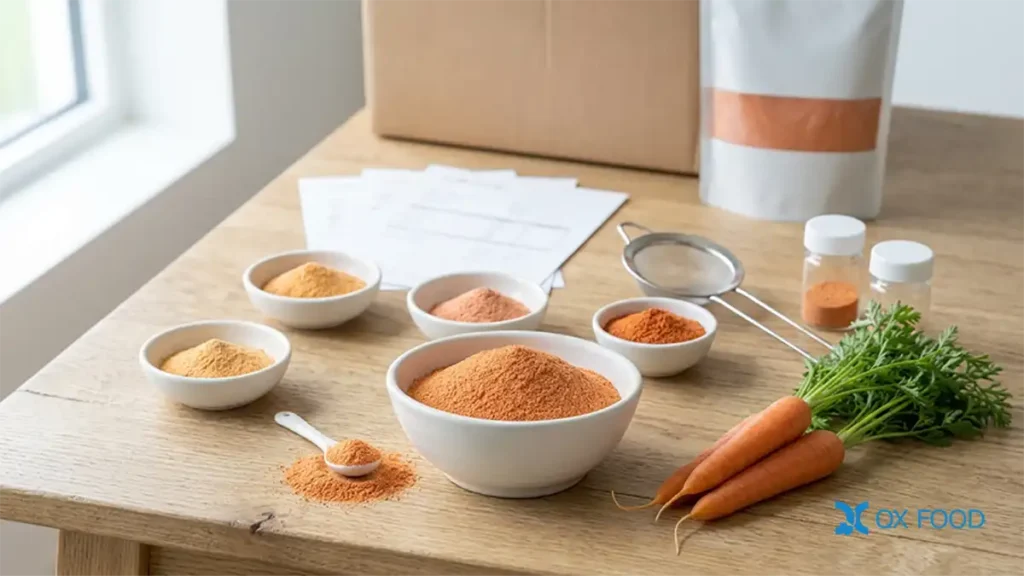
Carrot powder for food manufacturing is most useful where the recipe must stay dry but still needs a recognizable carrot note and color contribution. Dosage alone does not predict the result: heat, pH, fat, sugar, salt, and the background color of other ingredients all affect what remains visible and detectable in the finished food.
Bakery and Confectionery Applications
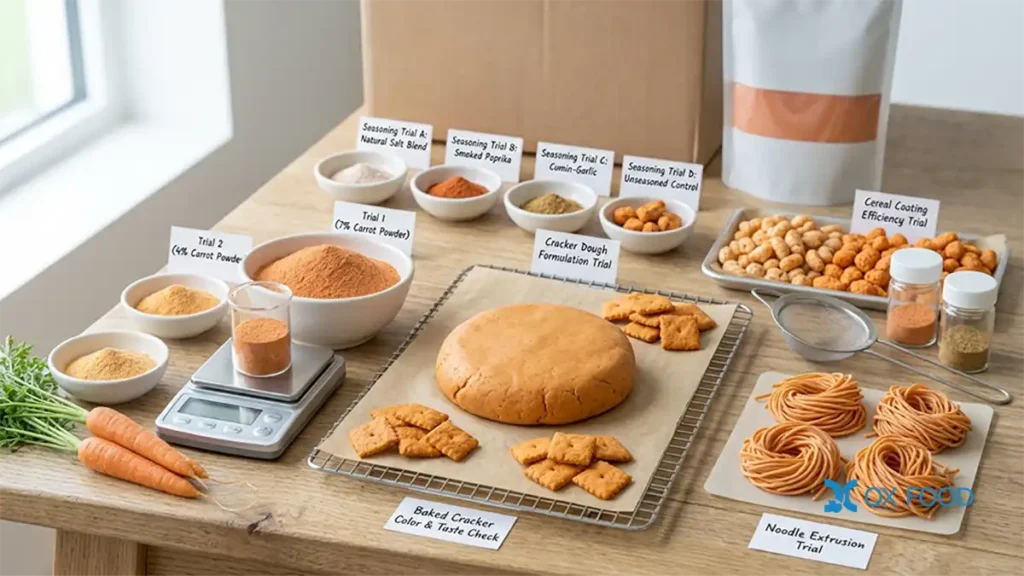
Carrot powder for bakery works as a trial ingredient in savory doughs, crackers, noodles, pastries, fillings, confectionery, and baked snacks. Add it during dry blending and compare at least two inclusion levels. Record dough handling, color before and after heating, carrot aroma, sweetness, texture, and any change during storage.
Heat can alter vegetable color and flavor, especially in recipes with reducing sugars, proteins, or alkaline ingredients. A pilot bake using the intended temperature and time is more reliable than judging the dry powder alone. The final product should be evaluated after cooling and again during the planned shelf-life study.
Snack and Compound Seasoning Applications
In puffed foods and compound seasonings, natural carrot powder supplies the vegetable component of a custom savory or lightly sweet flavor system. When testing carrot powder for snacks, use the production oil or binder and compare pickup, coverage, loose powder, color uniformity, and flavor after packaging.
CRP-H23 is not a complete snack seasoning by itself. Salt, sweetness, acidity, aromatics, umami ingredients, and top notes should be balanced around the target product. OEM trials can combine the carrot direction with herbs, onion, tomato, or other supported ingredients according to the buyer’s formula brief.
Spray Dried Carrot Powder for Solid Beverages and Instant Foods
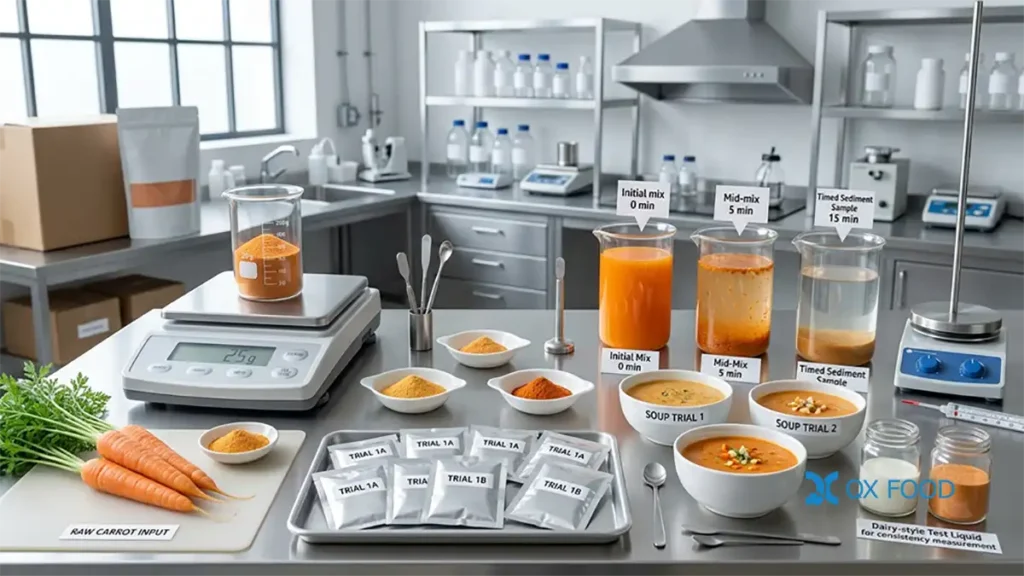
The spray dried carrot powder format is convenient for measured addition to solid beverages, meal-replacement blends, instant foods, catering seasonings, and selected dairy applications. A fine powder is not automatically soluble, so wetting, lumping, sediment, color, flavor, and stability still need to be checked in the complete mix.
Dispersion and Reconstitution Testing
For a carrot powder for solid beverages trial, use the intended water volume, temperature, mixing method, and holding time. Record wetting time, surface floating, lump formation, sediment after standing, color uniformity, and carrot flavor. Repeat the test with the sweetener, protein, dairy component, fiber, or other powder system planned for the finished beverage.
In instant soups, noodles, sauces, and catering seasonings, assess the powder together with salt, starch, oil, HVP, spices, and other vegetable powders. A powder that disperses acceptably in water may behave differently in a thickened, fatty, acidic, or protein-containing system. Pilot testing should therefore match the intended process as closely as possible.
Additive-Free Carrot Ingredient for Clean-Label Formulation
CRP-H23 uses natural carrot as its declared ingredient, with no added ingredients, preservatives, or artificial colorants. This supports an additive free carrot powder positioning and a short declaration for projects seeking a clean label carrot ingredient. The claim still needs to be assessed in the context of the buyer’s complete finished recipe.
Clean-label suitability and any non-GMO, allergen, natural-color, or finished-product statement must still be reviewed against the complete recipe, supporting documents, processing conditions, and destination-market rules. Carrot powder contributes its own natural color; it should not be presented as equivalent to a standardized food color additive without application and regulatory review.
Quality and Documentation Review
- Compare the current sample with the agreed sensory and appearance standard.
- Review the current-batch COA and product specification before bulk approval.
- Confirm ingredient, allergen, and non-GMO documentation for the destination market.
- Verify finished-product labeling and claims using the complete formulation.
- Review packaging integrity and storage conditions for the planned supply chain.
Applicable ISO9001, ISO22000, HACCP, Halal, product, packaging, and quality documents can be provided for buyer review. The official ISO 22000 food safety management systems overview offers general context and does not represent destination-market product approval.
OEM Development, Samples, and Custom Packaging
A useful OEM brief includes the target food, desired carrot note and color, process conditions, expected dosage range, declaration requirements, and a reference sample. With those details fixed, laboratory and pilot trials can compare one change at a time before scale-up.
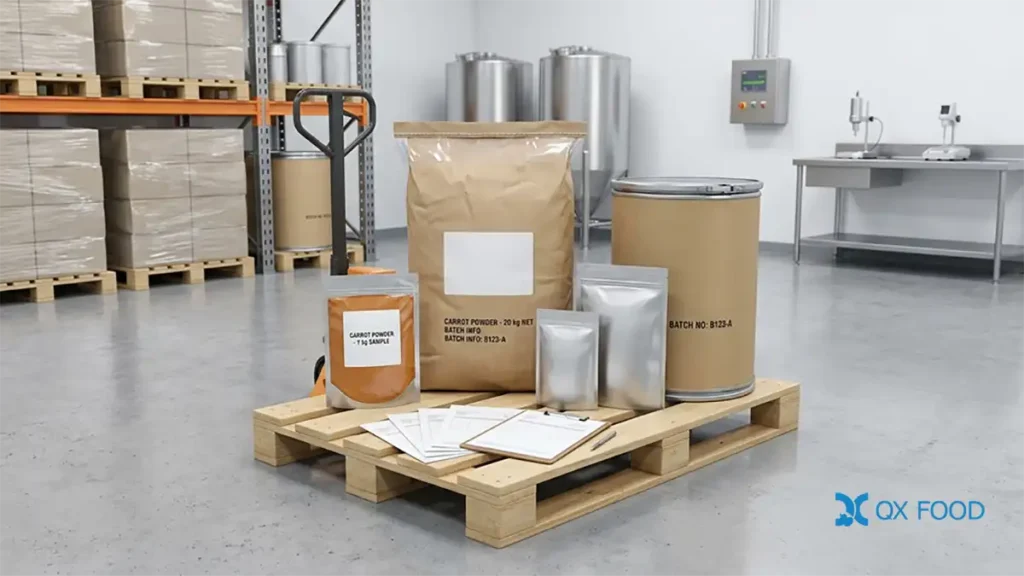
- Standard net content: 20 kg.
- Standard packaging: colorless inner PE packaging with an outer brown paper-plastic composite package.
- Reference options: 100 g and 1 kg aluminum foil bags, 10 kg and 20 kg cartons, and 25 kg fiber drums.
- Sample quantity: 1 kg.
- MOQ: 1 MT.
- Shelf life: 12 months under recommended storage conditions.
- Storage: keep tightly sealed in a cool, dry place away from direct sunlight and moisture.
- Customization: packaging format and product direction can be discussed according to buyer requirements.
Before approving bulk carrot powder, confirm the intended application, expected dosage, packaging, annual volume, destination market, and document checklist. The 1 kg sample is intended for laboratory evaluation before pilot production and commercial purchasing.
Carrot powder connects to our vegetable line through kale KP-W43 and to fruit systems via mango MGO-15.
FAQ
What is CRP-H23 made from?
CRP-H23 is made from natural carrot as its declared ingredient, with no added ingredients, preservatives, or artificial colorants.
How is CRP-H23 produced?
The process includes raw material acceptance, batching, sterilization, spray drying, sieving, magnetic separation, finished-product packaging, metal detection, and warehousing.
Which food applications are suitable for carrot powder?
Potential applications include puffed foods, bakery, compound seasonings, catering seasonings, noodles, pastries, confectionery, solid beverages, dairy formulations, meal-replacement powders, and instant foods after application testing.
Can carrot powder provide natural color in food?
It can contribute a natural light red-orange carrot color, but the result depends on dosage, heat, pH, fat, sugar, and the other ingredients. Finished-product color must be confirmed through trials.
What should be checked in a beverage or instant-food trial?
Check wetting, lumping, sediment, color uniformity, carrot flavor, heat response, holding stability, and compatibility with the complete formulation.
What are the MOQ, sample size, and shelf life?
The reference sample quantity is 1 kg, MOQ is 1 MT, and shelf life is 12 months under recommended storage conditions.
Can packaging and product direction be customized?
Yes. Packaging specifications and formulation direction can be discussed according to the intended application, market, and procurement requirements.
Which documents can buyers request?
Buyers can request the current-batch COA, product specification, packaging information, and applicable ISO9001, ISO22000, HACCP, Halal, ingredient, and supporting documents for review.