Soy Sauce Powder for Instant Food and Seasoning Sachets
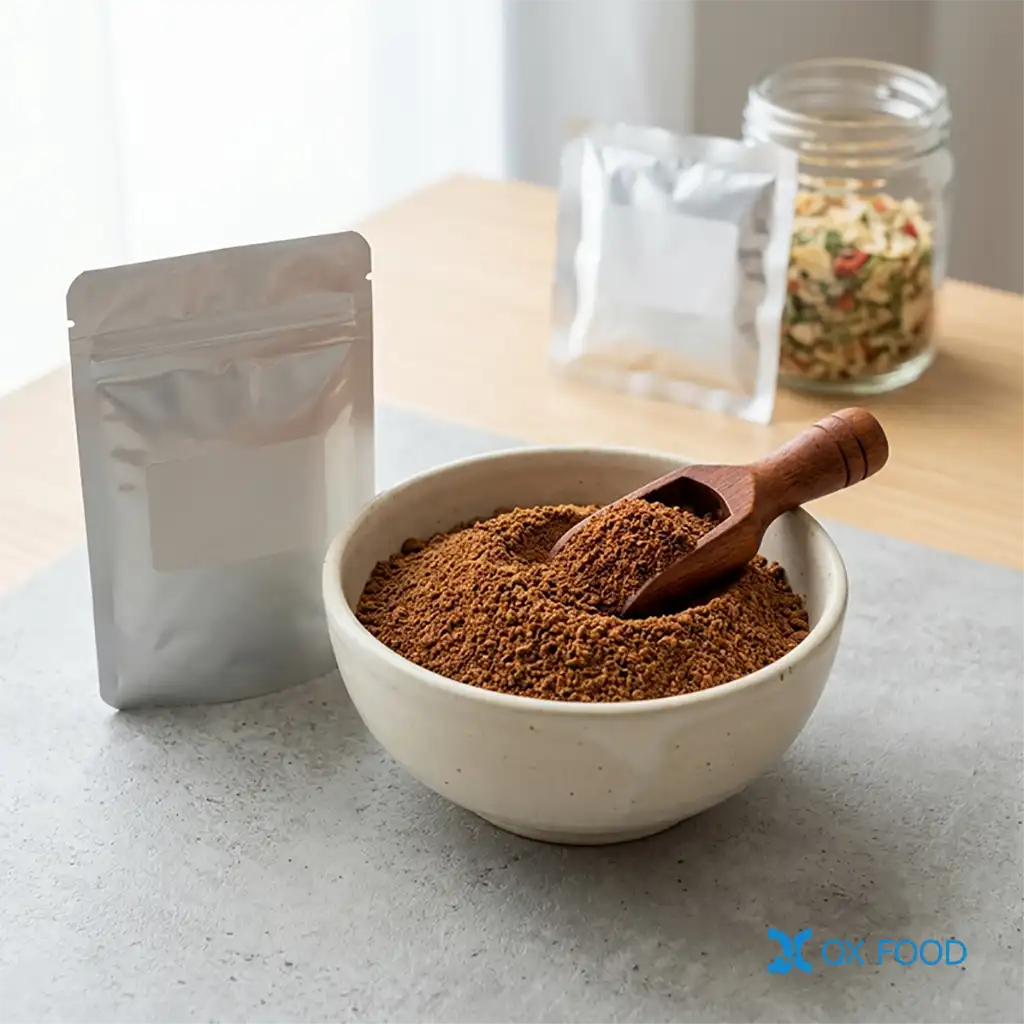
Soy sauce powder for instant food brings a brewed soy sauce note into dry formulas without introducing liquid at the blending stage. FSP-H03 starts with brewed soy sauce and vegetable protein liquid. After batching and sterilization, the blend is spray dried into a seasoning powder for measured addition on a production line.
The result is a salty, fermented profile with more body than a simple salt-and-spice blend. It fits instant noodle packets, soup and sauce sachets, household seasonings, snack coatings, hot pot bases, compound seasonings, and ready meals. FSP-H03 is an ingredient rather than a finished seasoning, so its final character depends on the surrounding salt, sweetness, acidity, spices, and other savory materials.
For broader product-line selection, visit our brewed soy sauce powder range. Buyers developing several fermented flavor directions can also explore the fermented and brewed powder portfolio or compare soybean paste powder for instant noodle seasoning.
FSP-H03 Product Specifications
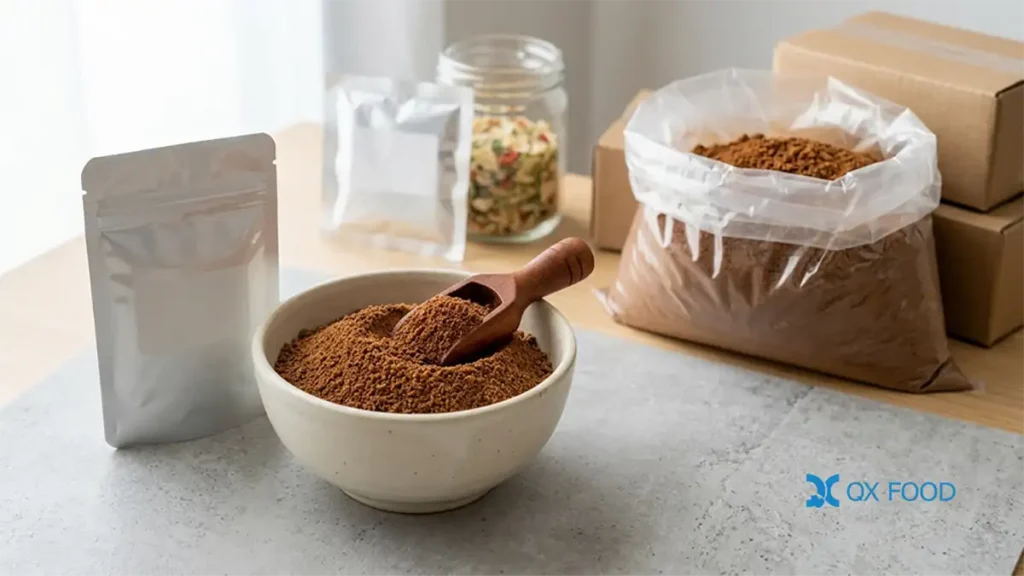
These specification limits provide a practical first screen for procurement and R&D. Commercial approval should be based on the current specification, an agreed sensory sample, the batch COA, and a trial in the intended recipe.
| Product Name | Soy Sauce Powder |
| Model | FSP-H03 |
| Main Ingredients | Brewed soy sauce and vegetable protein liquid |
| Physical State | Powder |
| Flavor Profile | Blended soy sauce and vegetable-protein flavor |
| Color and Appearance | Brownish-red to light yellow powder; conforms to the agreed standard sample |
| Main Process | Sterilization and spray drying, followed by sifting, magnetic separation, packaging, and metal detection |
| Moisture | ≤8.00 g/100g |
| Total Nitrogen | ≥0.80 g/100g |
| Amino Nitrogen | ≥0.40 g/100g |
| Sodium Chloride | ≤45.00 g/100g |
| 3-MCPD | ≤0.4 mg/kg |
| Recommended Dosage | 2%-10% as a formulation reference; confirm through trials |
| Certifications | ISO 9001, ISO 22000, HACCP, Halal |
| Allergen Information | Contains soy-derived ingredients; review the current allergen statement for destination-market labeling |
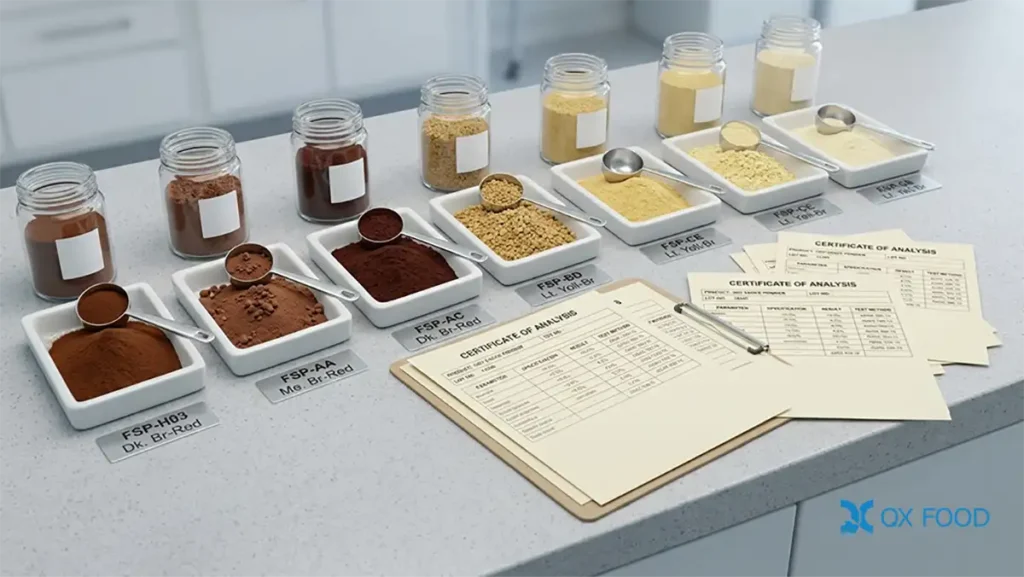
The batch COA can be reviewed for moisture, nitrogen indicators, sodium chloride, sensory items, contaminants, and microbiological results. Batch results may move within the agreed limits; the limits above, rather than one measured result, should guide purchasing approval.
Soy Sauce Powder for Instant Food Formulation
In instant food, a soy sauce note has to remain recognizable after dry blending, sachet filling, storage, and hot-water preparation. Soy sauce powder for instant food lets the formulator build that note directly into the dry base alongside salt, sugar, spices, starches, vegetable powders, and other umami ingredients.
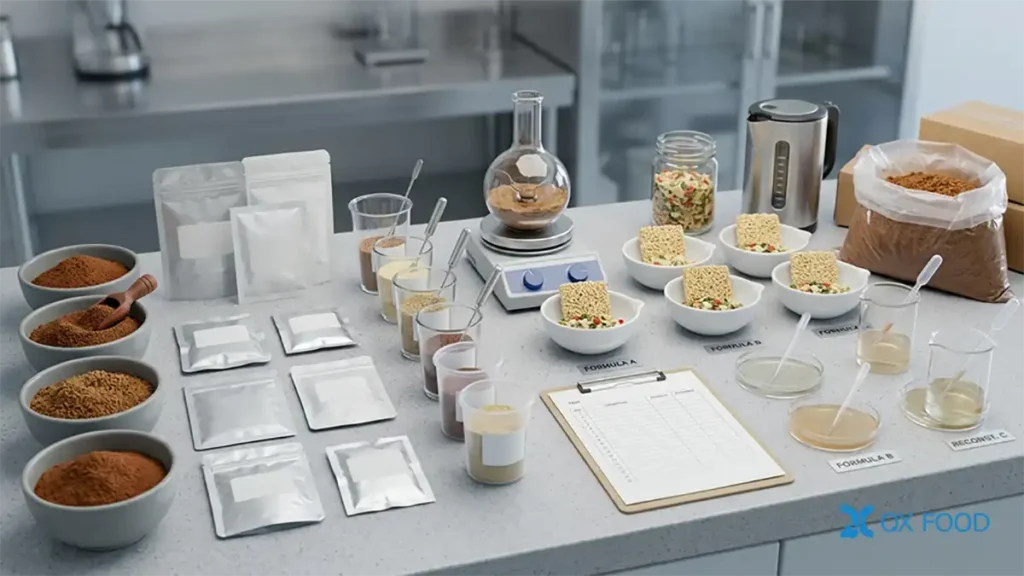
Instant Noodles, Soup Powders, and Seasoning Sachets
FSP-H03 is a useful starting point for an instant noodle seasoning powder or dry soup sachet that needs a clear soy sauce character and a rounded savory base. The World Instant Noodles Association production overview shows the broader role of powder soup seasonings in attached sachets; the exact flavor balance remains specific to each recipe.
A useful instant seasoning sachet trial compares the dry mix with the prepared serving. Check how quickly the aroma opens in hot water, whether the broth becomes too dark or salty, how much sediment remains, and whether the soy sauce note lasts through consumption. Where an oil or sauce packet is also used, test the full set together: fat and acidity can noticeably change the strength of the powder.
Dry Sauce Bases and Household Convenient Seasonings
In dry sauce mixes, soup bases, and household seasoning packets, FSP-H03 adds fermented depth while keeping the blend dry and easy to meter. That makes it a practical soy sauce powder for seasoning sachets when repeatable weighing and batch blending matter.
The 2%-10% range is a development reference, not a ready-made formula. Test at more than one level and calculate the sodium chloride contributed by FSP-H03 before adjusting the rest of the seasoning. This avoids a common problem: obtaining the right soy sauce aroma but overshooting the finished salt target.
Spray Dried Soy Sauce Powder for Snacks and Compound Seasonings
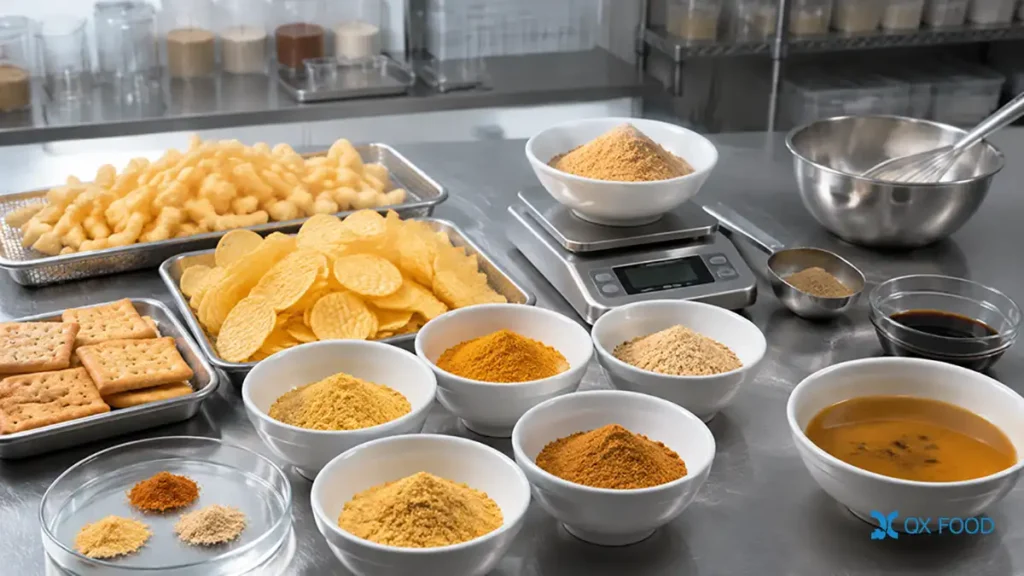
FSP-H03 also works as a spray dried soy sauce powder for snack coatings, puffed foods, hot pot bases, compound seasonings, ready meals, pickled vegetable seasonings, and compatible meat-processing formulas. Its job in these systems is to add a fermented savory layer; it does not replace the rest of the seasoning system.
Snack Coatings and Puffed Foods
When testing soy sauce powder for snack seasoning, use the same oil or binder planned for production. Compare coating pickup, bare spots, loose powder, salt perception, and aroma after frying or baking. Taste the packaged snack again after holding: a blend that is balanced in the bowl can become sharper as moisture falls or quieter once it contacts oil.
Its soy sauce and vegetable-protein profile can sit behind roasted, spicy, vegetable, poultry, or general savory directions. The surrounding spices and top notes determine which direction comes forward.
Compound Seasonings, Hot Pot Bases, and Ready Meals
In dry seasoning blends and hot pot bases, FSP-H03 fills the space between sharp spice top notes and the longer savory finish. Ready-meal and sauce trials should use the intended heating time, fat level, water activity, and pH. The product may reduce fishy or greasy impressions in some formulas, but that effect depends on the actual protein, oil, and spice combination.
For sauce-packet work that needs a stronger aroma impression at low dosage, the ester aroma FSP-BF grade is worth benchmarking.
From Prepared Soy Sauce Blend to Stable Seasoning Powder
FSP-H03 is prepared by accepting and batching the raw materials, sterilizing the liquid blend at the critical control point, and converting it into powder by spray drying. Sifting and magnetic separation support powder uniformity before packaging, while metal detection forms part of finished-product control.
Spray drying turns the prepared liquid blend into a soy sauce seasoning powder that can be weighed and dispersed through a dry mix. Powder condition and aroma still depend on storage humidity, package barrier, and how quickly an opened bag is resealed.
Procurement and Quality Review
- Confirm the target soy sauce intensity, salt contribution, color, and application.
- Review the current product specification, allergen statement, and current-batch COA.
- Compare the sample with the agreed sensory standard before scale-up.
- Run the intended blending, heating, filling, reconstitution, and shelf-life process.
- Confirm finished-product labeling and destination-market requirements using the complete formula.
ISO 9001, ISO 22000, HACCP, Halal, product, packaging, and applicable supporting documents can be provided for buyer review. Confirm the current certificate scope and destination-market requirements before commercial approval.

Samples, OEM Development, and Custom Packaging
A useful OEM brief states the target food, preferred soy sauce character, reference sample, expected dosage, salt target, processing conditions, packaging format, and destination market. With those points fixed, sample work can focus on one variable at a time instead of chasing a moving flavor target.
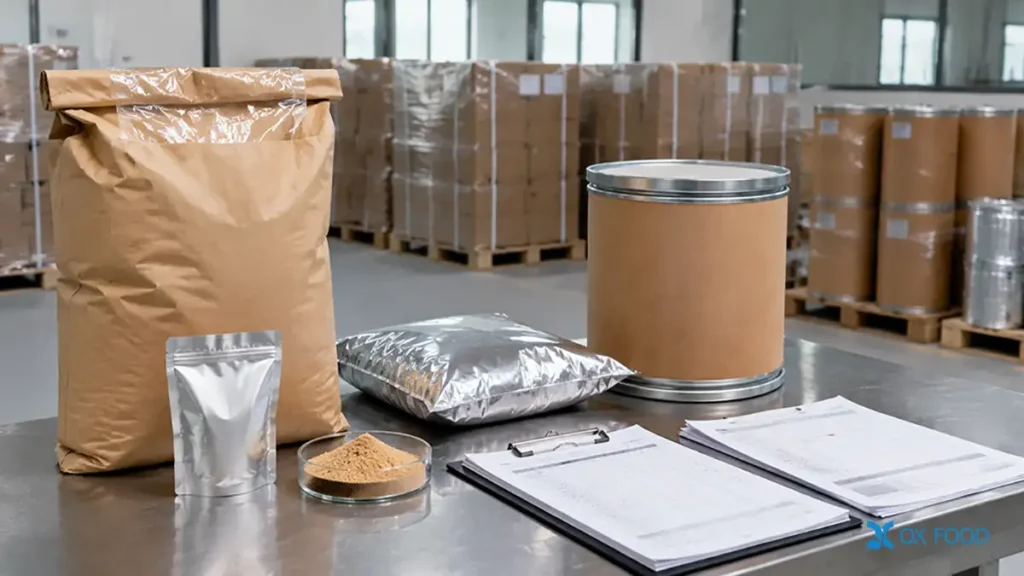
- Standard net content: 20 kg.
- Standard packaging: colorless inner PE bag with an outer brown paper-plastic composite bag.
- Reference/custom options: 100 g and 1 kg aluminum foil bags, 10 kg and 20 kg cartons, and 25 kg fiber drums; confirm the final format for the order.
- Sample quantity: 1 kg.
- MOQ: 1 MT.
- Shelf life: 18 months under recommended sealed storage conditions.
- Storage: store below 25 degrees C and 60% relative humidity in a cool, dry place; reseal promptly after opening.
- Customization: formulation direction and packaging specifications can be discussed according to the buyer’s project.
Before ordering bulk soy sauce powder, align the approved sample, current documents, packaging, annual volume, and delivery plan. The 1 kg sample is intended for laboratory and pilot work before the 1 MT minimum commercial order.
FAQ
What is FSP-H03 soy sauce powder?
FSP-H03 is a spray-dried seasoning powder made from a prepared blend of brewed soy sauce and vegetable protein liquid. It provides a blended soy sauce and savory protein profile for dry food formulations.
Where can soy sauce powder for instant food be used?
It can be tested in instant noodle packets, soup and sauce sachets, household convenient seasonings, snacks, hot pot bases, compound seasonings, ready meals, and other compatible savory foods.
What is the recommended dosage for FSP-H03?
The reference range is 2%-10%. The final dosage should be established by bench and pilot trials because salt, fat, heat, acidity, and other flavor ingredients affect the result.
Does FSP-H03 contain soy allergens?
Yes. FSP-H03 contains soy-derived ingredients. Buyers should review the current allergen statement and assess the complete finished formula for destination-market labeling.
Which technical indicators are controlled?
Key specification limits include moisture at no more than 8.00 g/100g, total nitrogen at no less than 0.80 g/100g, amino nitrogen at no less than 0.40 g/100g, and sodium chloride at no more than 45.00 g/100g.
Can a COA and certification documents be provided?
Yes. A current-batch COA and applicable ISO 9001, ISO 22000, HACCP, Halal, product, packaging, allergen, and supporting documents can be provided for review. Certificate scope should be confirmed for the current product and destination market.
What are the sample size, MOQ, and shelf life?
The reference sample quantity is 1 kg, the MOQ is 1 MT, and the shelf life is 18 months under recommended sealed storage conditions.
Can the formulation and packaging be customized?
Yes. OEM formulation direction and packaging specifications can be discussed according to the target application, market, annual volume, and procurement requirements.