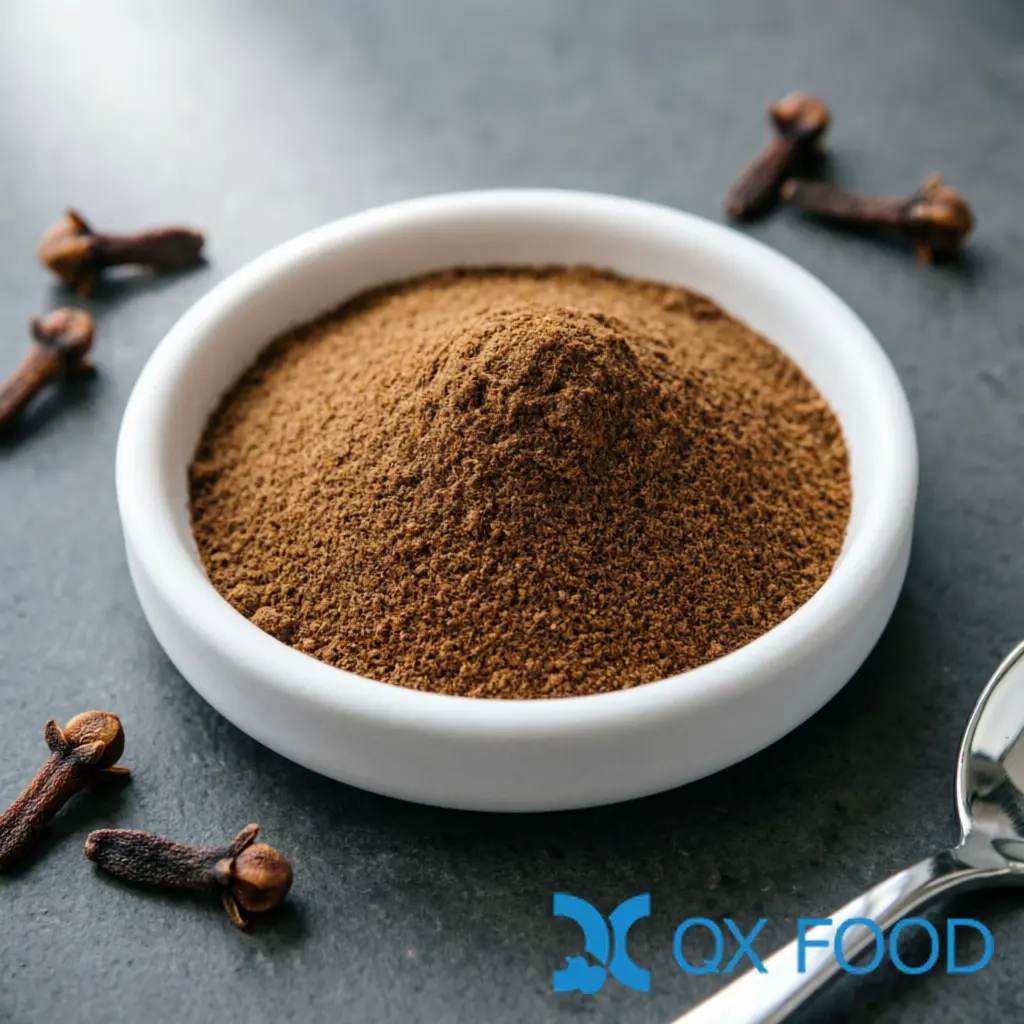
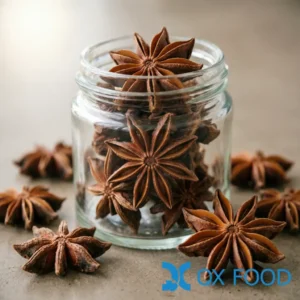
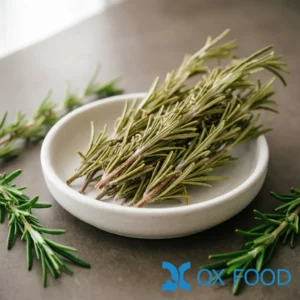
What Is Clove Powder CLO-D11?
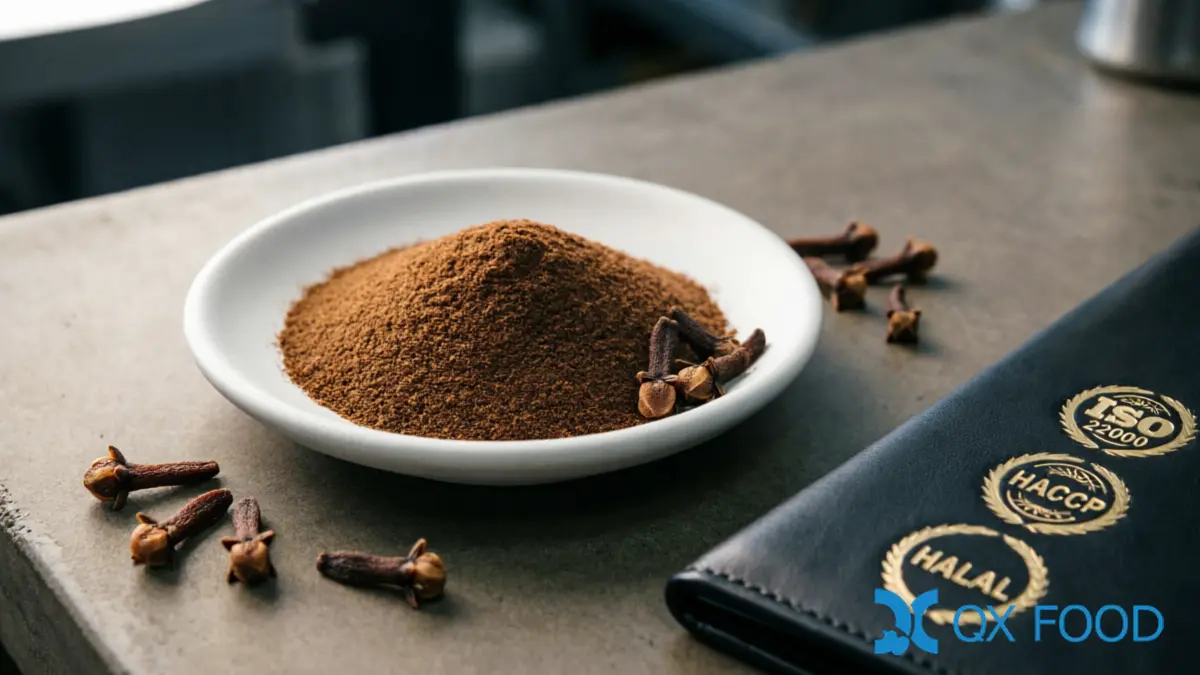
Clove powder CLO-D11 is made from whole dried clove buds — the unopened flower buds of the Syzygium aromaticum tree — that are manually sorted to remove stems and foreign matter, washed, low-temperature dried, sterilized, and then processed through coarse crushing, fine grinding to 80 mesh, and multi-layer sifting. Nothing else is added. No carriers, no anti-caking agents, no artificial flavors — just ground clove buds, with the volatile oil content that defines a clove’s quality preserved through low-temperature processing rather than burned off by high-heat grinding.
The volatile oil spec on clove powder CLO-D11 is the number that every buyer of ground cloves should look at first: 17.8 g/100g, against a minimum standard of 15.0 g/100g. That is an exceptionally high reading for a ground spice. Clove buds are the richest botanical source of eugenol — a phenylpropanoid compound that typically makes up 70–90% of clove volatile oil — and eugenol is the compound responsible for clove’s characteristic warm, sweet, pungent aroma and for its well-documented antimicrobial, antioxidant, and local anesthetic properties. A clove powder with high volatile oil content delivers more flavor per gram, holds its aroma longer in storage, and provides stronger functional effects in food systems than a clove powder with marginal oil content.
Heavy metal and mycotoxin screening is part of the standard COA: lead at 0.12 mg/kg (ceiling 2.0 mg/kg), aflatoxin B1 not detected at the 5 µg/kg limit. Microbiological control is tight: aerobic plate count at 200 CFU/g (ceiling 10,000), coliforms below detection, Salmonella not detected, Staphylococcus aureus under 10 CFU/g (ceiling 100). For a clove powder going into ready-to-eat products or into export markets with strict contaminant limits, having lead and aflatoxin data on the standard COA saves the buyer a round of third-party testing.
Specification Data — Standard Grade

| Parameter | Unit | Standard | Measured | Method |
|---|---|---|---|---|
| Moisture | g/100g | ≤12.0 | 9.2 | GB 5009.3 |
| Total Ash | % | ≤8.0 | 6.5 | GB 5009.4 |
| Volatile Oil | g/100g | ≥15.0 | 17.8 | GB 31626 |
| Aerobic Plate Count | CFU/g | ≤10,000 | 200 | GB 4789.2 |
| Coliforms | MPN/g | ≤0.3 | <0.3 | GB 4789.3 |
| Salmonella | /25g | Not detectable | Not detected | GB 4789.4 |
| Staphylococcus aureus | CFU/g | ≤100 | <10 | GB 4789.10 |
| Lead (as Pb) | mg/kg | ≤2.0 | 0.12 | GB 5009.12 |
| Aflatoxin B1 | μg/kg | ≤5.0 | Not Detected | GB 5009.22 |
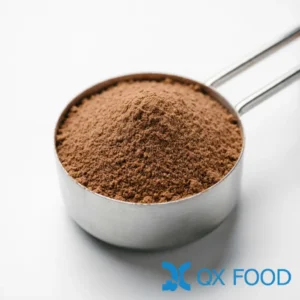
| Appearance | — | Fine brown powder, uniform | Compliant | GB/T 10220 |
| Odor & Taste | — | Strong spicy, sweet woody, characteristic clove | Compliant | GB/T 10220 |
The volatile oil reading of 17.8 g/100g deserves particular attention. Clove buds naturally contain 15–20% volatile oil by weight, of which 70–90% is eugenol. A reading of 17.8 tells you two things: first, the clove buds used to make this powder were harvested at peak maturity, when the oil content is highest (the buds are picked just before the flower opens, which is when the oil concentration peaks). Second, the low-temperature drying and grinding process preserved the oil — high-temperature processing would have driven off a significant fraction of the volatile compounds, resulting in a lower reading and a weaker, flatter aroma in the finished powder. For a buyer who has tested clove powder from other suppliers and found the aroma to be weak or inconsistent, the volatile oil number is the specification to compare.
Eugenol: What Makes Clove Powder More Than a Spice
Eugenol is the dominant compound in clove volatile oil and the reason clove powder occupies a position in food manufacturing that goes beyond simple flavoring. In food systems, eugenol functions in three ways that matter to the formulation team:
First, as a flavor compound. Eugenol delivers the warm, sweet, slightly numbing sensation that defines clove’s sensory profile. At typical food-use concentrations — 0.05–0.3% of the formulation by weight — clove powder contributes a recognizable aromatic note that complements cinnamon, nutmeg, allspice and ginger in sweet spice blends, and provides a distinctive sharp warmth in savory meat seasonings. Because eugenol’s flavor threshold is low (human sensory detection begins at roughly 6–30 parts per billion in water), a small amount of clove powder goes a long way.
Second, as an antimicrobial agent. Eugenol disrupts the cell membranes of a broad range of bacteria and fungi — a property that has been documented in decades of food microbiology research. In practical food manufacturing terms, this means clove powder provides an additional hurdle in the multi-barrier approach to food preservation. The effect is measurable: seasoned meat products containing clove powder at 0.1–0.5% typically show slower microbial growth and reduced lipid oxidation compared to unseasoned controls under the same storage conditions. Clove powder is not a substitute for proper refrigeration, salt levels, or approved preservatives — but it contributes to the overall preservation strategy in a way that a non-antimicrobial spice like black pepper does not.
Third, as an antioxidant. Eugenol is a potent free-radical scavenger — the phenolic hydroxyl group on the eugenol molecule donates a hydrogen atom to neutralize reactive oxygen species that would otherwise initiate lipid oxidation. In meat products, lipid oxidation is the chemical process that produces rancidity, off-flavors and color degradation during storage. Clove powder, by slowing that process, helps a seasoned meat product retain its sensory quality for longer than an unseasoned product or one seasoned with spices that lack significant antioxidant activity. The result is not dramatic — clove powder does not double a product’s shelf life — but in competitive food markets where a few extra days of retail display quality can make a commercial difference, the effect is worth understanding.
How Clove Powder Performs in Food Manufacturing
Meat Curing and Sausage Production
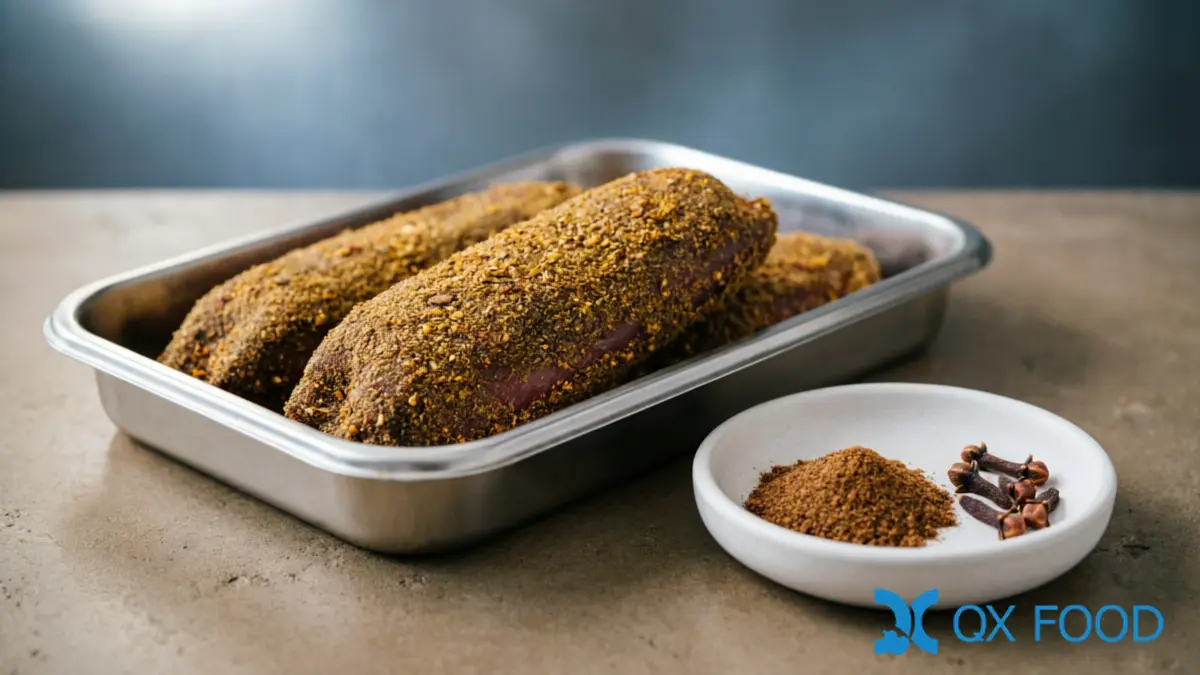
Clove powder appears in cured meat and sausage formulations across multiple culinary traditions — German blood sausage, French andouillette, Chinese cured meats, Dutch smoked sausage, and various Eastern European processed meat products. The typical inclusion rate is 0.1–0.5% of the meat block. At these levels, clove powder contributes a warm, spicy background note that complements the salt, smoke, and fermentation characters developed during curing. The antimicrobial activity of eugenol is particularly relevant in cured meat products where the clove powder is present throughout the product’s shelf life — the effect is cumulative and long-acting, unlike a surface treatment that washes off or degrades quickly.
In sausage manufacturing, clove powder is typically blended into the dry spice premix along with black pepper, garlic powder, paprika and other spices before being mixed into the meat emulsion. The fine particle size of clove powder CLO-D11 (80 mesh) ensures even distribution through the meat matrix. Clove powder’s potent flavor means that formulators must dose carefully — too much clove creates a medicinal, numbing character that consumers reject, while the right amount provides a distinctive warmth that differentiates the product from a generic sausage.
Curry Powders and Compound Spice Blends
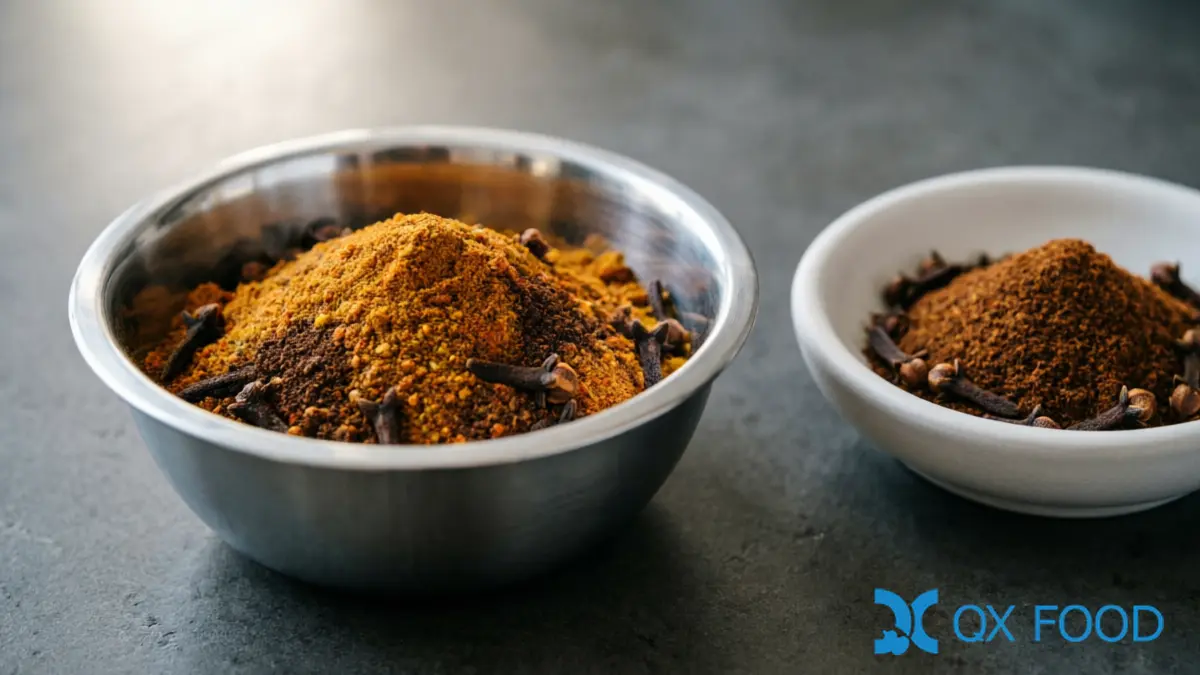
Clove powder is a standard component of curry powders and masala blends across South Asian, Southeast Asian, and Middle Eastern cuisines. In a commercial curry powder blend, clove powder typically makes up 3–8% of the blend by weight — enough to contribute its warm, sweet-spicy character without dominating the other spices. Clove pairs particularly well with cinnamon, cardamom, cumin and coriander in these blends, and the eugenol content helps anchor the blend’s aroma during storage.
Whole cloves are sometimes preferred over clove powder in curry blends where visible spice particles are part of the product’s identity, but for commercial curry powder manufacturing where uniformity and ease of blending are the priority, a consistently ground clove powder at a specified particle size is the practical choice. The low moisture content (9.2 g/100g) of clove powder CLO-D11 keeps it stable in multi-component dry spice blends without causing clumping.
Bakery and Sweet Goods
Clove powder is used in bakery products across European and North American traditions — gingerbread, speculoos cookies, pumpkin pie spice blends, fruit cakes, hot cross buns, and spiced breads. In a bakery dry mix, clove powder is typically used at 0.05–0.2% of the dry mix weight — a small amount relative to the dominant spices like cinnamon and ginger, because clove’s intense flavor can easily overwhelm a baked product. The volatile oil survives the baking process reasonably well — eugenol’s boiling point is around 254°C, well above typical baking temperatures — so the clove note remains present in the finished product.
Pickles, Sauces and Condiments
Clove powder is used in pickled vegetable production — particularly in sweet pickles, chutneys, and spiced fruit preserves — where it contributes warmth and complexity to the pickling brine. In sauce and condiment manufacturing, clove powder appears in Worcestershire sauce, barbecue sauces, ketchup variants, and certain Asian dipping sauces. The typical dosage in sauces is 0.02–0.1% — extremely low compared to other spices — because clove’s flavor intensity in a liquid matrix translates more efficiently to the palate than in a dry application. Clove powder also functions as a natural preservative in these acidic, high-sugar products, where the eugenol provides additional antimicrobial protection alongside the vinegar or acid already present in the formulation.
80 Mesh Fine Grind: Why Particle Size Matters
Clove powder CLO-D11 is ground to 80 mesh — meaning the powder passes through a sieve with 80 openings per linear inch, or roughly 180-micron particle size. This is finer than a standard commercial spice grind and has practical implications across the applications where clove powder is used.
In a dry seasoning blend, 80-mesh clove powder disperses evenly through the mixture during blending — no concentrated pockets of clove, no bland spots. In a liquid application like a sauce or marinade, the fine powder hydrates quickly without forming lumps or leaving a gritty residue on the palate. In a meat emulsion, the fine particles distribute through the protein matrix during mixing and chopping without creating visible specks in the finished product cross-section — important for emulsified sausages where visual uniformity is part of the quality specification.
For buyers who need a different particle size — coarser for visible clove particles in a rustic sausage or spice blend, or finer for instant beverage or supplement applications — the mesh specification can be discussed at the sample stage. This is a physical specification change (grinding and sieving parameters), not a formulation change.
Packaging and Shelf Stability
Clove powder CLO-D11 is a natural single-ingredient product — 100% ground clove buds with no additives, no preservatives, no anti-caking agents, no artificial flavors and no fillers. The rich brown color is characteristic of properly dried and ground clove buds. The volatile oil content (17.8 g/100g) is the primary quality indicator that buyers should monitor batch-to-batch — it reflects both the quality of the incoming clove buds and the care taken during drying and grinding.
Standard packaging covers the usual order volumes: 100 g and 1 kg aluminum foil bags for evaluation, 10 kg or 20 kg cartons for pilot and initial production, and 25 kg fiber drums for full container loads. Custom packaging — private-label bags, specific dimensions, multi-layer barrier materials — is available for OEM orders.
Storage: sealed container, cool dry place, away from direct sunlight and strong odors. The volatile oil in clove powder — primarily eugenol — is sensitive to oxygen and light over time, though less so than the volatile oils in many other spices because eugenol is relatively stable as phenolic compounds go. Under proper conditions — sealed bag, below 25°C, humidity below 60% — the shelf life is 18 months from production. Opened bags should be re-sealed immediately; the manufacturer recommends using opened stock within 60 days for best aromatic quality. Moisture is the main enemy of clove powder in storage — the powder is hygroscopic, and even a few hours of exposure in a humid production environment can initiate clumping.
Quality Systems and Documentation
- ISO 9001:2015 — quality management system
- ISO 22000:2018 — food safety management system
- HACCP — hazard analysis and critical control points
- HALAL — certified by an accredited halal certification body
The product standard is Q/HKSP 0001S. Each shipment comes with a batch-specific COA covering moisture, ash, volatile oil, microbiology, heavy metals and aflatoxin. Compliance with Codex Alimentarius guidelines is maintained. Import documentation requirements should be communicated early.
Related reading: Clove’s small-dose power in hot pot spice architecture.
In confectionery, clove accents mango MGO-15 and strawberry STB-18 jam-style profiles.
Frequently Asked Questions
What is the eugenol content of clove powder CLO-D11, and why does it matter?
Eugenol makes up 70–90% of the volatile oil in clove powder CLO-D11, which measures 17.8 g/100g total volatile oil by steam distillation. Eugenol is the compound responsible for clove’s warm, sweet, slightly numbing flavor and for its documented antimicrobial and antioxidant properties in food systems. A high volatile oil reading — well above the 15.0 g/100g minimum — means the clove powder delivers more flavor per gram, holds its aroma longer in storage, and provides stronger functional effects than a clove powder with marginal oil content. If eugenol content is specifically important to your formulation or labeling, request a quantitative eugenol assay from the QA team at the inquiry stage.
Does clove powder CLO-D11 contain any additives or anti-caking agents?
No. Clove powder CLO-D11 is 100% ground dried clove buds — no silicon dioxide, no maltodextrin, no anti-caking agents, no artificial flavors and no preservatives. The production process is entirely mechanical: manual sorting, washing, low-temperature drying, sterilization, coarse crushing, fine grinding to 80 mesh, multi-layer sifting, and metal detection. If your ingredient label needs to read “clove” alone, this grade supports that.
What mesh size is clove powder CLO-D11, and can I get a different specification?
The standard grade is ground to 80 mesh (approximately 180-micron particle size). This fineness ensures even dispersion in seasoning blends, rapid hydration in liquid applications, and no visible specks in emulsified meat products. Coarser or finer particle size specifications can be discussed at the sample stage — this is a physical specification change, not a formulation change. Provide a target mesh range or reference sample when you inquire.
Can clove powder help extend the shelf life of my meat products?
Clove powder’s eugenol content provides measurable antimicrobial and antioxidant effects in food systems — particularly in meat products, where it slows both microbial growth and lipid oxidation during storage. The effect is real but should not be overstated: clove powder at typical usage levels (0.1–0.5% of the meat block) contributes an additional hurdle in a multi-barrier preservation strategy alongside proper refrigeration, salt, and approved curing agents. It does not replace any of those. In practice, a seasoned meat product containing clove powder may hold its sensory and microbiological quality marginally longer than an unseasoned control under the same storage conditions.
Is clove powder CLO-D11 tested for aflatoxin and heavy metals?
Yes. The standard COA includes aflatoxin B1 (not detected at 5 µg/kg) and lead (0.12 mg/kg against a 2.0 mg/kg limit). These parameters are part of the routine testing schedule. If your importing country requires broader mycotoxin screening or additional heavy metal testing, communicate these requirements at the inquiry stage.
How should I store clove powder to maintain volatile oil quality?
Store clove powder in a sealed container in a cool, dry place — below 25°C with humidity below 60%. The powder is hygroscopic and the volatile oils are sensitive to oxygen and light. Opened bags should be re-sealed immediately. Under proper storage, shelf life is 18 months; opened stock used within 60 days retains the best aromatic quality. The manufacturer recommends against storing opened clove powder in high-humidity production environments without nitrogen-flushed or vacuum-sealed packaging.
Is clove powder CLO-D11 Halal-certified?
Yes. The manufacturing facility holds active Halal certification. Clove powder is a single-ingredient plant product — dried, ground clove buds — with no animal-derived materials, no ethanol, and no fermentation steps in the production process. The certificate is included in the standard documentation package.
Explore Our Natural Spice Powder Range
Clove powder CLO-D11 is part of the Natural Plant Powders family. Buyers building a full spice portfolio often evaluate these products alongside:
Cinnamon Powder CP-K38 — pure ground cassia bark for bakery, beverages and meat processing.
Turmeric Powder TP-K37 — curcumin 4.5 g/100g, natural color and seasoning base.
Garlic Powder GP-B06 — pure ground garlic for snack seasonings and savory blends.
Ginger Powder DGP-W01 — pure ground dried ginger for bakery, beverage and savory applications.
For the full category view, visit the Natural Plant Powders category page.