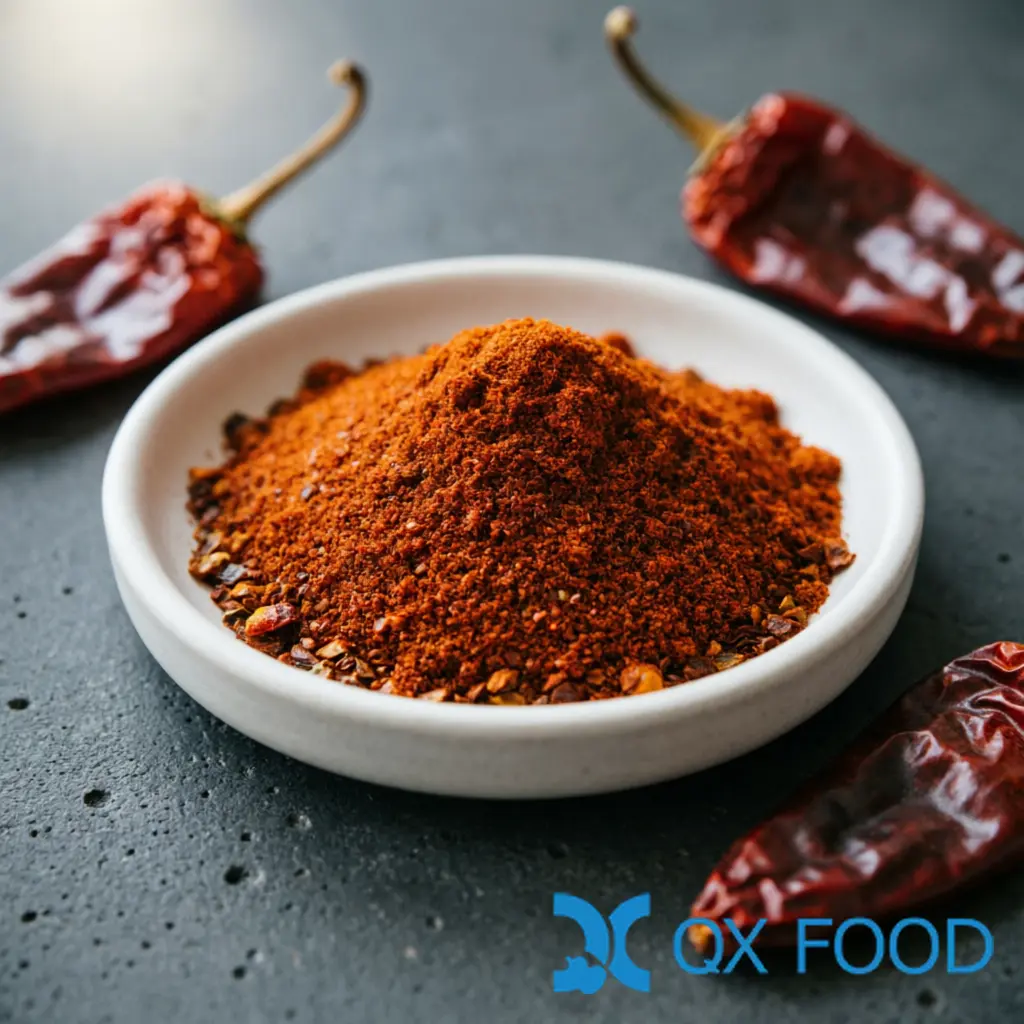
What Is Paprika PP-C13?
Paprika PP-C13 is made from sweet bell peppers (Capsicum annuum) — often called “红甜椒” or “红菜椒” in Chinese — not from hot chili peppers. This distinction is fundamental: paprika is a sweet pepper product, selected and bred for high carotenoid pigment content and low capsaicin. The word “paprika” itself comes from Hungarian and is used globally to refer specifically to ground sweet pepper powder. It should not be confused with “辣椒粉” (chili powder), which comes from hot pepper varieties.
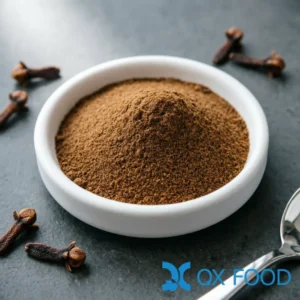
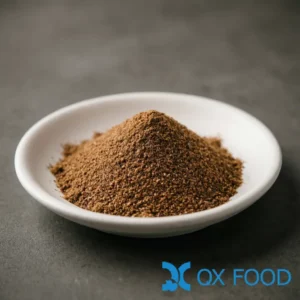
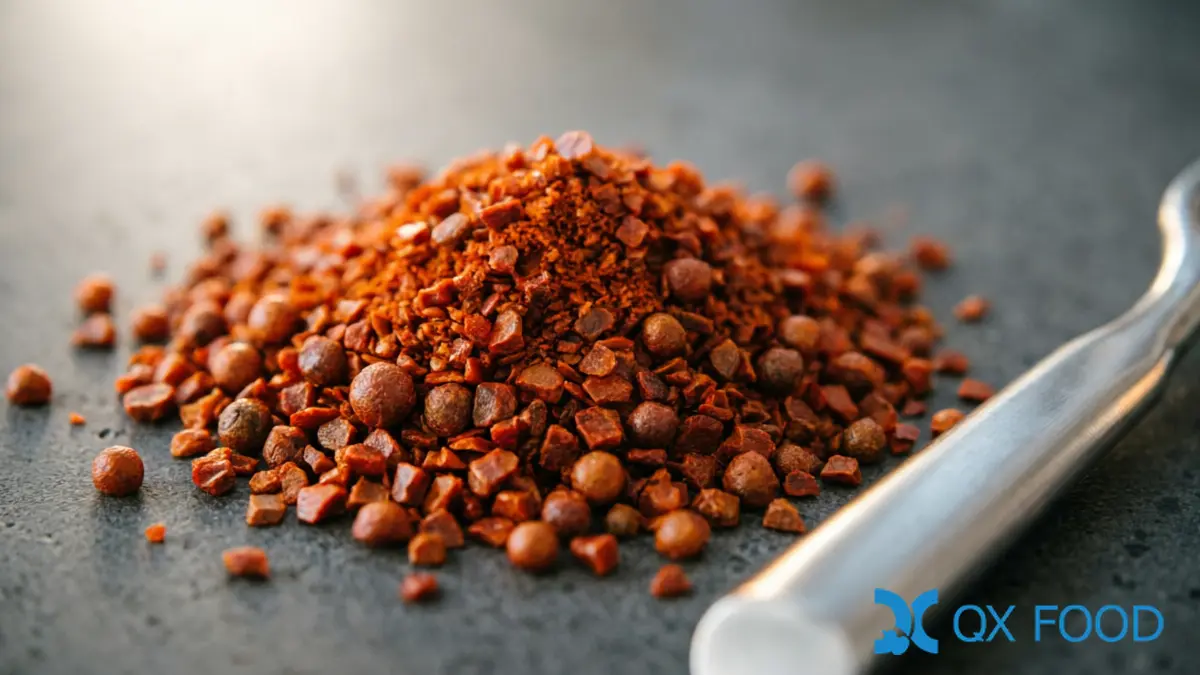
The peppers are harvested in spring from mountain growing regions, then sun-dried and air-dried through a traditional AD (air-drying) process — no hot-air dehydration, no freeze-drying, no chemical drying agents. The slow, natural drying preserves the pepper’s carotenoid pigments — primarily capsanthin (responsible for the red hue), capsorubin (deep red), and beta-carotene (orange-yellow) — which together give paprika its characteristic warm red-orange color. After drying, the peppers are ground to a granular consistency: coarser than a fine powder, which makes paprika easier to handle in dry-blend operations, reduces dust during mixing, and gives the product a visible particulate presence where the speckled red-orange appearance is part of the product’s visual identity.
Paprika Types: What Buyers Should Know
Not all paprika is the same, and the variety a buyer selects determines how the ingredient performs in the finished product. The global paprika market recognizes several distinct grades:
Sweet Paprika (PP-C13) — Made from sweet bell pepper varieties with no detectable capsaicin heat. The primary function is natural red-orange coloring, with a mild, sweet background flavor. This is the workhorse grade for food manufacturing: sausage, snack coatings, soup bases, cheese coloring, spice blends. It delivers color without heat, which is the critical distinction from chili powder. PP-C13 falls into this category.
Hot Paprika — Made from pepper varieties that carry some capsaicin, producing a mild to moderate heat alongside the red color. Hungarian “erős paprika” is the best-known hot paprika. Used when both color and a gentle warmth are wanted in the same ingredient.
Smoked Paprika (Spanish Pimentón) — Sweet or hot peppers that are slow-smoked over oak fires before grinding. The smoking process imparts a deep, smoky aroma that is distinct from regular paprika. Spanish pimentón de la Vera carries Protected Designation of Origin status. Used in chorizo, paella seasoning, and products where a smoky character is part of the flavor profile. PP-C13 is not smoked.
Paprika Oleoresin — A solvent-extracted concentrate of paprika’s carotenoid pigments, standardized to a specific color value. Used when maximum coloring power per gram is required and the formulator does not want to add bulk from ground pepper. Available on request from the QA team for buyers whose primary requirement is color intensity rather than the ground spice as an ingredient.
Specification Data — Standard Grade
| Parameter | Unit | Standard | Measured | Method |
|---|---|---|---|---|
| Moisture | g/100g | ≤8.0 | Compliant | GB 5009.3 |
| Sodium Chloride (NaCl) | g/100g | Standard | 0.111 | GB 5009.44 |
| Physical State | — | Granular, free-flowing | Compliant | Visual |
| Color | — | Deep red-orange, natural | Compliant | Q/HKSP 0002S |
| Odor & Taste | — | Mild sweet pepper, no heat | Compliant | Q/HKSP 0002S |
The moisture reading confirms the AD drying process has reduced the water content to a level that supports stable storage and free-flowing handling. The sodium chloride value (0.111 g/100g) is the naturally occurring salt content of the dried peppers — no salt is added during processing. For buyers formulating low-sodium products, the paprika contributes a trace amount of sodium that is well below any labeling threshold.
Paprika vs Chili Powder: Why the Distinction Matters for Formulators
Paprika and chili powder are both ground red pepper products, but they serve fundamentally different functions in food manufacturing, and confusing the two can produce a product that fails sensory QC.
Paprika is made from sweet pepper varieties — Capsicum annuum cultivars selected for high carotenoid pigment content and low capsaicin. The flavor is mild, sweet, and aromatic, with no detectable heat on the Scoville scale (typically 100–500 SHU, which is sub-threshold for most palates). The primary function of paprika in a formulation is visual: it delivers a natural red-orange color that ranges from bright orange (from the paprika’s carotenoid fraction) to deep brick-red (from the combination of carotenoids and the dried pepper’s natural brown undertones). In products like processed cheese, snack seasonings, sausage casings and dry soup mixes, paprika is the ingredient that provides the warm red-orange hue that consumers associate with the product category.
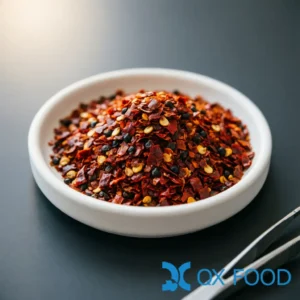
Chili powder is made from hot pepper varieties — Capsicum annuum or Capsicum frutescens cultivars selected for capsaicin content. The flavor is pungent and hot, with Scoville ratings that can range from 500 SHU (mild) to over 50,000 SHU (very hot). The primary function of chili powder is sensory: it delivers heat. The red color is secondary and often less intense than paprika because hot pepper varieties typically have lower carotenoid content than sweet pepper varieties bred specifically for color.
The practical implication for a buyer is that paprika and chili powder are not interchangeable at any dosage. Substituting chili powder for paprika in a product where the red color is the specification — and where heat is not wanted — will produce a product that is both the wrong color (less intense red) and unacceptably spicy. Substituting paprika for chili powder in a product where heat is the specification will produce a product that looks right but tastes bland. Most food manufacturers stock both ingredients and use them for different product lines: paprika for color-forward products, chili powder for heat-forward products.
How Paprika Performs in Food Manufacturing
Natural Food Coloring in Processed Foods
The primary B2B use case for paprika is as a clean-label natural colorant. In an era when consumers increasingly reject synthetic food dyes — and when regulatory pressure on artificial colors is tightening in multiple markets — paprika offers a plant-based alternative that can appear on the ingredient label as “paprika,” “paprika extract” or “spice,” depending on the jurisdiction and the product category. This is fundamentally different from synthetic red dyes like Allura Red (E129) or Ponceau 4R (E124), which must appear on the label under their chemical names or E-numbers and carry varying degrees of consumer and regulatory scrutiny.
Paprika’s coloring strength depends on the carotenoid content of the raw peppers and the extraction efficiency of the processing method. The AD process used for paprika PP-C13 — slow sun-drying and air-drying — preserves a higher fraction of the pepper’s native carotenoids than high-temperature mechanical drying, which can degrade capsanthin and capsorubin through thermal oxidation. The granular particle size also affects color release: the larger surface area of a fine powder releases color more quickly but is also more susceptible to oxidative color fading during storage; the granular form of paprika PP-C13 releases color more gradually and holds its pigment stability longer in dry blends.
Meat Processing and Sausage Manufacturing
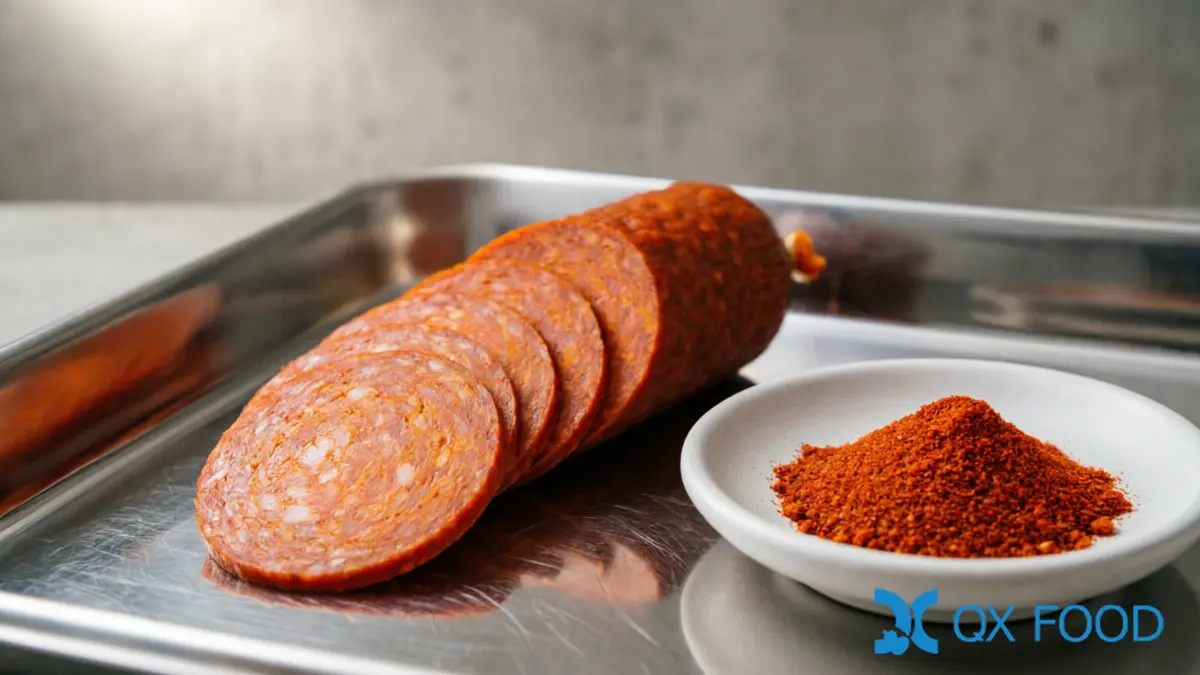
In meat processing, paprika serves a dual function: it contributes color to the product surface and to the fat phase of the meat emulsion, and it provides the mild sweet pepper flavor that consumers expect in products like chorizo, pepperoni, Italian sausage and various Eastern European processed meat products. At typical inclusion rates of 0.5–2% of the meat block, paprika PP-C13 produces a visible red-orange hue in the finished product. The granular texture means the paprika particles are visible as small red specks in the product cross-section — a characteristic that consumers recognize as authentic in traditionally made sausages.
Paprika also contributes to the oxidative stability of meat products. The carotenoids in paprika — particularly capsanthin and beta-carotene — are effective free-radical scavengers that slow lipid oxidation during storage. The effect is comparable in magnitude to what rosemary extract provides in commercial meat formulations: not a replacement for proper refrigeration or approved antioxidants, but a measurable contribution to the product’s overall oxidative stability that can extend the window of acceptable sensory quality by a matter of days.
Snack Seasoning and Coating Systems
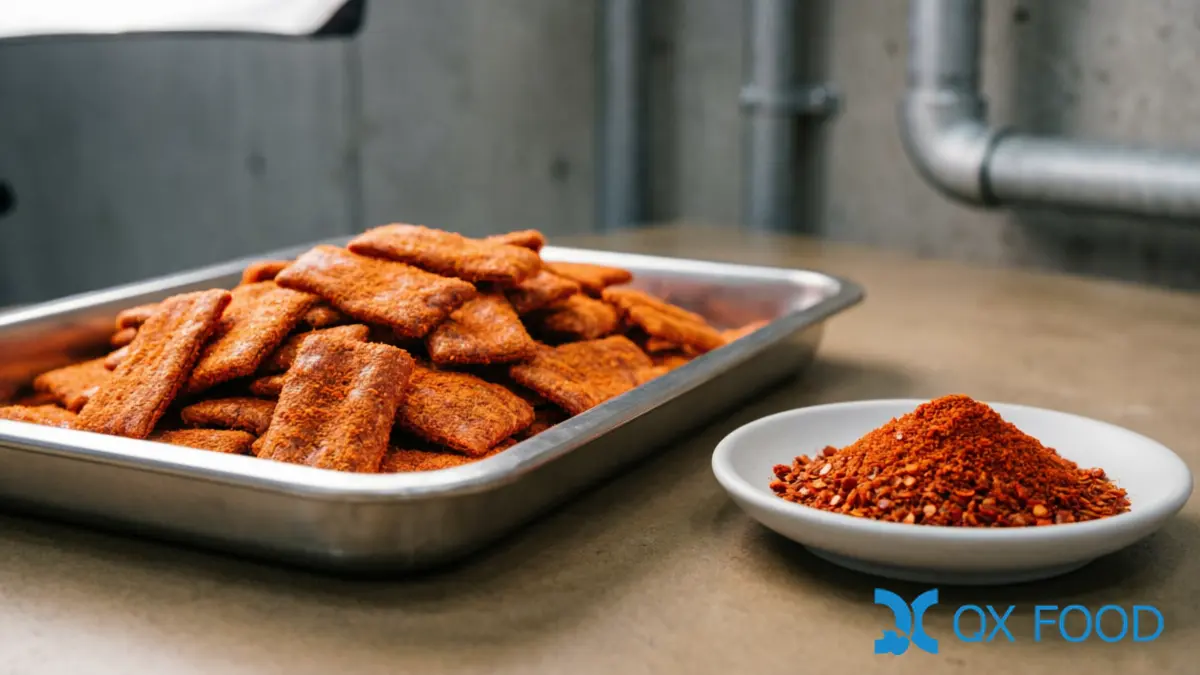
In snack manufacturing, paprika is a core component of barbecue, cheese and “red” seasoning blends. The granular texture of paprika PP-C13 gives the seasoning visual presence on the snack surface — consumers can see the red-orange paprika particles on a potato chip, extruded snack or coated nut, and the visible spice is part of the product’s appetite appeal. In a typical snack seasoning blend, paprika constitutes 10–30% of the blend by weight, depending on the target color intensity and the other spices in the formulation.
The oil-soluble carotenoids in paprika adhere well to oil-based snack coating systems. In a standard snack manufacturing process — where the seasoning blend is applied to the snack surface via an oil spray that acts as an adhesive — the paprika particles bind to the oil film and remain on the snack surface through packaging and distribution. The granular particle size of paprika PP-C13 means the particles are less likely to separate from the snack surface and settle to the bottom of the package as fine dust, which is a common quality complaint with finely ground paprika powders in snack applications.
Soups, Sauces and Liquid Food Systems
In soup and sauce manufacturing, paprika PP-C13 contributes both color and a mild sweet pepper background note. The granular form disperses in hot liquid and releases its carotenoid pigments into the fat phase of the soup or sauce — in a cream-based soup, the paprika color distributes through the fat globules and produces a uniform warm orange hue; in a clear broth, the paprika particles remain suspended and contribute visible red-orange specks. The visual effect is different from a finely ground paprika powder, which would produce a more uniform but less intense color — the granular paprika creates a speckled appearance that some product categories, particularly rustic or artisanal-style soups and sauces, intentionally seek.
Packaging and Shelf Stability
Paprika PP-C13 is a natural single-ingredient product — sun-dried and air-dried sweet peppers, ground to a granular consistency, with no additives, no artificial colorants and no preservatives. The deep red-orange color is entirely from the pepper’s native carotenoid pigments, preserved through the traditional AD drying process.
The carotenoid pigments in paprika are sensitive to light and oxygen — more so than the volatile oils in most other spices. Under prolonged exposure to direct light or air, capsanthin and capsorubin oxidize and the paprika’s color fades from bright red-orange to a dull brown. This is the primary quality concern for paprika in storage: color degradation, not flavor loss. For this reason, paprika should be stored in opaque, sealed packaging away from direct light, and opened bags should be re-sealed immediately after use.
Standard packaging covers evaluation pouches (100 g or 1 kg aluminum foil bags), mid-volume cartons (10 kg or 20 kg), and bulk drums (25 kg fiber drums). Custom packaging — private-label bags, multi-layer barrier materials with light-blocking layers — is available for OEM orders. Under proper conditions — sealed, opaque packaging, below 25°C, humidity below 60% — the shelf life is 12 months. The manufacturer recommends using opened stock within 60 days for best color retention. For long-term storage or high-humidity production environments, nitrogen-flushed packaging extends the color stability window.
Market Context: The Shift from Synthetic to Natural Colors
Paprika’s position as a natural food colorant has gained commercial urgency. In April 2025, the FDA announced a voluntary initiative to phase out synthetic food dyes — Red 40, Yellow 5, Yellow 6, Blue 1, Blue 2, and Green 3 — from the US food supply. This follows years of tightening regulation in the EU, where paprika extract (E160c) has long been approved as a natural food color. The global natural food coloring market is projected to grow at approximately 8.45% annually through 2033, driven by clean-label consumer demand and regulatory pressure on petroleum-based synthetic dyes.
For food manufacturers, the implication is clear: reformulating products that currently use synthetic red, orange, or yellow dyes requires a natural alternative that delivers comparable visual impact without compromising label appeal. Paprika PP-C13 — with its carotenoid-based red-orange color, zero additives, and simple ingredient declaration — fits that requirement. The granular form disperses in dry blends and oil-based coating systems, and the traditional AD drying process preserves the native pigment content without chemical intervention. Buyers sourcing paprika as a colorant should specify the ASTA color value requirement at the inquiry stage to ensure the delivered grade meets the target color intensity for their application.
Quality Systems and Documentation
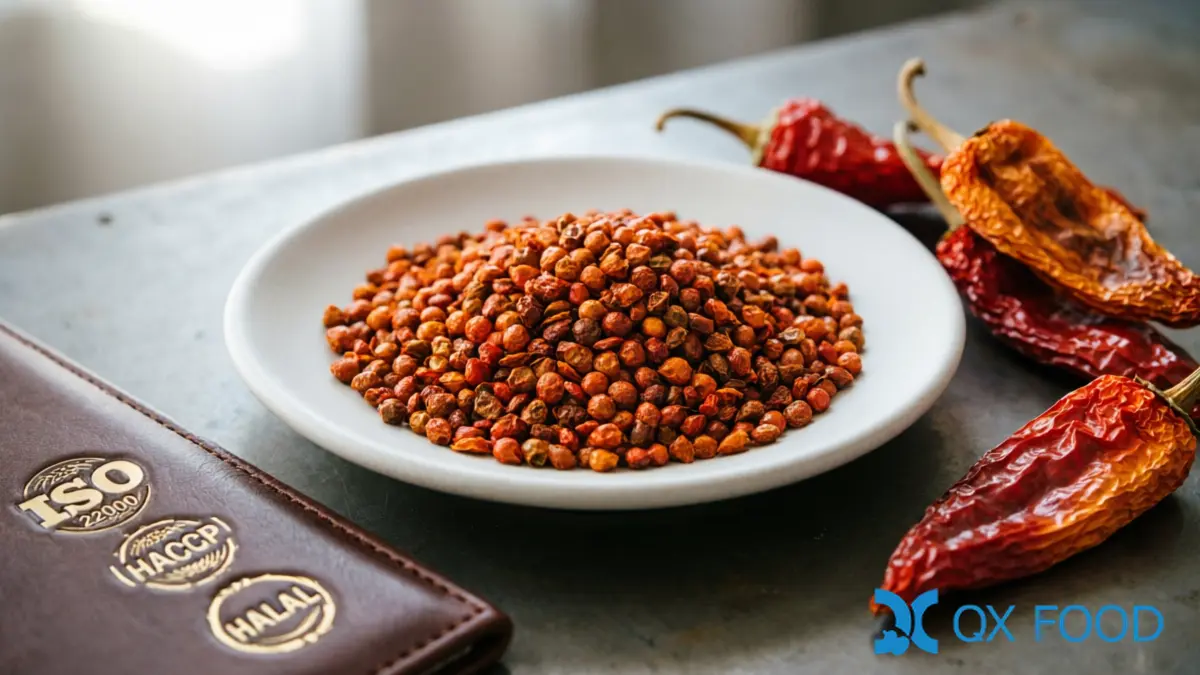
- ISO 9001:2015 — quality management system
- ISO 22000:2018 — food safety management system
- HACCP — hazard analysis and critical control points
- HALAL — certified by an accredited halal certification body
Each shipment comes with a batch-specific COA covering moisture and sodium chloride. Additional testing — ASTA color value, microbiological panel, heavy metals, pesticide residues — can be arranged on request. Compliance with Codex Alimentarius guidelines is maintained.
Paprika selection is covered in our paprika vs chili powder guide, with application context in snack seasoning.
Frequently Asked Questions
Is paprika PP-C13 the same as chili powder?
No. Paprika PP-C13 is made from sweet pepper varieties with no detectable heat (below 500 SHU). Its primary function in food manufacturing is natural red-orange coloring from carotenoid pigments — capsanthin and capsorubin. Chili powder is made from hot pepper varieties and its primary function is delivering pungent heat from capsaicin. Substituting one for the other will produce a product that fails to meet the specification — either the wrong color or an unacceptable level of heat. Most manufacturers stock both ingredients and use them for different product lines.
Can paprika PP-C13 replace synthetic red food dyes in my product?
Paprika is widely used as a clean-label natural alternative to synthetic red dyes like Allura Red (E129). The carotenoid pigments in paprika are oil-soluble and perform best in fat-based systems — meat emulsions, oil-sprayed snack coatings, sauces with a significant fat phase. In water-based systems, color release is slower. The labeling advantage of paprika over synthetic dyes is that it appears on the ingredient declaration as “paprika” or “spice” rather than as a chemical name or E-number. For maximum color intensity in demanding applications, a paprika oleoresin extract may provide stronger color than the ground spice alone — discuss this with the QA team if color strength is your primary specification.
What is the difference between paprika powder and paprika granules?
Paprika PP-C13 is produced in granular form — coarser than a fine powder. The granular texture reduces dust during mixing and handling, makes the paprika particles visible as red-orange specks in seasoning blends and sausage cross-sections, and provides better adhesion to oil-based snack coatings with less settling to the bottom of the package. Finer paprika powder releases color more quickly but is more susceptible to oxidative color fading during storage. The choice between granular and powder forms depends on the application: granular for visual presence and storage stability, powder for rapid color release and uniform dispersion in liquid systems.
Does paprika PP-C13 contain any additives or artificial colorants?
No. Paprika PP-C13 is 100% sun-dried and air-dried sweet peppers — no additives, no artificial colorants, no anti-caking agents and no preservatives. The deep red-orange color comes entirely from the pepper’s native carotenoid pigments. If your clean-label positioning requires a natural color source, this product supports that claim.
How should I store paprika to prevent color fading?
Paprika’s carotenoid pigments are sensitive to light and oxygen — more so than the volatile oils in most other spices. Store paprika in opaque, sealed packaging in a cool, dry place below 25°C with humidity below 60%. Keep away from direct light. Under prolonged light or air exposure, the bright red-orange color fades to a dull brown. Opened bags should be re-sealed immediately. Shelf life is 12 months under proper storage; opened stock used within 60 days retains the best color quality. Nitrogen-flushed packaging can be discussed for long-term storage.
What is the ASTA color value of paprika PP-C13?
The ASTA color value — the standard industry measure of paprika’s coloring strength — is not included on the standard COA for this grade but can be tested on request. ASTA color value measures the extractable color of paprika in a standardized solvent system and is the most direct indicator of the paprika’s performance as a natural colorant. If your product specification requires a minimum ASTA value, communicate this at the inquiry stage and the QA team will provide lot-specific data.
Is paprika PP-C13 Halal-certified?
Yes. The manufacturing facility holds active Halal certification. Paprika is a single-ingredient plant product — dried sweet peppers — with no animal-derived materials, no ethanol and no fermentation steps. The certificate is included in the standard documentation package.
Explore Our Natural Spice Powder Range
Paprika PP-C13 is part of the Natural Plant Powders family. Buyers building a full spice and color portfolio often evaluate these products together:
Turmeric Powder TP-K37 — curcumin 4.5 g/100g, natural yellow color and seasoning.
Garlic Powder GP-B06 — pure ground garlic for snack seasonings and savory blends.
Beetroot Powder — natural red-purple colorant for food and beverage.
Carrot Powder CRP-H23 — natural orange color and vegetable nutrition.
For the full category view, visit the Natural Plant Powders category page.
For a formulation-level comparison, read our paprika vs chili powder guide.