
Snack Seasoning for Chips and Extruded Snacks: Adhesion, Particle Size and Flavor Layering
Snack seasoning is the competitive battleground of a savory snacks market valued at USD 274.82 billion in 2025 and projected to reach USD 506.30 billion by 2035 at a 6.3% CAGR (Market Research Future, 2025). For chip plants, extruded snack lines and contract packers, the seasoning system determines consumer repeat purchase more than any other variable — and it fails more often than it should, because adhesion, particle size and flavor layering are engineering problems as much as recipe problems. This guide covers how industrial snack seasoning works on the line, what particle size means for each application method, and how to build flavor systems that survive tumbling, storage and the bag.
How Snack Seasoning Adheres: The Oil-and-Dust Mechanism
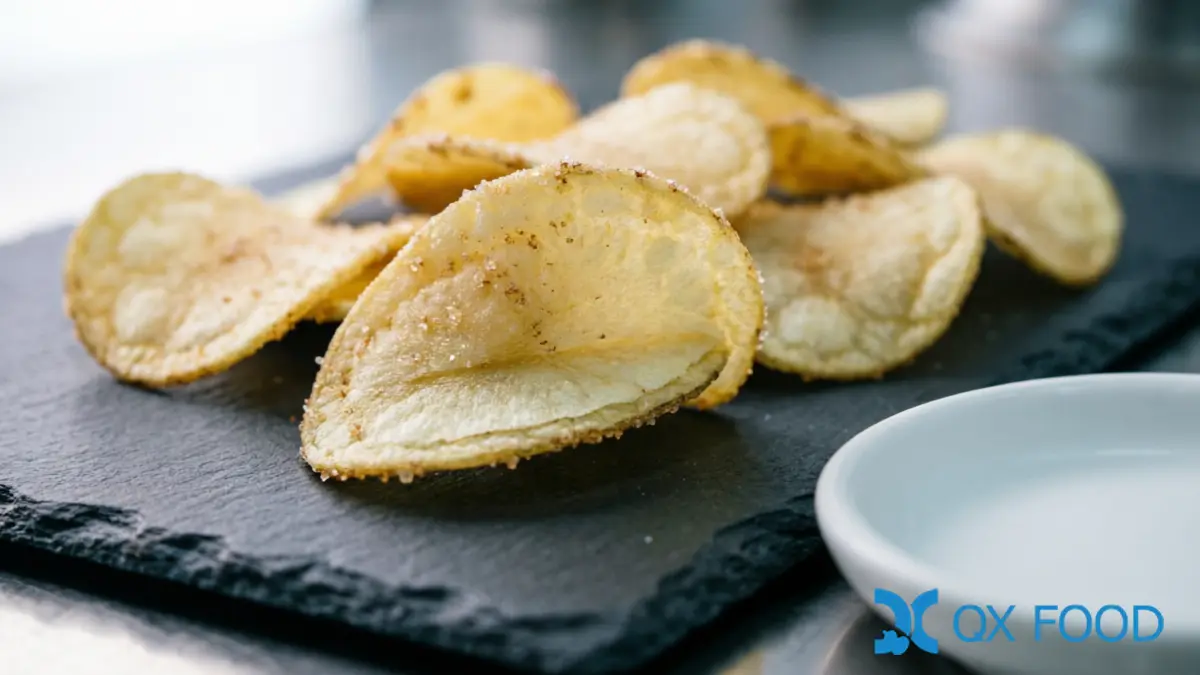
Most savory snack seasoning is applied topically: an oil coating is sprayed or tumbled onto the base, then dry seasoning powder is dusted on and sticks to the oil layer. The physics of adhesion is documented in food engineering research — the adhesion of dry seasoning particles onto tortilla chips depends on oil film thickness, particle size and surface roughness (Barringer, 2004). Three practical consequences follow for every snack seasoning line:
- Oil application comes first — oiling level typically runs 8-15% for fried snacks and higher for baked bases; too little oil and the seasoning falls off, too much and the product feels greasy and the powder clumps.
- Adhesion is a yield problem — seasoning that does not stick is seasoning you paid for and the consumer never tastes; line losses of 10-20% of seasoning weight are common on poorly tuned systems.
- Particle size drives adhesion — fine powders stick better to oil films and coat evenly; large particles give visual impact but fall off in the tumbler and the bag.
For a detailed engineering treatment of application systems, see the seasoning application system guide from Majestic Spice.
Particle Size: Matching Snack Seasoning to the Application Method
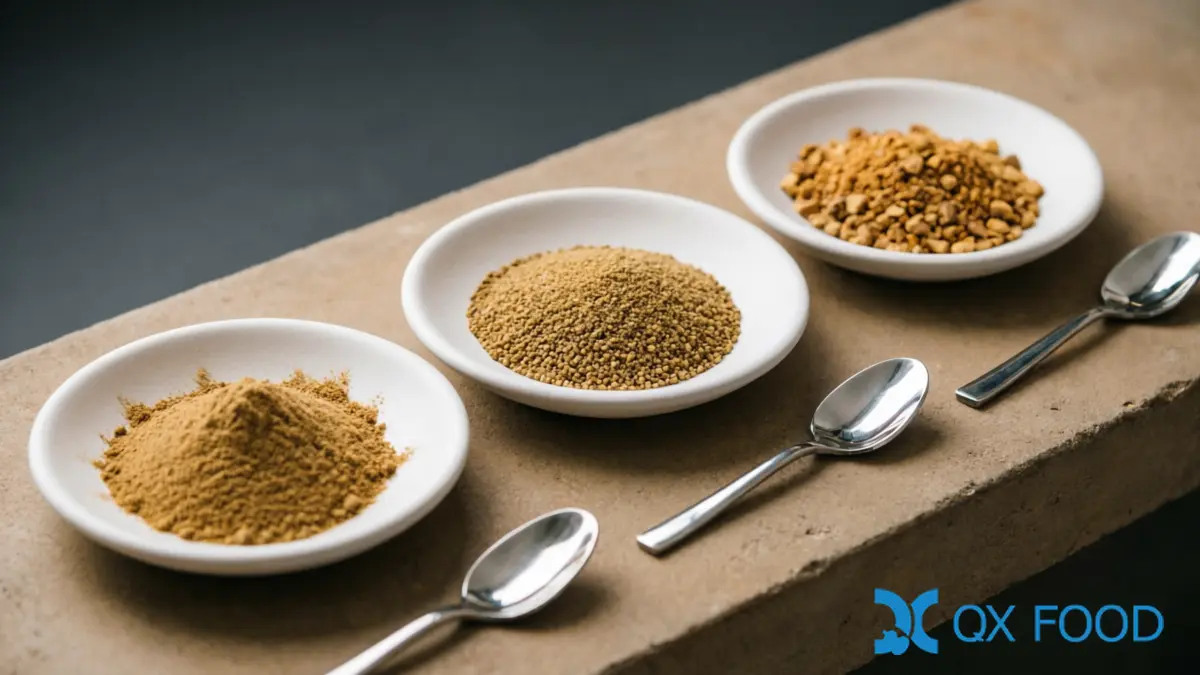
The same snack seasoning blend can perform brilliantly or fail completely depending on mesh size. Match the particle distribution to the application system:
| Application | Typical Mesh | Why It Works |
|---|---|---|
| Fine dusting on chips | 120-200 mesh | High adhesion, even coverage, no visible granules |
| Standard tumble coating | 60-80 mesh | Balanced adhesion and flavor impact for extruded snacks |
| Coarse topical seasoning | 20-40 mesh | Visible bits for premium positioning; needs strong oil layer |
| Slurry application | 80-120 mesh | Disperses cleanly in oil or water slurries without settling |
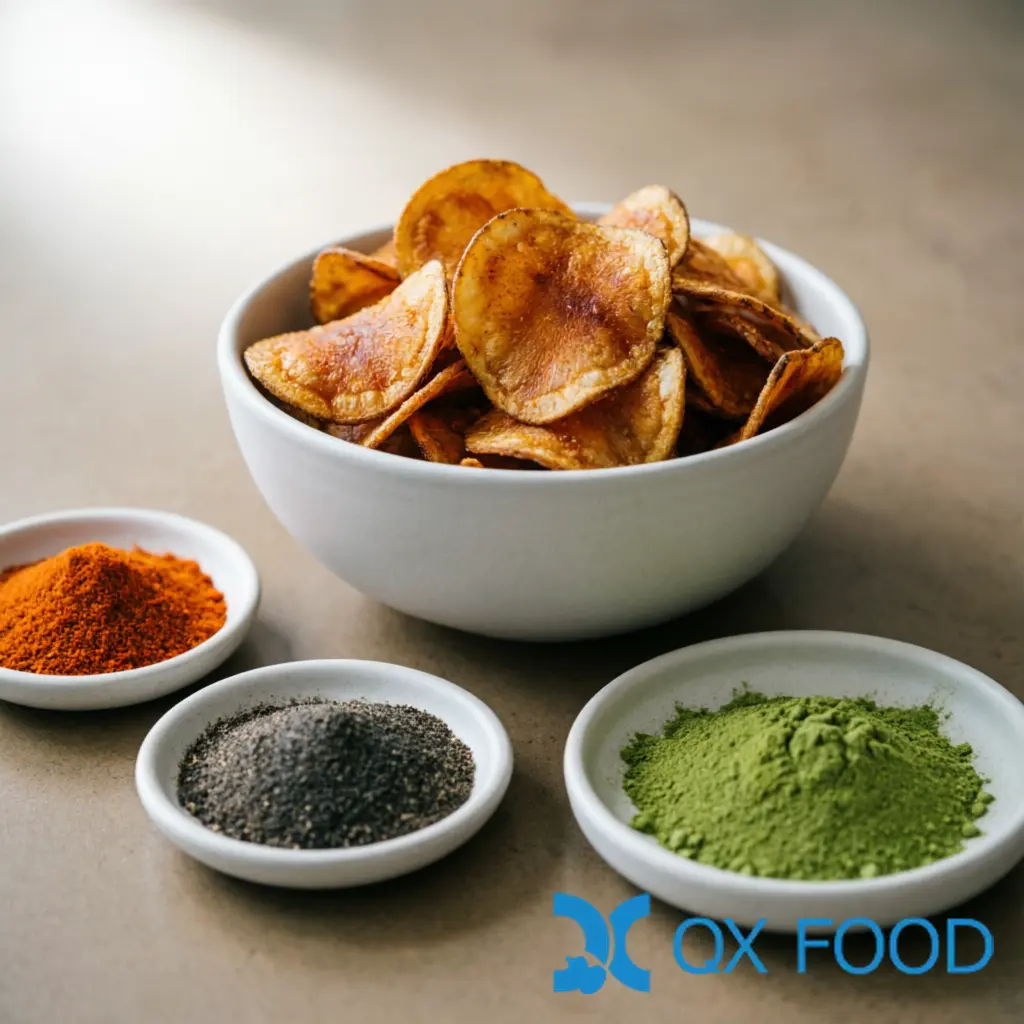
Pure black pepper powder BPP-K45 at 80-120 mesh and dehydrated garlic powder GP-W04 are standard snack seasoning grades: fine enough to adhere through tumble coating, coarse enough to register on the palate. For colored snack seasoning, matcha powder MP-K40 and mango powder MGO-15 show how fine fruit and tea powders deliver both color and flavor in one ingredient.
Flavor Layering: Building a Snack Seasoning That Survives the Line
Topical snack seasoning faces a brutal environment: heat from the fryer or oven, mechanical stress in the tumbler, moisture from the oil, and weeks of bag storage before consumption. Flavor layering is the formulation answer:
- Base layer — salt and savory carriers (dextrose, maltodextrin, yeast extract) provide the salty platform and bulk the seasoning for even application.
- Flavor core — the recognizable profile: pepper, garlic, onion, chili, cheese or fruit notes. Clove powder CLO-D11 at low inclusion rounds out barbecue and five-spice snack seasoning; whole star anise STA-23 ground fine anchors Chinese-style snack seasoning.
- Top note — volatile aromatics that carry the first sensory impression; these need protection because they degrade fastest in storage.
The layering principle also applies to coating sequences. Dual-stage coating — oil, then a portion of seasoning, then more oil, then the rest — improves both adhesion and flavor depth compared to a single dusting pass. It costs line time but measurably reduces seasoning loss and improves flavor balance.
The numbing-salt profile, a rising snack favorite, is covered in depth in our pepper salt seasoning guide.
Umami layering in savory snacks is covered in our HVP in snack seasonings guide.
Snack Seasoning Application Systems: Tumble, Slurry and Electrostatic
Choose the application system before finalizing particle size, because the two are coupled:
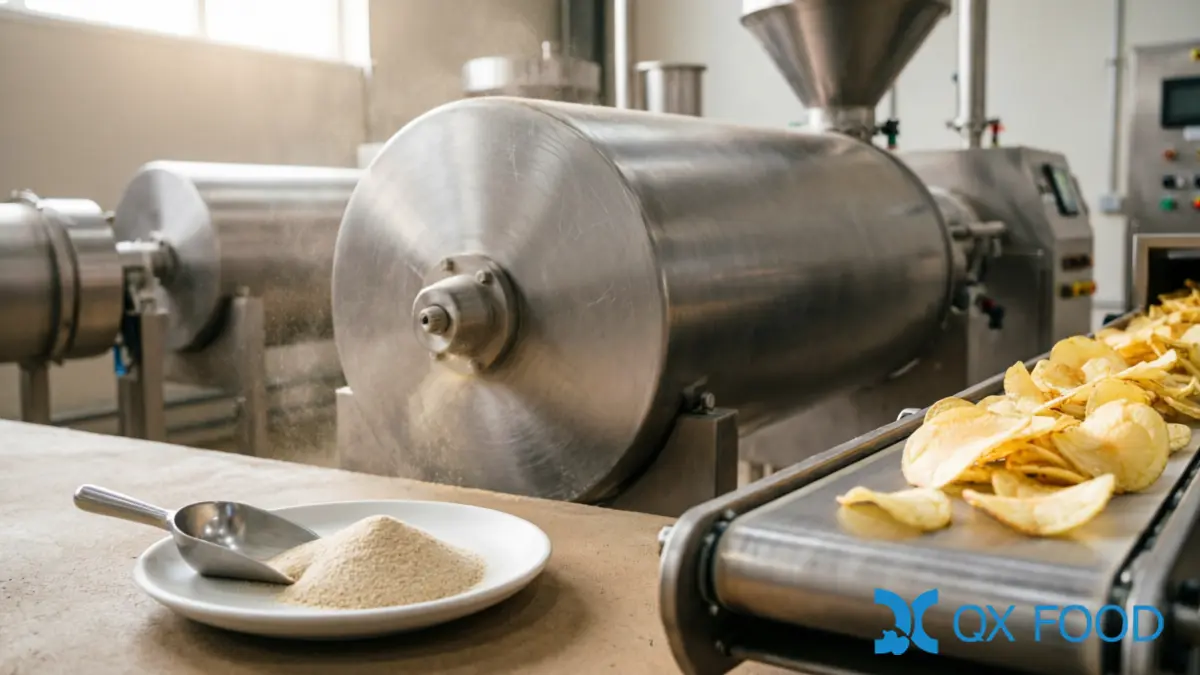
- Flighted tumbling drums — the industry standard for chips and extruded snacks. Angle, rotation speed and residence time control how much seasoning sticks; seasoning dust fines can be recovered and re-applied.
- Slurry or liquid systems — seasoning suspended in oil or water, sprayed on. Allows flavor inside the coating rather than on top; requires fine mesh to avoid nozzle clogging.
- Electrostatic coating — charged particles are attracted to the grounded product surface, improving adhesion and reducing ingredient loss. Electrostatic seasoning coating systems report significant seasoning savings on irregular surfaces like kettle chips.
For baked snacks without an oil layer, adhesion is harder: manufacturers use oil sprays, starch-based pre-coats or finer seasoning powders to compensate. If your snack seasoning is falling off a baked base, the fix is usually the base coating, not the seasoning.
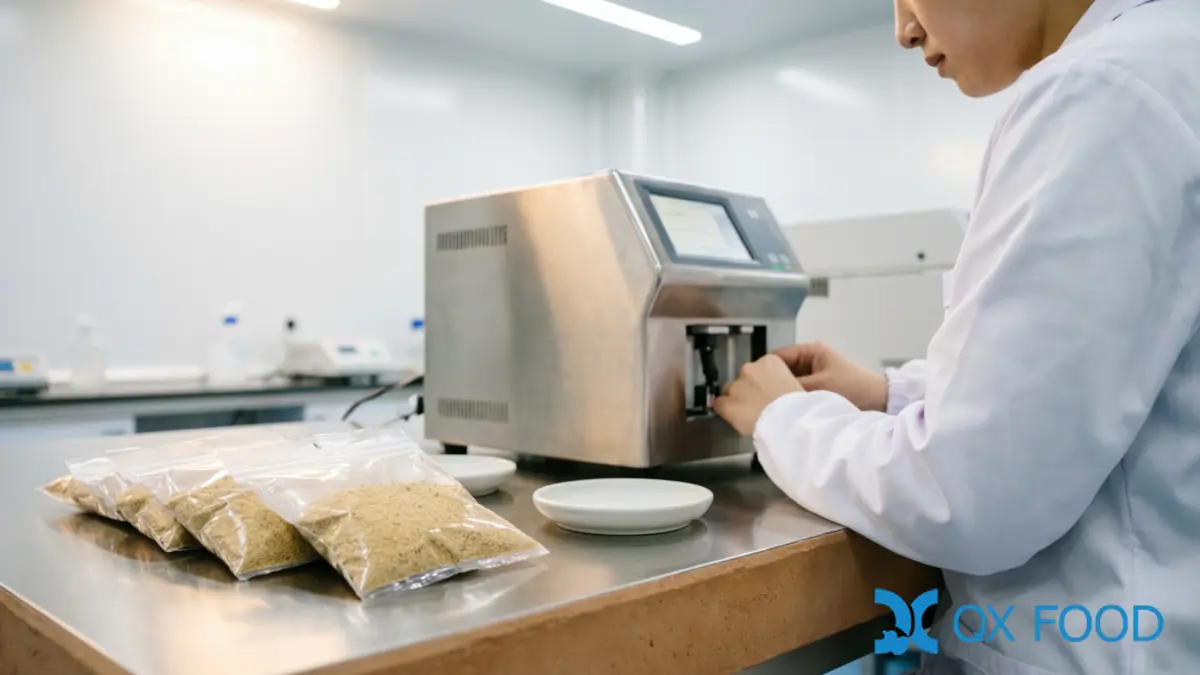
Seasoning Stability and Anti-Caking in the Bag
Snack seasoning sits in a warm, humid environment from the tumbler to the consumer’s hand. Three quality parameters protect the product in the bag:
- Moisture — high-moisture seasoning powders clump, accelerate oil oxidation on the snack surface and shorten shelf life. Verify moisture on every lot.
- Free-flowing behavior — anti-caking aids and proper particle distribution keep the seasoning metering cleanly through the dosing system.
- Color stability — paprika, chili and matcha-based snack seasoning fade under light and heat; specify color values (ASTA for paprika, bright-green grading for matcha) and protect the finished product with appropriate packaging.
QXFOOD’s snack seasoning raw materials — black pepper BPP-K45, garlic GP-W04, clove CLO-D11, matcha MP-K40, mango MGO-15 and strawberry STB-18 — ships with COA data for moisture, mesh and color parameters, plus ISO9001, ISO22000, HACCP and HALAL certification, with 1 kg samples for line trials.
For the full category view, visit the Natural Plant Powders category page.
Request snack seasoning samples through the contact form on this page and our application team will help you match particle size and flavor layering to your coating line.
The same seasoning science extends beyond chips: seasoned nuts and bakery snack coating shares the adhesion physics, while our paprika vs chili powder guide helps you choose the red powders behind a signature snack blend.
Frequently Asked Questions
Why does seasoning fall off my chips?
Seasoning falls off when the oil layer is too thin, the powder particle size is too coarse for the application method, or the tumbler residence time is too long. Check oiling level (typically 8-15%), mesh size against the system, and drum settings in that order.
What mesh size is best for snack seasoning?
Fine dusting needs 120-200 mesh for adhesion and even coverage; standard tumble coating works at 60-80 mesh; visible coarse bits need 20-40 mesh with a strong oil layer. Match mesh to the application system before finalizing the formula.
How much seasoning is lost during tumbling?
Line losses of 10-20% of seasoning weight are common on poorly tuned systems. Recovering fines, tuning drum angle and speed, and using finer powders or electrostatic coating can reduce losses significantly.
What is electrostatic snack seasoning coating?
Electrostatic coating charges the seasoning particles so they are attracted to the grounded product surface, improving adhesion and reducing ingredient loss — especially valuable on irregular surfaces like kettle chips and baked snacks without oil layers.
How do I keep snack seasoning fresh in the bag?
Control seasoning powder moisture, use anti-caking aids for free flow, and protect color-sensitive ingredients (paprika, chili, matcha) from light and heat with appropriate packaging. Verify moisture and color values on every lot.
Can fruit and tea powders be used in snack seasoning?
Yes — fine matcha, mango and strawberry powders deliver both color and flavor in one ingredient for sweet-savory snack seasoning. Their fine particle size suits tumble coating, and they require light protection for color stability.
What should a snack seasoning COA include?
Moisture, mesh/particle size distribution, microbiology, and color values where relevant (ASTA for paprika-type, green grading for matcha). Batch-to-batch consistency of these values predicts coating performance and shelf life.