
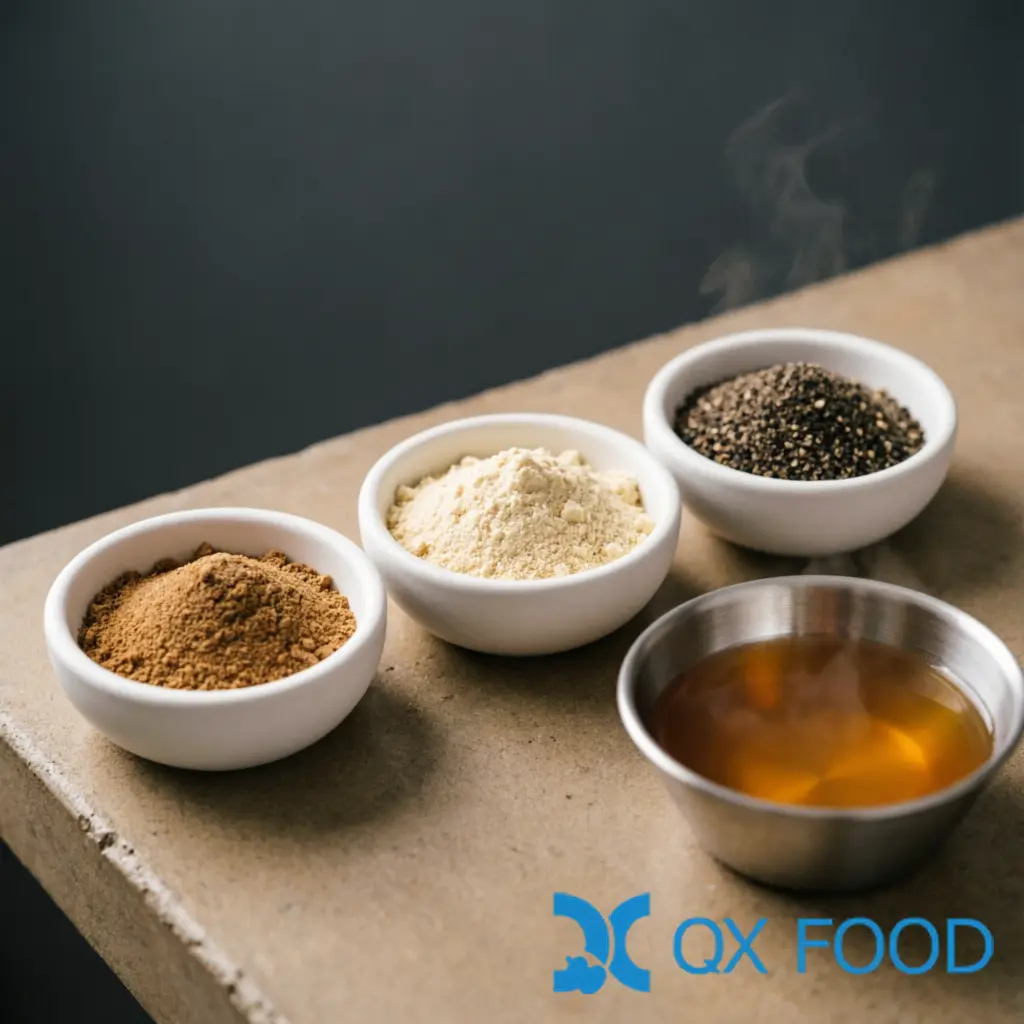
Umami Base Formulation for Compound Seasonings: Soy Sauce Powder, HVP and Yeast Extract in Synergy
The umami base is the foundation of every compound seasoning, and the market it serves is worth USD 22.8 billion in 2025, projected to reach USD 30.5 billion by 2035 at a 2.9% CAGR (WiseGuy Reports, 2025). For seasoning manufacturers, the difference between a flat, salty product and a round, satisfying one is almost always the umami base — the blend of brewed soy sauce powder, hydrolyzed vegetable protein (HVP), yeast extract and nucleotide enhancers that carries the savory character of the finished seasoning. This guide explains how the umami base works chemically, how to layer its components, and how to source the raw materials at production grade.
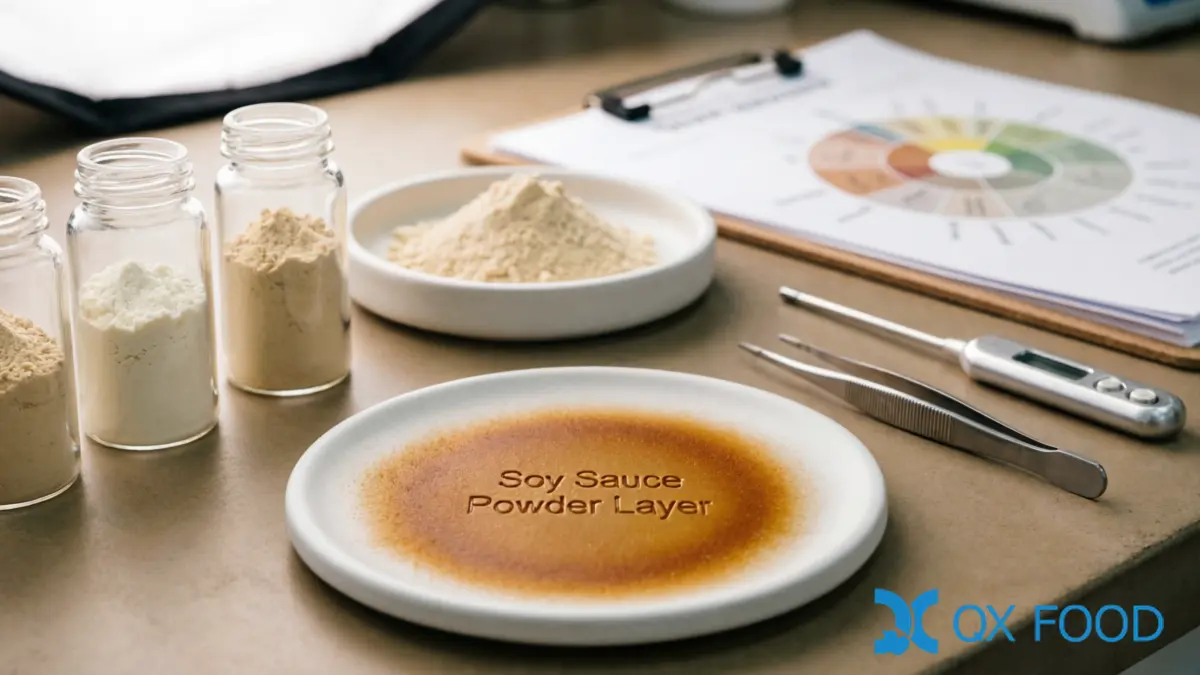
The Science of Umami Synergy
Umami perception is driven by glutamate binding to taste receptors, but the intensity is multiplied by 5′-ribonucleotides — inosinate (IMP) and guanylate (GMP) — through a synergy first quantified in food science decades ago (Yamaguchi, 1967). The practical consequence for compound seasoning formulators: a base built only on free glutamate is capped at a certain intensity, while a base that pairs glutamate with nucleotides reaches 5-8 times the perceived umami at the same cost. This synergy is the reason standard compound seasoning architecture pairs an amino-acid source (soy sauce powder, HVP, yeast extract) with an I+G enhancer rather than relying on either alone.
Modern reviews of umami-rich seasonings confirm the same architecture across Western and Asian formulations: a glutamate source, a nucleotide pair, and a savory carrier (Ono et al., 2025, Current Opinion in Food Science). The choice of glutamate source determines the flavor character — brewed soy sauce powder brings fermented, cooked-soy depth; HVP brings roasted, meaty notes; yeast extract brings brothy, dairy-adjacent richness.
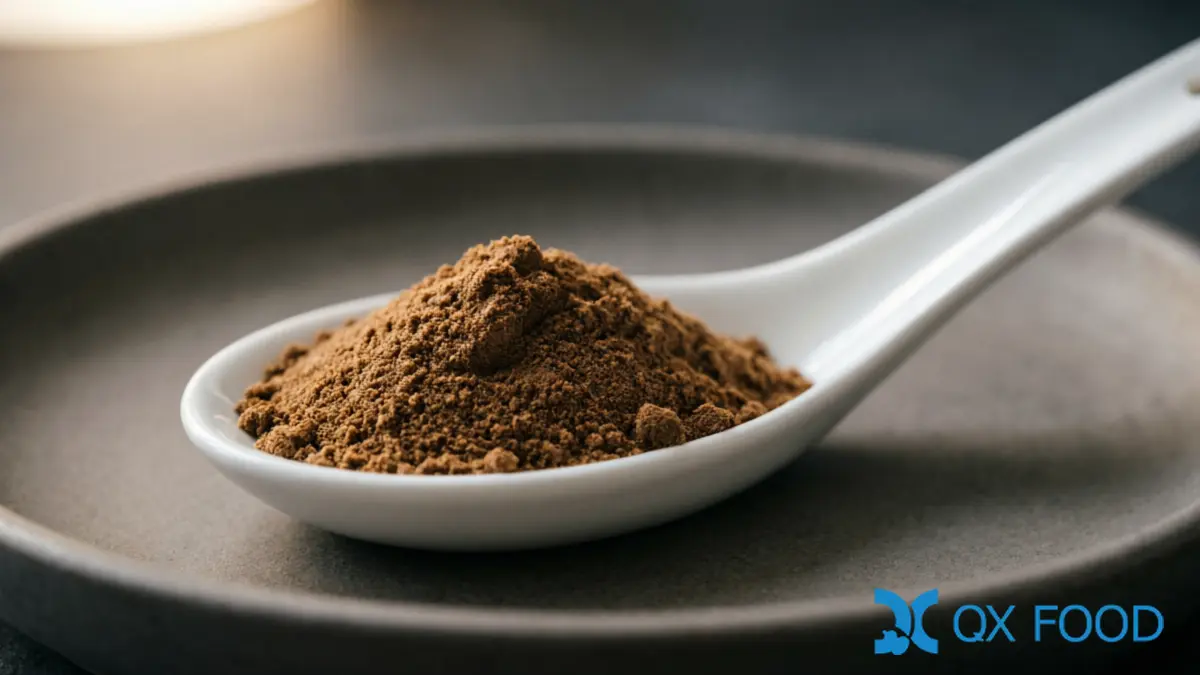
Layer One: Brewed Soy Sauce Powder as the Fermented Backbone
Japanese-style brewed soy sauce powder FSP-BH is the fermented backbone in many compound seasoning umami bases. Spray-dried from brewed soy sauce, it delivers the amino-acid nitrogen, dark color and cooked-soy character of liquid soy sauce in a stable powder that doses precisely and stores without refrigeration. Its role in the base is to supply the “brewed” quality — the fermented depth that distinguishes a compound seasoning from a simple salt-and-glutamate mix.
Umami-enhanced soy sauce powder FSP-H06 takes the same family one step further: brewed soy sauce blended with vegetable protein liquid, engineered for stronger umami delivery in marinades, dry seasoning blends and sauce packets. When a formula needs higher umami intensity without raising the soy sauce flavor load, H06 is the bridge between a straight brewed powder and a fully synthetic enhancer stack.
Layer Two: HVP for Roasted, Meaty Depth
Hydrolyzed vegetable protein contributes the roasted, savory, slightly meaty notes that brewed soy sauce powder does not carry. HVP is produced by acid or enzymatic hydrolysis of vegetable protein (typically corn, wheat or soy), generating free amino acids — including glutamic acid — plus peptides that react further during cooking. In the umami base, HVP and soy sauce powder are complementary: the soy sauce powder supplies fermented depth, the HVP supplies roast and broth character.
For clean-label positioning, the formulator’s choice between HVP and yeast extract is often a labeling decision: yeast extract can be declared as “yeast extract” while HVP must be declared as “hydrolyzed vegetable protein.” Both are GRAS and widely used; the decision belongs to the target market and label strategy.
Roasted, meaty depth from the reaction route is explained in the Maillard process guide.
Layer Three: Yeast Extract for Brothy Roundness
Yeast extract rounds out the base with brothy, savory and slightly sweet notes that fill the gap between the soy sauce powder’s fermented character and the HVP’s roasted character. It also carries natural nucleotides, contributing to the IMP/GMP pool that drives the synergy described above. In reduced-MSG formulations, yeast extract plus a small I+G addition can replace most of the added monosodium glutamate while keeping the perceived umami intensity.
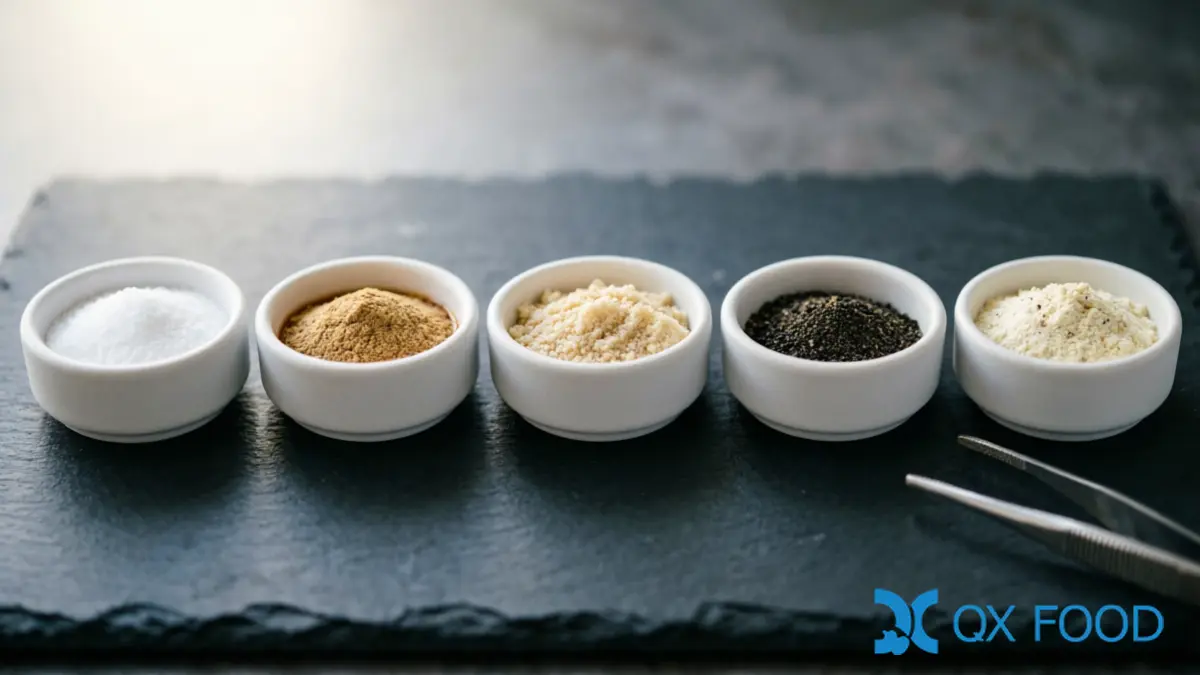
Building the Base: A Practical Layering Sequence
Compound seasoning umami bases follow a repeatable build sequence that manufacturers can adapt to their target profile:
- Salt platform — salt and dextrose or maltodextrin as the carrier and salinity anchor.
- Glutamate source — brewed soy sauce powder (fermented character) or HVP (roasted character), typically 10-30% of the base.
- Nucleotide enhancer — I+G at 0.5-2% of the base; small inclusion, large effect through synergy.
- Broth rounder — yeast extract at 2-8% for mouthfeel and brothy depth.
- Spice and aromatic layer — dehydrated garlic powder GP-W04, dried ginger DGR-27 and pure white pepper powder WPP-K44 carry the recognizable flavor identity on top of the base.
For a complete savory seasoning system, the base layer is then extended with the product-specific spice core — pure black pepper powder BPP-K45 for pepper-forward blends, clove powder CLO-D11 and cassia powder CP-B04 for braised-style profiles, whole star anise STA-23 for five-spice families.
The production side of turning a base into a stable blend is covered in our compound seasoning production guide.
Sourcing the Umami Base: Parameters That Matter
Umami base raw materials vary widely between suppliers, and three parameters separate production-grade sourcing from spot buying:
- Nitrogen and amino-acid content — for soy sauce powder and HVP, total nitrogen and amino-acid nitrogen predict umami delivery. Verify the values on the COA and compare across lots.
- Salt carryover — soy sauce powders carry 30-50% salt depending on grade; the salt budget of the finished seasoning must account for the base’s salt contribution.
- Solubility and moisture — for sachet and instant applications, cold-water solubility and low moisture protect dissolution speed and shelf life.
Certifications matter equally: ISO9001, ISO22000 and HACCP are baseline, with HALAL and KOSHER for destination markets. Each lot should carry a COA covering the parameters above plus microbiology.
For the full category view, visit the Fermented & Brewed Powders category page.
Request umami base raw material samples through the contact form on this page and our application team will support your compound seasoning formulation against your target profile.
An umami base only performs inside a product: see it applied in instant noodle seasoning and in prepared meal sauce packs, where the same layering logic drives batch consistency.
Frequently Asked Questions
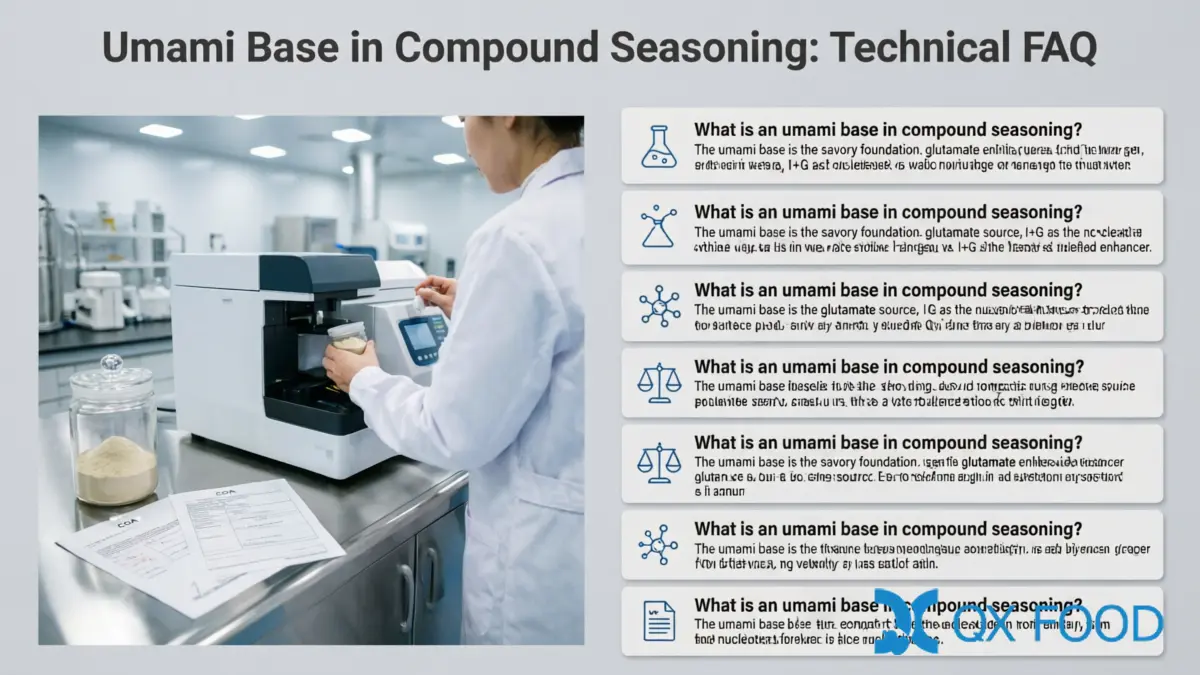
What is an umami base in compound seasoning?
The umami base is the savory foundation of a compound seasoning: typically brewed soy sauce powder or HVP as the glutamate source, I+G as the nucleotide enhancer, and yeast extract for brothy roundness. It carries the savory character that the spice layer then flavors.
How does umami synergy work?
Glutamate binds the umami receptor, and 5′-ribonucleotides (IMP and GMP) amplify the response — perceived umami can rise 5-8 times when nucleotides are added to a glutamate source. This is why standard compound seasoning architecture always pairs an amino-acid source with I+G.
Soy sauce powder or HVP for the base?
They are complementary, not alternatives. Brewed soy sauce powder supplies fermented, cooked-soy depth; HVP supplies roasted, meaty notes. Many umami bases use both, with the ratio set by the target flavor — Asian profiles lean soy sauce powder, Western profiles lean HVP.
What is the difference between HVP and yeast extract?
HVP is produced by acid or enzymatic hydrolysis of vegetable protein and contributes roasted, savory notes; yeast extract is made from yeast autolysis and contributes brothy, slightly sweet roundness plus natural nucleotides. Labeling differs: HVP is declared as hydrolyzed vegetable protein, yeast extract as yeast extract.
Can I reduce MSG in compound seasoning?
Yes — a base built on brewed soy sauce powder, yeast extract and a small I+G addition can replace most added MSG while retaining umami intensity through the natural glutamate and nucleotides. Verify the finished flavor against your benchmark, since clean-label positioning affects the supplier and cost structure.
What should I check on a soy sauce powder COA?
Total nitrogen, amino-acid nitrogen, salt content, moisture, solubility and microbiology. Salt carryover is the parameter most often missed — it directly affects the finished seasoning’s sodium budget.
How much I+G should I use in an umami base?
Typical inclusion is 0.5-2% of the base — small enough that cost stays controlled, large enough to trigger the synergy with the glutamate source. Optimize by sensory testing against your benchmark rather than fixed percentages.