
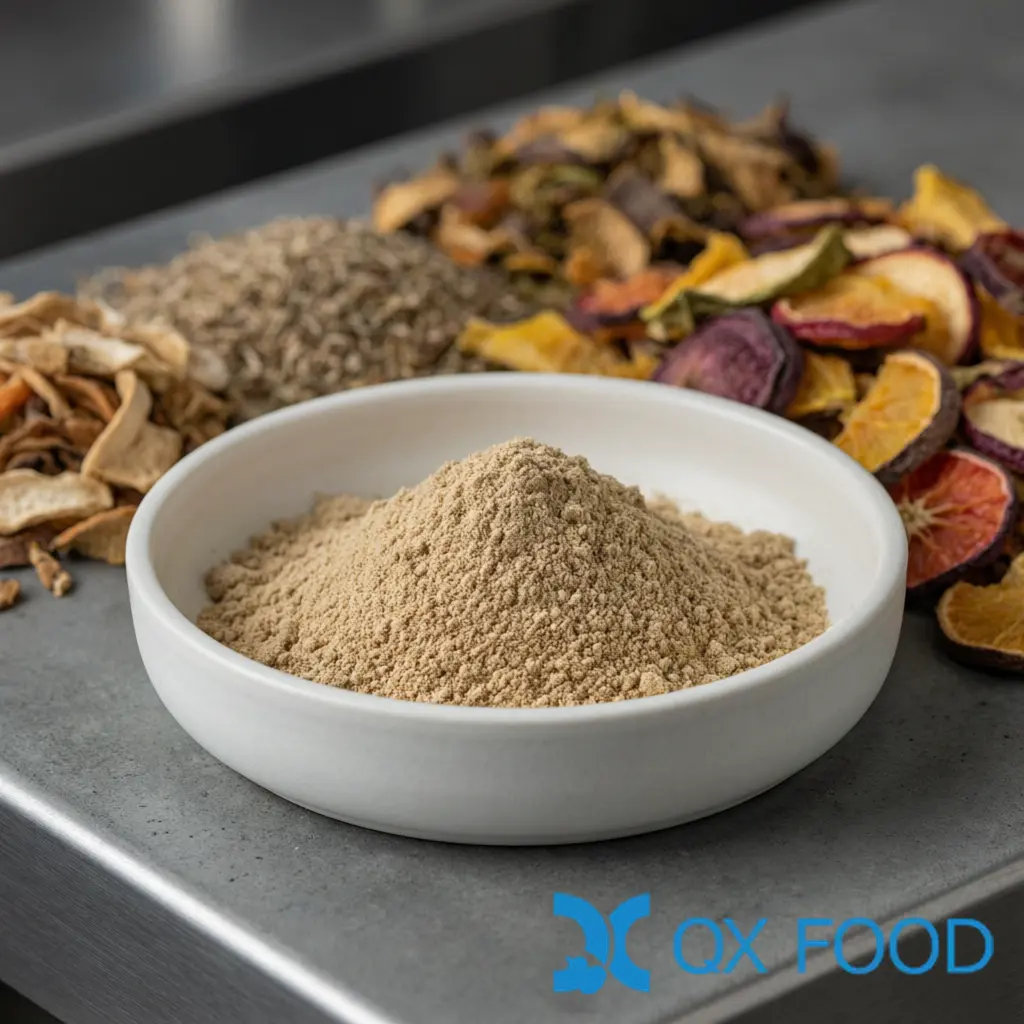
Natural plant powder is a physical form, not one processing route or composition. Powders sold under the same plant name can be whole dehydrated and ground material, spray-dried juice or puree, a carrier-containing spray-dried grade, or a dried extract system, and those structures behave differently in a formula.
Plant ingredient selection therefore starts with composition, process and intended function, not with a simple powder-versus-extract label. This guide explains the natural plant powder structures buyers actually meet, what changes between them, and what to verify before a trial, with clean-label suitability treated as a check against the buyer’s own policy and destination-market rules rather than as a fixed property of one category.
Plant Powder Is a Physical Form, Not One Processing Route
The useful distinction is not ground versus chemical. It is which ingredient structure a given product actually has, because that structure determines composition, declaration, flavor direction, functional contribution and cost. Four structures cover most of what food manufacturers buy:
- Whole dehydrated and ground powder — the cleaned plant is blanched or otherwise pre-treated where needed, dried and milled. The powder keeps most of the plant matrix, including fiber and insoluble solids, and typically declares as the plant itself.
- Spray-dried single-ingredient plant powder — juice, puree or another liquid plant feed is spray-dried without added carriers. The declared ingredient may still be the plant only, but the amount of insoluble plant matrix retained depends on how the liquid feed was prepared before drying. A filtered juice powder, for example, differs materially from a puree-based powder even though both may be spray-dried.
- Carrier-containing spray-dried powder — a liquid feed is dried with a carrier such as maltodextrin to improve yield and handling, so the ingredient declaration includes the carrier and the plant content is expressed as a percentage or specification parameter.
- Extract, concentrate, oleoresin or encapsulated extract — selected fractions are separated from the plant by water, ethanol, steam distillation, supercritical fluid or other extraction technologies, then standardized and delivered as liquid, concentrate, oleoresin or dried onto a carrier.
Composition Comes Before the Category Name
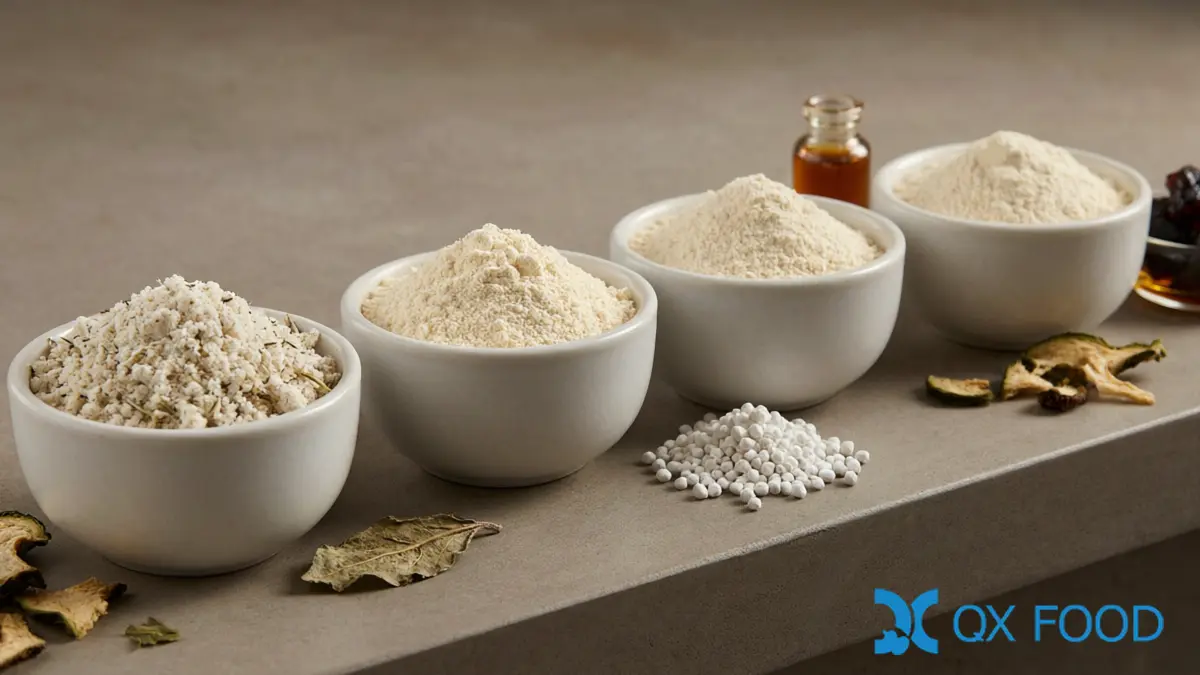
Two products both labeled plant powder can have different moisture, solids, fiber, sugar, salt-equivalent, color and flavor-compound composition. The word powder tells you the physical form; the specification tells you what is inside. Reviews of spray drying of fruit and vegetable juices note that the technique requires a liquid feed (solution, emulsion or suspension) and that carriers are frequently added to improve yield and powder properties — which is exactly why two fruit powders from different suppliers can be different ingredients in practice.
| Structure | What the declaration usually shows | What differs in use |
|---|---|---|
| Whole dehydrated and ground | Plant name, sometimes with mesh or process note | Insoluble solids, fiber and water-binding come with the plant matrix |
| Spray-dried, single ingredient | Plant name only | Matrix functions depend on feed preparation and the amount of insoluble plant material retained |
| Spray-dried with carrier | Plant and carrier declared | Carrier solids add to the dose; plant content is a specification parameter |
| Extract / oleoresin / concentrate | Extract, flavoring or the extracted fraction, by market rules | Concentration and standardization are process-defined; application form varies |

Labeling Depends on Ingredient, Function and Market
Ingredient declaration depends on the actual material, intended technical function and destination-market rules. A dried plant powder may use its common or usual ingredient name, while some extracts used primarily for flavoring may qualify for flavor labeling under the applicable market rules. Do not infer the finished label from powder or extract alone.
In the United States, natural flavor is defined under 21 CFR 101.22 by its primary flavoring function, while ingredients that must be individually declared are generally listed by their common or usual names under 21 CFR 101.4. The correct declaration therefore depends on the actual material and its function in the finished food.
A whole-plant ingredient may fit some buyer-defined clean-label policies because of its short and recognizable ingredient declaration, but clean label is not a universal regulatory category. Food-science literature notes that the term has no legal definition and that different brands and consumers apply different standards. Suitability should be checked against the buyer’s own ingredient policy, complete formulation and destination-market rules.

Flavor Depends on What the Process Retains or Selects
Neither plant powder nor extract has one fixed flavor architecture. A whole-ground powder retains more of the physical plant matrix, while an extract selectively concentrates fractions according to the extraction process. Drying, extraction and encapsulation can all change the final aroma and taste, so actual grades should be compared in the target food.
Spice oleoresins are the clearest counter-example to any simple flavor ladder: an oleoresin can carry volatile aroma compounds, non-volatile flavor compounds, pigments and pungent principles together, and can therefore sit closer to the whole spice in flavor architecture than a single essential-oil fraction does. Meanwhile whole-ground powders are not automatically pristine: blanching, drying temperature, milling heat, oxygen exposure and storage all modify volatile profiles. Ground garlic powder and a garlic oleoresin are different routes to different sensory results, and neither is inherently more complete.
For some spice ingredients, volatile oil, pungency compounds or other chemical markers may be useful specification parameters. Whether those parameters belong in the specification or batch COA depends on the selected grade and supplier control plan. They should not be treated as universal requirements for all plant powders.
Fiber and Matrix Functions Need Composition Evidence
Matrix-derived functions such as fiber, insoluble solids and water binding depend on how much of the original plant matrix remains in the selected ingredient. They should be verified from composition and analytical data rather than inferred from the word powder.
A whole dehydrated kale powder with 15 g/100 g dietary fiber contributes dietary fiber, insoluble solids and bulk to a formulation. Any water-binding or texture effect should still be validated in the target food. A spray-dried mango powder made from extracted and filtered juice carries little of that insoluble matrix, and a carrier-containing grade contributes the carrier’s solids on top of the plant solids. The same category name, three different functional contributions — the specification decides which one you are buying.
Clarity, Heat Stability and Intensity Are Grade-Specific
Where clarity is required, compare filtered or soluble ingredient forms rather than assuming every extract is clear. Extract products can be soluble extracts, oleoresins, emulsions, encapsulated powders or turbid concentrates, and their behavior in a clear beverage differs accordingly. Where thermal stability matters, compare the actual powder, extract or encapsulated grade under the intended heat process — encapsulation and other technologies can improve stability, but that is a property of the specific product, not of extracts as a class.
The same logic applies to intensity. Extraction can concentrate selected fractions, but concentration depends on what fraction is extracted, how the extract is standardized and what carrier or delivery system is used. Compare the actual composition and the required finished-product performance.
Compare Cost at Equivalent Finished-Product Performance
Cost should be compared at the finished-product result, not by ingredient price per kilogram or by a dosage rule of thumb. A high-concentration extract at a high unit price can be economical where a small dose replaces a large powder addition, but the reverse is also true where the powder’s matrix contribution (fiber, bulk, color carry) is part of what the formula needs. Build the trial around the reference product: same finished format, same serving or coating level, same label target, then compare total formulation cost after each candidate reaches an acceptable sensory and functional result.
What to Verify Before a Plant-Ingredient Trial
Before comparing candidates, separate what belongs in the specification or technical documentation from what appears on the batch COA:
- Ingredient composition and declaration, including any carrier or added ingredients.
- Process route and, where relevant, the plant content percentage or juice/solids basis.
- Analytical parameters such as moisture, color value or markers where the grade controls them.
- Microbiological, contaminant and other safety parameters according to the ingredient risk, applicable regulation, supplier control plan and buyer specification.
- Allergen, non-GMO and other statements from the applicable declarations rather than assuming they appear on the COA.
- Finished-application trial at the intended use level and process.

QXFOOD provides product-specific specifications and batch documentation for the selected grade. Analytical items reported on the COA depend on the SKU and control plan, while process, ingredient, allergen, non-GMO and other supporting information should be reviewed in the applicable technical documentation.
QXFOOD Plant Powders Use Different Processing Routes
QXFOOD’s plant-powder portfolio includes different ingredient structures rather than one universal whole-ground format, which is why the SKU specification matters more than the category name:
- KP-W43 kale powder follows a whole-ground route: blanching, low-temperature dehydration and fine grinding, with 15 g/100g dietary fiber and no added ingredients.
- CRP-H23 carrot powder is spray-dried with a declared ingredient of carrot only — a single-ingredient spray-dried powder rather than a ground product.
- MGO-15 mango powder is produced from selected ripe mangoes through juice extraction, filtration, vacuum concentration and spray drying.
- PKP-H22 pumpkin powder is spray-dried from 93% pumpkin pulp with maltodextrin as a processing carrier.
Whole-ground examples such as dehydrated garlic powder GP-W04 sit alongside these spray-dried grades in the same portfolio. Buyers should therefore review the ingredient declaration, process route and product-specific specification for the selected SKU rather than inferring composition from the category name. The broader natural plant powder range is listed under natural plant powders.
For application context, the snack seasoning application guide covers coating systems that use savory powders, and the formulation by application guide covers particle-size and format selection across categories.
Frequently Asked Questions
Is every plant powder a whole-ground plant ingredient?
No. Plant powders can be produced by dehydration and grinding, spray drying of juices or purees, or other processes, and some grades contain carriers. Review the process and ingredient declaration of the selected grade.
Is plant powder always better for clean-label products?
No universal rule applies. A single-ingredient plant powder may fit some buyer-defined clean-label policies, but suitability depends on the complete ingredient declaration, finished formula and destination-market requirements.
Are plant extracts always more concentrated than powders?
Often, but not as a universal category rule. Concentration depends on what fraction is extracted, how the extract is standardized and what carrier or delivery system is used. Compare the actual composition and required finished-product performance.
When should I choose an extract instead of a powder?
Choose from the actual application requirement, such as clarity, targeted flavor or color compounds, standardization, dosage space or process stability, and validate the selected grade in the finished product.
What documentation should I compare?
Start with ingredient composition and process route, then review the product specification, relevant analytical parameters, applicable batch COA, allergen or non-GMO statements where required, and application performance.