What Is Kale Powder KP-W43?
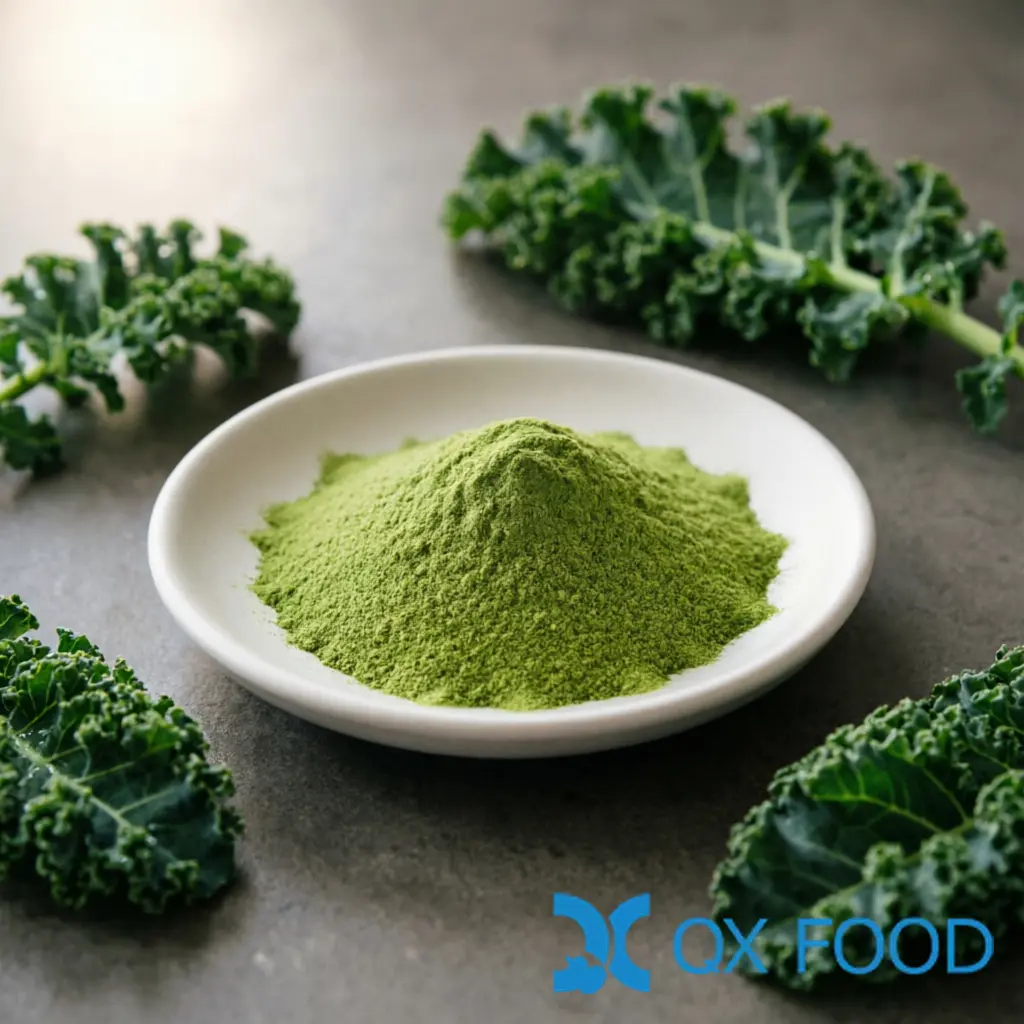
Kale powder KP-W43 is made from fresh kale harvested in Shandong and Jiangsu, processed through a color-protecting blanching step, low-temperature dehydration, fine grinding and 80–120 mesh sieving. The result is a bright fresh green fine powder with a clean natural vegetable scent, no bitter off-flavor and no coarse particles. The blanching step before dehydration is the key to the color: it inactivates the enzymes that would otherwise oxidize chlorophyll during drying, which is why this kale powder keeps its bright green hue instead of turning the muddy olive-brown that poorly processed vegetable powders show. No artificial pigments, no additives and no preservatives are used.
Kale has become one of the most commercially relevant vegetable powders in the global functional food market. According to Business Research Insights, the kale powder market is projected to reach USD 0.37 billion by 2035 with a compound annual growth rate of approximately 8%, driven by demand for meal replacement products, clean-label botanical ingredients and plant-based nutrition. USDA FoodData Central nutritional data shows kale delivering 705 micrograms of vitamin K per 100 grams of raw leaf roughly 882% of the daily value which is significantly higher than spinach at 483 micrograms. For a food manufacturer developing a green powder product, kale powder provides a nutritional profile that supports credible label claims.
The dietary fiber content of kale powder KP-W43 is 15% or higher, which makes it a functional ingredient rather than a simple coloring agent. In a meal replacement shake, a scoop of kale powder contributes measurable fiber to the nutrition declaration. In a bakery product, the same fiber content affects texture and water absorption. The low moisture content (6.2 g/100g against an 8.0 g/100g ceiling) keeps the powder free-flowing and stable during storage and blending. Heavy metal screening is part of the standard COA: inorganic arsenic not detected and lead not detected.
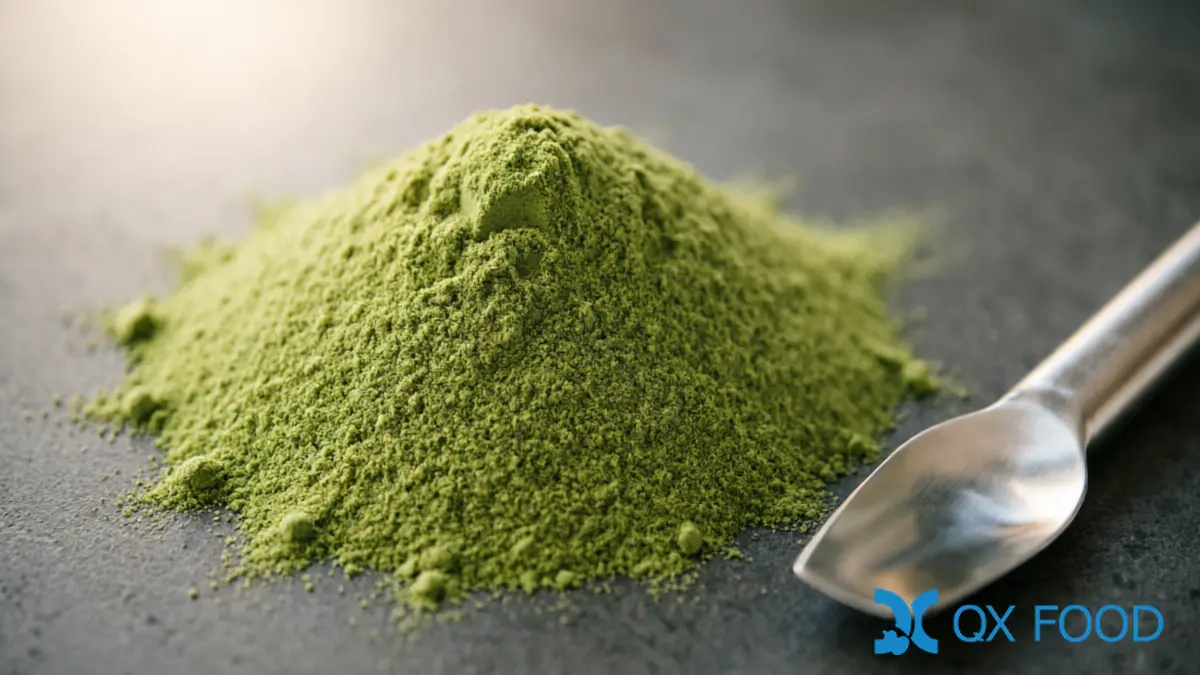
Specification Data — Standard Grade
| Parameter | Unit | Standard | Measured | Method |
|---|---|---|---|---|
| Moisture | g/100g | ≤8.0 | 6.2 | GB 5009.3 |
| Ash | g/100g | ≤12.00 | 9.5 | GB 5009.4 |
| Dietary Fiber | g/100g | ≥15 | Compliant | Q/KWQ 0001S |
| Fineness | Mesh | 80–120, no coarse particles | Compliant | Sieve test |
| Aerobic Plate Count | CFU/g | ≤10,000 | 200 | GB 4789.2 |
| Coliforms | MPN/g | ≤0.3 | <0.3 | GB 4789.3 |
| Salmonella | /25g | Not detectable | Not detected | GB 4789.4 |
| Staphylococcus aureus | CFU/g | ≤100 | <10 | GB 4789.10 |
| Inorganic Arsenic (as As) | mg/kg | ≤0.1 | Not detected | GB 5009.11 |
| Lead (as Pb) | mg/kg | ≤0.8 | Not detected | GB 5009.12 |
| Appearance | Bright fresh green, fine powder | Compliant | Q/KWQ 0001S | |
| Odor & Taste | Clean vegetable scent, no bitter off-flavor | Compliant | Q/KWQ 0001S |
The product standard is Q/KWQ 0001S. Each shipment comes with a batch-specific COA covering the parameters above. The dietary fiber reading at or above 15 g/100g is a defining specification for this kale powder it is what separates a functional food ingredient from a simple color additive, and it is the number formulators check first when evaluating kale powder for a meal replacement or nutrition product.
How Kale Powder Performs in Food Manufacturing
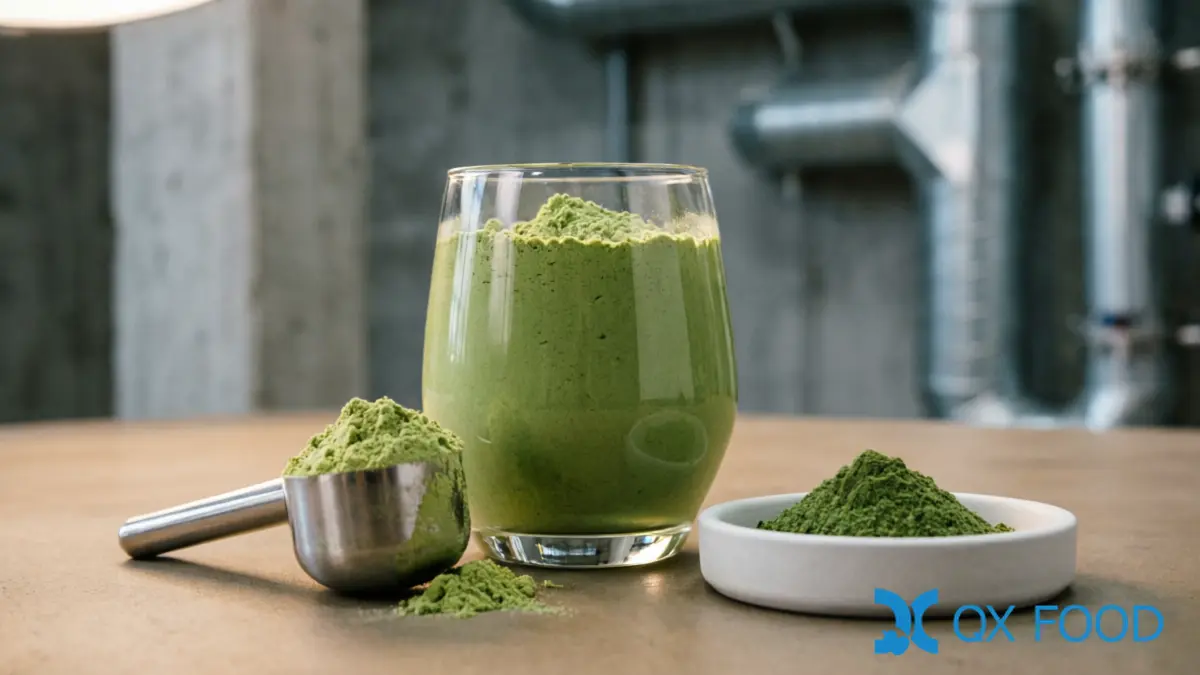
Meal Replacement Shakes and Nutrition Powders
Kale powder is a core ingredient in meal replacement shakes and nutrition powders, where it contributes three things at once: the bright green color that signals vegetable content, the fiber that supports the satiety claim, and the phytonutrient profile that consumers associate with healthy products. In a typical meal replacement formulation, kale powder is used at 2–5% of the dry blend weight, alongside protein isolates, oat flour, sweeteners and other vegetable powders. The fine 80–120 mesh particle size of kale powder KP-W43 ensures the powder disperses evenly in a shaker bottle without clumping or leaving a gritty mouthfeel a common complaint with coarser vegetable powders.
In a nutrition protein powder for athletes or wellness consumers, kale powder adds the vegetable component that many plant-based protein brands use to differentiate their products from competitors. The clean natural flavor of kale powder KP-W43 mild herbal with no bitter off-note is important in this application: consumers mixing a daily shake expect the vegetable character to be present but not unpleasant, and a bitter kale powder will fail in consumer taste panels regardless of its nutritional profile.
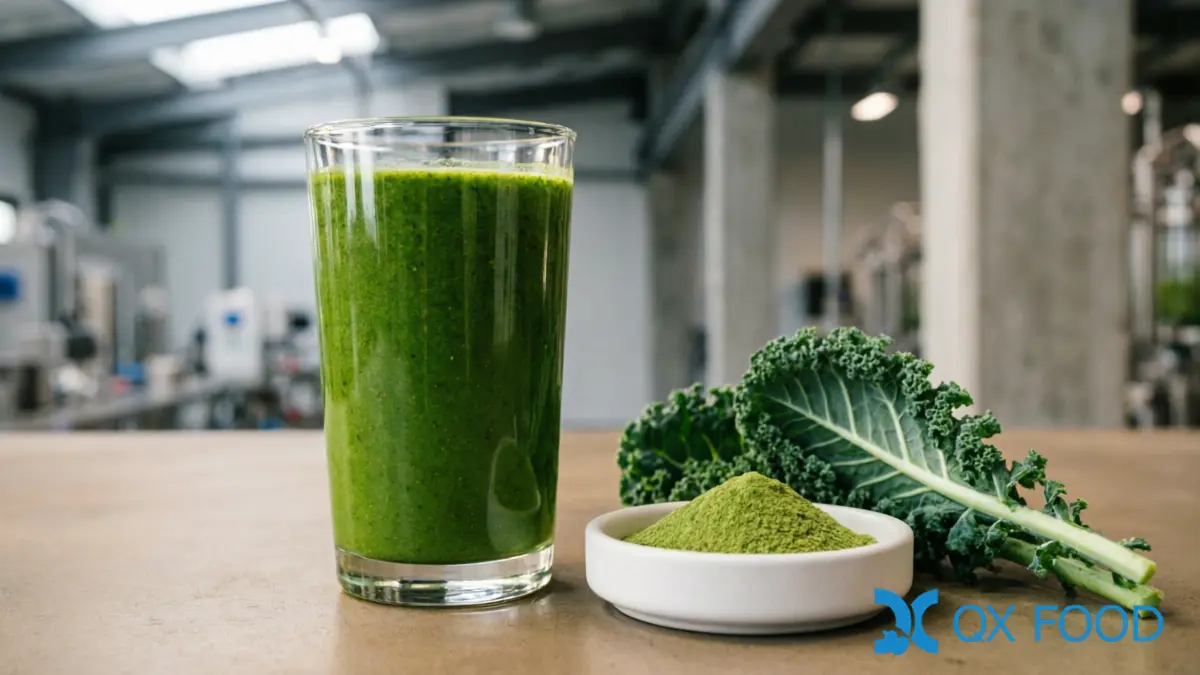
Fruit and Vegetable Smoothie Blends
In commercial smoothie blends both retail dry mixes and foodservice smoothie programs kale powder provides the green component that brands use for the “green smoothie” product line. Kale powder is typically used at 1–4% of a smoothie dry mix, balanced with fruit powders (mango, pineapple, banana), yogurt powder or dairy powder, and sweetener. The powder disperses instantly in cold liquid when blended, releasing the bright green color that consumers expect from a green smoothie.
The color stability of kale powder KP-W43 matters in this application because the smoothie may sit in a display cooler for hours. A kale powder that fades to olive-brown in liquid the result of incomplete enzyme inactivation during processing produces a product that looks stale and unappealing. The color-protecting blanching step in the production of kale powder KP-W43 prevents this, keeping the green bright through the shelf life of the finished beverage.
Bakery: Breads, Biscuits and Savory Baked Goods
Kale powder is used in bakery applications green breads, vegetable biscuits, savory crackers, and nutrition-enhanced baked goods at 1–3% of the flour weight. The fine powder disperses evenly through dough systems, giving the baked product a uniform green tint and a subtle vegetable character. The dietary fiber content (15 g/100g) affects the water absorption of the dough, so formulators should account for the fiber when calibrating hydration. In crackers and biscuits, kale powder pairs well with cheese powder, onion powder and herb blends.
Ice Cream, Frozen Desserts and Functional Foods
Kale powder appears in ice cream and frozen dessert formulations typically in health-positioned product lines at 0.5–2% where it provides color and a nutrition story without dominating the flavor. The powder disperses through the ice cream mix during pasteurization and homogenization. In functional food products nutrition bars, snack bites, instant soups, seasoning mixes kale powder serves as a vegetable fortification ingredient at 1–5%, contributing fiber, color and the clean-label positioning that manufacturers use to differentiate products in crowded categories.
Kale Powder vs Spinach Powder: What the Buyer Should Know
Kale powder and spinach powder are the two most commonly specified green vegetable powders, and buyers comparing them should understand the key differences. USDA FoodData Central data shows kale leading spinach on vitamin K (705 micrograms vs 483 micrograms per 100 grams raw) and on vitamin C, while spinach has higher vitamin A content. In practical formulation terms, the differences that matter are color, flavor and fiber. Kale powder delivers a brighter, more stable green in finished products and a milder, less grassy flavor profile than spinach powder. Kale powder KP-W43, with its color-protecting blanching, retains the bright green that makes the finished product visually appealing.
For a manufacturer deciding between the two, the choice usually comes down to the label story and the target consumer. Kale carries a stronger “superfood” association in consumer marketing, which is why kale powder is the preferred green vegetable ingredient in meal replacement and smoothie products targeting the wellness consumer. Spinach powder is often chosen for cost-sensitive applications or where a less prominent green color is acceptable. Many brands use both kale powder for the hero ingredient position and spinach powder as a cost-effective complement in the vegetable blend.
Packaging and Shelf Stability
Kale powder KP-W43 is a natural single-ingredient product 100% dehydrated kale with no additives, no artificial colors, no preservatives and no anti-caking agents. The bright green color is the natural chlorophyll color preserved through the blanching and low-temperature drying process. Non-GMO and Halal compliant.
Standard packaging covers evaluation pouches (100 g or 1 kg aluminum foil bags), mid-volume cartons (10 kg or 20 kg), and bulk drums (25 kg fiber drums). Custom packaging private-label bags, specific dimensions, multi-layer barrier materials is available for OEM orders.
Storage: sealed container, cool dry place, below 25°C with humidity below 60%. The chlorophyll pigments and heat-sensitive nutrients in kale powder are sensitive to light and oxygen over time. Under proper storage, shelf life is 18 months. Opened bags should be re-sealed immediately; opened stock used within 60 days retains the best color and nutritional quality.
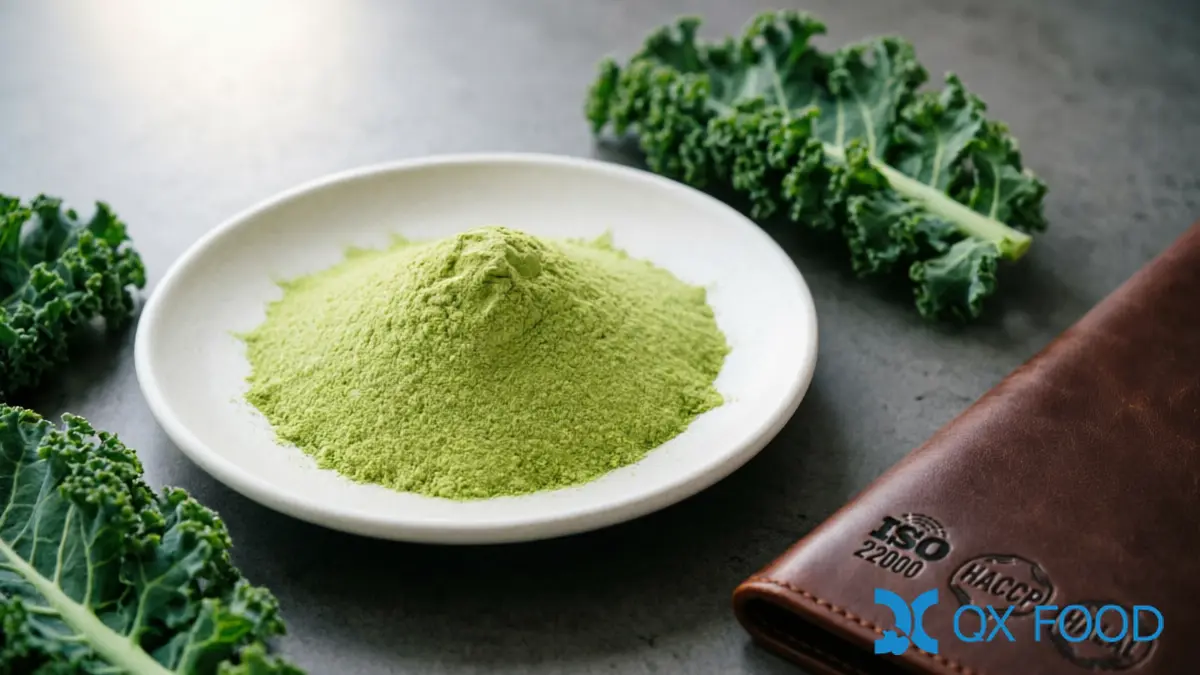
Quality Systems and Documentation
- ISO 9001:2015 — quality management system
- ISO 22000:2018 — food safety management system
- HACCP — hazard analysis and critical control points
- HALAL — certified by an accredited halal certification body
The production facility operates under an integrated quality management system, and each shipment of kale powder comes with a batch-specific COA. Additional testing beyond the standard panel can be arranged on request. Compliance with Codex Alimentarius guidelines is maintained.
Related reading: Green powders in plant based meat flavor and snack coating.
Green smoothie blends pair kale with matcha MP-K40 and strawberry STB-18 for color-balanced nutrition mixes.
Frequently Asked Questions
What is kale powder made from, and how is it different from fresh kale?
Kale powder KP-W43 is made from fresh kale that is cleaned, color-protecting blanched, low-temperature dehydrated, ground and sieved to 80–120 mesh. One kilogram of kale powder concentrates the nutrients of roughly eight to ten kilograms of fresh kale, depending on the moisture content of the raw leaves. The powder form offers manufacturers the convenience of a shelf-stable, dry ingredient with consistent color, flavor and nutrition from batch to batch without the cold-chain storage, short shelf life and seasonal price variation of fresh kale.
Why is kale powder bright green instead of olive-brown?
The bright green color comes from a color-protecting blanching step before dehydration. Blanching inactivates the enzymes primarily chlorophyllase and polyphenol oxidase that would otherwise oxidize the chlorophyll during drying and turn the powder olive-brown. Kale powder KP-W43 is blanched immediately after cleaning, which locks in the fresh green color. A vegetable powder that arrives olive-brown was typically dried without adequate enzyme inactivation.
What is the dietary fiber content of kale powder KP-W43?
Dietary fiber is 15 g/100g or higher, measured under the product standard Q/KWQ 0001S. This makes kale powder a functional ingredient in meal replacement shakes, nutrition bars and fortified foods a scoop of kale powder contributes measurable fiber to the nutrition declaration, supporting fiber content claims that many health-positioned products require.
Can kale powder be used in clear beverages?
Kale powder disperses in water and blends smoothly into smoothies, shakes and cloudy beverages. In clear or transparent beverages, the suspended powder particles will be visible kale powder is a natural plant material, not a soluble extract. For clear applications, manufacturers typically use filtered kale juice concentrate or clarified extracts rather than the whole-leaf powder. For opaque and cloudy products smoothies, meal replacements, protein shakes kale powder is the appropriate form.
Does kale powder KP-W43 contain any additives or artificial colors?
No. Kale powder KP-W43 is 100% dehydrated kale with no additives, no artificial colors, no preservatives, no anti-caking agents and no sulfur treatment. The green color is natural chlorophyll preserved through the blanching process. Non-GMO and Halal compliant. If the ingredient label needs to read “kale” alone, this product supports that.
How should I store kale powder to maintain color and nutrition?
Store kale powder in a sealed container in a cool, dry place below 25°C with humidity below 60%, away from direct light. The chlorophyll pigments and nutrients are sensitive to light and oxygen over time. Re-seal opened bags immediately after use. Under proper storage, shelf life is 18 months; opened stock used within 60 days retains the best color and nutritional quality.
Is kale powder KP-W43 Halal-certified?
Yes. The manufacturing facility holds active Halal certification. Kale powder is a single-ingredient plant product dehydrated kale with no animal-derived materials, no ethanol and no fermentation steps. The certificate is included in the standard documentation package.
Explore Our Natural Vegetable Powder Range
Kale powder KP-W43 is part of the Natural Plant Powders family. Buyers building a complete vegetable powder portfolio often evaluate these products together:
Scallion Powder SLP-B05 — spray-dried green onion for soups, noodles and seasoning blends.
Onion Powder OP-B03 — spray-dried onion powder for dry seasonings, soups and sauces.
Dehydrated Garlic Powder GP-W04 — low-temperature dehydrated, ultra-fine, allicin-rich.
Carrot Powder CRP-H23 — natural orange color and vegetable nutrition.
For the full category view, visit the Natural Plant Powders category page.